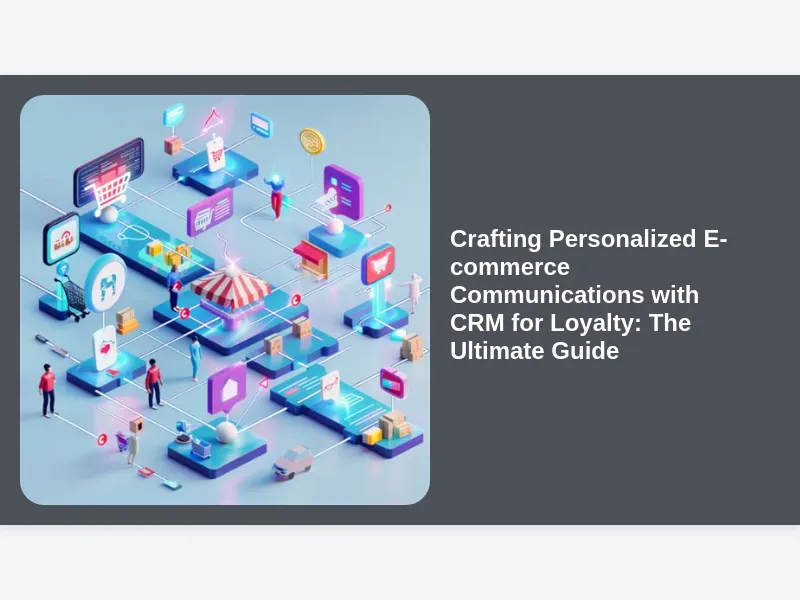
The digital marketplace is a bustling arena, teeming with competition and increasingly discerning customers. In this vibrant landscape, merely offering great products at competitive prices is no longer enough to secure enduring success. Today’s consumers expect more; they crave experiences that are tailored, relevant, and anticipate their needs. This is precisely where Crafting Personalized E-commerce Communications with CRM for Loyalty emerges as not just a strategy, but a fundamental necessity for any business aiming to thrive and build lasting customer relationships. It’s about moving beyond generic blasts and toward a nuanced dialogue that resonates individually, transforming casual browsers into devoted brand advocates.
Imagine a world where every interaction with your brand feels like it was designed just for you. From the moment you land on a website, through your browsing journey, to the post-purchase experience and beyond, the communication feels intuitive, helpful, and genuinely connected to your preferences. This isn’t science fiction; it’s the power of a well-implemented Customer Relationship Management (CRM) system, acting as the intelligent backbone for truly personalized e-commerce engagements. This article will delve deep into the multifaceted ways CRM empowers businesses to achieve this level of personalization, fostering unparalleled customer loyalty and driving sustainable growth in the ever-evolving e-commerce ecosystem.
Understanding the Modern E-commerce Customer: Beyond Transactions
The modern e-commerce customer is a sophisticated entity, far removed from the passive recipient of yesterday’s mass marketing efforts. They are digitally savvy, comparison-shopping experts, and highly attuned to value, not just in terms of price, but in the overall experience a brand provides. They navigate a multitude of channels, from social media to email, mobile apps, and direct website visits, expecting a seamless and consistent brand voice across all touchpoints. Their loyalty is not easily won, nor is it given blindly; it is earned through consistent delivery of relevant information, exceptional service, and, crucially, a sense of being understood.
This understanding goes far beyond knowing what products they’ve purchased. It encompasses their browsing history, the pages they lingered on, the emails they opened, the items they abandoned in their cart, their geographic location, their communication preferences, and even their feedback and support interactions. These layers of data paint a rich portrait of individual preferences, pain points, and aspirations. Without a robust system to capture, analyze, and act upon this mosaic of information, businesses are left guessing, resorting to broad-brush campaigns that inevitably miss the mark for a significant portion of their audience. The consequence? Disengaged customers, missed opportunities, and ultimately, a significant impact on loyalty and repeat business.
What is CRM and Why It’s Indispensable for E-commerce Loyalty?
At its core, a Customer Relationship Management (CRM) system is a technological solution designed to manage and analyze customer interactions and data throughout the customer lifecycle. Its primary goal is to improve business relationships with customers, assist in customer retention, and drive sales growth. For e-commerce businesses, CRM is not merely a tool; it’s the central nervous system that organizes, interprets, and leverages every piece of customer data to build stronger, more profitable relationships. It moves businesses away from reactive customer service to proactive engagement, anticipating needs before they even arise.
In the context of loyalty, a CRM becomes truly indispensable. It provides a 360-degree view of each customer, consolidating data from various touchpoints – sales, marketing, customer service, social media, and website interactions – into a single, accessible profile. This holistic view is the bedrock upon which genuine personalization is built. Without it, fragmented data leads to fragmented experiences, frustrating customers who feel like they’re starting from scratch with every new interaction. A CRM allows e-commerce businesses to remember past interactions, understand current preferences, and predict future behaviors, enabling them to communicate in ways that foster trust, appreciation, and ultimately, unwavering loyalty. It’s the difference between a fleeting transaction and a lifelong brand relationship.
The Data Goldmine: How CRM Powers Personalization Insights
The true power of a CRM in Crafting Personalized E-commerce Communications with CRM for Loyalty lies in its ability to transform raw data into actionable personalization insights. Every click, every purchase, every abandoned cart, every customer service inquiry, every email open – these are all valuable data points. A robust CRM systematically collects, organizes, and stores this information, creating a comprehensive profile for each customer. This isn’t just about collecting data for data’s sake; it’s about building a digital footprint that reveals individual behaviors, preferences, and triggers.
Beyond basic demographic information, CRM systems delve into transactional data (purchase history, order frequency, average order value), behavioral data (website browsing patterns, product views, search queries), communication data (email opens, click-through rates, preferred channels), and even sentiment data from social media or customer feedback. Sophisticated CRMs employ analytics and AI to sift through this “data goldmine,” identifying patterns and segments that would be invisible to the human eye. These insights allow e-commerce businesses to understand not just what a customer did, but why they did it, and what they might do next. This predictive capability is what elevates communication from generic to genuinely personalized and powerfully effective, laying the groundwork for loyalty that endures beyond a single purchase.
Segmenting for Success: Dividing and Conquering Customer Journeys
Once the data is collected and transformed into insights, the next crucial step in Crafting Personalized E-commerce Communications with CRM for Loyalty is effective segmentation. It’s practically impossible to create a unique message for every single customer, but it’s entirely feasible and highly effective to group customers into segments based on shared characteristics and behaviors. CRM systems provide the robust tools necessary for dynamic and granular segmentation, moving beyond simple demographics to create highly specific and actionable customer groups.
Segmentation can be based on numerous factors: demographic (age, location, gender), psychographic (interests, values, lifestyle), behavioral (purchase history, frequency, recency, average order value, browsing patterns, content consumption, engagement levels), and even lifecycle stage (new customer, repeat buyer, high-value customer, at-risk customer, lapsed customer). By creating these distinct segments, e-commerce businesses can tailor their communications precisely. For instance, a segment of “first-time buyers who purchased product X” might receive a welcome series with complementary product recommendations, while a segment of “loyal customers who haven’t purchased in 60 days” might receive a special offer to re-engage. This precision ensures that messages are always relevant, increasing engagement rates, fostering a sense of being understood, and significantly contributing to long-term customer loyalty.
Automated Personalization: Delivering the Right Message at the Right Time
The dream of delivering perfectly timed, highly relevant messages to every customer at scale is realized through automated personalization, a core strength of modern CRM platforms. It’s simply not feasible for a human team to manually send out individual communications to thousands or even millions of customers. This is where CRM-driven marketing automation steps in, transforming insights into action by triggering personalized messages based on predefined rules and customer behaviors. This capability is pivotal for Crafting Personalized E-commerce Communications with CRM for Loyalty.
Imagine a customer browsing a specific category of products for an extended period but not making a purchase. A CRM system can detect this behavior and automatically trigger an email or push notification offering a relevant discount, suggesting related items, or providing helpful content (e.g., a buying guide for that product category). Similarly, an abandoned cart automatically triggers a reminder email, often with an incentive to complete the purchase. Post-purchase, automated workflows can send thank-you notes, solicit reviews, recommend complementary products, or offer exclusive content. These automated touchpoints, powered by CRM data, ensure that customers receive the right message at the exact moment it’s most impactful, guiding them through their journey, reinforcing their relationship with the brand, and cultivating enduring loyalty.
Email Marketing Reinvented: Personalizing the Digital Inbox
Email marketing, often deemed an “old” channel, is anything but outdated when powered by CRM-driven personalization. In fact, it becomes one of the most potent tools for Crafting Personalized E-commerce Communications with CRM for Loyalty. Gone are the days of generic newsletters sent to an entire list; today, a personalized email inbox is a treasure trove of relevant offers, helpful content, and timely reminders, all designed to resonate with the individual recipient.
CRM data allows e-commerce businesses to segment their email lists with incredible precision, leading to highly targeted campaigns. This includes:
- Welcome Series: Tailored sequences for new subscribers based on how they joined your list or their initial browsing activity.
- Product Recommendations: Emails showcasing products a customer is likely to be interested in, based on past purchases, browsing history, or the behavior of similar customers.
- Abandoned Cart Recovery: Highly effective reminders with dynamic content showing the exact items left behind, often including incentives.
- Post-Purchase Follow-ups: Thank you notes, order updates, shipping notifications, and suggestions for complementary products or accessories.
- Re-engagement Campaigns: Targeted emails for dormant customers, offering special discounts or highlighting new arrivals to entice them back.
- Birthday/Anniversary Emails: Personalized greetings with special offers, fostering a personal connection and celebrating their loyalty.
- Dynamic Content: Emails where sections of the content change based on the recipient’s known preferences or segment, ensuring maximum relevance. This reinvention of email marketing transforms it from a broadcast medium into a one-to-one conversation, dramatically increasing engagement, conversions, and customer loyalty.
Beyond Email: Expanding Personalized Communications Across Channels
While email remains a cornerstone, a truly holistic approach to Crafting Personalized E-commerce Communications with CRM for Loyalty extends far beyond the digital inbox. Modern customers interact with brands across a multitude of channels, and consistent, personalized messaging across all of them is crucial for a unified brand experience. CRM systems act as the central hub, orchestrating these multi-channel communications to ensure continuity and relevance, regardless of where the customer chooses to engage.
Consider other vital channels:
- SMS Marketing: Highly effective for time-sensitive offers, order updates, shipping notifications, or quick re-engagement messages, especially for opted-in segments. CRM ensures these texts are personal and timely, avoiding spamming.
- Push Notifications: For mobile app users, these can deliver instant alerts about new arrivals, flash sales, abandoned cart reminders, or order status updates, tailored to their app activity and preferences.
- Social Media Retargeting: CRM data can be pushed to advertising platforms to create highly specific custom audiences for social media ads, showing products or promotions based on their previous website interactions or purchase history.
- Live Chat/Chatbots: When integrated with CRM, these tools can access customer history, allowing service agents or AI bots to provide personalized support and recommendations based on past interactions, ensuring a frictionless and efficient experience.
- In-App Messaging: For brands with dedicated mobile apps, personalized messages within the app can guide users, offer exclusive content, or highlight relevant features based on their in-app behavior. By synchronizing these diverse channels through CRM, businesses can create a cohesive and deeply personalized customer journey that consistently reinforces loyalty.
Building Lasting Bonds: Leveraging CRM for Post-Purchase Loyalty Programs
The initial purchase is merely the beginning of the relationship; the real work of Crafting Personalized E-commerce Communications with CRM for Loyalty happens after the sale. Loyalty programs, when intelligently managed by a CRM, are potent tools for transforming one-time buyers into lifelong advocates. CRM provides the essential infrastructure to track, manage, and personalize every aspect of a loyalty program, making it feel less like a generic scheme and more like a tailored reward for individual allegiance.
A CRM allows businesses to:
- Track Loyalty Points and Tiers: Automatically accumulate points for purchases, reviews, social shares, or referrals, and manage different loyalty tiers with varying benefits, all visible in the customer’s profile.
- Personalize Rewards: Instead of generic discounts, CRM data enables the offering of rewards that are genuinely appealing to the individual customer based on their purchase history or expressed interests. For example, a customer who frequently buys pet food might receive a discount on a new pet toy.
- Segment for Exclusive Access: Use segmentation to identify your most valuable customers and offer them exclusive early access to new products, members-only sales, or special events, making them feel truly valued.
- Proactive Engagement: Identify customers nearing a new loyalty tier and send encouraging communications, or recognize those whose points are about to expire, prompting them to redeem.
- Gather Feedback: Integrate feedback mechanisms into the loyalty journey, asking for product reviews or suggestions, demonstrating that their opinion matters and contributing to an iterative cycle of improvement. By turning loyalty programs into highly personalized experiences, e-commerce businesses can significantly boost repeat purchases, increase customer lifetime value, and forge unbreakable bonds of loyalty.
Predictive Personalization: Anticipating Customer Needs and Desires
The ultimate frontier in Crafting Personalized E-commerce Communications with CRM for Loyalty is predictive personalization – the ability to anticipate what a customer will want or need before they even know it themselves. This sophisticated level of insight is driven by advanced analytics and artificial intelligence (AI) embedded within modern CRM systems. By analyzing vast datasets of past behaviors, trends, and external factors, CRM can forecast future customer actions and preferences with remarkable accuracy.
Predictive capabilities allow e-commerce businesses to:
- Proactive Product Recommendations: Suggest products not just based on past purchases, but on what similar customers bought, what trends are emerging, or what they are likely to need next (e.g., suggesting ink cartridges shortly before a printer’s ink is predicted to run out).
- Churn Prevention: Identify customers who are showing signs of disengagement (e.g., decreasing purchase frequency, lower email open rates) and trigger proactive re-engagement campaigns with targeted offers or personalized messages to prevent them from leaving.
- Optimized Pricing and Promotions: Predict which customers are most sensitive to price and which are more focused on value, allowing for dynamic pricing or personalized discount offers that maximize conversion without eroding margins unnecessarily.
- Personalized Content Delivery: Determine which types of content (blog posts, videos, guides) a customer is most likely to engage with based on their browsing history and demographic data, delivering information that is truly valuable.
- Enhanced Customer Service: Arm service agents with predictions about a customer’s potential issues or future needs, allowing them to offer solutions before a problem escalates. This foresight transforms customer interaction from reactive problem-solving to proactive value delivery, deepening trust and solidifying loyalty.
Measuring Success: ROI and LTV in Personalized E-commerce Strategies
Implementing sophisticated CRM-driven personalization is a significant investment, and for any e-commerce business, demonstrating its return on investment (ROI) is crucial. Measuring the success of Crafting Personalized E-commerce Communications with CRM for Loyalty goes beyond vanity metrics; it focuses on tangible improvements to the bottom line and long-term customer value. A well-integrated CRM system is instrumental in tracking these key performance indicators (KPIs), providing the data necessary to prove value and refine strategies.
Key metrics to monitor include:
- Customer Lifetime Value (CLTV or LTV): This is perhaps the most important metric for loyalty-focused personalization. A higher LTV indicates that customers are staying longer, purchasing more frequently, and spending more over their entire relationship with the brand. CRM helps track and forecast this by segment.
- Conversion Rates: Personalized communications, such as abandoned cart emails or targeted product recommendations, should lead to significantly higher conversion rates compared to generic approaches.
- Engagement Rates: Higher open rates, click-through rates, and interaction with personalized emails, SMS, and push notifications indicate that messages are resonating with the audience.
- Repeat Purchase Rate & Purchase Frequency: An increase in how often customers return to make another purchase is a direct indicator of improved loyalty.
- Average Order Value (AOV): Personalization can lead to customers adding more items to their cart or purchasing higher-value products due to relevant recommendations or upselling/cross-selling efforts.
- Churn Rate Reduction: Identifying and re-engaging at-risk customers through personalized strategies can significantly lower the rate at which customers stop doing business with your brand. By meticulously tracking these metrics within the CRM dashboard, businesses can quantify the impact of their personalization efforts, optimize their strategies, and continuously build a stronger case for the value of their investment in customer loyalty.
Overcoming Challenges: Data Privacy, Integration, and Implementation
While the benefits of Crafting Personalized E-commerce Communications with CRM for Loyalty are undeniable, the journey is not without its challenges. Addressing these hurdles proactively is essential for successful adoption and maximum impact. Key areas of concern often revolve around data, technology, and people.
One of the foremost challenges is data privacy and compliance. With regulations like GDPR and CCPA, businesses must ensure that customer data is collected, stored, and used ethically and legally. This requires transparent privacy policies, robust data security measures within the CRM, and obtaining explicit consent for communication. A CRM helps manage these consents and data preferences, but the initial setup and ongoing vigilance are critical. Another significant hurdle is CRM integration. E-commerce businesses use a myriad of tools – e-commerce platforms (Shopify, Magento), marketing automation systems, helpdesk software, analytics platforms, and more. Ensuring that the CRM seamlessly integrates with all these existing systems to create a unified data flow can be complex and requires careful planning and potentially custom development. Poor integration leads to siloed data, undermining the very purpose of a CRM. Finally, implementation and user adoption present internal challenges. Migrating existing data, configuring the CRM to specific business workflows, and training employees across sales, marketing, and customer service teams to effectively use the new system can be time-consuming and met with resistance. Overcoming these challenges requires a clear strategy, robust technical expertise, strong leadership buy-in, and an ongoing commitment to training and optimization, but the rewards in enhanced loyalty make the effort worthwhile.
The Evolving Landscape: Future Trends in CRM and E-commerce Personalization
The world of e-commerce and customer relations is constantly evolving, driven by technological advancements and shifting consumer expectations. Crafting Personalized E-commerce Communications with CRM for Loyalty will continue to push boundaries, incorporating innovative trends that promise even deeper levels of personalization and engagement. Businesses must stay abreast of these developments to maintain a competitive edge.
One significant trend is the rise of hyper-personalization through even more sophisticated AI and machine learning. This goes beyond segment-based targeting to offer truly individualized experiences, where every element of a communication, from the copy to the images and offers, is dynamically generated for a single user in real-time. We’re also seeing an increased integration of voice commerce and conversational AI with CRM. As more customers interact with brands via voice assistants, CRM systems will need to capture and leverage these conversational data points to provide personalized voice responses and product recommendations. Furthermore, the focus on zero-party data – data voluntarily shared by customers (e.g., preferences, intentions) – will grow, complementing traditional first-party data. CRMs will become even more adept at facilitating the collection and activation of this highly valuable information. Finally, the emphasis on ethical AI and transparent data usage will intensify. As personalization becomes more pervasive, customers will demand greater transparency about how their data is used, and CRMs will need to provide robust tools for managing consent and demonstrating responsible data practices. These trends signal a future where CRM-powered personalization becomes not just a competitive advantage, but a foundational expectation for building lasting customer loyalty.
Choosing Your CRM Champion: Key Considerations for E-commerce Businesses
Selecting the right CRM is a pivotal decision for any e-commerce business committed to Crafting Personalized E-commerce Communications with CRM for Loyalty. The market is flooded with options, each offering a unique set of features, pricing structures, and specialties. Making an informed choice requires a thorough understanding of your business’s specific needs, existing tech stack, and future growth aspirations.
Here are key considerations:
- Scalability: Choose a CRM that can grow with your business, handling increasing volumes of data and customers without performance issues.
- Integration Capabilities: Ensure the CRM seamlessly integrates with your existing e-commerce platform (Shopify, Magento, WooCommerce, etc.), email marketing tools, ERP, and customer service software to avoid data silos.
- Personalization and Automation Features: Evaluate the CRM’s ability to segment customers, create dynamic content, automate workflows, and support multi-channel communication (email, SMS, push, etc.). Does it offer predictive analytics or AI capabilities for deeper insights?
- User-Friendliness: The best CRM in the world is useless if your team can’t or won’t use it. Look for an intuitive interface, easy-to-configure workflows, and comprehensive training resources.
- Reporting and Analytics: A strong CRM should provide robust dashboards and reporting features to track KPIs, measure campaign performance, and gain insights into customer behavior and loyalty.
- Customer Support and Community: Reliable customer support and an active user community can be invaluable for troubleshooting, learning best practices, and getting the most out of your investment.
- Pricing Structure: Understand the total cost of ownership, including licenses, implementation, training, and potential add-ons. Consider whether a subscription model aligns with your budget and business model. By carefully evaluating these factors, e-commerce businesses can select a CRM that truly champions their personalization and loyalty objectives, providing a solid foundation for sustainable growth.
Case Studies in Success: Real-World Applications of Personalized CRM
To truly appreciate the power of Crafting Personalized E-commerce Communications with CRM for Loyalty, it’s helpful to look at hypothetical but realistic examples of how businesses leverage these strategies. While specific names are withheld, the scenarios illustrate common successful applications across different e-commerce verticals.
Consider a fashion retailer specializing in custom-designed apparel. They integrated a powerful CRM that tracks not just purchases, but also customer style preferences (e.g., preferred colors, fits, fabrics) expressed through website interactions, quiz responses, and even social media likes. When a customer browses specific dress types, the CRM triggers an email showcasing new arrivals only in their preferred style and color palette, potentially including an exclusive offer for first-time custom orders. For loyal customers, the CRM might identify those who frequently purchase a specific designer’s collection and notify them with early access to limited-edition drops, significantly boosting repeat purchases and brand advocacy.
Another example is a gourmet food subscription box service. Their CRM meticulously tracks dietary preferences, previous box ratings, and even gift recipient information. When a subscriber rates a particular item highly, the CRM ensures similar items are prioritized in future boxes or offered as add-ons. For subscribers whose subscriptions are nearing renewal, the CRM analyzes their engagement and might send a personalized email detailing the unique items in their upcoming box, coupled with a testimonial from another satisfied customer with similar tastes. If a customer cancels, the CRM triggers a personalized survey to understand the reason and potentially offers a tailored incentive to win them back, demonstrating a commitment to understanding and retaining every customer. These examples underscore how CRM moves beyond generic marketing to truly individualize the customer journey, fostering deep-seated loyalty.
From First Click to Lifelong Advocate: The Full Customer Journey with CRM
Crafting Personalized E-commerce Communications with CRM for Loyalty is not a series of isolated tactics; it’s a holistic approach that guides the customer through every stage of their journey, transforming them from an initial visitor into a lifelong advocate. A well-implemented CRM acts as the consistent thread, ensuring personalization at every touchpoint, from the very first interaction to years down the line.
The journey begins even before a purchase. A new website visitor might interact with a chatbot powered by CRM data, offering personalized product suggestions based on their initial queries. Once they browse, dynamic website content might display products relevant to their location or previous searches. During the purchase phase, abandoned cart recovery emails, dynamically populating the items left behind, nudge them towards completion. Post-purchase, the CRM orchestrates a personalized thank-you, delivery updates, and relevant cross-sell or upsell recommendations. As the relationship matures, the CRM tracks their loyalty points, recognizes milestones (birthdays, anniversaries), and proactively offers exclusive access or tailored rewards. Should a customer become inactive, the CRM identifies the signs and triggers a re-engagement campaign designed specifically to address their likely reasons for disengagement. This continuous, data-driven cycle of understanding, communicating, and rewarding ensures that the customer feels valued and understood at every turn, cultivating an unbreakable bond that transcends individual transactions and builds a loyal, long-term relationship with the brand.
The Ethical Dimension: Balancing Personalization with Privacy Concerns
As e-commerce personalization becomes increasingly sophisticated, powered by the vast data capabilities of CRM systems, the ethical dimension of data usage and customer privacy moves to the forefront. Crafting Personalized E-commerce Communications with CRM for Loyalty must always be balanced with a strong commitment to transparency, respect for individual privacy, and adherence to evolving data protection regulations. The goal is to build trust, not to exploit data.
Customers are becoming more aware and concerned about how their personal data is collected, stored, and used. While they appreciate relevant recommendations, they also value their privacy and the ability to control their information. Businesses must ensure that their CRM practices are not only legally compliant (e.g., GDPR, CCPA) but also ethically sound. This involves:
- Transparency: Clearly communicating what data is collected, why it’s collected, and how it will be used in privacy policies and consent notices.
- Consent Management: Providing clear, opt-in mechanisms for data collection and marketing communications, and making it easy for customers to update their preferences or withdraw consent at any time. CRM systems are crucial for managing these granular consent settings.
- Data Security: Implementing robust security measures to protect customer data from breaches and unauthorized access.
- Value Exchange: Ensuring that personalization genuinely benefits the customer, offering convenience, relevance, and value in exchange for their data, rather than feeling intrusive or manipulative.
- Anonymization/Aggregation: Where possible, using aggregated or anonymized data for general insights without identifying individuals. Brands that navigate this ethical tightrope successfully will not only avoid legal repercussions but will also build a deeper layer of trust and loyalty with their customer base, demonstrating their commitment to responsible data stewardship.
Empowering Your Team: Training and Adoption for CRM Personalization
A powerful CRM system, designed for Crafting Personalized E-commerce Communications with CRM for Loyalty, is only as effective as the people using it. Without proper team training and enthusiastic adoption, even the most advanced CRM features for personalization can go underutilized, leading to a suboptimal return on investment. The transition to a CRM-centric approach requires a cultural shift within the organization, emphasizing data-driven decision-making and customer-centricity across all departments.
Effective implementation involves:
- Comprehensive Training: Providing thorough training for all relevant teams – marketing, sales, customer service, and even product development – on how to use the CRM, understand its features, and interpret the data it provides. This training should be ongoing, addressing new features and best practices.
- Clear Roles and Responsibilities: Defining who is responsible for data entry, segmentation, campaign creation, analysis, and reporting within the CRM to avoid confusion and ensure accountability.
- Change Management: Addressing any resistance to change by clearly communicating the benefits of the CRM for both the business and individual employees, demonstrating how it can streamline workflows and improve outcomes.
- Leadership Buy-in: Strong support and active participation from leadership are crucial to emphasize the importance of the CRM and drive its adoption throughout the organization.
- Feedback Loops: Establishing mechanisms for employees to provide feedback on the CRM’s usability and functionality, allowing for continuous improvement and optimization of the system to better meet their needs. By investing in its people as much as in the technology, e-commerce businesses can ensure their teams are fully equipped to harness the power of CRM for personalized communications, leading to improved customer experiences and unwavering loyalty.
The Synergy of CRM and Marketing Automation: A Powerful Partnership
The effectiveness of Crafting Personalized E-commerce Communications with CRM for Loyalty is amplified exponentially when CRM is seamlessly integrated with marketing automation platforms. While CRM is the brain, housing all the customer data and insights, marketing automation is the muscle, executing personalized campaigns at scale across various channels without manual intervention. This powerful synergy creates a continuous feedback loop, refining strategies and enhancing customer engagement.
CRM provides marketing automation with the granular customer data necessary for intelligent triggers, segmentation, and dynamic content. For example, the CRM identifies a customer who abandoned a cart, and the marketing automation platform then automatically sends a personalized follow-up email. The CRM informs the automation platform about a customer’s loyalty tier, allowing automation to send exclusive offers only to that specific high-value segment. Conversely, the marketing automation platform feeds campaign performance data (email opens, clicks, conversions) back into the CRM, enriching customer profiles and allowing for further refinement of future personalization efforts. This data exchange ensures that every automated communication is informed by the most up-to-date customer insights, making it relevant, timely, and impactful. The combination of CRM’s deep customer understanding and marketing automation’s ability to execute at scale creates an unparalleled engine for delivering highly personalized e-commerce communications that consistently build and reinforce customer loyalty.
Conclusion: Crafting Personalized E-commerce Communications with CRM for Loyalty – The Path Forward
In the fiercely competitive landscape of modern e-commerce, the era of one-size-fits-all marketing is firmly behind us. The future, and indeed the present, belongs to businesses that master the art of deep, meaningful customer engagement. Crafting Personalized E-commerce Communications with CRM for Loyalty is not just a strategic advantage; it has become a fundamental imperative for survival and growth. As we’ve explored, a robust CRM system is the indispensable bedrock for this transformation, acting as the central intelligence hub that collects, analyzes, and activates customer data to create genuinely individualized experiences.
From understanding the nuanced desires of the modern customer to leveraging data for predictive insights, orchestrating multi-channel automation, and building rewarding loyalty programs, CRM empowers e-commerce businesses to forge connections that transcend mere transactions. While challenges around data privacy, integration, and adoption exist, the immense benefits in terms of increased customer lifetime value, higher conversion rates, and reduced churn far outweigh the complexities. By embracing the ethical considerations, investing in team empowerment, and staying attuned to evolving technological trends, e-commerce brands can unlock an unparalleled level of customer loyalty. The path forward is clear: prioritize personalization, put CRM at the heart of your strategy, and commit to a relentless pursuit of understanding and serving your customers as individuals. This is how e-commerce businesses don’t just survive but truly thrive, turning fleeting interactions into enduring relationships and casual buyers into passionate, lifelong brand advocates.