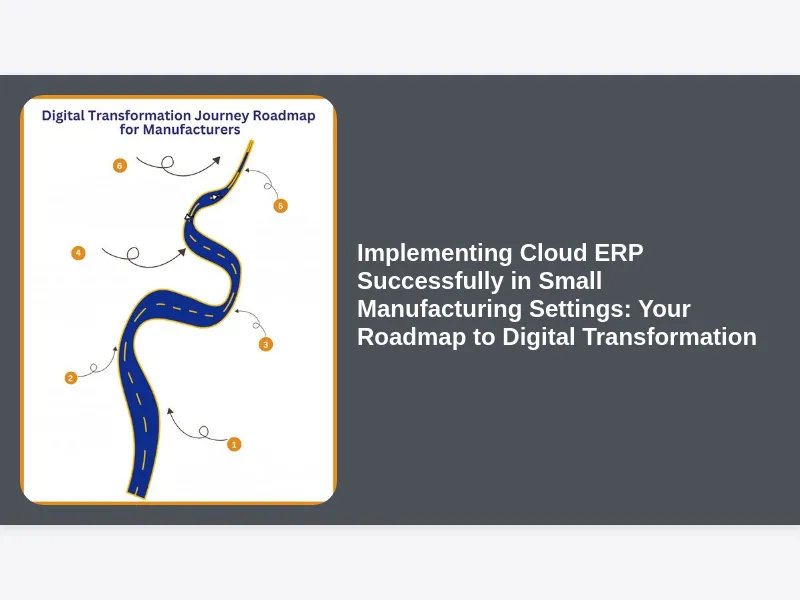
For small manufacturing businesses, the idea of digital transformation can seem daunting, a complex maze navigated only by larger enterprises with vast IT budgets. Yet, the reality is that cloud-based Enterprise Resource Planning (ERP) systems are no longer an exclusive club for the giants. In fact, they offer an incredible lifeline for small manufacturers looking to streamline operations, enhance efficiency, and compete more effectively in today’s fast-paced global market. The journey to implementing Cloud ERP successfully in small manufacturing settings isn’t without its challenges, but with the right strategy and understanding, it’s entirely achievable and profoundly rewarding.
This comprehensive guide will walk you through every critical aspect, from the initial spark of an idea to the sustained success of a fully integrated cloud ERP system. We’ll explore why cloud ERP is a game-changer for small manufacturers, how to navigate the selection process, manage the implementation, and ultimately, harness its power to drive growth and profitability.
The Urgent Need for Digital Transformation in Small Manufacturing
Let’s be honest, the traditional ways of running a manufacturing business – spreadsheets, disparate systems, and manual processes – are becoming increasingly unsustainable. Small manufacturers often grapple with fragmented data, inefficient workflows, and a lack of real-time visibility into their operations. This leads to missed deadlines, inaccurate inventory counts, poor customer service, and ultimately, lost revenue. The competitive landscape demands agility, precision, and the ability to adapt quickly.
Without a unified system, critical information about orders, production, inventory, and finances remains siloed. Imagine trying to make informed decisions about production schedules or purchasing raw materials when your inventory data is a week old, or your sales forecasts are based on gut feelings rather than concrete trends. This disjointed approach is not just inefficient; it’s a significant bottleneck to growth and innovation. Embracing digital tools isn’t just about keeping up; it’s about gaining a competitive edge.
The current economic climate, with its supply chain disruptions and fluctuating demand, has only amplified the pressure on small manufacturers. Those relying on outdated methods found themselves particularly vulnerable. The ability to quickly pivot, gain insights into true costs, and manage resources optimally became not just a luxury but a necessity for survival. This recognition forms the bedrock of why so many small manufacturing leaders are now actively exploring comprehensive solutions like Cloud ERP.
It’s time to move beyond reactive problem-solving and towards proactive strategic planning. A successful Cloud ERP implementation offers that pathway, integrating various business functions into a single, cohesive platform. It’s about empowering your team with the right information at the right time, fostering collaboration, and significantly reducing operational friction across the board. The initial investment, when viewed through the lens of long-term strategic advantage, becomes a compelling proposition for any forward-thinking small manufacturing enterprise.
Understanding Cloud ERP: A Game-Changer for Small Businesses
So, what exactly is Cloud ERP, and why is it particularly well-suited for small manufacturing settings? At its core, ERP (Enterprise Resource Planning) is a suite of integrated software applications that manage core business processes, from finance and human resources to manufacturing, supply chain, services, procurement, and more. When we add “Cloud” to the mix, it means this software is hosted and managed by a third-party provider and accessed over the internet, rather than being installed and run on servers located in your own facility.
This “Software as a Service” (SaaS) model dramatically shifts the traditional ERP paradigm. Instead of large upfront investments in hardware, software licenses, and IT infrastructure, small manufacturers pay a recurring subscription fee, usually monthly or annually. This significantly lowers the barrier to entry, making sophisticated enterprise-grade technology accessible to businesses that previously couldn’t afford it. It’s like moving from owning a fleet of expensive private jets to subscribing to a highly efficient and well-maintained airline service.
For small manufacturing businesses, this translates into immediate benefits. You no longer need a dedicated IT team to manage servers, perform backups, or install updates. The cloud provider handles all of that, ensuring your system is always up-to-date, secure, and available. This frees up valuable internal resources to focus on what they do best: designing, producing, and delivering quality products. The shift from a capital expenditure (CapEx) model to an operational expenditure (OpEx) model also offers significant financial flexibility.
Beyond cost and management, cloud ERP inherently offers flexibility and scalability. As your small manufacturing business grows, your ERP system can easily scale to accommodate increased users, transaction volumes, or new modules without major hardware upgrades. This agile nature is crucial for businesses operating in dynamic markets, allowing them to adapt their technological infrastructure to evolving business needs quickly and efficiently.
Tailored Benefits of Cloud ERP for Small Manufacturing Settings
The advantages of implementing Cloud ERP successfully in small manufacturing settings are numerous and directly address many of the unique challenges faced by these businesses. One of the most significant benefits is enhanced real-time visibility. Imagine knowing the exact status of every order, every machine, and every piece of inventory at any given moment. Cloud ERP provides this holistic view, breaking down information silos that plague traditional systems. This real-time data empowers better decision-making, from production planning to purchasing.
Another critical benefit is improved operational efficiency. By automating routine tasks and standardizing workflows across different departments, Cloud ERP reduces manual errors and frees up employees from tedious, repetitive work. For a small manufacturer, where every minute and every employee counts, this efficiency gain is invaluable. Processes like order processing, bill of materials (BOM) management, production scheduling, and financial reporting become streamlined, allowing your team to focus on higher-value activities.
Cost reduction is also a compelling factor. While there’s an investment, cloud ERP often leads to significant savings in the long run. Beyond the lower upfront IT infrastructure costs, improved inventory management minimizes waste and carrying costs. Better production planning reduces overtime and optimizes machine utilization. Even seemingly small improvements in efficiency across the board accumulate into substantial savings, directly impacting the bottom line of a small manufacturing operation.
Furthermore, cloud ERP enhances customer satisfaction. With integrated sales, production, and shipping data, small manufacturers can provide more accurate lead times, track orders effectively, and respond to customer inquiries much faster. This improved responsiveness builds trust and fosters stronger customer relationships, which are vital for sustained business growth. The ability to deliver on promises consistently is a powerful differentiator in a competitive market, solidifying your reputation.
Finally, compliance and security are often major concerns, especially for smaller businesses lacking dedicated security expertise. Cloud ERP providers invest heavily in robust security measures and ensure compliance with various industry standards. This level of security and compliance would be prohibitively expensive for most small manufacturers to achieve on their own, offering peace of mind and reducing regulatory risks.
Assessing Your Readiness: Are You Prepared for a Cloud ERP Journey?
Before diving headfirst into vendor demos and feature comparisons, a crucial first step for implementing Cloud ERP successfully in small manufacturing settings is to conduct a thorough internal readiness assessment. This isn’t just about financial capacity; it’s about understanding your current operational landscape, identifying pain points, and gauging your organization’s cultural willingness to embrace change. Without this introspection, even the best ERP system can fall flat.
Start by meticulously documenting your existing processes across all departments: sales, engineering, production, inventory, procurement, finance, and shipping. Where are the inefficiencies? What data is hard to access? Which tasks are still manual and prone to error? Gathering this information isn’t about blaming existing systems or people; it’s about building a clear picture of what needs improvement and how an ERP system can address those specific challenges. Engage key stakeholders from each department in this exercise, as their insights will be invaluable.
Beyond process analysis, evaluate your current technological infrastructure. While cloud ERP reduces the need for on-premises servers, a stable internet connection is paramount. Do you have reliable broadband? Are your existing workstations adequate? While some cloud ERPs are lighter on client-side requirements, understanding your current state helps set realistic expectations and identify any necessary upgrades to support the new system effectively.
Perhaps most importantly, assess your organizational culture and your team’s openness to change. Implementing an ERP system is not merely a technological upgrade; it’s a fundamental shift in how people work and interact with information. Resistance to change is common, and it can derail even the most well-planned implementation. Identifying potential champions within your team, as well as anticipating areas of resistance, allows you to proactively develop strategies for communication, training, and change management.
Ultimately, this readiness assessment serves as a foundational step. It helps define your specific needs, articulate your objectives, and build a compelling internal case for change. It ensures that when you begin evaluating ERP solutions, you do so with a clear understanding of your requirements and a realistic perspective on the journey ahead, setting the stage for a smoother and more successful transition.
Building a Robust Business Case: Demonstrating ROI for Small Manufacturers
For many small manufacturing owners, the investment in a Cloud ERP system can feel significant, prompting the critical question: “What’s the return on this investment?” Building a robust business case is essential not just for securing budget approval but also for aligning internal stakeholders and demonstrating the tangible value of implementing Cloud ERP successfully in small manufacturing settings. This involves quantifying both the direct cost savings and the indirect benefits.
Begin by identifying the specific problems and inefficiencies uncovered during your readiness assessment and assigning a measurable cost to them. For example, what is the cost of inaccurate inventory leading to stockouts or excess inventory? What’s the cost of production delays due to poor scheduling? How much time is spent on manual data entry and reconciliation across disparate systems? Assigning a dollar value to these “pain points” makes the case for change much more concrete and compelling.
Next, project the potential gains from a new Cloud ERP system. This includes direct savings from reduced labor costs due to automation, lower inventory carrying costs, improved purchasing leverage, and fewer errors. But don’t stop there. Consider the indirect benefits: faster time-to-market for new products, improved customer satisfaction leading to repeat business, enhanced data security reducing risk, and better compliance reducing potential fines. These often represent significant long-term value, even if harder to quantify precisely in monetary terms.
Factor in the Total Cost of Ownership (TCO). While Cloud ERP reduces upfront hardware costs, remember to include subscription fees, implementation services (consulting, training), data migration efforts, and any necessary upgrades to your internet infrastructure or client devices. Compare this TCO over a 3-5 year period against the projected savings and benefits. This comprehensive view helps to justify the investment by showing a clear positive net impact on your financial performance.
Finally, present your business case with a clear roadmap. Outline the anticipated timeline for implementation, the key milestones, and the expected outcomes at each stage. Emphasize how the Cloud ERP will not just solve current problems but also position your small manufacturing business for future growth and scalability. A well-articulated business case transforms the ERP decision from a perceived cost into a strategic investment that drives profitability and secures your future competitiveness.
Selecting the Right Cloud ERP Vendor and Solution: A Tailored Approach
Choosing the correct Cloud ERP vendor and solution is arguably the most critical decision for implementing Cloud ERP successfully in small manufacturing settings. This isn’t a one-size-fits-all process; what works for a large enterprise may not suit your specific needs, budget, or operational complexity. A tailored approach is paramount, focusing on solutions built with small to medium-sized manufacturers in mind.
Start by leveraging the detailed requirements gathered during your readiness assessment. Create a comprehensive Request for Proposal (RFP) or a detailed requirements checklist. This document should outline your specific functional needs (e.g., strong production planning, robust inventory control, comprehensive financial reporting, quality management features), technical requirements (e.g., integration capabilities, mobile access), and non-functional requirements (e.g., security protocols, support availability, training options). This structured approach ensures you’re comparing apples to apples across different vendors.
When evaluating vendors, look beyond just the feature list. Consider the vendor’s experience with small manufacturing businesses. Do they have case studies or testimonials from companies similar to yours? A vendor who understands the nuances of discrete manufacturing, job shops, or process manufacturing will offer more relevant solutions and support. Investigate their implementation methodology – is it agile and suitable for smaller projects, or designed for multi-year, large-scale deployments?
Pay close attention to the scalability and flexibility of the solution. Your small manufacturing business today might be a medium-sized one in a few years. Can the ERP system grow with you? Can you easily add new modules or users as your needs evolve? Furthermore, consider the ease of customization versus configuration. For small manufacturers, out-of-the-box functionality with strong configuration options is generally preferable to extensive customization, which can be costly and difficult to maintain.
Finally, thoroughly investigate the vendor’s support model and training offerings. What kind of ongoing support is included in the subscription? Are there active user communities? How accessible and responsive is their technical support? Comprehensive training for your team is non-negotiable for successful user adoption. The right vendor will feel like a partner, not just a software provider, offering guidance and support throughout your entire ERP journey and beyond.
Data Migration Strategy: The Backbone of a Smooth Transition
One of the most daunting aspects of implementing Cloud ERP successfully in small manufacturing settings is the process of data migration. Moving your historical and operational data from disparate legacy systems, spreadsheets, and manual records into a new, integrated ERP platform requires meticulous planning and execution. A poorly managed data migration can lead to significant delays, data inaccuracies, and a loss of trust in the new system.
The first step is a thorough data audit. Identify all sources of critical data: customer information, vendor details, product master data (BOMs, routings), inventory levels, historical transactions, open orders, and financial records. Assess the quality and completeness of this data. Be prepared to discover inconsistencies, duplicates, and outdated information. Data cleansing, often a time-consuming but essential task, involves correcting, standardizing, and deduplicating your data to ensure its integrity before migration.
Next, develop a detailed data mapping strategy. This involves identifying how data fields in your old systems correspond to the data fields in the new Cloud ERP. This mapping needs to be precise, as misalignments can lead to incorrect reporting and operational errors. Work closely with your ERP implementation partner on this step, as they will have expertise in their system’s data structure and best practices for migration.
The actual migration typically involves several phases: extraction, transformation, and loading (ETL). Data is extracted from source systems, transformed to fit the new ERP’s format and cleansed, and then loaded into the new system. It’s crucial to perform test migrations with sample data early in the process. This allows you to identify and resolve issues, refine your mapping, and validate the integrity of the migrated data without impacting live operations.
Finally, establish a clear cutover plan for the final data migration. This dictates when and how the old systems will be shut down and the new ERP system will become the single source of truth. Plan for potential downtime and ensure your team understands the process. Comprehensive testing of the migrated data post-load is non-negotiable. This meticulous approach to data migration, though arduous, ensures that your new Cloud ERP system starts with a clean and reliable foundation, empowering accurate reporting and efficient operations from day one.
Customization vs. Configuration: Striking the Right Balance for Small Manufacturers
When considering implementing Cloud ERP successfully in small manufacturing settings, a critical discussion often revolves around customization versus configuration. This distinction is vital because it impacts not only the cost and complexity of your implementation but also the long-term maintainability and upgrade path of your system. For small manufacturers, understanding this balance is key to avoiding unnecessary pitfalls.
Configuration involves adapting the ERP system’s existing features and settings to meet your specific business processes without altering the core code. This might include setting up specific workflows, defining user roles and permissions, creating custom reports using built-in tools, or adjusting parameter settings. Configuration is generally less expensive, quicker to implement, and does not interfere with future software updates from the vendor. It leverages the inherent flexibility designed into modern cloud ERP solutions.
Customization, on the other hand, involves modifying the core code or adding entirely new features that are not available out-of-the-box, even through configuration. This could mean developing a unique module, deeply altering specific business logic, or creating integrations that require significant coding. While customization can provide a perfect fit for unique business processes, it comes with significant downsides: increased development costs, longer implementation times, potential challenges during upgrades (as customizations may break with new versions), and reliance on specific developers or consultants.
For small manufacturers, the general recommendation is to prioritize configuration over customization whenever possible. Cloud ERP solutions, especially those designed for SMBs, often come with robust, industry-specific functionalities that can accommodate most common manufacturing processes with minimal configuration. Adapting your processes slightly to align with the ERP’s best practices can often be more cost-effective and sustainable than forcing the software to conform exactly to every legacy process.
Before opting for customization, thoroughly evaluate if a particular requirement is truly unique and provides a significant competitive advantage, or if it’s merely a preference based on old habits. Work closely with your implementation partner to explore all configuration options first. If customization is absolutely necessary, ensure it is carefully documented, justified by a strong business case, and built with future upgrades in mind. Striking this balance ensures your ERP system remains agile, affordable, and easy to maintain as your business evolves.
Integration with Existing Systems: Harmonizing Your Digital Ecosystem
Even with a comprehensive Cloud ERP, it’s rare for a small manufacturing setting to replace every single piece of existing software. Therefore, a crucial aspect of implementing Cloud ERP successfully in small manufacturing settings involves strategizing how your new ERP will integrate with other vital systems that you either cannot or choose not to replace immediately. This creates a harmonious digital ecosystem where data flows seamlessly, avoiding new information silos.
Common systems that small manufacturers often need to integrate with their ERP include Computer-Aided Design (CAD) or Product Lifecycle Management (PLM) software for engineering data, Customer Relationship Management (CRM) systems for sales and customer service, shop floor control systems (MES), time and attendance tracking, and specialized shipping software. The goal of integration is to ensure that data entered in one system automatically updates relevant records in the ERP, and vice-versa, eliminating manual data entry and ensuring data consistency.
Before selecting your ERP, inquire about its integration capabilities. Does the vendor offer pre-built connectors or APIs (Application Programming Interfaces) for popular third-party applications? Pre-built connectors are typically the easiest and most cost-effective option. If direct connectors aren’t available, explore the ERP’s API documentation to understand the feasibility and complexity of building custom integrations. Your implementation partner will play a vital role in assessing these technical requirements.
Prioritize your integrations based on business criticality. Which data flows are most essential for immediate operational efficiency and decision-making? For example, integrating sales orders from your CRM into ERP for production planning, or BOM data from CAD into ERP for manufacturing, might be top priorities. Tackle these first, and then address less critical integrations in subsequent phases, if necessary. This phased approach helps manage complexity and allows your team to adapt gradually.
Finally, remember that integration isn’t a “set it and forget it” task. As your business evolves, or as integrated systems update, your integrations may need maintenance. Plan for ongoing monitoring and support for your integrated landscape. A well-integrated Cloud ERP system acts as the central nervous system of your small manufacturing operation, ensuring that all parts of your digital ecosystem communicate effectively, leading to greater accuracy, efficiency, and real-time insights across the board.
Change Management and User Adoption: The Human Element of Success
Technology can be brilliant, but its ultimate success hinges on people. This is especially true when implementing Cloud ERP successfully in small manufacturing settings. Overlooking the human element—the impact on your employees, their workflows, and their comfort levels—is one of the most common reasons for ERP implementation failure. Effective change management and a focus on user adoption are not optional; they are paramount.
Begin by communicating openly and transparently about the upcoming ERP implementation well in advance. Explain why the change is happening, what benefits it will bring to the business, and most importantly, how it will make their jobs easier or more effective. Address concerns and fears proactively. Employees often worry about job security, learning new systems, or losing established routines. Acknowledge these anxieties and provide reassurance and support.
Identify “change champions” or “super-users” within each department early on. These are employees who are technologically adept, respected by their peers, and enthusiastic about the new system. Involve them in the planning, testing, and training phases. They can act as advocates, answering questions, providing informal support, and fostering a positive attitude towards the new ERP. Their peer-to-peer influence is often more effective than top-down mandates.
Comprehensive and ongoing training is non-negotiable. Don’t assume your employees will intuitively understand a new complex system. Develop a tailored training program that goes beyond basic functionality, focusing on how the ERP specifically supports their daily tasks and roles. Use a variety of training methods—classroom sessions, online modules, hands-on workshops, and easily accessible reference materials. Plan for refresher courses and ongoing support after go-live, as learning continues beyond the initial rollout.
Finally, foster a culture of feedback. Encourage employees to voice their experiences, identify areas for improvement, and share successes. Regular check-ins, surveys, and dedicated communication channels can help monitor user adoption and address any lingering issues promptly. When employees feel heard and supported, they are much more likely to embrace the new system and contribute to its long-term success, transforming potential resistance into enthusiastic participation.
Project Management and Implementation Phases: A Structured Approach
Implementing Cloud ERP successfully in small manufacturing settings demands a structured, well-managed project. Even for smaller deployments, treating the ERP rollout as a formal project with clear phases, roles, and responsibilities is crucial. A robust project management approach minimizes risks, keeps the project on track, and ensures the desired outcomes are met within budget and timeline constraints.
The journey typically begins with a Discovery and Planning Phase. This is where your implementation partner deep dives into your specific business processes, validates the requirements you’ve identified, and helps you refine your scope. Detailed project plans, timelines, resource allocation, and key performance indicators (KPIs) for success are established. This phase sets the foundation for everything that follows, ensuring mutual understanding and alignment.
Next comes the Design and Configuration Phase. Based on the planning, the ERP system is configured to match your defined processes. This involves setting up master data, configuring workflows, developing necessary reports, and setting up security roles. This phase often includes prototyping key functionalities, allowing your team to see how their processes will work in the new system and provide feedback, ensuring a fit-for-purpose solution.
The Data Migration and Integration Phase runs concurrently or sequentially, as discussed earlier. This is where your cleansed and mapped data is moved into the new ERP, and critical integrations with other systems are built and tested. Rigorous testing of data integrity and integration points is paramount here to avoid issues down the line.
Following these, the Testing and Training Phase is critical. User Acceptance Testing (UAT) involves your actual end-users performing their daily tasks within the configured system, verifying that it meets their needs and functions as expected. Any bugs or issues are identified and resolved. Concurrently, comprehensive training programs are delivered to all users, equipping them with the knowledge and skills needed for the new system.
Finally, the Go-Live and Post-Implementation Support Phase. This is the moment of truth where the new Cloud ERP officially becomes your system of record. It’s followed by intensive post-go-live support, monitoring the system, addressing any immediate issues, and providing ongoing user assistance. A well-managed project adheres to these phases, adapting the level of detail to the complexity of your specific small manufacturing environment.
Testing and Go-Live Strategy: Ensuring a Smooth Transition
The moments leading up to and immediately following the go-live of your new Cloud ERP are critical. A well-thought-out testing and go-live strategy is vital for implementing Cloud ERP successfully in small manufacturing settings, ensuring that the system functions as expected and that your business operations continue smoothly. This phase is about minimizing disruption and building confidence in the new platform.
Testing should be multi-layered and comprehensive. Begin with individual module testing (unit testing) to ensure each component works correctly in isolation. Follow this with integrated system testing, verifying that data flows correctly between modules (e.g., a sales order generates a production order, which impacts inventory and finance). Finally, User Acceptance Testing (UAT) is paramount. This involves actual end-users performing realistic day-to-day tasks in a test environment with migrated data. UAT identifies usability issues, confirms process flows, and builds user familiarity and confidence. Document all issues found during testing and ensure they are resolved before go-live.
Your go-live strategy needs to be meticulously planned. Will it be a “big bang” approach, where all old systems are replaced simultaneously? Or a phased rollout, introducing modules or departments incrementally? For small manufacturers, a phased approach can often be less risky, allowing for easier troubleshooting and adaptation. However, it can also extend the implementation timeline and require temporary interfaces between old and new systems. Discuss these options thoroughly with your implementation partner to determine the best fit for your risk tolerance and operational needs.
Crucially, define a clear “cutover plan.” This outlines the precise steps and timeline for shutting down old systems, performing the final data migration, and bringing the new ERP online. This often requires a period of planned downtime, usually over a weekend, to minimize impact on production. Ensure everyone involved knows their role and the exact sequence of events. Have contingency plans in place for unforeseen issues, including a rollback strategy if necessary.
Post-go-live, intensive support is essential. Designate a team, possibly including your “super-users” and implementation partner, to be available immediately to address questions, troubleshoot problems, and provide on-the-spot guidance. Monitor system performance and key business processes closely. The initial weeks and months are where the real learning and fine-tuning occur, making dedicated support vital for solidifying user adoption and realizing the full benefits of your new Cloud ERP.
Post-Implementation & Optimization: Continuous Improvement with Cloud ERP
The launch of your Cloud ERP system isn’t the finish line; it’s just the beginning. For implementing Cloud ERP successfully in small manufacturing settings, the post-implementation phase is critical for optimization, continuous improvement, and truly realizing the long-term benefits. Think of it as cultivating a garden rather than simply planting seeds – ongoing care is needed for robust growth.
In the immediate weeks and months after go-live, focus on stabilizing the system and refining processes. There will invariably be minor issues, user questions, and workflow adjustments that emerge as people become more familiar with the new system in a live environment. Establish a clear process for users to report issues and suggest improvements. Work with your implementation partner to address these promptly, making small configurations or providing additional training where needed. This responsive support builds user trust and reinforces adoption.
Beyond stabilization, look for opportunities for continuous optimization. Cloud ERP systems are powerful tools, and it’s common for businesses not to leverage all their capabilities from day one. Regularly review your processes and reports. Are there bottlenecks that could be further streamlined with existing ERP features? Are there additional modules you could activate (e.g., advanced planning and scheduling, quality management) that would provide even greater value? Many cloud ERPs offer business intelligence tools; are you using them to their full potential to gain actionable insights?
Regular training and knowledge sharing are also key aspects of post-implementation success. As new features are released by your cloud ERP vendor (often automatically updated in the cloud model), ensure your team is aware of them and understands how to utilize them. Conduct refresher training sessions, create internal knowledge bases, and encourage peer-to-peer learning. Keeping your team proficient ensures they are consistently getting the most out of the system.
Finally, establish a governance model for your ERP system. Who is responsible for ongoing maintenance, security, and future enhancements? How will new feature requests or process changes be evaluated and implemented? A clear ownership structure ensures that your Cloud ERP remains a dynamic tool that adapts and grows with your small manufacturing business, continuously driving efficiency and competitive advantage.
Measuring Success: KPIs for Your Cloud ERP Investment
How do you truly know if you are implementing Cloud ERP successfully in small manufacturing settings? The answer lies in establishing clear Key Performance Indicators (KPIs) and regularly measuring them against your pre-implementation benchmarks and business objectives. Without concrete metrics, it’s impossible to gauge the impact of your investment and identify areas for further improvement.
Start by revisiting the business case you built before implementation. What were the specific problems you aimed to solve, and what measurable improvements did you anticipate? Your KPIs should directly reflect these objectives. For a small manufacturer, common KPIs fall into several categories:
- Operational Efficiency:
- On-time delivery rate: Has it improved due to better scheduling and visibility?
- Inventory accuracy: How close are your system counts to physical counts?
- Lead time reduction: From order placement to product shipment.
- Production yield: Reduced scrap and rework.
- Cycle time reduction: Time taken for specific manufacturing processes.
- Machine utilization rates: Are assets being used more effectively?
- Financial Performance:
- Cost of goods sold (COGS): Has better cost tracking reduced it?
- Working capital optimization: Reduced inventory holding costs.
- Accounts receivable days: Faster collection cycles.
- Return on Investment (ROI): Tracking against your initial business case.
- Gross profit margins: Reflecting overall efficiency and cost control.
- Data Quality & Access:
- Data accuracy: Reduced manual errors and reconciliation time.
- Report generation time: How quickly can you get critical business insights?
- Availability of real-time data: For decision-making.
- User Adoption:
- System usage rates: How frequently and extensively are users engaging with the ERP?
- Training effectiveness: Feedback from users on their proficiency.
- Reduction in manual spreadsheets: A clear indicator of system reliance.
It’s not enough to just track these numbers; you need to analyze them. Compare post-ERP metrics to pre-ERP benchmarks. Identify trends, celebrate successes, and pinpoint areas where the ERP might not be delivering as expected, prompting further investigation or optimization efforts. Regularly review these KPIs with your team and leadership, demonstrating the tangible value that your Cloud ERP is bringing to your small manufacturing business and guiding its evolution.
Overcoming Common Pitfalls: Navigating ERP Challenges
Even with meticulous planning, implementing Cloud ERP successfully in small manufacturing settings can present its fair share of challenges. Being aware of common pitfalls allows you to proactively mitigate risks and navigate bumps in the road more effectively. Forewarned is forearmed when undertaking a transformative project of this magnitude.
One of the most frequent pitfalls is scope creep. This happens when new requirements are added to the project after the initial scope has been defined, leading to budget overruns and timeline delays. To combat this, establish a strict change control process. Any new requirement must be formally reviewed, justified, and assessed for its impact on cost and schedule before being approved. Stick to your core requirements for the initial go-live, and defer less critical enhancements to future phases.
Data quality issues are another major stumbling block. As discussed in the data migration section, starting with dirty or incomplete data can undermine the integrity of your new ERP system and lead to distrust among users. Don’t underestimate the time and effort required for data cleansing and validation. It’s a foundational step that, if rushed, will cause significant problems later on.
Lack of executive sponsorship and insufficient user buy-in can cripple an ERP project. If leadership isn’t visibly committed and actively championing the change, employees will sense a lack of seriousness and resist adoption. Similarly, if end-users aren’t adequately involved, trained, and supported, they won’t use the system effectively. Ensure strong, consistent communication from the top, and empower key users throughout the process.
Underestimating the resources required, both financially and in terms of human effort, is also common. Beyond subscription fees, factor in consulting services, training costs, internal staff time dedicated to the project, and potential upgrades to your network or client devices. Don’t stretch your team too thin; recognize that participating in an ERP implementation is a significant commitment.
Finally, poor project management can derail the entire initiative. A lack of clear milestones, responsibilities, communication channels, and risk management can lead to chaos. Ensure you have a dedicated project manager, either internal or from your implementation partner, who has the experience and authority to guide the project effectively. By recognizing and actively planning against these common challenges, your small manufacturing business can significantly increase its chances of a successful Cloud ERP implementation.
Security and Compliance Considerations for Cloud ERP
For small manufacturing settings, data security and industry compliance are not just IT concerns; they are fundamental to business operations and reputation. When implementing Cloud ERP successfully in small manufacturing settings, entrusting your critical business data to a cloud provider raises legitimate questions about how that data will be protected and whether it meets regulatory requirements. Addressing these concerns head-on is crucial.
First and foremost, choose a cloud ERP vendor with a proven track record in security. Inquire about their data centers, encryption protocols (both at rest and in transit), access controls, and regular security audits. Reputable cloud ERP providers invest heavily in enterprise-grade security infrastructure that often far exceeds what a small manufacturer could afford or manage on-premises. They typically employ dedicated security teams and implement best practices such as multi-factor authentication, intrusion detection, and disaster recovery plans.
Understand your own responsibilities versus the vendor’s. While the cloud provider secures the infrastructure, you are generally responsible for securing your data within the application (e.g., proper user access controls, strong passwords) and protecting your endpoints (user devices). This shared responsibility model is important to grasp, ensuring no gaps in your security posture.
Compliance is another significant aspect. Depending on your industry (e.g., medical devices, aerospace, food production) or the regions you operate in, you may need to adhere to specific regulations (e.g., ISO, FDA, ITAR, GDPR, CCPA). Ask potential ERP vendors about their certifications and how their system can support your compliance needs. Does it provide audit trails, electronic signatures, or robust quality management features necessary for your industry? The right ERP system can actually simplify compliance by centralizing data and standardizing processes.
Finally, review the vendor’s service level agreements (SLAs) regarding data availability and backup. What guarantees do they offer for uptime? How frequently is your data backed up, and what is the recovery process in case of a data loss incident? Understanding these assurances provides peace of mind and outlines the vendor’s commitment to protecting your valuable information. Proactive engagement on these security and compliance fronts ensures that your Cloud ERP becomes a secure and compliant backbone for your manufacturing operations.
Scalability and Future Growth: How Cloud ERP Supports Expansion
One of the most compelling reasons for implementing Cloud ERP successfully in small manufacturing settings is its inherent scalability and ability to support future growth. Unlike traditional on-premises systems that often require significant hardware upgrades and complex reconfigurations to handle increased loads, cloud ERP is designed to grow with your business organically and efficiently.
Imagine your small manufacturing business experiences a sudden surge in orders, decides to launch a new product line, or opens a second facility. With a cloud ERP, accommodating these changes is typically much simpler. You can easily add more users, activate new modules (e.g., advanced warehousing, multi-company accounting, field service management), or expand into new geographic regions without needing to purchase and install new servers, license additional software, or increase your internal IT footprint. The cloud provider handles the underlying infrastructure scaling, allowing you to focus on business expansion.
This agility is a significant competitive advantage. It means your technology won’t become a bottleneck to your growth ambitions. If you secure a major contract that doubles your production volume, your Cloud ERP system can often adapt by increasing subscription tiers or resources, ensuring your operational backbone can keep pace with demand. This pay-as-you-grow model makes sophisticated enterprise capabilities accessible and affordable for scaling businesses.
Furthermore, cloud ERP often offers built-in flexibility to adapt to evolving business processes. As your manufacturing operations mature, you might adopt lean manufacturing principles, move towards more automated production, or diversify your product offerings. A robust cloud ERP can be reconfigured or enhanced to support these new approaches without requiring a complete system overhaul. The ability to integrate with new technologies, like IoT devices on the shop floor or advanced analytics platforms, also ensures your ERP remains relevant and powerful for future innovation.
By choosing a scalable cloud ERP solution, small manufacturers are not just investing in current efficiency but also future-proofing their operations. It empowers them to seize growth opportunities with confidence, knowing their core systems can seamlessly support increasing complexity and demand, transforming growth from a logistical nightmare into a strategic advantage.
Cost Management and Total Cost of Ownership (TCO)
While the appeal of Cloud ERP for implementing Cloud ERP successfully in small manufacturing settings often starts with its lower upfront costs, it’s vital to have a comprehensive understanding of the total cost of ownership (TCO). Focusing solely on subscription fees can lead to surprises down the line. A realistic TCO analysis ensures you budget appropriately and accurately assess the long-term financial benefits.
The TCO for a Cloud ERP includes several components. The most obvious are the subscription fees, which are typically paid monthly or annually and cover software access, hosting, maintenance, and basic support. These fees can vary significantly based on the number of users, the specific modules selected, and the level of functionality required. Always clarify what is included in the base subscription and what constitutes an add-on.
Beyond subscriptions, implementation costs are a significant factor. This includes fees for your ERP implementation partner’s services, such as project management, process consulting, system configuration, data migration, integration development, and initial training. These services are crucial for a successful rollout and represent a substantial portion of the initial investment. Ensure your contract clearly outlines the scope of these services.
Training costs might be separate from implementation fees. While some basic training is usually included, specialized or ongoing training for new hires or advanced features might incur additional expenses. Budget for this to ensure your team remains proficient. Data migration and cleansing can also be an internal cost in terms of staff time, or an external cost if you hire specialists. Do not underestimate the resources required for these critical tasks.
Finally, consider ongoing operational costs that might not be immediately apparent. These could include costs for advanced support tiers, specialized reporting tools, custom integration maintenance, or third-party add-on applications that extend ERP functionality. While cloud ERP generally reduces internal IT infrastructure costs, ensure your existing internet service is robust enough to handle the demands of a cloud-based system. By meticulously accounting for all these elements, small manufacturers can develop an accurate TCO, avoid unexpected expenses, and build a stronger financial justification for their Cloud ERP investment, turning a potential perceived cost into a strategic financial decision.
Key Success Factors: A Checklist for Small Manufacturing ERP Adoption
As we’ve explored the intricate journey of implementing Cloud ERP successfully in small manufacturing settings, it’s clear that success hinges on a combination of strategic planning, thoughtful execution, and proactive management. To summarize, here’s a checklist of key success factors that every small manufacturer should keep in mind:
- Clear Objectives and Business Case: Define why you need an ERP, what problems it will solve, and how you will measure its ROI. This anchors your entire project.
- Strong Executive Sponsorship: Leadership must visibly champion the project, allocate necessary resources, and communicate its importance throughout the organization.
- Dedicated Project Team & Manager: Appoint capable individuals, either internally or externally, to lead and manage the project, ensuring clear roles, responsibilities, and accountability.
- Thorough Requirements Gathering: Understand your current processes and pain points in detail to ensure the chosen ERP truly meets your operational needs.
- Strategic Vendor Selection: Choose a Cloud ERP solution and partner that deeply understands small manufacturing, offering scalable, industry-relevant functionality, and reliable support.
- Prioritize Configuration Over Customization: Leverage the out-of-the-box power of the ERP and adapt your processes where sensible, minimizing costly and complex customizations.
- Meticulous Data Migration Strategy: Plan for comprehensive data cleansing, mapping, and testing to ensure your new system starts with accurate and reliable information.
- Robust Change Management & Communication: Prepare your team for the change, communicate openly, address concerns, and foster a positive attitude towards the new system.
- Comprehensive User Training: Invest in tailored, hands-on training for all users, focusing on their specific roles and workflows, and provide ongoing support.
- Rigorous Testing: Conduct thorough unit, integration, and User Acceptance Testing (UAT) to identify and resolve issues before go-live, building confidence in the system.
- Well-Defined Go-Live & Support Plan: Plan the transition carefully, provide intensive post-go-live support, and establish clear channels for issue resolution and ongoing assistance.
- Focus on Continuous Optimization: View ERP as an evolving tool. Regularly review processes, leverage new features, and seek opportunities to further enhance efficiency and value.
- Commitment to Security and Compliance: Partner with a vendor who prioritizes robust security and ensure your internal practices align with data protection and industry regulations.
By consciously addressing each of these factors, small manufacturing businesses can transform the daunting prospect of ERP implementation into a strategic advantage, paving the way for digital transformation and sustained growth.
Conclusion: Empowering Small Manufacturing Through Cloud ERP
The journey of implementing Cloud ERP successfully in small manufacturing settings is undoubtedly a significant undertaking, requiring investment, commitment, and a willingness to embrace change. However, as we’ve explored, the rewards far outweigh the challenges. For small manufacturers operating in an increasingly complex and competitive global landscape, Cloud ERP isn’t just an option; it’s rapidly becoming a fundamental requirement for agility, efficiency, and sustained growth.
By moving your core operations to the cloud, you’re not just digitizing processes; you’re gaining real-time visibility, streamlining workflows, reducing operational costs, and empowering your team with accurate, accessible data. This strategic shift allows you to move beyond reactive problem-solving, enabling proactive decision-making that drives innovation and enhances customer satisfaction. The scalability of cloud solutions means your technology infrastructure can grow seamlessly with your ambitions, ensuring your business is always poised for the next big opportunity.
While the path demands careful planning, thorough execution, and a strong partnership with your chosen vendor, the ultimate outcome is a more resilient, efficient, and profitable manufacturing enterprise. Embrace the digital transformation that Cloud ERP offers. It’s an investment not just in software, but in the future success and competitiveness of your small manufacturing business, positioning you to thrive in the modern industrial era. The time to unlock your full potential is now.