Embarking on a journey to modernize your small manufacturing business with new technology can feel like navigating uncharted waters. One of the most significant advancements making waves in the manufacturing sector is Cloud ERP – Enterprise Resource Planning systems hosted entirely in the cloud. While the promise of increased efficiency, better data insights, and reduced IT overhead is incredibly appealing, small manufacturers often face a unique set of obstacles when considering or implementing such a system. It’s a natural reaction to wonder if the benefits outweigh the potential headaches. But here’s the good news: many common challenges with Cloud ERP for small manufacturers are not only identifiable but also entirely addressable with the right strategy, knowledge, and partner.
This comprehensive guide will dive deep into these challenges, exploring the root causes, and, more importantly, providing practical, actionable strategies to overcome them. We’re here to demystify Cloud ERP, helping your small manufacturing enterprise unlock its full potential without getting bogged down by common pitfalls.
Understanding Cloud ERP for Small Manufacturing Businesses: What It Truly Offers
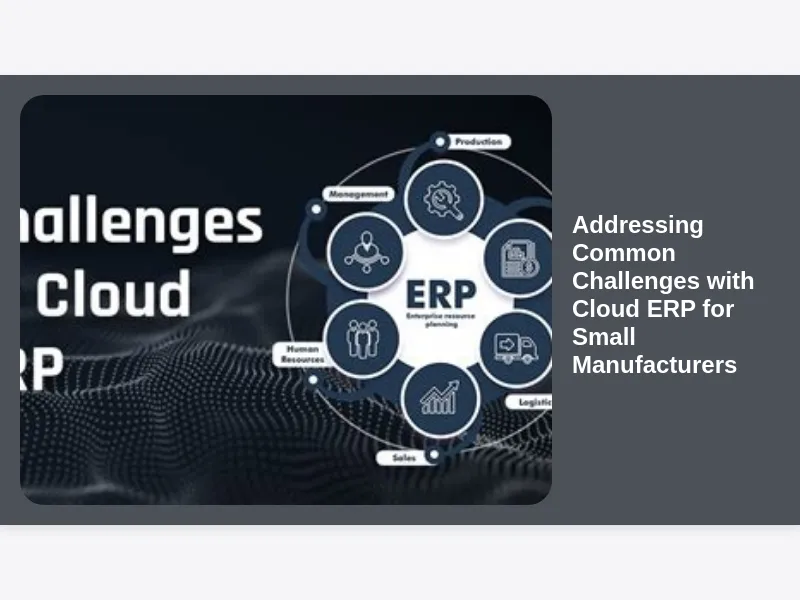
Before we delve into the hurdles, let’s briefly clarify what Cloud ERP entails, especially for the nuanced world of small-scale manufacturing. At its core, Cloud ERP is a suite of integrated applications designed to manage a manufacturer’s core business processes – from production planning and inventory control to sales, finance, human resources, and customer relationship management – all delivered over the internet. Instead of installing software on your own servers, you access it through a web browser, and the vendor manages the infrastructure. This model is particularly transformative for small manufacturers, offering agility and capabilities traditionally reserved for larger enterprises.
For a small manufacturer, Cloud ERP means having real-time visibility into your operations, from the raw material arriving at your dock to the finished product shipping out. It allows for better demand forecasting, optimized production schedules, more accurate costing, and streamlined administrative tasks. Imagine a world where your sales team knows the exact inventory levels, your production team can instantly see upcoming orders, and your finance department can track project profitability with a few clicks. That’s the promise of Cloud ERP, designed to foster growth and competitive advantage for businesses that might not have extensive IT departments or capital budgets.
The Allure of Cloud ERP for Small Manufacturers: Why Make the Leap?
Why are so many small manufacturing businesses even considering Cloud ERP if challenges exist? The answer lies in the compelling advantages it offers, which often far outweigh the initial concerns once properly addressed. For starters, Cloud ERP typically involves a subscription-based pricing model, transforming a hefty upfront capital expenditure into predictable operational expenses. This financial flexibility is a game-changer for businesses with limited capital.
Beyond cost structure, the accessibility of Cloud ERP is a major draw. Teams can access critical business data from anywhere, at any time, on any device with an internet connection. This is invaluable for production managers on the shop floor, sales teams on the road, or even owners working remotely. Furthermore, cloud vendors handle system maintenance, upgrades, and security, freeing up your team to focus on core manufacturing activities rather than IT management. This “set it and forget it” aspect of IT infrastructure is a significant relief for small businesses without dedicated IT staff. The promise of scalability – easily adding users or modules as your business grows – also makes Cloud ERP an attractive long-term solution, allowing manufacturers to adapt without costly re-implementations.
Overcoming Budgetary Constraints: Demystifying Cloud ERP Cost for Small Manufacturers
One of the most immediate concerns for any small business considering a major software investment is the cost. Small manufacturers often operate with tighter margins and less access to capital than their larger counterparts, making every dollar spent a critical decision. The perceived expense of Cloud ERP can be a significant deterrent, leading many to stick with outdated, disparate systems or even manual processes. However, a deeper look reveals that Cloud ERP, when properly evaluated, can be a highly cost-effective solution.
The key is to move beyond the sticker price and consider the total cost of ownership (TCO). While traditional on-premise ERP systems require substantial upfront investments in servers, software licenses, implementation services, and ongoing IT support, Cloud ERP typically bundles many of these into a single, predictable monthly or annual subscription fee. This eliminates the need for large capital outlays and shifts IT spending from CapEx to OpEx, which is often more favorable for small businesses. Furthermore, consider the hidden costs of not having an integrated system: inefficiencies, errors, lost opportunities, and reduced productivity. When these factors are weighed, a well-chosen Cloud ERP solution often presents a superior long-term financial picture, providing significant ROI through improved operational efficiency and decision-making.
Navigating the Implementation Maze: Simplifying Cloud ERP Deployment for Manufacturers
The thought of implementing a new ERP system can send shivers down the spine of even seasoned business owners. Small manufacturers, often lacking dedicated project managers or extensive internal IT teams, might perceive Cloud ERP implementation as a monumental, disruptive task. This perceived complexity and the fear of business interruption are significant challenges. Many envision lengthy, over-budget projects that drag on for months, pulling valuable resources away from core production activities.
However, the reality of Cloud ERP implementation, especially with modern solutions designed for small and mid-sized businesses, is often far less daunting. Cloud ERP deployments tend to be quicker and less complex than their on-premise predecessors because much of the infrastructure setup is handled by the vendor. The focus shifts to configuration, data migration, and user training. To simplify deployment, selecting a vendor with a proven track record in your specific manufacturing niche is crucial. They will understand your industry’s nuances and offer pre-configured templates or best practices that can significantly shorten the implementation timeline. Furthermore, a phased approach, where modules are rolled out incrementally, can reduce disruption, allowing your team to adapt gradually and minimize the initial shock of a complete system overhaul.
Data Migration Madness: Ensuring a Smooth Transition for Your Manufacturing Data
One of the most critical and often underestimated challenges in any ERP implementation, especially for small manufacturers, is data migration. Your existing data—customer information, product specifications, inventory levels, bills of material, historical sales, and financial records—is the lifeblood of your operation. Moving this data from various spreadsheets, legacy systems, and even paper records into a new Cloud ERP system accurately and efficiently is a huge undertaking. The fear of data loss, corruption, or incomplete transfers is very real and can stall implementation before it even begins.
The key to a smooth data migration lies in meticulous planning and preparation. Start by cleaning your existing data. This means identifying and eliminating duplicates, correcting inaccuracies, and standardizing formats before attempting to move anything. It’s a tedious but essential step that will save countless headaches later. Engage your Cloud ERP vendor or implementation partner early in this process; they can provide templates, tools, and expertise to facilitate the migration. Prioritize which data absolutely must be migrated for go-live, and which can be brought over later or archived. Don’t underestimate the time and effort required for data validation – thoroughly checking the migrated data in the new system to ensure accuracy and integrity. A well-executed data migration forms the robust foundation upon which your new Cloud ERP system will operate.
User Adoption Resistance: Getting Your Team On Board with New Cloud ERP Systems
Even the most technologically advanced and perfectly implemented Cloud ERP system is useless if your team doesn’t use it effectively. User adoption resistance is a common and often overlooked challenge for small manufacturers. Employees, accustomed to their existing routines, even if inefficient, may be hesitant to embrace new processes and learn new software. Fear of the unknown, discomfort with change, and a perception that the new system will make their jobs harder, not easier, can lead to passive resistance or outright refusal, ultimately undermining your investment in Cloud ERP.
To overcome user adoption challenges, a proactive and empathetic approach is essential. Start by involving key users from different departments in the selection and planning phases. Their input will not only help shape a system that meets their needs but also foster a sense of ownership. Comprehensive, hands-on training tailored to specific roles is crucial, moving beyond theoretical concepts to practical application. Communicate the “why” behind the change – how the new Cloud ERP system will benefit them and the business as a whole, making their daily tasks easier, more accurate, or less frustrating. Provide ongoing support and create internal champions who can assist peers. Remember, change management is an ongoing process, not a one-time event, requiring continuous communication, support, and encouragement to truly integrate the new system into your company culture.
Customization Conundrums: Balancing Flexibility and Standardization in Cloud ERP
Small manufacturers often pride themselves on unique processes, specialized products, or niche market approaches that set them apart. The fear that a standard Cloud ERP solution won’t accommodate these unique needs, or that customization will be prohibitively expensive and complex, is a significant challenge. On the one hand, you want a system that aligns with your specific operational flow; on the other, you don’t want to stray so far from the standard that upgrades become impossible or costs skyrocket. This balancing act between flexibility and standardization is a common conundrum when addressing common challenges with Cloud ERP for small manufacturers.
The key here is understanding the difference between configuration and customization. Most modern Cloud ERP systems are highly configurable, meaning you can adjust settings, workflows, and fields to match your specific processes without altering the core code. This allows for significant tailoring without the risks associated with true customization. When customization is genuinely needed for a critical competitive advantage, explore solutions that offer platform-as-a-service (PaaS) extensions or low-code/no-code development tools. These allow you to build unique applications that integrate seamlessly with the ERP without touching the underlying code, making future upgrades much smoother. Always challenge the necessity of customization; often, a slight adjustment to a business process can allow you to leverage a standard ERP feature, which is almost always a more sustainable and cost-effective approach.
Integration Headaches: Connecting Cloud ERP with Existing Manufacturing Software
Small manufacturers rarely operate in a vacuum of a single software system. They often rely on a patchwork of specialized tools: CAD software for design, MES (Manufacturing Execution Systems) for shop floor control, CRM for sales, specific accounting packages, and perhaps even legacy equipment with proprietary software. The challenge of integrating a new Cloud ERP system with these existing tools can seem daunting, raising concerns about data silos, double data entry, and inconsistent information across systems. This lack of seamless data flow can negate many of the benefits an integrated ERP system promises.
Modern Cloud ERP solutions are increasingly built with robust APIs (Application Programming Interfaces) and connectors designed to facilitate integration with other applications. When selecting a Cloud ERP, inquire about its integration capabilities and whether it offers pre-built connectors for the specific software you currently use. For more complex integrations, consider middleware or integration platform as a service (iPaaS) solutions, which act as a bridge between disparate systems, orchestrating data flow and transformations. Prioritize which integrations are critical for your daily operations and focus on those first. Remember, the goal of integration is to create a unified data landscape, eliminating manual data entry and ensuring that all departments operate with the most current and accurate information. A good integration strategy ensures your Cloud ERP truly becomes the central nervous system of your manufacturing enterprise.
Security Scares: Trusting Your Manufacturing Data in the Cloud
For small manufacturers, the idea of entrusting their sensitive business data – customer lists, intellectual property, product designs, financial records – to a third-party cloud provider can be a significant source of anxiety. Concerns about data breaches, unauthorized access, and compliance with data protection regulations are valid and must be thoroughly addressed. This challenge often stems from a lack of understanding about the robust security measures employed by reputable Cloud ERP vendors, which can sometimes surpass the security capabilities of a small manufacturer’s internal IT infrastructure.
Leading Cloud ERP providers invest heavily in cybersecurity, employing multi-layered security protocols, including advanced encryption for data at rest and in transit, intrusion detection systems, regular security audits, and adherence to industry-standard certifications (e.g., ISO 27001, SOC 2). They typically have dedicated security teams monitoring systems 24/7. When evaluating Cloud ERP solutions, thoroughly vet potential vendors on their security practices. Ask about their data center physical security, data encryption methods, disaster recovery plans, and incident response protocols. Understand who owns the data and what happens to it if you decide to switch providers. It’s also crucial for your organization to maintain strong internal security practices, such as strong passwords, multi-factor authentication, and regular employee training on data security best practices. By combining a secure vendor with your own diligent practices, you can confidently protect your manufacturing data in the cloud.
Performance Puzzles: Ensuring Speed and Reliability with Cloud ERP
A common concern among small manufacturers considering Cloud ERP is performance – specifically, worries about slow system response times, unreliable access, or interruptions due to internet connectivity issues. For a manufacturing operation where quick data access and real-time updates are often critical, any perceived lag or downtime can translate directly into production delays, decreased efficiency, and frustration among users. This challenge is particularly acute in areas with less robust internet infrastructure or for processes that require very low latency.
Addressing this challenge starts with a stable and sufficient internet connection at your manufacturing facility. Consider investing in redundant internet lines or backup cellular connectivity if uptime is absolutely critical. Beyond your own infrastructure, the performance of your Cloud ERP largely depends on the vendor’s data center infrastructure and network architecture. Look for vendors who offer geographically distributed data centers, robust load balancing, and guaranteed service level agreements (SLAs) regarding uptime and performance. Test the system with a pilot group during the evaluation phase to gauge real-world performance under your specific network conditions. Also, ensure your internal networks are optimized for cloud applications, with sufficient bandwidth and up-to-date hardware. While internet dependency is inherent to cloud solutions, strategic planning and vendor selection can mitigate most performance concerns, ensuring your Cloud ERP runs smoothly and reliably, keeping your manufacturing operations running at peak efficiency.
Vendor Lock-in Worries: Maintaining Flexibility with Your Cloud ERP Provider
The fear of “vendor lock-in” is a significant apprehension for many small manufacturers contemplating a long-term commitment to a Cloud ERP solution. Once invested in a particular system, company data, processes, and employee training become deeply intertwined with that vendor’s platform. The concern is that switching providers in the future could be prohibitively expensive, time-consuming, and disruptive, essentially leaving them at the mercy of the current vendor for pricing, features, and support. This perceived lack of flexibility can deter businesses from making the leap to Cloud ERP.
To mitigate vendor lock-in risks, thorough due diligence during the selection phase is paramount. Examine the vendor’s data export capabilities: how easily can you retrieve all your data in a standard, usable format if you decide to leave? Look for open APIs and integration capabilities that make it easier to connect with other services or migrate data should the need arise. Understand the contract terms, including termination clauses and data ownership policies. Furthermore, consider vendors that operate on widely adopted platforms or technologies, which might offer more portability. While switching ERP systems will always involve effort, selecting a vendor committed to data portability and open standards, along with clearly defined exit strategies, can significantly reduce the risk and cost associated with a potential future migration. A robust exit strategy clause within your contract can be your best protection against true vendor lock-in.
Scalability Struggles: Growing Your Manufacturing Operations with Cloud ERP
Small manufacturers, by their very nature, aspire to grow. A critical challenge when evaluating any new system, especially a core one like ERP, is ensuring it can scale effectively with their evolving business needs. The concern is that a Cloud ERP solution chosen today might become insufficient or overly complex as the business expands, adds new product lines, enters new markets, or increases production volume. The last thing a growing manufacturer needs is to outgrow its core business system and face another costly, disruptive re-implementation a few years down the line.
Fortunately, scalability is one of the inherent strengths of Cloud ERP. Unlike on-premise systems that require hardware upgrades and manual scaling, cloud solutions are designed to scale resources (storage, processing power, users) up or down on demand. When evaluating Cloud ERP for small manufacturers, inquire about how the system handles increased transaction volumes, additional users, and new modules or functionalities. Look for vendors with a clear roadmap for adding features relevant to growing manufacturers, such as multi-plant support, internationalization capabilities, or advanced analytics. The modular nature of many Cloud ERP systems also supports scalability, allowing you to activate new functionalities (e.g., advanced quality management, robust supply chain planning) as your business requirements evolve, without needing a complete system overhaul. Choosing a vendor that caters to businesses of varying sizes within the manufacturing sector ensures that your Cloud ERP can truly be a long-term partner in your growth journey.
Offline Access Limitations: Addressing Connectivity Gaps in Manufacturing Environments
The very nature of Cloud ERP implies constant internet connectivity. For small manufacturers, particularly those with shop floors located in areas with unreliable internet, or operations that require continuous data input even during network outages, the dependency on an internet connection can pose a significant challenge. The fear is that a lost connection could halt production, prevent data entry, or render critical business functions inaccessible, leading to costly downtime and operational disruptions. This is a legitimate concern for businesses where continuous operation is paramount.
While Cloud ERP fundamentally relies on internet access, many modern solutions are developing robust strategies to address offline access limitations. Some systems offer “hybrid” models where certain critical functions or data can be cached locally and synchronized once connectivity is restored. Others provide mobile applications with limited offline capabilities, allowing users to capture data (e.g., production progress, inventory counts) that then syncs to the cloud. When evaluating Cloud ERP options, specifically ask vendors about their offline capabilities and how they ensure business continuity during network interruptions. Assess your own operational needs: how critical is continuous real-time access versus batch synchronization? For highly critical shop floor operations, a local MES (Manufacturing Execution System) might continue to operate and then integrate with the Cloud ERP when connectivity is available. Investing in reliable and redundant internet infrastructure is also a fundamental step in minimizing this challenge, ensuring that your Cloud ERP remains accessible and functional.
Regulatory Compliance Complexities: Meeting Industry Standards with Cloud ERP
For many small manufacturers, especially those in highly regulated industries like aerospace, medical devices, food and beverage, or pharmaceuticals, meeting stringent regulatory compliance standards (e.g., FDA, ISO, AS9100) is not just a best practice but a legal necessity. The concern with Cloud ERP is whether a third-party hosted system can adequately support these complex requirements for traceability, quality management, documentation, and audit trails. The fear is that moving to the cloud might jeopardize their compliance status, leading to fines, sanctions, or loss of certifications.
Reputable Cloud ERP vendors understand the critical importance of regulatory compliance for their manufacturing customers. Many modern Cloud ERP systems offer built-in functionalities designed to support various industry regulations, including robust quality management modules, electronic signatures, audit trails, document control, and comprehensive traceability features (from raw material to finished product). When selecting a vendor, inquire about their experience with manufacturers in your specific industry and their system’s capabilities for meeting relevant compliance standards. Ask for case studies or references from similar businesses that have successfully achieved or maintained compliance using their platform. Furthermore, the cloud vendor themselves should adhere to various security and data privacy certifications (e.g., SOC 2, ISO 27001), demonstrating their commitment to maintaining a secure and compliant environment for your data. Partnering with a knowledgeable vendor and clearly defining your compliance needs from the outset can transform this potential challenge into a distinct advantage, leveraging the ERP to automate and streamline compliance processes.
Training and Support Gaps: Ensuring Ongoing Success with Cloud ERP
Implementing a new Cloud ERP system is not a “one and done” event. To truly maximize its value, small manufacturers need ongoing training and robust support. A common challenge arises from the fear that once the initial implementation is complete, they will be left to fend for themselves, struggling with new features, troubleshooting issues, or onboarding new employees without adequate resources. Small manufacturers typically don’t have dedicated ERP administrators or extensive IT support staff, making reliable vendor support absolutely crucial for their long-term success.
Addressing these training and support gaps requires proactive planning and a critical evaluation of vendor offerings. During the selection process, inquire extensively about the vendor’s support model: What are the support hours? What channels are available (phone, email, chat, online portal)? What are the typical response times? Do they offer self-service knowledge bases, online tutorials, or user communities? Look for vendors who offer continuous training options, such as webinars, updated documentation, or advanced user courses, to ensure your team’s skills evolve with the system. Consider whether they offer dedicated account managers who can provide strategic guidance as your business grows. Don’t overlook the importance of having an internal champion – a power user within your organization who can act as a first point of contact for colleagues, provide peer-to-peer training, and liaise with the vendor. Comprehensive training and readily available support are cornerstones for sustained user adoption and realizing the full potential of your Cloud ERP investment.
The Myth of “Set It and Forget It”: Continuous Improvement with Cloud ERP
While Cloud ERP offers significant advantages over legacy systems, there’s a common misconception, especially among small manufacturers, that once implemented, the system will simply run itself, requiring no further attention. The truth is, maximizing your investment in Cloud ERP is an ongoing journey of continuous improvement. The challenge lies in recognizing that an ERP system is a dynamic tool that needs regular review, optimization, and adaptation to truly keep pace with your evolving business needs and market demands. Failing to engage in this continuous optimization can lead to underutilized features, outdated processes, and a system that gradually loses its effectiveness.
For small manufacturers, embracing the philosophy of continuous improvement with their Cloud ERP means regularly reviewing business processes to identify areas where the system can be better leveraged. This involves periodic check-ins with department heads to understand their pain points and explore new features or configurations that could address them. Many Cloud ERP vendors release regular updates and new functionalities; staying informed about these releases and evaluating their relevance to your operations is key. Consider forming a small internal “ERP steering committee” or assigning a dedicated power user the responsibility of monitoring system usage, gathering feedback, and proposing enhancements. Leveraging the analytics and reporting capabilities within your Cloud ERP is also crucial for identifying trends, measuring performance, and making data-driven decisions for further optimization. Remember, your Cloud ERP is a strategic asset; nurturing it ensures it continues to deliver value and supports your manufacturing business’s long-term success.
Choosing the Right Cloud ERP Partner: A Crucial Step for Small Manufacturing Businesses
One of the most impactful decisions for small manufacturers when addressing common challenges with Cloud ERP is selecting the right vendor and implementation partner. The market is saturated with various Cloud ERP solutions, each with its own strengths, weaknesses, and target industries. Making the wrong choice can exacerbate existing challenges or introduce new ones, leading to costly disruptions, unmet expectations, and a system that simply doesn’t fit your unique manufacturing operations. This decision requires careful consideration, moving beyond just features and price.
A crucial first step is to thoroughly assess your specific manufacturing requirements, pain points, and long-term strategic goals. What are your must-have features? What processes do you need to streamline most urgently? Once you have a clear understanding of your needs, seek out vendors and partners who have deep expertise and a proven track record specifically within the small manufacturing sector. They should understand concepts like bills of material, routings, work orders, shop floor control, and inventory management specific to manufacturing. Look for partners who offer comprehensive support beyond just implementation, including training, customization assistance, and ongoing maintenance. Engage in detailed demonstrations, ask for references, and ensure the vendor’s company culture and approach align with your own. Choosing a partner who acts as a trusted advisor, not just a software seller, will be instrumental in navigating the complexities of Cloud ERP and ensuring your investment pays off.
Beyond the Challenges: Unlocking the Full Potential of Cloud ERP for Small Manufacturers
We’ve explored a multitude of common challenges with Cloud ERP for small manufacturers, from budgetary constraints and data migration to security concerns and user adoption. Each of these hurdles, while significant, is ultimately surmountable with thoughtful planning, strategic vendor selection, and a commitment to change management. But why go through all this effort? The answer lies in the profound and transformative benefits that a well-implemented Cloud ERP system can bring to a small manufacturing business, propelling it into a new era of efficiency, competitiveness, and growth.
Once these challenges are addressed, small manufacturers can unlock a world of possibilities. Imagine having real-time visibility into every aspect of your production process, enabling proactive decision-making rather than reactive problem-solving. Envision streamlined inventory management that reduces waste and frees up capital, or automated financial processes that eliminate manual errors and provide instant profitability insights. Picture your sales team having immediate access to accurate product availability, leading to faster quotes and improved customer satisfaction. Cloud ERP empowers small manufacturers to achieve operational excellence, respond swiftly to market changes, innovate more rapidly, and compete effectively against larger players. It’s an investment not just in software, but in the future resilience and prosperity of your manufacturing enterprise.
Conclusion: Empowering Small Manufacturers Through Smart Cloud ERP Adoption
The journey to implementing Cloud ERP for small manufacturers is undoubtedly marked by potential challenges, but these should not be viewed as insurmountable obstacles. Instead, they are critical considerations that, when proactively addressed, pave the way for a more agile, efficient, and profitable manufacturing future. From carefully planning your budget and simplifying data migration to fostering strong user adoption and choosing the right technological partner, each step is an opportunity to strengthen your business.
By understanding the common pitfalls and armed with the strategies to overcome them, small manufacturers can confidently embrace Cloud ERP. It’s about moving beyond spreadsheets and fragmented systems to a unified, intelligent platform that centralizes your data, automates your processes, and provides the insights needed to make informed decisions. In an increasingly competitive global landscape, Cloud ERP isn’t just a technological upgrade; it’s a strategic imperative for small manufacturers looking to optimize their operations, foster sustainable growth, and secure their place in the industry. Don’t let the challenges deter you; let them inform your strategy and empower you to leverage the full potential of Cloud ERP.