In today’s fiercely competitive market, simply generating leads isn’t enough; the real magic happens in how you nurture them. For small businesses, where every lead represents a significant potential for growth, a strategic and sustained approach to guiding prospects through the sales funnel is not just beneficial—it’s absolutely essential. This comprehensive guide will delve into effective lead nurturing strategies with small business CRM, uncovering how these powerful tools can transform your sales process, build lasting relationships, and ultimately drive sustainable revenue. Get ready to unlock the full potential of your leads and watch your small business thrive.
Understanding Lead Nurturing: More Than Just Follow-Ups
Lead nurturing, at its core, is the process of building relationships with potential customers by providing them with relevant information and support at every stage of their buyer’s journey. It’s a strategic, consistent effort to engage with prospects, educate them about your solutions, and establish your brand as a trusted resource, moving them steadily towards a purchase decision. Far from being a series of generic “just checking in” emails, effective lead nurturing is about understanding your prospects’ needs, pain points, and interests, then delivering tailored content that addresses those specific concerns.
For many small businesses, the misconception persists that lead nurturing is simply about making a few follow-up calls or sending a couple of emails. However, this couldn’t be further from the truth. True lead nurturing is a marathon, not a sprint, requiring patience, consistency, and a deep understanding of your audience. It acknowledges that not all leads are ready to buy immediately and that a significant portion require gentle guidance, education, and trust-building before they’re prepared to commit. This patient, value-driven approach is what separates successful small businesses from those struggling to convert promising leads into loyal customers.
The Small Business Challenge: Why Lead Nurturing is Essential for Growth
Small businesses often operate with limited resources, smaller marketing budgets, and fewer personnel compared to their larger counterparts. This makes every lead precious and every conversion critical. In such an environment, allowing leads to “go cold” due to a lack of follow-up or an inconsistent communication strategy is a luxury no small business can afford. Lead nurturing becomes a vital mechanism to maximize the return on investment from your marketing efforts, ensuring that the time and money spent attracting leads don’t go to waste.
Furthermore, the sales cycle for many products and services, especially in B2B or high-value B2C sectors, can be lengthy. Prospects often need time to research, compare options, consult with stakeholders, and feel confident in their decision. Without a structured nurturing process, these leads can easily disengage, forget about your brand, or worse, be scooped up by a competitor who is more diligent in their follow-up. By consistently staying top-of-mind and providing value, small businesses can bridge the gap between initial interest and final purchase, significantly increasing their conversion rates and solidifying their market position.
The Power of Small Business CRM in Lead Management
This is where a robust Small Business CRM (Customer Relationship Management) system steps in as an indispensable ally. A CRM isn’t just a glorified contact list; it’s a centralized hub for all your customer data, interactions, and sales activities. For lead nurturing, it provides the essential infrastructure to track, organize, and manage every prospect from their very first touchpoint until they become a loyal customer, and beyond. Without a CRM, attempting to execute sophisticated lead nurturing strategies would be akin to navigating a complex maze blindfolded.
With a CRM, small businesses gain unprecedented visibility into their leads’ behaviors, preferences, and progress through the sales funnel. It allows you to log every phone call, email, meeting, and website visit, creating a comprehensive history for each individual. This invaluable data empowers you to craft highly personalized communications, automate repetitive tasks, and ensure that no lead falls through the cracks. In essence, a CRM transforms your lead management from a chaotic, manual process into a streamlined, data-driven engine for growth, making effective lead nurturing strategies with small business CRM not just possible, but highly efficient.
Building Your Lead Nurturing Foundation: Defining Your Ideal Customer
Before you can effectively nurture leads, you must first understand who you’re trying to reach. This foundational step involves creating detailed buyer personas – semi-fictional representations of your ideal customers based on market research and real data about your existing customers. A buyer persona goes beyond basic demographics, delving into psychographics: their goals, challenges, motivations, pain points, preferred communication channels, and even their objections to purchasing your product or service.
By meticulously defining these personas, small businesses can gain profound insights into what drives their target audience. This understanding then informs every aspect of your lead nurturing strategy, from the types of content you create to the tone of your messages and the timing of your communications. Without clear buyer personas, your nurturing efforts will likely be generic and ineffective, failing to resonate with the diverse needs of your prospects. This foundational work ensures that your subsequent efforts in implementing effective lead nurturing strategies with small business CRM are built on a solid understanding of your audience.
Segmenting Your Leads for Hyper-Personalized Communication
Once you have leads flowing into your system and buyer personas defined, the next critical step is lead segmentation. Not all leads are created equal, nor are they all at the same stage of their buying journey. A prospect who just downloaded an introductory e-book requires a different nurturing approach than someone who has attended a product demo or requested a quote. Segmenting your leads involves categorizing them based on various criteria such as their demographics, source (e.g., website, social media, referral), engagement level, expressed interests, industry, company size, and their position in the sales funnel.
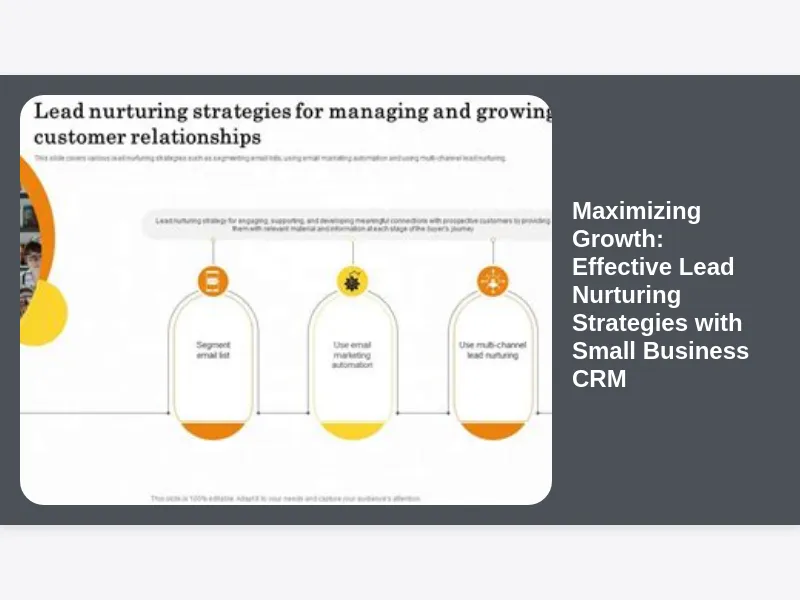
A Small Business CRM is absolutely instrumental in facilitating this segmentation. It allows you to tag, filter, and group leads based on virtually any data point you collect. This granular segmentation is the key to delivering hyper-personalized communication, which is a hallmark of effective lead nurturing strategies with small business CRM. Instead of sending a generic newsletter to your entire database, you can send highly specific messages, offers, and content that directly address the unique needs and interests of each segment, dramatically increasing engagement and conversion rates.
Crafting Compelling Content for Every Stage of the Sales Funnel
Content is the fuel that powers your lead nurturing engine. To keep prospects engaged and moving forward, you need a diverse library of compelling content tailored to each stage of their journey, from awareness to decision. At the top of the funnel (awareness), prospects are often seeking information to understand their problem; blog posts, infographics, and short videos are ideal. In the middle of the funnel (consideration), they are researching solutions; webinars, case studies, whitepapers, and comparison guides work best. At the bottom of the funnel (decision), they are ready to make a choice; product demos, free trials, consultations, and testimonials are most effective.
Developing a robust content strategy aligned with your buyer personas and the sales funnel is crucial. Your Small Business CRM can help you track which content pieces leads are engaging with, providing valuable insights into their interests and where they are in their decision-making process. By consistently providing value through relevant and informative content, you build trust, establish your authority, and gently guide leads towards your solution. Remember, the goal isn’t just to sell, but to educate and empower your prospects, proving that you understand their challenges and have the best solution.
Automating Your Nurturing Sequences with CRM Workflows
One of the most transformative capabilities a Small Business CRM offers for lead nurturing is automation. Manually sending out personalized emails, scheduling follow-ups, and updating lead statuses for hundreds or even thousands of prospects is simply not feasible. CRM automation allows you to set up predefined workflows and drip campaigns that trigger specific actions based on a lead’s behavior or specific criteria. For example, if a lead downloads a particular e-book, the CRM can automatically enroll them in a follow-up email sequence that provides more information on that topic.
This automation capability is central to effective lead nurturing strategies with small business CRM. It ensures consistent, timely communication without requiring constant manual intervention, freeing up your sales and marketing teams to focus on higher-value activities. You can automate welcome series, re-engagement campaigns, event reminders, and even internal tasks like notifying a sales rep when a lead reaches a certain engagement score. Automation not only saves time but also guarantees that every lead receives the right message at the right time, optimizing their journey towards becoming a customer.
Email Marketing Mastery: Engaging Prospects Through Strategic Campaigns
Email remains one of the most powerful and cost-effective channels for lead nurturing, especially when integrated with a Small Business CRM. Effective email marketing campaigns go far beyond simple promotional blasts; they are strategically designed to deliver value, build rapport, and guide prospects through the sales funnel. This involves crafting compelling subject lines that encourage opens, writing engaging body copy that provides useful information, and including clear calls to action (CTAs) that prompt the next step.
Your CRM provides the intelligence needed to make your email campaigns truly impactful. By segmenting your audience and personalizing email content based on CRM data (like their name, company, recent interactions, or specific interests), you can achieve significantly higher open and click-through rates. For instance, if a lead has viewed pricing pages multiple times, an automated email offering a free consultation or a detailed breakdown of ROI might be highly effective. Email marketing, when powered by CRM insights, becomes a finely tuned instrument for engaging prospects and advancing them along their buying journey.
Beyond Email: Diversifying Your Nurturing Touchpoints
While email marketing is a cornerstone of lead nurturing, relying solely on one channel can limit your reach and effectiveness. To truly implement effective lead nurturing strategies with small business CRM, it’s crucial to diversify your touchpoints and engage prospects across multiple channels. This multi-channel approach increases the likelihood of reaching leads where they are most receptive and reinforces your brand message through different mediums. Consider incorporating personalized phone calls, targeted social media interactions, retargeting ads, and even direct mail for high-value leads.
Your Small Business CRM can act as the orchestrator for these diverse touchpoints. It allows sales reps to track call logs, schedule follow-ups, and see a unified view of all interactions, regardless of the channel. For example, a CRM could trigger a social media ad campaign to a segment of leads who have shown interest but haven’t engaged with emails recently. By creating a cohesive, multi-channel nurturing experience, small businesses can build stronger relationships and accelerate the conversion process, ensuring that every lead receives a well-rounded and impactful nurturing experience.
Personalization at Scale: Making Every Interaction Count
The modern consumer expects personalization. Generic, one-size-fits-all messaging is not only ineffective but can also alienate potential customers. However, for a small business, delivering highly personalized interactions to every single lead can seem like an overwhelming task. This is precisely where the synergy between effective lead nurturing strategies with small Business CRM shines. A CRM empowers you to achieve personalization at scale, making every interaction feel tailored and relevant, without requiring manual customization for each individual.
By leveraging the rich data stored in your CRM—such as a lead’s industry, company size, previous website visits, content downloads, and email opens—you can dynamically populate emails with specific details, recommend relevant resources, and reference past interactions. Imagine an email that not only addresses a prospect by name but also mentions the specific product they viewed on your website yesterday and offers a demo tailored to their industry’s challenges. This level of informed personalization demonstrates that you truly understand their needs and are paying attention, building trust and strengthening the relationship.
Measuring Success: Key Metrics for Lead Nurturing Effectiveness
Implementing lead nurturing strategies without measuring their effectiveness is like sailing without a compass. To ensure your efforts are yielding results and to identify areas for improvement, you must track key performance indicators (KPIs). Your Small Business CRM is an invaluable tool for this, as it centralizes data and often provides built-in analytics and reporting features. Crucial metrics to monitor include conversion rates (from lead to MQL, MQL to SQL, and SQL to customer), lead engagement rates (email open rates, click-through rates, content downloads), time to conversion, and return on investment (ROI).
By regularly analyzing these metrics, small businesses can gain actionable insights into what’s working and what isn’t. For instance, if a particular email sequence has a low open rate, it might indicate issues with subject lines or sender reputation. If leads are stalling at a specific stage, it could point to a gap in your content or an unclear call to action. Continuous measurement and analysis are fundamental to refining your effective lead nurturing strategies with small business CRM, ensuring that your processes are optimized for maximum impact and continuous improvement.
Optimizing Your Nurturing Process: Continuous Improvement
Lead nurturing is not a “set it and forget it” activity. The market evolves, customer needs change, and your strategies must adapt accordingly. Therefore, continuous optimization is a vital component of effective lead nurturing strategies with small business CRM. This involves regularly reviewing your lead nurturing workflows, analyzing performance data, gathering feedback, and implementing improvements based on your findings. A/B testing is a powerful technique here, allowing you to test different email subject lines, content formats, CTAs, and even timing to see which versions perform best.
Beyond A/B testing, solicit feedback from your sales team, who are on the front lines interacting with nurtured leads. Their insights can be invaluable in identifying common questions, objections, or areas where leads feel underserved. Your CRM’s reporting features can highlight bottlenecks in your sales funnel or identify segments that are underperforming. By fostering a culture of continuous learning and iteration, small businesses can ensure their lead nurturing efforts remain fresh, relevant, and highly effective, consistently driving better results over time.
Integrating Sales & Marketing for a Seamless Hand-Off
One of the biggest challenges in many organizations is the disconnect between sales and marketing. Marketing generates leads, and sales converts them, but often they operate in silos, leading to friction and lost opportunities. For effective lead nurturing strategies with small business CRM, a seamless integration and alignment between these two teams are paramount. The CRM serves as the central nervous system that connects marketing’s lead generation efforts with sales’ conversion activities, ensuring a smooth and efficient hand-off process.
Marketing can use the CRM to track lead engagement and qualify leads, passing “sales-ready” leads to the sales team with a complete history of their interactions. Sales, in turn, can access all the nurturing context, avoiding redundant questions and picking up the conversation exactly where the marketing efforts left off. Regular communication, shared goals, and jointly defined lead scoring criteria within the CRM foster collaboration and create a unified approach to guiding prospects. This integrated approach ensures that no valuable information is lost and that every lead receives consistent, targeted attention as they transition from marketing-qualified to sales-qualified.
Re-engaging Cold or Stalled Leads: Breathing New Life into Old Opportunities
Even with the best lead nurturing strategies, some leads will inevitably go cold or stall in the sales funnel. This doesn’t mean they are lost forever; it simply means they might need a different approach or a renewed spark of interest. Effective lead nurturing strategies with small business CRM include specific campaigns designed to re-engage these dormant leads. These might involve sending highly personalized emails that acknowledge their previous interest but offer a fresh perspective, a new piece of valuable content, or an exclusive incentive.
Your CRM can help identify these cold leads by tracking their inactivity over a certain period or by noting where they dropped off in the sales process. You can then segment these leads and launch targeted re-engagement campaigns. For example, an email campaign featuring testimonials from satisfied customers, a limited-time offer, or an invitation to a relevant industry webinar could be effective. The key is to provide new value and a compelling reason to re-engage, demonstrating that you still care about their needs and have something relevant to offer, potentially turning seemingly lost opportunities into future customers.
Post-Purchase Nurturing: Turning Customers into Advocates
The nurturing journey doesn’t end once a lead becomes a customer. In fact, post-purchase nurturing is equally, if not more, crucial for the long-term success of a small business. Effective lead nurturing strategies with small business CRM extend beyond the initial sale, focusing on customer retention, satisfaction, upselling, cross-selling, and ultimately, turning customers into loyal advocates and repeat buyers. Acquiring a new customer is significantly more expensive than retaining an existing one, making post-purchase nurturing a highly profitable endeavor.
Your CRM can help you automate welcome sequences for new customers, provide onboarding resources, solicit feedback, and send personalized offers for complementary products or services. It can also track customer anniversaries, support tickets, and product usage, allowing you to proactively address potential issues or celebrate milestones. By continuing to provide value and support, you build deeper relationships, foster loyalty, and encourage referrals, transforming satisfied customers into enthusiastic promoters of your brand. This holistic approach ensures sustained growth and a robust customer base for your small business.
Choosing the Right Small Business CRM for Your Needs
Implementing effective lead nurturing strategies with small business CRM begins with selecting the right CRM platform. With a myriad of options available, choosing the best fit for your specific small business needs can seem daunting. Key factors to consider include ease of use (especially important for small teams), scalability (can it grow with your business?), integration capabilities (does it connect with your existing tools like email marketing or accounting software?), mobile accessibility, customer support, and, of course, pricing.
Look for features that directly support lead nurturing, such as robust contact management, lead scoring, marketing automation, email campaign management, segmentation tools, and comprehensive reporting. Don’t be swayed by an overwhelming number of features you might never use; instead, prioritize a system that offers the core functionalities you need to execute your nurturing strategy efficiently. Many CRM providers offer free trials, allowing you to test drive the platform and ensure it aligns with your workflow and budget before making a long-term commitment.
Common Pitfalls and How to Avoid Them in Lead Nurturing
Even with the best intentions and a powerful CRM, small businesses can fall into common lead nurturing traps. One significant pitfall is inconsistent follow-up; sporadic communication can confuse leads and diminish trust. Another common mistake is sending generic messages that don’t address specific lead needs or stages, leading to low engagement. Neglecting lead scoring can also be detrimental, as it means sales teams might waste time on unqualified leads, while truly hot prospects are overlooked. Not tracking metrics and failing to optimize is another major oversight.
To avoid these pitfalls, ensure your CRM is properly configured and that your team is fully trained on its capabilities. Develop a clear content calendar and communication plan. Regularly review your lead scoring model and adjust it as needed. Most importantly, foster a mindset of continuous improvement and data-driven decision-making. By being proactive and addressing these common issues, small businesses can significantly enhance the effectiveness of their lead nurturing efforts and maximize their return on investment from their CRM.
The Future of Lead Nurturing: AI and Advanced Personalization
The landscape of lead nurturing is continuously evolving, with advancements in artificial intelligence (AI) and machine learning (ML) poised to revolutionize how small businesses engage with prospects. These technologies are paving the way for even more advanced personalization and predictive analytics. AI-powered CRM systems can analyze vast amounts of data to predict which leads are most likely to convert, suggest optimal content for each lead, and even automate the creation of personalized messages. This takes effective lead nurturing strategies with small business CRM to an entirely new level.
Imagine a CRM that not only tracks a lead’s interactions but also uses AI to understand their sentiment, identify their personality type, and then recommend the best communication style for a sales rep to use. While these advanced capabilities might seem futuristic, many are already becoming accessible to small businesses through increasingly sophisticated CRM platforms. Embracing these emerging technologies will allow small businesses to stay ahead of the curve, delivering hyper-relevant experiences that build deeper connections and drive even greater conversion rates in the years to come.
Conclusion: Empowering Your Small Business with Strategic Lead Nurturing
In an increasingly crowded marketplace, the ability to effectively nurture leads can be the single greatest differentiator for a small business. It’s about more than just making a sale; it’s about building relationships, demonstrating value, and guiding prospects with care and precision through their buying journey. By strategically leveraging a Small Business CRM, you transform what could be a chaotic, manual process into a streamlined, data-driven engine for sustainable growth.
The synergy between well-defined effective lead nurturing strategies with small business CRM empowers you to personalize communication at scale, automate repetitive tasks, measure performance with accuracy, and continuously optimize your approach. It ensures that every marketing dollar spent and every lead generated is given the best possible chance to convert into a loyal customer. Invest the time and resources into developing a robust lead nurturing framework with a powerful CRM, and watch as your small business not only survives but truly thrives in the competitive landscape.