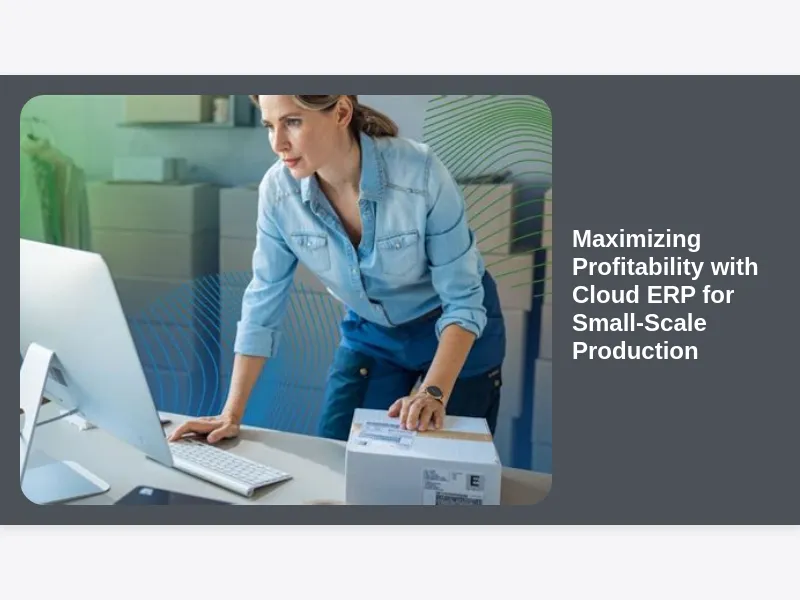
Small-scale production businesses, often the backbone of local economies and niche markets, face a unique set of challenges. From managing intricate inventory to scheduling complex production runs and meticulously tracking costs, the daily grind can feel overwhelming. In a competitive landscape, merely keeping the lights on isn’t enough; the goal is to thrive, innovate, and, most importantly, maximize profitability. This ambition often hits a wall when businesses rely on outdated manual processes, fragmented spreadsheets, or disparate systems that fail to communicate. The promise of efficiency, cost reduction, and growth often remains just that – a promise – until a truly integrated solution comes into play.
Enter Cloud ERP (Enterprise Resource Planning). For many small manufacturers, the very term ERP might conjure images of massive, expensive, and complex systems designed for multinational corporations. However, cloud-based solutions have democratized this powerful technology, making it accessible, affordable, and highly adaptable for businesses of all sizes, especially those in small-scale production. This article will delve deep into how adopting a Cloud ERP system isn’t just an IT upgrade but a strategic move that can fundamentally transform your operations, drive down costs, and ultimately, put your business on a clear path to maximizing profitability with Cloud ERP for small-scale production. We’ll explore the tangible benefits, address common concerns, and paint a clear picture of a more efficient, data-driven future for your manufacturing venture.
The Unique Challenges of Small-Scale Manufacturing Operations
Small-scale manufacturing businesses, while agile and often innovative, grapple with a distinct set of operational hurdles that larger enterprises might not face in the same way. These challenges often stem from limited resources, a tight profit margin, and the need to wear multiple hats across various departments. Without robust systems in place, these issues can quickly escalate, hindering growth and eroding profitability.
One of the most persistent problems is the reliance on manual processes and disparate systems. Many small manufacturers start with basic tools: spreadsheets for inventory, sticky notes for production schedules, and separate accounting software. While these might work initially, they quickly become unmanageable as the business grows. Data silos emerge, meaning information stored in one system isn’t readily available in another, leading to double data entry, errors, and a significant time sink. This fragmentation creates a lack of holistic visibility across the entire operation, making it nearly impossible to get a clear, real-time picture of performance.
Another significant challenge is inventory management. For small producers, overstocking ties up valuable capital and increases carrying costs, while understocking can lead to production delays and missed sales opportunities. Without accurate data on demand, supplier lead times, and current stock levels, finding that sweet spot becomes a constant guessing game. Similarly, production scheduling often turns into a chaotic puzzle, trying to balance available resources, machine capacity, worker availability, and customer deadlines. When unforeseen issues arise, such as a machine breakdown or a material shortage, the entire schedule can collapse, causing further delays and frustrating customers. These inefficiencies directly impact the bottom line, making maximizing profitability with Cloud ERP for small-scale production an urgent necessity rather than a luxury.
What Exactly is Cloud ERP and Why Does it Matter for Small Businesses?
Before we dive into the specifics of how it boosts profitability, let’s demystify Cloud ERP. At its core, an Enterprise Resource Planning (ERP) system is an integrated software solution designed to manage and automate all core business processes, from financials and human resources to manufacturing, supply chain, services, procurement, and more. Think of it as the central nervous system of your business, connecting every function and providing a single source of truth for all data.
The “Cloud” in Cloud ERP signifies a fundamental shift in how this software is delivered and accessed. Instead of being installed on physical servers within your own premises (on-premise ERP), Cloud ERP software is hosted and managed by a third-party vendor and delivered over the internet as a service (SaaS – Software as a Service). This means you access the system through a web browser or a dedicated app, just like you would with email or online banking. The vendor is responsible for all the underlying infrastructure, maintenance, updates, and security, freeing you from the burdens of IT management.
This model is particularly revolutionary and beneficial for small businesses. Traditionally, ERP systems were prohibitively expensive due to the massive upfront investment required for licenses, hardware, installation, and ongoing IT staff. Cloud ERP, however, operates on a subscription model, typically a monthly or annual fee, making it an operational expense rather than a capital one. This significantly lowers the barrier to entry, allowing small-scale production companies to leverage enterprise-grade technology without breaking the bank. The inherent scalability, accessibility, and reduced IT overhead make Cloud ERP not just an option, but an essential tool for small businesses aiming at maximizing profitability with Cloud ERP for small-scale production.
Streamlining Production Workflows: Enhancing Operational Efficiency
One of the most immediate and impactful benefits of implementing Cloud ERP for small-scale production is the dramatic streamlining of production workflows. In many traditional setups, various stages of production operate in isolated silos. Orders come in one way, raw materials are tracked another way, and production progress might be monitored through manual updates or spreadsheets. This disjointed approach leads to bottlenecks, communication breakdowns, and significant inefficiencies that directly eat into profit margins.
A Cloud ERP system integrates all these disparate processes into a single, cohesive platform. From the moment a customer order is received, the system can automatically trigger a chain of events: checking inventory for required raw materials, generating purchase orders for shortages, scheduling production runs based on machine availability and capacity, and even assigning tasks to specific employees. This automation eliminates the need for manual data transfer between departments, drastically reducing human error and saving valuable time. For instance, once an item is finished, the system can instantly update inventory, trigger shipping notifications, and even generate an invoice.
Furthermore, Cloud ERP provides real-time visibility into every stage of the production process. Managers can see exactly where an order is, what machines are in use, and if any delays are anticipated. This level of insight allows for proactive problem-solving rather than reactive firefighting. If a machine breaks down, the system can quickly help reallocate tasks or adjust schedules, minimizing disruption. By moving away from fragmented, manual steps towards an integrated, automated workflow, small manufacturers can significantly enhance their operational efficiency, directly contributing to maximizing profitability with Cloud ERP for small-scale production through reduced lead times and increased output.
Mastering Inventory Control: Reducing Waste and Optimizing Stock Levels
For any manufacturing business, inventory is a double-edged sword. It’s essential to have enough raw materials and finished goods to meet demand, but too much inventory ties up capital, incurs carrying costs, and risks obsolescence. For small-scale production, where cash flow is often tight, mastering inventory control is paramount to financial health. Cloud ERP offers sophisticated tools that transform inventory management from a guessing game into a precise, data-driven process.
With Cloud ERP, you gain real-time, accurate visibility into every item in your warehouse, from raw materials and work-in-progress to finished products. As items are received, moved, used in production, or shipped, the system automatically updates inventory levels. This eliminates the need for manual stock counts and reduces discrepancies that often lead to production delays or unexpected shortages. The system can track items by lot number, serial number, or even location, providing granular control and traceability crucial for quality control and recall management.
Beyond mere tracking, Cloud ERP systems leverage historical sales data, production forecasts, and supplier lead times to optimize reorder points and quantities. This intelligent forecasting capability helps you maintain optimal stock levels – enough to meet demand without overstocking. By minimizing excess inventory, you reduce storage costs, insurance expenses, and the risk of spoilage or obsolescence, directly impacting your bottom line. Conversely, by preventing stockouts, you avoid costly production delays and ensure customer orders are fulfilled on time, enhancing customer satisfaction and boosting revenue, thereby playing a critical role in maximizing profitability with Cloud ERP for small-scale production.
Precision in Cost Tracking and Financial Management for Manufacturers
Accurate cost tracking is a cornerstone of profitability for any business, but it’s particularly critical and often challenging for small-scale manufacturers. Understanding the true cost of producing each item – including raw materials, labor, overhead, and even energy consumption – is essential for setting competitive prices, identifying inefficiencies, and making informed strategic decisions. Without precise cost data, businesses might unknowingly sell products at a loss or miss opportunities to optimize their operations.
Cloud ERP systems provide unparalleled precision in cost tracking by integrating financial data with every operational activity. As raw materials are consumed, labor hours are logged against specific jobs, and overheads are incurred, the ERP system captures and allocates these costs automatically. This means you can get a detailed breakdown of the cost of goods sold (COGS) for each product line or even individual production batch. This granular visibility allows you to pinpoint exactly where costs are accumulating and where there might be opportunities for reduction. For example, if a particular product’s labor cost is consistently higher than expected, you can investigate the underlying causes and implement process improvements.
Moreover, Cloud ERP fully integrates with your financial management modules, offering a comprehensive view of your company’s financial health. It automates invoicing, accounts receivable, accounts payable, and general ledger functions, reducing manual effort and errors. With real-time financial reporting, you can generate profit and loss statements, balance sheets, and cash flow forecasts with ease, providing the necessary insights to manage cash flow effectively, make timely payments, and plan for future investments. This robust financial control and accurate costing are indispensable for maximizing profitability with Cloud ERP for small-scale production, allowing you to price products intelligently and drive financial growth.
Gaining Real-Time Visibility: Making Informed Decisions Faster
In the fast-paced world of manufacturing, delays in receiving crucial information can lead to missed opportunities, poor decisions, and significant financial losses. Small-scale production businesses, often operating with limited wiggle room, desperately need a clear, instantaneous view of their operations. This is precisely where the real-time visibility offered by Cloud ERP systems becomes a game-changer, moving businesses away from reactive problem-solving to proactive strategic management.
Imagine a scenario where a sales representative can immediately confirm stock availability and production lead times while talking to a customer, without having to call different departments or wait for someone to check a spreadsheet. Or where a production manager can see, at a glance, the status of every order on the shop floor, identify potential bottlenecks, and reallocate resources before delays impact delivery schedules. This is the power of real-time data integration. Cloud ERP dashboards provide a centralized hub where all key performance indicators (KPIs) and operational data are updated continuously.
This instant access to information empowers every level of your organization. Executives can monitor overall business performance, identify trends, and make strategic decisions based on current facts rather than outdated reports. Production staff can track their progress, identify issues with specific machines or processes, and take corrective action immediately. Sales teams can provide accurate delivery estimates, improving customer satisfaction and trust. The ability to make informed decisions faster, based on accurate and up-to-the-minute data, reduces waste, improves efficiency, and directly contributes to maximizing profitability with Cloud ERP for small-scale production by allowing swift responses to market changes and operational challenges.
Scaling Your Small Business: Future-Proofing with Cloud ERP Solutions
Growth is a primary goal for many small-scale production businesses. However, without the right infrastructure, growth can quickly turn into chaos. As order volumes increase, product lines expand, or new markets are explored, manual processes and disparate systems buckle under the pressure, leading to bottlenecks, errors, and ultimately, stifled growth. Cloud ERP solutions are inherently designed for scalability, offering a robust foundation that can grow seamlessly alongside your business, effectively future-proofing your operations.
One of the key advantages of a cloud-based system is its flexibility to accommodate increased demand. Unlike on-premise systems that require significant hardware upgrades and complex software installations when you need to expand, Cloud ERP vendors handle all the infrastructure scaling. As your business grows, you simply add more users, modules, or storage capacity as needed, often with a few clicks and an adjustment to your subscription plan. This elasticity means you’re not paying for excess capacity you don’t need today, but it’s readily available when you do.
Furthermore, Cloud ERP systems often come with a wide range of modules that can be activated as your business needs evolve. You might start with core manufacturing, inventory, and financial modules. As you grow, you could add advanced features like Customer Relationship Management (CRM), Supply Chain Management (SCM), or even Business Intelligence (BI) tools without having to switch to an entirely new system or integrate complex third-party software. This modular approach ensures that your ERP system remains relevant and effective, supporting new processes and operational demands as they emerge. By providing a scalable, adaptable platform, Cloud ERP enables small manufacturers to embrace growth opportunities confidently, making it an indispensable tool for maximizing profitability with Cloud ERP for small-scale production over the long term.
Empowering Sales and Customer Relationships: CRM Integration Benefits
For small-scale production businesses, every customer interaction is crucial. Building strong relationships, managing orders efficiently, and providing excellent service are key differentiators in a competitive market. While often viewed primarily as an operational tool, Cloud ERP significantly empowers sales and enhances customer relationships, especially when integrated with or including a CRM (Customer Relationship Management) module. This integration creates a holistic view of the customer journey, from initial inquiry to post-sale support.
With an integrated CRM within your Cloud ERP, your sales team gains immediate access to vital customer information, including purchase history, outstanding orders, payment status, and any past communications. This allows them to provide personalized service, anticipate needs, and quickly resolve queries, all contributing to a superior customer experience. When a customer calls with a question about an order, the sales rep doesn’t need to transfer them to production or accounting; all relevant data is at their fingertips. This efficiency builds trust and reinforces positive customer perceptions.
Beyond mere information access, the integration streamlines the entire order-to-cash cycle. Sales quotes can be generated rapidly, approved workflows can be automated, and orders can be directly pushed into the production schedule. This reduces manual data entry, minimizes errors, and ensures that customer commitments (like delivery dates) are realistic and achievable. By providing sales teams with robust tools and production visibility, Cloud ERP helps small manufacturers process orders faster, improve communication, and ultimately foster stronger customer loyalty – a direct pathway to maximizing profitability with Cloud ERP for small-scale production through repeat business and positive referrals.
Navigating Compliance and Quality Control with Integrated Systems
For many small-scale production businesses, particularly those in regulated industries or those committed to high standards, navigating compliance requirements and ensuring stringent quality control can be a complex and time-consuming undertaking. Manual tracking, paper-based records, and fragmented data make it difficult to maintain audit trails, prove adherence to standards, and quickly identify the source of quality issues. Cloud ERP systems provide the integrated capabilities needed to transform these challenges into streamlined, manageable processes.
An ERP system can enforce quality checks at various stages of production, from raw material inspection upon receipt to in-process checks and final product testing. It can record all quality data, track non-conformances, and manage corrective and preventive actions (CAPA). This ensures that every product meets specified quality standards before it leaves your facility, reducing rework, scrap, and customer returns – all of which directly impact profitability. By having these processes embedded within the ERP, quality control becomes an integral part of the workflow rather than an afterthought.
Furthermore, Cloud ERP provides robust traceability features, which are invaluable for compliance and quality management. If a batch of raw material is found to be defective, the system can quickly identify all finished products that used that material, enabling targeted recalls or investigations. For industries with strict regulatory requirements, such as food and beverage or pharmaceuticals, the ability to generate detailed audit trails for every component, process, and change is critical. This transparency and control not only helps avoid costly penalties and legal issues but also enhances your brand’s reputation for reliability and quality, contributing significantly to maximizing profitability with Cloud ERP for small-scale production through reduced risk and increased customer confidence.
Optimizing Your Supply Chain: From Raw Material to Finished Product
The supply chain is the lifeblood of any manufacturing operation, and for small-scale producers, inefficiencies within it can have a disproportionately large impact on costs and delivery times. Managing suppliers, procurement, logistics, and distribution effectively requires seamless coordination and real-time information. Cloud ERP provides the tools to optimize your entire supply chain, ensuring a smooth flow of materials and products, thereby reducing costs and enhancing customer satisfaction.
Through integrated procurement modules, Cloud ERP streamlines the purchasing process. It can automatically generate purchase orders based on production schedules and inventory levels, manage supplier relationships, track vendor performance, and even facilitate electronic data interchange (EDI) with key suppliers. This automation reduces administrative burden, helps secure better pricing through informed negotiation, and ensures that raw materials arrive precisely when needed, minimizing both storage costs and the risk of production delays due to material shortages.
Beyond procurement, Cloud ERP also plays a crucial role in managing logistics and distribution. It can integrate with shipping carriers, generate shipping labels, track shipments, and provide customers with real-time delivery updates. This not only improves operational efficiency but also enhances the customer experience by offering transparency and reliability. By optimizing the entire supply chain – from sourcing raw materials to delivering the finished product – small manufacturers can significantly reduce operational costs, improve delivery performance, and enhance their competitive position, all contributing directly to maximizing profitability with Cloud ERP for small-scale production.
The Economic Advantage: Lowering IT Costs and Total Cost of Ownership (TCO)
One of the most compelling arguments for small-scale production businesses to adopt Cloud ERP is the significant economic advantage it offers, particularly in lowering IT costs and the overall Total Cost of Ownership (TCO). Traditional on-premise ERP systems, while powerful, came with a hefty price tag that was often out of reach for smaller companies. The cloud model fundamentally changes this financial equation, making enterprise-grade technology accessible and affordable.
With an on-premise system, businesses typically incur substantial upfront costs for software licenses, server hardware, networking equipment, and the necessary infrastructure. Additionally, there are ongoing expenses for IT staff to manage, maintain, update, and secure the system. This includes server maintenance, software patching, backups, disaster recovery planning, and potentially hiring dedicated IT professionals. These capital expenditures and operational burdens can be a massive drain on a small business’s limited resources, diverting funds that could otherwise be invested in production, marketing, or R&D.
Cloud ERP, by contrast, operates on a subscription-based model. You pay a recurring fee (monthly or annually) to access the software, which covers everything from licensing to hosting, maintenance, security, and automatic updates. The vendor handles all the complex IT infrastructure, allowing your team to focus on core manufacturing activities rather than IT management. This eliminates large upfront capital expenditures, converts a large capital expense into a predictable operational expense, and drastically reduces the need for in-house IT expertise. The result is a much lower TCO, freeing up capital and resources that can be strategically reinvested to further your goal of maximizing profitability with Cloud ERP for small-scale production.
Overcoming Implementation Hurdles: A Smooth Transition to Cloud ERP
While the benefits of Cloud ERP are clear, the thought of implementing an entirely new system can be daunting for small-scale production businesses. The perceived complexity, potential disruption, and fear of failure are common hurdles. However, with careful planning, the right approach, and a focus on best practices, a smooth and successful transition to Cloud ERP is not only achievable but often far less disruptive than anticipated, especially compared to older, on-premise implementations.
The first step to overcoming implementation hurdles is thorough planning and preparation. This involves clearly defining your business requirements, identifying key pain points, and establishing measurable goals for the ERP system. It’s crucial to select an ERP vendor and implementation partner who understands the unique needs of small-scale manufacturing and has a proven track record. Engage your key stakeholders from various departments early in the process to ensure buy-in and gather valuable insights into current workflows and desired improvements. This collaborative approach helps tailor the system to your specific needs and reduces resistance to change.
Data migration is another critical phase. While it can seem overwhelming, starting early, cleaning your existing data, and having a clear strategy for transferring it to the new system will prevent significant headaches. Most Cloud ERP vendors offer tools and support for this process. Equally important is comprehensive user training. Employees need to understand not only how to use the new system but also why the change is beneficial. Phased rollouts, starting with core modules and gradually introducing more functionality, can also help ease the transition. By proactively addressing these common challenges, small manufacturers can ensure a smooth implementation, quickly realize the benefits of their new system, and accelerate their journey towards maximizing profitability with Cloud ERP for small-scale production.
Security and Data Integrity: Protecting Your Valuable Business Information
For any business, especially those relying heavily on proprietary processes, customer data, and financial information, the security and integrity of their data are paramount. When considering a move to Cloud ERP, concerns about data security are natural. However, reputable Cloud ERP providers typically offer security measures that often surpass what a small business could afford or implement independently, making the cloud a robust and secure environment for your valuable information.
Leading Cloud ERP vendors invest heavily in state-of-the-art security infrastructure and protocols. This includes physical security at data centers, advanced encryption for data in transit and at rest, multi-factor authentication for user access, and robust firewalls and intrusion detection systems. They also employ dedicated cybersecurity experts who constantly monitor for threats and vulnerabilities, applying patches and updates proactively. For a small business with limited IT resources, achieving this level of security on an on-premise system would be incredibly costly and complex.
Furthermore, Cloud ERP providers implement comprehensive data backup and disaster recovery strategies. Your data is typically replicated across multiple geographic locations, ensuring that even in the event of a catastrophic regional outage, your business-critical information remains safe and accessible. This built-in redundancy provides a level of business continuity that is often beyond the reach of small businesses with their own on-premise solutions. By entrusting your data to a specialized and secure cloud environment, small-scale production companies can confidently leverage the power of ERP without compromising their data’s safety, thereby supporting their efforts in maximizing profitability with Cloud ERP for small-scale production by mitigating significant operational risks.
Harnessing Analytics and Business Intelligence for Continuous Improvement
One of the most transformative aspects of Cloud ERP for small-scale production is its ability to convert raw operational data into actionable insights through robust analytics and business intelligence (BI) capabilities. Traditionally, small businesses relied on intuition or rudimentary reports, making it difficult to identify underlying trends, predict future outcomes, or pinpoint inefficiencies. Cloud ERP changes this by providing a data-driven foundation for continuous improvement.
With all your core business data consolidated in one system – from sales and inventory to production and finance – Cloud ERP can generate comprehensive reports and dashboards that offer a holistic view of your operations. You can easily track key performance indicators (KPIs) such as production costs per unit, on-time delivery rates, inventory turnover, customer acquisition costs, and profit margins. These insights allow you to quickly identify areas that are performing well and, more importantly, areas that require attention. For example, if a specific production line is consistently underperforming, the ERP’s analytics can help uncover the root cause, whether it’s machine downtime, material shortages, or labor inefficiencies.
Beyond retrospective reporting, many Cloud ERP systems now incorporate more advanced analytical capabilities, including predictive analytics. By analyzing historical data, these tools can forecast future demand, predict equipment maintenance needs, or even model the impact of different pricing strategies. This foresight empowers small manufacturers to make proactive decisions, optimize resource allocation, and adapt to market changes more effectively. By transforming data into strategic intelligence, Cloud ERP enables a culture of continuous improvement, directly supporting the overarching goal of maximizing profitability with Cloud ERP for small-scale production through smarter, data-informed operations.
The Competitive Edge: How Cloud ERP Elevates Small Manufacturers
In today’s globalized and rapidly evolving marketplace, small-scale production businesses face intense competition not only from larger enterprises but also from other agile niche players. To not just survive but thrive, these businesses need every possible advantage. Cloud ERP provides a significant competitive edge, allowing small manufacturers to operate with the efficiency, responsiveness, and sophistication typically associated with much larger organizations.
One of the most crucial competitive advantages is enhanced responsiveness and agility. With real-time data and integrated processes, small manufacturers can react more quickly to market shifts, customer demands, and unforeseen disruptions. They can accelerate product development cycles, adapt production schedules on the fly, and provide faster, more accurate quotes to customers. This agility translates into quicker time-to-market for new products, improved customer satisfaction through reliable deliveries, and the ability to seize new opportunities before competitors.
Furthermore, Cloud ERP enables small manufacturers to offer a higher level of customer service and build stronger relationships. By having a 360-degree view of each customer, including their purchase history, preferences, and interactions, sales and service teams can provide personalized support and anticipate needs. This personalized approach fosters loyalty, drives repeat business, and helps differentiate your brand in a crowded market. Ultimately, by empowering small businesses with sophisticated operational control, data-driven insights, and superior customer engagement, Cloud ERP elevates their entire operational game, giving them a decisive advantage in the race for maximizing profitability with Cloud ERP for small-scale production.
Case Studies and Success Stories: Real-World Impact on Small Production
While the theoretical benefits of Cloud ERP are compelling, its true power is best demonstrated through real-world impact. Across various industries, small-scale production businesses have leveraged Cloud ERP to overcome challenges, drive growth, and significantly boost their bottom line. Though we won’t name specific companies, the patterns of their success stories offer invaluable insights.
Consider a small custom furniture manufacturer struggling with long lead times and inventory inaccuracies. Before Cloud ERP, they relied on spreadsheets to track hundreds of unique components, often leading to stockouts or overstocked items. Production schedules were chaotic, manually adjusted with every customer change order. After implementing a Cloud ERP, they gained real-time inventory visibility, optimized purchasing, and automated their production scheduling. This resulted in a 20% reduction in lead times, a 15% decrease in inventory carrying costs, and a dramatic improvement in on-time delivery rates. Their increased efficiency allowed them to take on more orders without expanding their physical footprint, directly contributing to maximizing profitability with Cloud ERP for small-scale production.
Another example might be a specialty food producer facing complex compliance requirements and traceability demands. Manual batch tracking and quality control logs were time-consuming and prone to human error, posing significant risks during audits. With Cloud ERP, they implemented automated quality checks at each production stage, maintained meticulous digital records of ingredients and processes, and achieved full batch traceability from farm to fork. This not only streamlined their compliance efforts but also enhanced their reputation for quality and safety, attracting new clients and opening doors to larger markets. These stories underscore that Cloud ERP isn’t just about managing processes; it’s about transforming operational efficiency into tangible financial gains and sustained growth for small production companies.
Choosing the Right Cloud ERP System for Your Specific Needs
The market for Cloud ERP systems is vibrant and diverse, offering a range of solutions tailored to different industries and business sizes. For small-scale production businesses, selecting the right system is a critical decision that will impact their operations and profitability for years to come. It’s not a one-size-fits-all solution; what works perfectly for one manufacturer might be ill-suited for another. Therefore, a careful and deliberate selection process is essential to ensure the chosen system truly supports your goal of maximizing profitability with Cloud ERP for small-scale production.
The first key consideration is industry fit. Does the ERP system have specific modules or functionalities designed for manufacturing, and even better, for your specific type of production (e.g., discrete, process, make-to-order)? Generic ERPs might cover the basics, but industry-specific solutions often come with pre-configured workflows, terminology, and compliance features that save significant customization time and cost. Next, evaluate the feature set against your identified business requirements and pain points. Does it offer robust inventory management, production scheduling, quality control, and financial reporting? Is it scalable enough to support your projected growth? Avoid feature bloat, but ensure it addresses your core needs.
Beyond features, consider the vendor’s reputation, support, and implementation services. A good vendor should offer comprehensive training, ongoing technical support, and potentially a network of experienced implementation partners. Look at their track record with businesses similar to yours. Finally, and crucially, evaluate the total cost of ownership, including subscription fees, implementation costs, potential customization expenses, and training. While Cloud ERP is generally more affordable, costs can vary significantly. By thoroughly researching and comparing options based on these criteria, small manufacturers can confidently choose a Cloud ERP system that will become a powerful catalyst for their success and profitability.
The Future of Small-Scale Production: Integrating Emerging Technologies
The manufacturing landscape is continuously evolving, with new technologies promising even greater efficiencies and opportunities. For small-scale production businesses looking to stay competitive and continue their journey of maximizing profitability with Cloud ERP for small-scale production, understanding how these emerging technologies integrate with and enhance their ERP system is crucial. Cloud ERP is not just a static system; it’s designed to be the central hub that can connect and leverage these innovations.
One of the most significant trends is the integration of the Internet of Things (IoT). By embedding sensors into machinery and equipment on the shop floor, real-time data on machine performance, uptime, and maintenance needs can be fed directly into the ERP system. This allows for predictive maintenance, minimizing unexpected downtime and optimizing production schedules. Similarly, artificial intelligence (AI) and machine learning (ML) are being integrated into ERP for more sophisticated demand forecasting, optimized inventory levels, and even quality control by analyzing visual data from production lines.
Beyond the shop floor, Cloud ERP can also facilitate greater connectivity across the entire supply chain through blockchain for enhanced transparency and traceability, or advanced analytics for deeper market insights. For small manufacturers, the beauty of Cloud ERP lies in its ability to adopt these innovations modularly. You don’t need to overhaul your entire system to experiment with new technologies. As these solutions become more accessible, your Cloud ERP acts as the central nervous system, collecting and processing data from these advanced tools, providing you with an integrated and intelligent operation ready for the future. This continuous evolution ensures that your investment in Cloud ERP remains future-proof, consistently driving efficiency and profitability.
Conclusion: Your Path to Maximizing Profitability with Cloud ERP for Small-Scale Production
For small-scale production businesses navigating the complexities of today’s market, the journey to enhanced efficiency, reduced costs, and sustainable growth often hinges on embracing the right technology. We’ve explored in depth how Cloud ERP is not just another software solution but a transformative strategy, empowering these businesses to overcome common operational hurdles and unlock their full potential. From streamlining intricate production workflows and achieving unparalleled precision in inventory control to mastering cost tracking and gaining real-time operational visibility, Cloud ERP provides the integrated foundation necessary for true operational excellence.
Moreover, the economic advantages are clear: Cloud ERP significantly lowers the Total Cost of Ownership by eliminating hefty upfront IT investments and reducing ongoing maintenance burdens, making enterprise-grade capabilities accessible. It future-proofs your business by offering inherent scalability, allowing you to grow without outgrowing your system. Beyond internal efficiencies, Cloud ERP strengthens customer relationships, ensures compliance, and optimizes your entire supply chain, providing a crucial competitive edge. By providing robust analytics and acting as a hub for integrating emerging technologies, it sets the stage for continuous improvement and innovation.
In an era where data is king and efficiency is paramount, continuing to rely on fragmented systems, manual processes, and outdated information is a gamble no small-scale production business can afford. The path to maximizing profitability with Cloud ERP for small-scale production is clear, well-trodden by many success stories, and more accessible than ever before. Embracing this powerful technology isn’t just an upgrade; it’s a strategic investment in your business’s future, promising not just survival, but sustained growth and enduring profitability. The time to explore the possibilities of Cloud ERP for your small manufacturing operation is now.