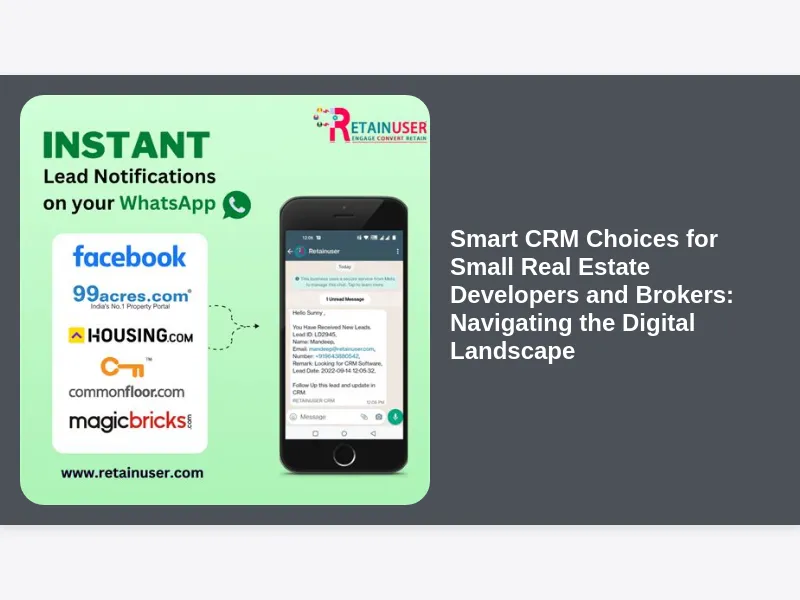
In today’s fast-paced real estate market, staying ahead means more than just having great properties or a knack for sales. It means mastering client relationships, streamlining operations, and making every minute count. For small real estate developers and brokers, where every lead is precious and every deal is critical, the right tools can make all the difference. This is precisely where smart CRM choices for small real estate developers and brokers come into play. It’s no longer a luxury but a fundamental necessity for sustainable growth and competitive advantage.
Many small real estate professionals grapple with spreadsheets, scattered notes, and overflowing inboxes, trying to manage an ever-growing network of contacts, properties, and ongoing deals. This manual approach is not only time-consuming but also prone to errors, missed opportunities, and ultimately, stifled growth. Imagine a system that centralizes all your client interactions, tracks every lead’s journey, and automates mundane tasks, freeing you up to do what you do best: build relationships and close deals. That’s the promise of a well-chosen CRM, and for the savvy small real estate developer or broker, understanding these tools is the first step towards unlocking unparalleled efficiency and success.
Understanding the Real Estate CRM Landscape: Beyond Basic Contact Management
The world of Customer Relationship Management (CRM) has evolved dramatically, moving far beyond its initial purpose of simply storing contact information. For small real estate developers and brokers, this evolution means a wealth of sophisticated options tailored to the unique demands of the property market. No longer are CRMs just for Fortune 500 companies; they are now accessible, affordable, and incredibly powerful for businesses of all sizes, especially those with limited resources aiming for significant impact.
At its core, a real estate CRM is a software solution designed to help professionals manage and analyze customer interactions and data throughout the customer lifecycle, with the goal of improving business relationships with customers, assisting in customer retention, and driving sales growth. In the real estate context, this translates to tracking leads from initial inquiry to closed deal, managing property listings, scheduling showings, handling documents, and nurturing long-term client relationships. For small real estate developers and brokers, understanding this broader landscape is crucial to making smart CRM choices that truly serve their specific operational needs and growth ambitions, rather than merely adopting a generic system.
Why Small Developers and Brokers Need a Dedicated CRM: Boosting Efficiency and Client Relations
For many small real estate developers and brokers, the idea of investing in a dedicated CRM might seem like an unnecessary expense or an overly complex system. However, the reality is quite the opposite. In a market where agility and personalization are key differentiators, a specialized CRM offers a strategic advantage that manual processes simply cannot match. It’s about transforming chaos into order and converting potential into profit, making smart CRM choices for small real estate developers and brokers a pivotal decision for their future.
Consider the sheer volume of information a real estate professional handles daily: buyer preferences, seller timelines, property specifications, showing schedules, follow-up reminders, and intricate financial details. Without a centralized system, this information becomes fragmented, leading to missed calls, forgotten emails, and ultimately, lost deals. A dedicated CRM acts as your single source of truth, organizing all this data into an easily accessible and actionable format. It automates repetitive tasks, ensuring timely follow-ups and consistent communication, which in turn nurtures client relationships and frees up invaluable time for more strategic activities like networking, property scouting, and negotiation. This move from reactive to proactive management is fundamental for any small business aiming to scale effectively and build a robust, loyal client base.
Key Features to Look for in a Real Estate CRM: Essential Tools for Growth
When evaluating smart CRM choices for small real estate developers and brokers, focusing on a few critical features can guide you toward the most impactful solution. Not all CRMs are created equal, and some generic systems may lack the specialized functionalities essential for thriving in the property market. Identifying these core capabilities ensures that your investment truly pays off by streamlining your unique real estate workflows and enhancing your professional output.
At the top of the list is robust contact and lead management. A good CRM should not only store contact details but also track every interaction, communication history, property interest, and lead source. This comprehensive view allows you to understand your clients better and tailor your approach. Secondly, property and deal tracking is indispensable. Your CRM should enable you to manage property listings, track development projects, monitor the status of each deal in your pipeline, and link specific properties to interested clients. Thirdly, communication tools integrated within the CRM, such as email templates, automated follow-ups, and even SMS capabilities, can drastically improve your responsiveness and consistency. Finally, don’t overlook reporting and analytics, which provide insights into your performance, identifying what’s working and where adjustments are needed. These core features form the backbone of an effective real estate CRM, empowering small developers and brokers to operate with unmatched efficiency and insight.
Tailoring CRM to Development vs. Brokerage: Specific Needs, Specific Solutions
While the overarching goal of any CRM in real estate is to manage relationships and drive sales, the specific functionalities required can differ significantly between small real estate developers and brokers. Recognizing these distinctions is crucial for making smart CRM choices that truly align with your business model, preventing the frustration of adopting a system that feels like a square peg in a round hole. A solution perfect for a broker might fall short for a developer, and vice-versa, underlining the need for a tailored approach.
For small real estate brokers, the primary focus often revolves around managing a dynamic portfolio of listings, connecting buyers with sellers, and orchestrating numerous showings and open houses. Their CRM needs to excel at listing management, buyer-seller matching algorithms, scheduling tools, and robust communication logs to keep track of multiple client interactions simultaneously. They need quick access to property details, client preferences, and negotiation statuses. On the other hand, small real estate developers have a distinct set of priorities. Their CRM must effectively manage projects from land acquisition to final sale, tracking construction phases, inventory levels, investor relations, and potentially even permit applications. For developers, features like project management dashboards, robust inventory tracking, and modules for managing investor communications are paramount. Understanding these nuances ensures that the CRM selected enhances rather than complicates their unique operational demands.
Cloud-Based vs. On-Premise Solutions: A Modern Perspective for Flexibility
One of the fundamental decisions when considering smart CRM choices for small real estate developers and brokers revolves around deployment: should you opt for a cloud-based (SaaS) solution or an on-premise system? In today’s interconnected world, the pendulum has decisively swung towards cloud-based options, especially for smaller businesses, offering a suite of advantages that are hard to overlook in the quest for agility and cost-effectiveness. The flexibility and accessibility provided by cloud solutions perfectly align with the mobile and dynamic nature of the real estate profession.
Cloud-based CRMs are hosted on the vendor’s servers and accessed via the internet, meaning you don’t need to purchase or maintain expensive hardware or IT infrastructure. This significantly reduces upfront costs and ongoing maintenance burdens, a major benefit for small businesses with limited budgets and IT resources. Furthermore, cloud CRMs offer unparalleled accessibility; you can access your data from anywhere, on any device with an internet connection – a critical feature for real estate professionals who are constantly on the go, whether at showings, construction sites, or client meetings. While some might raise concerns about data security, reputable cloud CRM providers invest heavily in robust security measures and data encryption, often surpassing what a small business could afford for an on-premise setup. On-premise solutions, requiring local installation and maintenance, offer greater control and customization but come with higher initial investments, ongoing IT costs, and less flexibility, making them a less viable option for the majority of small real estate entities today.
Budgeting for Your Smart CRM Investment: Maximizing Value Without Overspending
Making smart CRM choices for small real estate developers and brokers isn’t just about functionality; it’s also critically about managing your budget effectively. For small businesses, every dollar counts, and understanding the true cost of a CRM goes beyond the advertised monthly fee. A well-planned budget considers not just the subscription but also potential hidden costs and the invaluable return on investment (ROI) that a powerful CRM can deliver, ensuring you maximize value without overspending.
Most cloud-based CRMs operate on a subscription model, typically priced per user per month, often with different tiers offering varying features. It’s essential to accurately assess how many users will need access and what feature set is truly necessary for your operations. Beyond the subscription, factor in potential costs for implementation and onboarding, especially if your chosen CRM requires significant customization or data migration from existing systems. Training your team is another crucial investment, as even the most sophisticated CRM is useless if nobody knows how to use it effectively. Some vendors may include basic training, while others charge extra. Don’t forget about potential add-ons or integrations with other software you use, as these can sometimes incur additional fees. By thoroughly evaluating these components, small real estate businesses can build a realistic budget, ensuring they select a CRM that is not only powerful but also financially sustainable, ultimately contributing to a positive ROI through improved efficiency, lead conversion, and client retention.
Integration Capabilities: Connecting Your Real Estate Tech Stack Seamlessly
In today’s digital ecosystem, no single software operates in a vacuum. For small real estate developers and brokers, the ability of their chosen CRM to integrate seamlessly with other essential tools is not just a convenience; it’s a necessity for creating a truly efficient and interconnected tech stack. When evaluating smart CRM choices, robust integration capabilities are a hallmark of a truly modern and future-proof system, ensuring that data flows freely and processes are automated across your entire operation.
Think about the other digital tools you rely on daily: email marketing platforms, accounting software, digital signature tools, calendar applications, lead generation websites, and even social media. A top-tier real estate CRM should offer native integrations or robust API (Application Programming Interface) capabilities that allow it to communicate effortlessly with these platforms. For example, syncing your CRM with your email client means all client communications are automatically logged. Integrating with your calendar ensures appointments are scheduled and reminded directly from your CRM. Connecting to accounting software can streamline invoicing and financial tracking. This interconnectedness eliminates manual data entry, reduces errors, saves significant time, and provides a holistic view of your client interactions and business operations from a single dashboard. Prioritizing integration means building a cohesive system that amplifies the power of each individual tool, making your entire real estate business more productive and responsive.
User Experience and Adoption: Making Your CRM Work for You
Even the most feature-rich CRM system is only as good as its adoption rate among its users. For small real estate developers and brokers, where every team member often wears multiple hats, a complicated or unintuitive CRM can quickly become a costly shelf-ware rather than a productivity engine. Therefore, when considering smart CRM choices, emphasizing user experience (UX) and ease of adoption is paramount. A CRM that is easy to learn and enjoyable to use will be embraced, leading to consistent data entry and maximum utilization of its powerful features.
An intuitive user interface is key. This means clean layouts, logical navigation, and simple workflows that mirror how real estate professionals naturally operate. Look for CRMs that offer a clear dashboard view, easy access to key client information, and straightforward processes for logging interactions, updating deals, and scheduling tasks. Beyond the software itself, consider the vendor’s commitment to user training and support. Do they offer comprehensive guides, video tutorials, live webinars, or dedicated support channels? Good onboarding resources can dramatically reduce the learning curve and ensure that your team quickly becomes proficient. Ultimately, successful CRM adoption hinges on making the tool a natural part of your daily routine. When a CRM is a joy to use, it empowers your team, boosts morale, and transforms into an indispensable asset for your small real estate business.
Data Security and Compliance in Real Estate: Protecting Sensitive Information
In the real estate sector, you’re constantly handling a wealth of highly sensitive personal and financial information belonging to your clients, from addresses and financial statements to confidential deal terms. For small real estate developers and brokers, ensuring the robust security of this data and adhering to relevant compliance regulations is not just good practice; it’s a legal and ethical imperative. When making smart CRM choices, never overlook the critical importance of data security features and the vendor’s commitment to safeguarding your information. A data breach can have devastating consequences, both financially and to your reputation.
A reliable real estate CRM should incorporate advanced security protocols to protect your client data from unauthorized access, loss, or corruption. This includes features like robust encryption for data both in transit and at rest, multi-factor authentication (MFA) for user access, and regular security audits. Furthermore, given the global and local nature of real estate transactions, compliance with data privacy regulations such as GDPR (General Data Protection Regulation) or CCPA (California Consumer Privacy Act), as well as any regional specific real estate data laws, is crucial. Your chosen CRM should provide tools and frameworks to help you manage data according to these regulations, such as consent management features and clear data retention policies. By prioritizing a CRM with strong security features and a clear compliance strategy, small real estate businesses can build trust with their clients and protect themselves from potential legal and reputational risks, ensuring peace of mind in a data-driven world.
Automation for Efficiency: Beyond Basic Contact Management
For small real estate developers and brokers, time is arguably their most valuable asset. Every minute spent on repetitive, manual tasks is a minute lost from generating leads, nurturing client relationships, or closing deals. This is where the power of automation within your CRM becomes a game-changer. Smart CRM choices for small real estate developers and brokers should not just manage contacts; they should intelligently automate workflows, turning your CRM into a proactive assistant rather than just a data repository.
Imagine automating the initial follow-up email to a new lead, sending out property updates to interested buyers, or even scheduling a series of touchpoints for a specific client segment. A robust real estate CRM allows you to set up these “drip campaigns” and automated tasks, ensuring that no lead falls through the cracks and that communication is consistent and timely, without you lifting a finger every single time. Beyond marketing, automation can extend to internal processes too: assigning new leads to specific team members, setting reminders for contract deadlines, or automatically updating deal stages based on certain actions. This level of automation significantly boosts efficiency, reduces the potential for human error, and ensures a professional, consistent experience for every client. It frees up your valuable time to focus on strategic thinking, negotiation, and building genuine connections, ultimately driving greater productivity and profitability for your small real estate business.
Scalability: Growing Your Business with the Right CRM Partner
For any small real estate developer or broker with ambitions of growth, the scalability of their chosen CRM is a paramount consideration. What serves your needs perfectly today might become a bottleneck tomorrow if the system cannot evolve alongside your expanding operations. Making smart CRM choices means looking beyond current requirements and envisioning how the platform can accommodate more users, more data, and more complex workflows as your business flourishes. This foresight prevents the costly and disruptive process of having to switch CRMs down the line.
A scalable real estate CRM should be able to handle an increasing volume of contacts, properties, and transactions without performance degradation. This often means a cloud-based solution that can easily provision more storage and computing power as needed. Furthermore, consider the flexibility of its licensing model; can you easily add or remove users as your team expands or contracts? Does the CRM offer tiered features, allowing you to upgrade to more advanced functionalities as your business matures and its needs become more sophisticated? As your business grows, you might require more specialized reporting, advanced marketing automation, or even additional integration capabilities. A CRM designed for scalability will offer these pathways for growth, ensuring that your core system remains a reliable and adaptable partner throughout your business journey. Investing in a scalable CRM is an investment in the long-term health and growth potential of your small real estate enterprise.
Mobile Accessibility: Managing Your Business On-the-Go, Anytime, Anywhere
Real estate is not a desk job. Small real estate developers and brokers are constantly on the move: showing properties, meeting clients, visiting construction sites, and attending networking events. In such a dynamic environment, the ability to access and update critical business information from anywhere, at any time, is not just a convenience—it’s a non-negotiable requirement. This makes mobile accessibility a core consideration when evaluating smart CRM choices for real estate professionals. Your CRM needs to be as mobile as you are.
A truly effective real estate CRM should offer robust mobile applications for both iOS and Android devices, providing a seamless and intuitive user experience that mirrors its desktop counterpart. This means being able to instantly access client contact details, review property information, log calls, update deal stages, upload photos, and even sign documents directly from your smartphone or tablet. Imagine finishing a showing and immediately updating the client’s interest level or making notes on their feedback, all before you even leave the property. This instant data capture not only ensures accuracy but also prevents information from being forgotten or incorrectly recorded later. Mobile accessibility empowers small real estate businesses to remain highly responsive, make informed decisions on the spot, and manage their pipeline efficiently, regardless of their physical location. It transforms downtime into productive time and keeps you connected to your business, no matter where your work takes you.
Evaluating Specific CRM Options: Industry-Specific vs. Customizable Platforms
When diving into smart CRM choices for small real estate developers and brokers, you’ll generally encounter two main categories of solutions: industry-specific CRMs designed exclusively for real estate, and more generalized, highly customizable CRMs that can be adapted for real estate use. Each approach has its merits and potential drawbacks, and understanding these differences is key to making an informed decision that best suits your specific operational philosophy and budget.
Industry-specific real estate CRMs are built from the ground up with the unique workflows, terminology, and compliance needs of the property market in mind. These solutions often come with pre-built features like property listing management, transaction management tools, agent dashboards, lead routing specifically for real estate, and industry-standard reporting. Examples of such platforms are numerous, offering a ready-to-go solution that often requires less initial setup and customization. The main advantage here is that they “speak your language” from day one, meaning less time is spent configuring and more time is spent selling. However, they might sometimes be less flexible for highly unique workflows or come with a higher price tag for their specialized functionalities.
On the other hand, customizable general-purpose CRMs (such as Zoho CRM, HubSpot CRM, or Salesforce Essentials, when configured appropriately) offer a powerful, flexible foundation that can be tailored to real estate needs. While they might require more initial setup and customization to adapt them to real estate terminology and workflows, their strength lies in their versatility. You can often build custom fields for property details, design unique pipelines for development projects or brokerage deals, and integrate with a wider array of general business tools. These platforms often scale very well and can be more cost-effective if you only need a subset of their vast features. The downside is the learning curve and the potential need for expert assistance during the initial customization phase. For small real estate professionals, the choice boils down to whether you prefer an out-of-the-box solution that understands real estate implicitly or a more flexible platform you can mold precisely to your unique vision.
The Onboarding and Support Experience: A Partnership for Success
Selecting a CRM is not just a software purchase; it’s the beginning of a long-term partnership with a technology provider. For small real estate developers and brokers, the quality of the onboarding process and ongoing customer support can significantly impact the success and return on investment of their smart CRM choice. Even the most powerful CRM can fail if your team struggles with implementation or encounters persistent issues without adequate assistance. Prioritizing robust support ensures a smoother transition and continued productivity.
When evaluating potential CRMs, inquire extensively about their onboarding process. Does the vendor offer guided setup, data migration assistance, or dedicated onboarding specialists? A structured onboarding program can save you countless hours of frustration and ensure that the system is configured correctly from the start. Furthermore, consider the availability and quality of their ongoing customer support. What channels are available (phone, email, chat)? What are their response times? Do they offer a comprehensive knowledge base, tutorials, or user communities where you can find answers and share insights? For a small business, having reliable and accessible support is crucial, as you might not have an in-house IT team to troubleshoot complex issues. A vendor that invests in excellent support demonstrates a commitment to your success, fostering a true partnership that extends well beyond the initial sale and helps you maximize the utility of your new real estate CRM.
Measuring Success: ROI of Your Real Estate CRM Investment
For small real estate developers and brokers, every investment must demonstrate a tangible return. This holds especially true for smart CRM choices. It’s not enough to simply hope a CRM improves your business; you need to define, track, and measure its impact. Understanding the return on investment (ROI) of your real estate CRM is crucial for justifying its cost, optimizing its use, and continuously improving your business strategies.
Calculating CRM ROI involves looking at both direct and indirect benefits. Directly, you should track improvements in key performance indicators (KPIs) such as lead conversion rates, the speed at which leads move through your pipeline (deal velocity), client retention rates, and the average value of closed deals. For instance, if your CRM helps you convert 10% more leads into clients each month, or reduces the time it takes to close a deal by 15%, those are clear indicators of a positive ROI. Indirect benefits, though harder to quantify, are equally important: increased team productivity due to automation, reduced administrative overhead, improved client satisfaction leading to more referrals, and better data-driven decision-making. Before implementing a CRM, establish baseline metrics for these areas. After implementation, regularly review your CRM’s reporting and analytics features to track progress against these baselines. This continuous measurement allows you to fine-tune your CRM usage, identify areas for further optimization, and clearly demonstrate how your real estate CRM investment is contributing directly to your bottom line and sustainable growth.
Future-Proofing Your Real Estate CRM Choice: Staying Ahead of the Curve
The real estate market, much like technology itself, is in a constant state of evolution. Trends like artificial intelligence (AI), machine learning (ML), virtual reality (VR), and advanced data analytics are already beginning to reshape how properties are developed, marketed, and sold. For small real estate developers and brokers making smart CRM choices today, it’s not enough to select a system that only meets current needs; it must also have the capacity to adapt and integrate with future technologies. Future-proofing your CRM investment ensures your business remains competitive and innovative for years to come.
When evaluating potential CRMs, consider the vendor’s roadmap and their commitment to innovation. Do they regularly release updates, new features, and integrate with emerging technologies? Look for CRMs that are already incorporating, or have clear plans to incorporate, elements like AI-powered lead scoring, predictive analytics for market trends, or chatbots for initial client inquiries. These advanced capabilities can provide invaluable insights, automate even more complex tasks, and personalize client experiences to an unprecedented degree. Furthermore, consider the CRM’s flexibility and openness to integration with future platforms. An open API or a wide marketplace of integrations suggests that the CRM will be able to connect with new tools as they emerge, ensuring your tech stack remains cohesive and cutting-edge. By choosing a CRM that is forward-thinking and adaptable, small real estate businesses can confidently navigate the evolving landscape, embracing new opportunities and maintaining a competitive edge in a rapidly changing industry.
Common Pitfalls to Avoid When Choosing a Real Estate CRM: Learning from Others’ Mistakes
Embarking on the journey to select a new CRM for your small real estate development or brokerage firm is a significant undertaking, one fraught with potential missteps that can lead to wasted time, resources, and frustration. Understanding common pitfalls can equip you with the foresight needed to make truly smart CRM choices, avoiding the mistakes many others have made and ensuring a smoother, more successful implementation process. A little caution and preparation can go a long way in safeguarding your investment.
One of the most frequent errors is choosing a CRM based solely on price. While budget is certainly a factor, opting for the cheapest solution without considering its features, scalability, or support can lead to a system that quickly becomes inadequate, forcing you to switch later at a greater overall cost. Another common mistake is over-customization during the initial setup. While flexibility is good, trying to perfectly replicate every existing manual process or adding too many niche features upfront can complicate the system, increase costs, and hinder user adoption. Instead, focus on core functionalities and adapt as needed. Conversely, ignoring scalability and integration needs can also be detrimental; a system that can’t grow with you or connect to your other essential tools will eventually limit your potential. Finally, a crucial pitfall is neglecting comprehensive user training. A powerful CRM is useless if your team doesn’t understand how to leverage its capabilities. Allocate sufficient time and resources for training to ensure high adoption rates and maximize the return on your investment. By being aware of these common errors, small real estate developers and brokers can navigate the selection process more effectively and make a choice that truly empowers their business.
A Step-by-Step Guide to Real Estate CRM Selection: Your Roadmap to Success
Making smart CRM choices for small real estate developers and brokers can feel overwhelming given the myriad of options and considerations. However, by breaking down the process into a structured, step-by-step approach, you can systematically evaluate your needs, research solutions, and confidently select the CRM that will best propel your business forward. This methodical approach ensures that your final decision is well-informed and strategically aligned with your growth objectives, minimizing guesswork and maximizing potential success.
Step One: Assess Your Needs and Goals. Before looking at any software, clearly define what problems you want the CRM to solve and what goals you aim to achieve. Are you struggling with lead management, client follow-ups, property tracking, or team collaboration? What specific functionalities are essential for your daily operations as a developer or broker? Document these requirements.
Step Two: Research and Shortlist Potential Solutions. Based on your identified needs, begin researching real estate-specific CRMs and highly customizable general CRMs. Read reviews, compare features, and identify 3-5 platforms that seem like a good fit. Look for solutions that cater to small businesses and offer the core features discussed earlier.
Step Three: Schedule Demos and Ask Targeted Questions. Contact your shortlisted vendors for live demonstrations. Prepare a list of specific questions based on your unique needs and challenges. Pay close attention to the user interface, ease of use, mobile accessibility, and integration capabilities during these demos. Inquire about pricing tiers, onboarding processes, and ongoing support.
Step Four: Evaluate and Compare. After demos, critically compare each option against your requirements checklist. Consider factors like functionality, ease of use, scalability, integration options, data security, customer support, and total cost of ownership (including subscription, setup, and training). Involve key team members in this evaluation process to ensure their buy-in and gather diverse perspectives.
Step Five: Negotiate and Pilot (If Possible). Once you’ve narrowed it down to your top choice, discuss pricing, contract terms, and any specific customizations or onboarding support you might need. Some vendors offer pilot programs or free trials, which can be invaluable for testing the CRM in a real-world scenario with your actual data before making a full commitment.
Step Six: Plan for Implementation and Training. With your decision made, develop a clear implementation plan. This includes data migration, setting up workflows, and crucially, comprehensive training for all users. A well-executed implementation and thorough training are vital for maximizing user adoption and ensuring a successful transition to your new real estate CRM. By following these steps, small real estate developers and brokers can confidently navigate the CRM selection process, positioning themselves for enhanced efficiency, stronger client relationships, and accelerated business growth.
Conclusion: Empowering Your Real Estate Venture with Smart CRM Choices
In the competitive landscape of modern real estate, the distinction between thriving and merely surviving often hinges on the strategic application of technology. For small real estate developers and brokers, making smart CRM choices is not just about adopting another piece of software; it’s about making a fundamental investment in the efficiency, scalability, and long-term success of their business. We’ve explored the critical features, deployment options, budgeting considerations, and the paramount importance of user experience and data security, all designed to guide you through this pivotal decision.
A well-chosen real estate CRM transforms fragmented data into actionable insights, automates mundane tasks to free up precious time, and ensures that every client interaction is consistent, timely, and personalized. It empowers you to nurture leads more effectively, manage properties with greater precision, and build stronger, more lasting relationships that fuel referrals and repeat business. As your enterprise grows, a scalable and flexible CRM will adapt alongside you, ensuring that your technology infrastructure remains a supportive partner rather than a limiting factor. By embracing the power of a dedicated CRM, small real estate developers and brokers can elevate their operations, outmaneuver competitors, and confidently build a robust and prosperous future in the dynamic world of real estate. The time to streamline, optimize, and connect is now.