The Modern Small Business Dilemma: Manual Processes vs. Scalable Growth
In today’s fiercely competitive market, small businesses often find themselves in a precarious position. On one hand, there’s an undeniable drive to grow, to expand reach, and to convert more prospects into loyal customers. On the other, many operations are still bogged down by manual processes, spreadsheets, and fragmented communication, particularly when it comes to managing leads and guiding them through the sales journey. This disconnect isn’t just inefficient; it’s a significant barrier to sustainable growth and often leads to missed opportunities and a frustratingly high churn rate for potential customers.
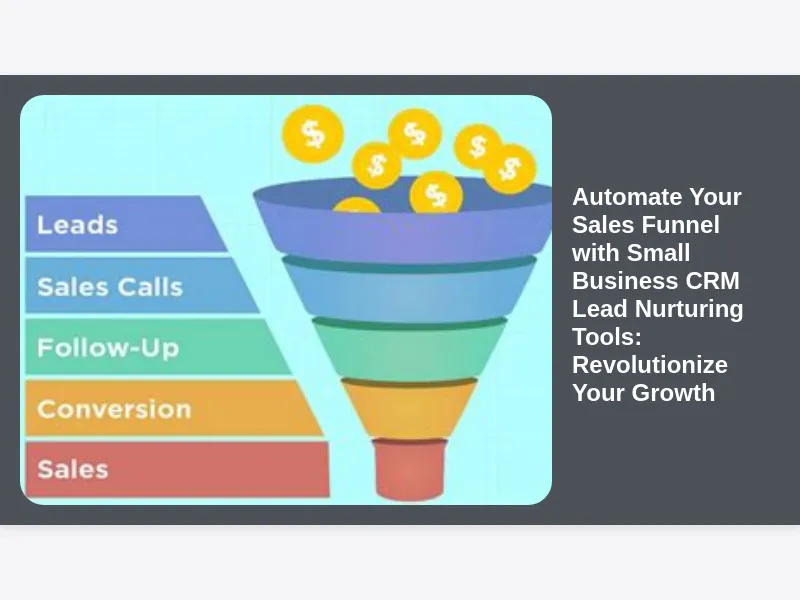
Imagine trying to remember every interaction with every potential client, every email sent, every call made, and every interest expressed. Now multiply that by dozens, hundreds, or even thousands of leads. It quickly becomes an impossible task for even the most dedicated sales and marketing teams. This is where the concept of the sales funnel, a visual representation of the journey a customer takes from initial awareness to becoming a paying client, comes into play. Without a systematic approach to nurturing these leads through each stage, businesses are essentially leaving money on the table, hoping that sheer effort will compensate for a lack of strategic automation.
The challenge isn’t just about managing contacts; it’s about understanding their specific needs, timing your communication perfectly, and ensuring no lead falls through the cracks. This intricate dance requires more than just good intentions; it demands a robust system capable of handling the complexities of customer relationships at scale, even for the leanest of small business teams. The very idea of automating these critical processes might seem daunting at first, especially for businesses accustomed to a more hands-on, traditional approach. However, the benefits of embracing such technology far outweigh the initial learning curve, paving the way for unprecedented efficiency and growth.
This article will delve deep into how you can automate your sales funnel with small business CRM lead nurturing tools, transforming your chaotic lead management into a streamlined, highly effective conversion machine. We’ll explore not just the “what,” but the “how” and the “why,” providing a comprehensive guide to leveraging these powerful solutions for your unique business needs.
Unpacking the Sales Funnel: Why Each Stage Matters for Conversion
Before we dive into automation, it’s crucial to have a clear understanding of the sales funnel itself. While variations exist, a typical sales funnel moves prospects through distinct stages: Awareness, Interest, Consideration, Intent, Evaluation, and Purchase. Each stage represents a different level of engagement and requires a tailored approach to move the prospect closer to conversion. At the top of the funnel (Awareness), your goal is to attract as many potential leads as possible, often through content marketing, social media, and advertising. These are individuals who might just be discovering their problem or your brand.
As prospects move to the Interest and Consideration phases, they’re actively researching solutions and evaluating different options, including yours. This is where providing valuable, educational content that addresses their pain points becomes critical. You’re not selling yet; you’re building trust and establishing yourself as a credible resource. The Intent and Evaluation stages are where prospects are narrowing down their choices and seriously considering a purchase. They might be looking for product demos, testimonials, case studies, or more detailed pricing information. This is often the point where sales teams become directly involved, moving from nurturing to direct engagement.
Finally, the Purchase stage is the culmination of all your efforts, where the prospect becomes a paying customer. But the journey doesn’t end there. A truly effective sales funnel often extends into post-purchase activities like onboarding, support, and fostering loyalty, aiming for repeat business and referrals. Understanding these stages is fundamental because effective automation and lead nurturing are all about delivering the right message, to the right person, at the right time, based on their position within this funnel. Without this understanding, any automation efforts risk being generic and ineffective, potentially pushing leads away rather than drawing them in.
Every small business, regardless of its industry, benefits immensely from meticulously mapping out its unique sales funnel. This visual representation not only clarifies the customer journey but also highlights potential bottlenecks and opportunities for improvement. Once you have a clear picture of how your ideal customer progresses, you can then begin to identify points where automation can be most impactful, ensuring a smoother, more efficient transition from one stage to the next.
Introducing Small Business CRM: More Than Just Contact Management
At its core, CRM, or Customer Relationship Management, is a technology for managing all your company’s relationships and interactions with customers and potential customers. The goal is simple: improve business relationships to grow your business. For small businesses, a CRM is not just a glorified address book; it’s a strategic platform designed to centralize customer data, streamline communication, and automate sales and marketing tasks. Think of it as the central nervous system for your customer-facing operations, bringing order to what can often be a chaotic environment of scattered information.
A robust small business CRM goes beyond mere contact management. It tracks every touchpoint a customer has with your business – emails, phone calls, website visits, social media interactions, purchases, and support tickets. This consolidated view empowers your sales, marketing, and customer service teams with a complete history of each relationship, enabling them to deliver personalized experiences and make informed decisions. Imagine a salesperson knowing exactly what articles a lead has read on your blog, what emails they’ve opened, and what products they’ve shown interest in, all before making a single call. This level of insight transforms generic outreach into highly targeted, relevant conversations.
Furthermore, modern CRMs for small businesses are built with ease of use and affordability in mind, acknowledging the unique constraints and resources available to smaller operations. They often come with intuitive interfaces and scalable features that grow with your business, ensuring you’re not paying for complex functionalities you don’t need while still having room to expand. The investment in a CRM system is not just about technology; it’s an investment in your customer relationships, which are ultimately the lifeblood of any successful enterprise. It empowers you to treat every customer, no matter how small, as if they are your most important, fostering loyalty and driving repeat business.
The real power of a small business CRM lies in its ability to transform disparate pieces of information into actionable intelligence. By providing a 360-degree view of every customer and prospect, it enables a cohesive, collaborative approach across departments, ensuring that everyone is working from the same playbook. This eliminates silos and ensures a consistent, positive customer experience from the very first interaction all the way through to long-term loyalty.
The Indispensable Role of Lead Nurturing in Driving Conversions
Lead nurturing is the process of building relationships with prospects over time, providing them with valuable information and tailored experiences that guide them through the sales funnel. It’s about staying top-of-mind, establishing trust, and demonstrating your expertise long before a prospect is ready to buy. In a world saturated with information and choices, simply generating leads isn’t enough; you must also nurture them effectively. Without a dedicated nurturing strategy, a significant percentage of your valuable leads will simply go cold, never converting into paying customers, representing a direct loss on your marketing investment.
Think about it: very few people make a significant purchase the first time they encounter a business. They need time to research, compare, and build confidence in your brand. Lead nurturing fills this gap, keeping the conversation going even when a prospect isn’t immediately ready to buy. It involves a series of communications – often automated email sequences, targeted content, or even personalized calls – designed to educate, engage, and persuade. The key is relevance; each piece of communication should be directly tied to the prospect’s interests, pain points, and their stage in the buying journey. Generic, one-size-fits-all messages are unlikely to resonate and can even alienate potential customers.
The effectiveness of lead nurturing is well-documented. Studies consistently show that nurtured leads make larger purchases and convert at a significantly higher rate than non-nurtured leads. This isn’t surprising when you consider the trust and credibility built through a thoughtful, consistent nurturing process. It moves the relationship beyond a transactional interaction to one of partnership and value. Furthermore, effective lead nurturing significantly reduces the burden on your sales team, as prospects who enter the sales conversation are already better informed, more qualified, and closer to making a purchase decision, allowing sales reps to focus their valuable time on high-potential opportunities.
In essence, lead nurturing transforms curiosity into commitment. It bridges the gap between initial interest and final purchase, ensuring that your valuable leads don’t slip away. By providing consistent value and relevant information, you not only increase conversion rates but also build stronger, more lasting customer relationships from the outset, laying the groundwork for future loyalty and advocacy.
How to Automate Your Sales Funnel with Small Business CRM Lead Nurturing Tools
Now, let’s get to the crux of the matter: how do you actually automate your sales funnel with small business CRM lead nurturing tools? The beauty of a CRM is its ability to integrate various aspects of your sales and marketing process into a cohesive, automated workflow. This automation isn’t about replacing human interaction, but rather about streamlining repetitive tasks, ensuring timely follow-ups, and personalizing communication at scale, freeing up your team to focus on high-value activities that require a human touch.
The first step in automation is often lead capture and entry. Modern CRMs can integrate directly with your website forms, landing pages, and even social media, automatically adding new leads to your database as soon as they express interest. Once a lead is in the CRM, automation rules can be triggered based on their source, behavior, or demographic information. For example, if a lead downloads an e-book about “digital marketing strategies,” they can automatically be tagged as interested in digital marketing and enrolled in a specific email nurturing sequence designed around that topic. This immediate, relevant follow-up is far more effective than a delayed, generic response.
Next comes the sequencing of communications. CRMs allow you to build sophisticated drip campaigns and email sequences that deliver messages at predefined intervals or based on specific triggers. These can range from a welcome email series for new subscribers to a re-engagement campaign for dormant leads. The key is dynamic content and personalization. Instead of sending the same email to everyone, the CRM can pull data fields like the lead’s name, company, or specific interests to make each message feel highly personalized, as if it were written just for them. This level of tailored communication significantly boosts engagement and conversion rates, moving leads smoothly through the funnel.
Moreover, automation extends beyond just email. CRMs can automate task assignments for sales reps, such as reminding them to call a lead who has just visited a specific pricing page, or scheduling follow-up calls after a demo. They can also automate lead scoring, assigning points based on engagement and demographic data, helping you identify your hottest leads. By taking over these routine, yet critical, tasks, a CRM ensures that no lead is forgotten, no follow-up is missed, and your sales funnel operates like a well-oiled machine, continually driving prospects towards conversion with minimal manual intervention.
Essential Lead Nurturing Tools Within a Small Business CRM
Within a small business CRM, a suite of integrated tools works synergistically to power effective lead nurturing. These aren’t standalone applications but rather functionalities built directly into the CRM platform, allowing for seamless data flow and centralized management. Understanding these specific tools and how they operate is key to maximizing your automation efforts and truly seeing the benefits of a streamlined sales funnel.
One of the most fundamental tools is email marketing automation. This allows you to design, schedule, and send targeted email campaigns based on lead behavior, demographics, or stage in the sales funnel. This goes far beyond basic mass emailing. You can create complex workflows with multiple branches, where a lead’s action (e.g., opening an email, clicking a link, or ignoring an email) dictates the next communication they receive. This dynamic approach ensures that your messages remain relevant and engaging, leading to higher open rates and click-through rates, continually guiding prospects towards the next step in their journey with your business.
Another crucial component is lead segmentation. A CRM allows you to segment your leads into various groups based on shared characteristics or behaviors. This could be anything from their industry, company size, and geographic location to their engagement level, past purchases, or specific interests. Segmentation is vital because it enables highly targeted lead nurturing. You wouldn’t send the same message to a cold lead as you would to someone who just requested a demo. By segmenting your audience, you can craft highly relevant messages that resonate with each group, ensuring that your content addresses their unique needs and challenges, making your nurturing efforts far more impactful.
Finally, workflow automation is a powerful feature that ties everything together. This allows you to define a series of actions that are automatically triggered when specific conditions are met within the CRM. For example, when a lead downloads a premium content offer, the workflow could automatically: (1) add them to a specific nurturing email sequence, (2) assign a task to a sales representative to follow up in 48 hours, (3) update their lead score, and (4) send an internal notification to the marketing team. These automated workflows eliminate manual errors, save countless hours, and ensure consistent, timely follow-ups, ensuring that every lead receives the attention they need, precisely when they need it, accelerating their progress through your sales pipeline.
Personalization at Scale: A CRM’s Secret Weapon for Deeper Engagement
In an era of information overload, generic communication is often ignored. True engagement comes from personalization, making each interaction feel unique and relevant to the individual. However, for small businesses dealing with a growing number of leads, true personalization can seem like an impossible dream without the right tools. This is where a small business CRM truly shines, acting as a secret weapon to deliver personalization at scale, fostering deeper engagement and stronger relationships with your prospects and customers alike.
A CRM centralizes all available data about your leads – their name, company, job title, industry, past interactions, website activity, and even social media mentions. This rich data profile forms the foundation for hyper-personalization. Instead of starting an email with a generic “Dear Valued Customer,” you can immediately use their name and reference a specific action they took, such as “Hi John, thanks for downloading our whitepaper on XYZ.” This simple act instantly captures attention and signals that the communication is tailored, not just a mass email. This level of detail makes the recipient feel seen and understood, significantly increasing the likelihood of engagement.
Beyond just using names, a CRM allows for dynamic content insertion and conditional logic within your communications. This means different sections of an email or different paragraphs within a message can appear or change based on the recipient’s specific attributes or behaviors. For example, if a lead has shown interest in Product A, your email can automatically highlight features of Product A, while for another lead interested in Product B, the same email template will display information relevant to Product B. This eliminates the need to create hundreds of different messages, saving immense time while delivering highly relevant content to each segment of your audience.
This capability to personalize at scale is transformative for lead nurturing. It allows you to build a sense of one-on-one connection even when communicating with thousands of leads simultaneously. By delivering highly relevant content and offers based on known preferences and behaviors, you significantly increase the effectiveness of your nurturing campaigns, leading to higher conversion rates and a more positive overall customer experience. Personalization is no longer a luxury for large enterprises; it’s an essential strategy made accessible to small businesses through powerful CRM lead nurturing tools.
Lead Scoring and Qualification: Focusing Your Sales Efforts Intelligently
Not all leads are created equal. Some are hot and ready to buy, others are merely curious, and some may never be a good fit for your business. Manually sifting through hundreds or thousands of leads to identify the most promising ones is an incredibly time-consuming and often inaccurate process. This is where lead scoring within a small business CRM becomes an invaluable tool, allowing you to intelligently focus your sales efforts on the leads with the highest probability of conversion, maximizing efficiency and boosting your sales team’s productivity.
Lead scoring assigns a numerical value to each lead based on their demographic information (e.g., job title, industry, company size) and their engagement behavior (e.g., website visits, email opens, content downloads, form submissions). For instance, a lead from your target industry might get 10 points, while visiting your pricing page could add another 20 points, and downloading a specific product brochure might add 30 points. Conversely, certain negative behaviors, like unsubscribing from emails or failing to respond, can deduct points. The cumulative score provides an objective measure of a lead’s interest and their fit with your ideal customer profile.
Once a lead reaches a predefined “threshold score,” they are automatically flagged as a “sales-qualified lead” (SQL) and can be seamlessly handed off to your sales team. This automation ensures that sales reps are only engaging with leads who are genuinely interested and ready for a conversation, rather than wasting their valuable time chasing prospects who are not yet ready or are a poor fit. This significantly shortens the sales cycle and improves conversion rates because sales efforts are directed precisely where they will yield the greatest return. It also fosters better alignment between marketing and sales teams, as both work towards a common goal defined by clear qualification criteria.
Lead scoring not only optimizes sales efforts but also informs your nurturing strategies. Leads with lower scores might remain in longer-term nurturing campaigns, receiving educational content designed to increase their interest and engagement until they reach the qualification threshold. This intelligent prioritization ensures that every lead receives appropriate attention, whether it’s immediate outreach from sales or continued nurturing from marketing. By leveraging lead scoring, small businesses can transform their sales process from a reactive scramble to a proactive, data-driven approach, ensuring that no potential sale is left unpursued while simultaneously preventing the valuable sales team from being overburdened with unqualified prospects.
Seamless Handoff: Ensuring Continuity from Marketing to Sales
The transition point from marketing-led nurturing to sales-led engagement is often a critical bottleneck in the sales funnel. Without a smooth, well-defined process, valuable context can be lost, leads can go cold, and the customer experience can suffer. A small business CRM with robust lead nurturing tools plays an indispensable role in ensuring a seamless handoff, guaranteeing continuity and maximizing the chances of converting a qualified lead into a paying customer.
When a lead reaches the predefined qualification threshold through lead scoring, the CRM can automatically trigger a series of actions designed to prepare the sales team for engagement. This might include creating a new sales opportunity, assigning the lead to the appropriate sales representative based on territory or product interest, and sending a notification to that rep. Critically, all of the lead’s historical data – their interactions with marketing emails, website visits, content downloads, and any notes from previous engagements – are immediately available to the assigned salesperson within the CRM interface. This comprehensive view eliminates the need for manual data transfer or repeated questioning, allowing the sales rep to jump into the conversation fully informed and prepared.
Furthermore, the CRM can automate personalized introductory emails or messages from the sales rep to the lead, immediately after the handoff. These messages can acknowledge the lead’s journey so far and introduce the sales rep as their dedicated contact for the next steps. This continuity of communication ensures that the lead feels supported and valued throughout their journey, preventing the jarring experience of being passed off without context. It builds on the trust already established by the nurturing efforts and maintains the momentum towards a conversion.
A streamlined handoff not only improves the customer experience but also significantly boosts the efficiency and effectiveness of both marketing and sales teams. Marketing can confidently pass on leads knowing that sales has all the necessary information and that a defined process is in place. Sales, in turn, can focus their energy on closing deals, armed with rich context and a clear understanding of the lead’s needs and preferences. This collaborative synergy, orchestrated by the CRM, is paramount for optimizing the sales funnel and achieving consistent revenue growth, transforming a potential point of failure into a powerful competitive advantage.
Beyond Lead Nurturing: Leveraging CRM for Customer Retention and Loyalty
While the primary focus of this discussion has been on how to automate your sales funnel with small business CRM lead nurturing tools to acquire new customers, the value of a CRM extends far beyond the initial sale. In fact, one of the most significant long-term benefits of a robust CRM system is its ability to support customer retention, foster loyalty, and drive repeat business – often at a much lower cost than acquiring new customers. The journey doesn’t end at purchase; it evolves into a new phase of relationship management.
Once a prospect becomes a customer, the CRM transitions from a lead nurturing tool to a customer success and relationship management platform. All their purchase history, support inquiries, communication preferences, and product usage data remain centralized and accessible. This allows your customer service and account management teams to provide proactive support, personalized recommendations, and targeted upsell or cross-sell opportunities. For example, if a customer frequently uses a particular feature of your software, the CRM can trigger an automated email sequence offering advanced tips for that feature or suggesting related add-ons, deepening their engagement and satisfaction.
Moreover, CRMs facilitate robust post-purchase nurturing campaigns. This could include automated onboarding sequences to help new customers get started, regular check-ins to gauge satisfaction, or campaigns to solicit feedback and reviews. These proactive communications demonstrate that you value their business beyond the initial transaction, building trust and reinforcing their decision to choose you. By continuously engaging with existing customers through relevant content and personalized offers, you not only increase their lifetime value but also transform them into advocates who are likely to refer new business.
In essence, a small business CRM helps you move beyond a transactional relationship to a truly relational one, ensuring that your customers feel valued, heard, and supported long after the sale. This sustained engagement is the cornerstone of customer retention and loyalty, crucial for building a sustainable business. By extending the power of automation and personalized communication to your existing customer base, you turn your CRM into an engine for ongoing growth, leveraging the immense potential within your current clientele for future expansion.
Measuring Success: CRM Analytics and Reporting for Informed Decisions
Implementing a powerful system to automate your sales funnel with small business CRM lead nurturing tools is only half the battle; the other half involves continuously monitoring and optimizing its performance. This is where the analytics and reporting capabilities inherent in modern CRMs become indispensable. Without robust data insights, you’re essentially flying blind, unable to identify what’s working, what’s not, and where opportunities for improvement lie.
A good CRM provides a comprehensive dashboard and customizable reports that offer real-time insights into every aspect of your sales and marketing funnel. You can track key metrics such as lead volume, lead source effectiveness, conversion rates at each stage of the funnel, sales cycle length, average deal size, and the ROI of your nurturing campaigns. For example, you can easily see which lead nurturing email sequences are generating the highest open rates and click-throughs, or which content assets are most effective at converting prospects from the interest stage to the consideration stage. This level of granular data allows you to make informed, data-driven decisions rather than relying on guesswork or intuition.
Beyond aggregated statistics, a CRM allows you to drill down into individual lead and customer journeys. You can analyze the specific path a highly successful customer took through your funnel, identifying the touchpoints and content that resonated most with them. This detailed insight can then inform improvements to your overall nurturing strategy, allowing you to replicate successful patterns across a larger audience. Conversely, you can identify where leads are dropping off or getting stuck, pinpointing bottlenecks in your sales process that require attention or optimization.
Ultimately, CRM analytics transform raw data into actionable intelligence. They empower you to refine your lead scoring models, optimize your email content, adjust your sales process, and allocate your marketing budget more effectively. By continuously measuring and analyzing the performance of your automated sales funnel, you ensure that your efforts are consistently driving the best possible results, leading to higher conversion rates, shorter sales cycles, and a more predictable revenue stream, proving the tangible value of your investment in a small business CRM.
Choosing the Right Small Business CRM: Factors for Consideration
Selecting the ideal small business CRM is a crucial decision that will impact your entire sales and marketing operation. With a plethora of options available, it’s important to carefully evaluate your needs and priorities before committing to a platform. The goal is to find a system that not only helps you automate your sales funnel with small business CRM lead nurturing tools effectively but also aligns with your specific budget, team size, and long-term growth aspirations.
First and foremost, consider your specific needs and the size of your team. Are you a solopreneur, a small team of 5, or a growing business with 20+ employees? Some CRMs are tailored for very small operations with simpler feature sets and lower price points, while others are built for more complex sales processes and larger teams. Evaluate the core functionalities you absolutely need: contact management, lead tracking, email automation, reporting, and pipeline management are usually baseline requirements. Avoid getting swayed by an abundance of features you won’t use; focus on what solves your immediate problems and supports your primary objectives.
Secondly, prioritize ease of use and user adoption. A CRM, no matter how powerful, is useless if your team finds it too complex or cumbersome to use. Look for an intuitive interface, clear navigation, and minimal training requirements. Many CRMs offer free trials, which are an excellent opportunity to test the platform with your team and gather their feedback. A user-friendly system ensures higher adoption rates, which is critical for the success of your CRM implementation. Consider whether the CRM offers mobile apps, as this can significantly boost productivity for sales reps on the go.
Finally, think about scalability, integration capabilities, and customer support. Will the CRM grow with your business? Can it handle an increasing volume of leads and customers without requiring a complete overhaul down the line? Does it integrate seamlessly with your existing tools, such as your accounting software, website, or marketing platforms? Strong integrations are vital for creating a cohesive business ecosystem. Also, investigate the quality of customer support and the availability of resources like knowledge bases, online communities, and training materials. A responsive support team can be a lifesaver when you encounter issues or have questions, ensuring you get the most out of your investment in automating your sales funnel.
Implementing Your CRM: Best Practices for Success
Once you’ve chosen your small business CRM, successful implementation is paramount. It’s not simply about signing up and logging in; it’s a strategic process that requires planning, training, and ongoing commitment. A well-executed implementation ensures smooth adoption, maximizes your return on investment, and truly allows you to automate your sales funnel with small business CRM lead nurturing tools to their full potential.
The first best practice is to start with a clear strategy and define your goals. Before you even begin migrating data, clearly articulate what you want to achieve with the CRM. Is it to reduce sales cycle time by 20%? Improve lead conversion rates by 15%? Enhance customer retention? Having specific, measurable goals will guide your implementation process and help you configure the CRM effectively. Also, map out your current sales process and identify areas where the CRM can automate or improve workflows. This pre-planning ensures that the CRM is customized to your specific needs, rather than adopting a generic setup.
Secondly, prioritize data cleanliness and migration. A CRM is only as good as the data it holds. Before importing your existing customer and lead data, take the time to clean it up. Remove duplicates, update outdated information, and standardize formats. This upfront effort will prevent headaches down the line and ensure the accuracy of your reporting and personalization efforts. When migrating data, start with essential information and gradually add more as your team becomes comfortable with the system. Consider a phased approach, perhaps starting with a smaller group or department before rolling it out company-wide, to iron out any kinks.
Finally, invest in comprehensive training and foster a culture of adoption. Don’t just provide a quick tutorial; offer ongoing training sessions, create internal cheat sheets, and establish clear guidelines for how the CRM should be used by every team member. Address potential resistance by communicating the benefits of the CRM for individual roles and how it will make their jobs easier. Appoint a CRM champion or an internal expert who can provide ongoing support and answer questions. Regular check-ins and feedback sessions will also help identify areas for further optimization and ensure that the CRM becomes an integral part of your daily operations, ultimately driving sustained success for your automated sales funnel.
Overcoming Common Challenges in CRM Adoption for Small Businesses
Even with the best intentions and a carefully chosen CRM, small businesses often encounter challenges during the adoption phase. These hurdles, if not addressed proactively, can derail the implementation and lead to frustration, underutilization of the system, and a failure to fully automate your sales funnel with small business CRM lead nurturing tools. Recognizing and preparing for these common issues is key to a smoother transition and long-term success.
One of the most prevalent challenges is resistance to change from employees. People are naturally accustomed to their existing workflows, even if they are inefficient, and introducing a new system can be met with skepticism or outright pushback. To combat this, involve your team in the selection and planning process from the outset. Clearly communicate the “why” behind the CRM adoption – how it will benefit them personally by reducing tedious tasks, improving organization, or providing better insights. Provide ample training and ongoing support, and emphasize that the CRM is a tool to empower them, not replace them or add more work. Celebrating early wins and highlighting how the CRM is simplifying their jobs can also foster greater acceptance.
Another common pitfall is insufficient data entry or inconsistent usage. If team members aren’t regularly updating lead information, logging activities, or following defined processes within the CRM, the data becomes incomplete and unreliable, rendering the system less effective for lead nurturing and reporting. To overcome this, establish clear, non-negotiable data entry standards and make them part of your team’s daily routine. Integrate CRM usage into performance reviews and provide incentives for consistent data entry. Regular audits of the data can help identify gaps and provide opportunities for re-training or process adjustments, ensuring that your CRM remains a single source of truth for all customer interactions.
Finally, many small businesses struggle with underutilization of CRM features. They might use it only for contact management, neglecting the powerful automation, reporting, and lead nurturing capabilities. This often stems from a lack of deep understanding of the CRM’s full potential. To mitigate this, schedule regular “discovery” sessions or workshops where you explore advanced features relevant to your business. Share success stories from other businesses utilizing similar functionalities. Partner with your CRM provider for training or consult with an expert to unlock more advanced automation workflows. Continuously educating your team on the CRM’s capabilities ensures that you are extracting maximum value from your investment and fully leveraging it to automate your sales funnel.
Integrating Your CRM with Other Business Tools: Enhancing the Ecosystem
The true power of a small business CRM is amplified when it doesn’t operate in isolation but rather integrates seamlessly with your other essential business tools. This creates a cohesive, interconnected ecosystem where data flows freely between platforms, eliminating manual data entry, reducing errors, and providing an even more comprehensive view of your operations. Integrating your CRM enhances its ability to automate your sales funnel with small business CRM lead nurturing tools by connecting every touchpoint in the customer journey.
Consider your email marketing platform. While many CRMs have built-in email capabilities for lead nurturing, you might still use a dedicated marketing automation platform for broader campaigns or more advanced functionalities. A good CRM integration ensures that contact lists are synced, email opens and clicks are logged back into the CRM, and new subscribers are automatically added. This prevents data silos and ensures that your sales team has visibility into all marketing interactions, leading to more informed and personalized follow-ups. Similarly, integrating with your website’s analytics platform or lead capture forms ensures that new leads are immediately captured and entered into the CRM, triggering automated nurturing sequences without any manual intervention.
Integrating with your accounting or invoicing software is another critical step. This allows sales and customer service teams to view a customer’s payment history directly within the CRM, providing a holistic financial view alongside their interaction history. This can be invaluable for cross-selling, upselling, or resolving billing inquiries quickly. Furthermore, connecting your CRM with project management tools or customer support desks can streamline post-sale processes, ensuring that customer issues are tracked and resolved efficiently, and that project progress is transparently linked to customer records.
The benefit of these integrations is a unified data landscape. Every department accesses the same, up-to-date information, leading to better collaboration, more efficient workflows, and a superior customer experience. It means your sales team knows when marketing sends a crucial email, your marketing team knows when a deal closes, and your customer service team knows the full history of a customer before they even pick up the phone. This synergy, made possible by thoughtful CRM integrations, transforms your disconnected tools into a powerful, automated machine that drives efficiency and growth across your entire business.
The Future of Sales Automation and CRM for Small Businesses
The landscape of sales and marketing is constantly evolving, driven by technological advancements and changing customer expectations. For small businesses looking to stay competitive and effectively automate your sales funnel with small business CRM lead nurturing tools, it’s important to keep an eye on emerging trends and the future direction of CRM and automation. These innovations promise even greater efficiency, personalization, and predictive power.
One significant trend is the increasing integration of Artificial Intelligence (AI) and Machine Learning (ML) within CRM platforms. AI-powered features are already beginning to automate more complex tasks, such as predicting which leads are most likely to convert based on historical data patterns, optimizing email send times for maximum engagement, or even suggesting personalized content recommendations for sales reps to send to specific leads. Chatbots and conversational AI, integrated with CRM, are also revolutionizing lead qualification and instant customer support, providing 24/7 interaction and capturing valuable data before a human agent even gets involved. These advancements will make lead nurturing even more precise and efficient, reducing the guesswork involved in qualifying and engaging prospects.
Another key area is the continued emphasis on hyper-personalization and omnichannel experience. Customers expect seamless interactions across all channels – email, social media, web, chat, and phone. Future CRMs will increasingly facilitate a unified customer journey, ensuring that every touchpoint is informed by previous interactions, regardless of the channel. This means sales reps will have a complete view of a customer’s social media engagement and web browsing history within the CRM, allowing for truly context-aware conversations. The CRM will become the central hub for managing and orchestrating every customer interaction, creating a truly unified and personalized experience.
Finally, the future will likely bring even more intuitive user interfaces, greater mobile functionality, and deeper analytics that require less technical expertise to interpret. CRMs will become even more accessible and powerful for small businesses, democratizing advanced sales and marketing capabilities that were once exclusive to large enterprises. As these technologies mature, small businesses that embrace them will gain a significant competitive edge, allowing them to scale their operations, build stronger customer relationships, and achieve unprecedented levels of efficiency in their sales funnels, making the decision to automate your sales funnel with small business CRM lead nurturing tools an even more critical strategic imperative.
The Transformative Impact on Your Bottom Line: Why Automation Matters
The ultimate measure of any business investment is its impact on the bottom line. For small businesses, the decision to automate your sales funnel with small business CRM lead nurturing tools isn’t just about adopting new technology; it’s a strategic move that promises significant, measurable returns. The cumulative effect of increased efficiency, improved conversion rates, and enhanced customer relationships directly translates into substantial financial benefits and sustainable growth.
Firstly, automation dramatically reduces manual labor and associated costs. By automating tasks like lead entry, email scheduling, follow-up reminders, and lead scoring, your sales and marketing teams spend less time on repetitive, administrative work and more time on high-value activities like direct selling, strategic planning, and building deeper customer relationships. This efficiency gain allows your existing team to handle a larger volume of leads and sales without needing to immediately hire additional staff, thus optimizing your operational expenses and allowing your workforce to focus on more complex, human-centric tasks that cannot be automated.
Secondly, effective lead nurturing powered by CRM automation directly leads to higher conversion rates. Nurtured leads are more informed, more engaged, and more likely to purchase. By consistently delivering relevant content and timely communications, you guide prospects smoothly through the sales funnel, reducing drop-off points and ensuring that a higher percentage of initial inquiries transform into paying customers. This boost in conversion efficiency means that your marketing spend becomes more effective, as you convert a greater portion of the leads you already generate, maximizing the return on every marketing dollar invested.
Finally, the long-term benefits of enhanced customer retention and loyalty significantly impact your revenue. It’s a well-known fact that acquiring a new customer is far more expensive than retaining an existing one. By using your CRM to nurture post-purchase relationships, provide proactive support, and identify upsell/cross-sell opportunities, you increase the lifetime value of each customer. Loyal customers also become brand advocates, generating valuable referrals and positive word-of-mouth, which acts as a powerful, low-cost marketing channel. The comprehensive approach provided by a CRM, extending from lead acquisition to post-sale care, builds a robust foundation for predictable, scalable revenue growth, cementing its place as a cornerstone investment for any forward-thinking small business.
Real-World Scenarios: How Small Businesses Benefit from CRM Automation
To truly grasp the power of automation, let’s consider a few real-world scenarios illustrating how various small businesses can automate their sales funnel with small business CRM lead nurturing tools and reap tangible benefits. These examples highlight the versatility and transformative potential of these solutions across different industries.
Imagine a small, independent consulting firm. Previously, leads would come in through referrals or website forms, but follow-up was inconsistent, often relying on sticky notes and memory. With a CRM, every new inquiry automatically triggers a welcome email sequence introducing the firm’s services and case studies. If a lead clicks on a link about “marketing strategy,” they are moved into a specific nurturing track that sends them relevant blog posts and invitations to webinars on that topic. When a lead attends a webinar or requests a discovery call, their lead score automatically increases, and the CRM notifies a consultant to follow up within the hour, armed with the lead’s engagement history. This systematic approach ensures no lead is missed, and every follow-up is timely and relevant, significantly boosting their conversion rate for high-value consulting projects.
Consider a local e-commerce store selling artisanal coffee beans. Their challenge isn’t just getting initial sales but encouraging repeat purchases and upselling different blends. Using their CRM, new customers are automatically enrolled in an onboarding email series explaining brewing techniques and highlighting popular products. If a customer hasn’t purchased in 30 days, an automated re-engagement campaign sends personalized offers based on their past orders. Furthermore, if a customer browses a specific gourmet coffee but doesn’t buy, the CRM can trigger an email with a special discount on that particular blend or suggest complementary products like specialty grinders. This continuous, personalized engagement nurtures customer loyalty, increases average order value, and turns first-time buyers into regular patrons, all running in the background with minimal manual effort.
Finally, picture a growing B2B software startup. Their sales cycle is long and complex, involving multiple stakeholders. Before CRM, tracking interactions with each decision-maker was a nightmare. Now, when a company fills out a demo request, the CRM creates an opportunity record, assigns it to a sales development representative (SDR), and immediately sends a confirmation email. The SDR uses the CRM to log every call, email, and meeting with each contact at the prospect company. As key decision-makers download product guides or watch tutorial videos, their individual lead scores within the account increase, signaling their readiness. The CRM also automates reminders for follow-up activities and alerts the account executive when the cumulative account score reaches a threshold, indicating it’s time for a personalized demo or proposal. This structured, data-driven approach dramatically shortens their sales cycle and improves their win rates for complex enterprise deals.
Conclusion: Empower Your Small Business with Automated Sales Funnels
In an increasingly digitized and competitive business landscape, relying on manual processes for managing your sales funnel is no longer a viable strategy for sustainable growth. The ability to efficiently attract, engage, and convert leads is paramount, and for small businesses, the solution lies in embracing powerful technology. As we’ve explored, to automate your sales funnel with small business CRM lead nurturing tools is not merely an upgrade; it’s a fundamental transformation that empowers your business to operate with unprecedented efficiency, precision, and scalability.
From centralizing all customer interactions and personalizing communication at scale to intelligently scoring leads and ensuring seamless handoffs between marketing and sales, a well-implemented CRM acts as the backbone of a high-performing revenue engine. It frees up your valuable team members from tedious administrative tasks, allowing them to focus their energy on building genuine relationships and closing more deals. Beyond initial acquisition, it extends its benefits to fostering long-term customer loyalty and driving repeat business, securing your future revenue streams.
The investment in a small business CRM with robust lead nurturing capabilities pays dividends far beyond its cost. It translates into shorter sales cycles, higher conversion rates, increased customer lifetime value, and ultimately, a more predictable and robust bottom line. By embracing these tools, you are not just automating tasks; you are strategically optimizing every stage of your customer’s journey, ensuring that no lead falls through the cracks and every opportunity is fully maximized.
The time to transform your sales funnel from a chaotic series of manual steps into a streamlined, automated, and highly effective conversion machine is now. By strategically adopting and leveraging a small business CRM, you equip your business with the essential tools to compete, grow, and thrive in today’s dynamic market, turning every lead into a potential advocate and every customer into a long-term partner. Embrace the power of automation, and watch your sales funnel flourish.