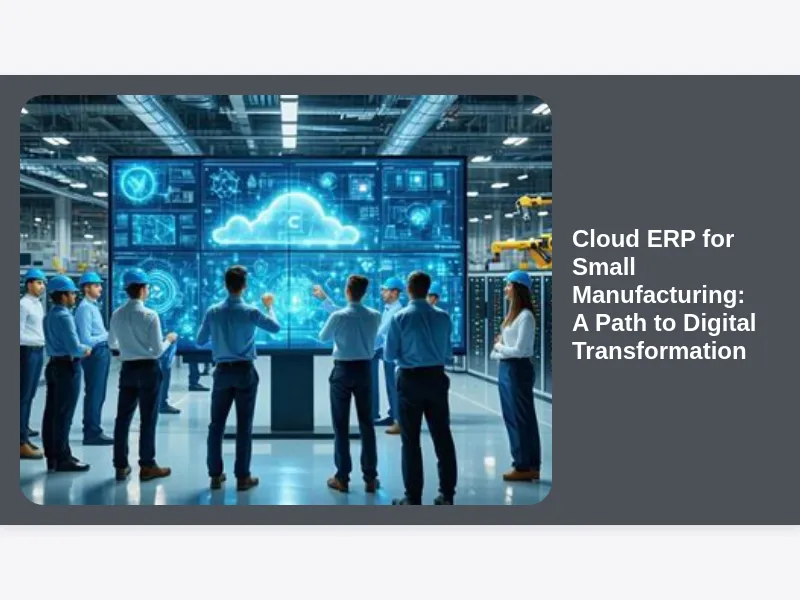
For small manufacturers, the journey to sustained growth and competitive advantage in today’s rapidly evolving global market often feels like an uphill battle. Constrained by limited resources, tight budgets, and the ever-present pressure to innovate, many find themselves grappling with outdated systems, manual processes, and fragmented data. Yet, a powerful solution is not just within reach but becoming increasingly indispensable: Cloud ERP for small manufacturing. It’s more than just software; it’s a strategic investment, a fundamental shift that paves the way for genuine digital transformation, unlocking efficiencies, insights, and agility previously reserved for much larger enterprises.
This comprehensive guide delves deep into how adopting a Cloud ERP system can revolutionize your small manufacturing operation, transforming challenges into opportunities and setting a robust foundation for future success. We’ll explore the ‘why’ and the ‘how,’ addressing common concerns and painting a clear picture of a more streamlined, data-driven, and ultimately more profitable future. Get ready to discover how cloud-based enterprise resource planning isn’t just a trend, but a vital necessity for any small manufacturer serious about thriving in the digital age.
The Modern Small Manufacturer: Navigating a Complex Landscape
The challenges faced by small manufacturers today are multifaceted and often unique to their scale and operational scope. Unlike their larger counterparts, who possess dedicated IT departments and substantial capital, small businesses must often make do with less, stretching every dollar and every hour to its maximum potential. This often translates into a reliance on legacy systems that no longer meet modern demands or, even more commonly, a patchwork of disconnected spreadsheets, basic accounting software, and manual record-keeping.
This piecemeal approach, while seemingly cost-effective in the short term, inevitably leads to significant inefficiencies, costly errors, and a severe lack of real-time visibility across the entire operation. From managing inventory and production schedules to tracking customer orders and financial performance, every aspect becomes a laborious task, prone to miscommunication and delayed decision-making. The lack of a centralized data source hinders growth, stifles innovation, and makes adapting to market changes incredibly difficult, putting these businesses at a distinct disadvantage.
Understanding Cloud ERP: More Than Just Software in the Sky
Before we delve into the transformative power of Cloud ERP for small manufacturing, it’s crucial to establish a clear understanding of what Cloud ERP truly entails. At its core, ERP, or Enterprise Resource Planning, is a suite of integrated applications that an organization can use to manage and automate many back-office functions related to technology, services, and human resources. Think of it as the central nervous system for your entire business, bringing together disparate functions under one unified platform.
What distinguishes Cloud ERP is its deployment model. Instead of installing and maintaining software on physical servers within your own premises, Cloud ERP solutions are hosted by a third-party vendor and accessed over the internet, typically through a web browser. This fundamentally changes the nature of IT infrastructure, shifting from a capital expenditure model (buying and maintaining hardware/software) to an operational expenditure model (paying a subscription fee for the service). This distinction is incredibly important for small manufacturers, as it removes many of the traditional barriers to entry associated with sophisticated business software.
The Digital Transformation Imperative for Small Manufacturers
Digital transformation isn’t just a buzzword; it’s a fundamental shift in how businesses operate and deliver value to customers, leveraging technology to improve every facet of their enterprise. For small manufacturers, embracing digital transformation is no longer optional; it’s a strategic imperative for survival and growth in an increasingly competitive global marketplace. It means moving beyond analog processes and siloed data to create a connected, intelligent, and agile operation capable of responding rapidly to market demands.
At its heart, digital transformation for manufacturing involves integrating advanced technologies—like Cloud ERP, IoT, and AI—into core business processes. This isn’t just about replacing old machines with new ones; it’s about fundamentally rethinking workflows, optimizing resource allocation, enhancing customer experiences, and empowering employees with better tools and information. The goal is to build a resilient, future-proof business model that can leverage data for predictive insights, automate repetitive tasks, and consistently deliver high-quality products more efficiently.
Why Cloud ERP is a Game-Changer for Small Manufacturers
For small manufacturers, the adoption of Cloud ERP for small manufacturing isn’t merely an upgrade; it’s a paradigm shift that delivers a multitude of tangible benefits, directly addressing many of the historical pain points that have held them back. One of the most compelling advantages is the significantly reduced upfront cost compared to traditional on-premise ERP systems. With no need for expensive server hardware, licenses, or dedicated IT staff for maintenance, small businesses can access enterprise-grade functionality at a predictable monthly or annual subscription, freeing up capital for other critical investments.
Beyond cost savings, Cloud ERP provides unparalleled flexibility and scalability. As a small manufacturer grows and evolves, the system can easily adapt, adding new users, modules, or functionalities without major infrastructure overhauls. This agility ensures that the ERP system remains a supportive tool, not a restrictive bottleneck, enabling businesses to scale operations efficiently, enter new markets, or introduce new product lines with confidence. The inherent accessibility of cloud solutions also means that key stakeholders can access critical business data from anywhere, at any time, fostering collaboration and informed decision-making across the entire organization.
Key Benefits: Streamlining Production and Inventory Management
One of the most immediate and profound impacts of implementing Cloud ERP for small manufacturing is the dramatic improvement it brings to production planning and inventory management. Small manufacturers often struggle with inaccurate inventory counts, stockouts, overstocking, and inefficient production schedules, all of which eat into profits and delay customer orders. A cloud-based ERP system centralizes all inventory data, providing real-time visibility into stock levels across multiple locations, incoming materials, and outgoing finished goods.
This comprehensive view allows for more precise demand forecasting, optimized reorder points, and significantly reduced carrying costs. Furthermore, Cloud ERP integrates production planning modules that can automatically generate work orders, track production progress against schedules, and optimize machine utilization. By having a clear, unified picture of raw materials, work-in-process, and finished goods, manufacturers can minimize waste, reduce lead times, and ensure that production aligns perfectly with customer demand, leading to higher customer satisfaction and a more agile supply chain.
Enhancing Financial Management and Reporting with Cloud ERP
Sound financial management is the bedrock of any successful business, and small manufacturers are no exception. Fragmented financial data, manual reconciliation processes, and delayed reporting can obscure the true financial health of an operation, making it difficult to make timely strategic decisions. Cloud ERP for small manufacturing revolutionizes this critical area by integrating all financial transactions directly with operational data, offering a unified ledger that provides a single source of truth.
From accounts payable and receivable to general ledger and payroll, all financial processes are streamlined and automated, significantly reducing manual effort and the potential for human error. Real-time financial dashboards provide instant insights into cash flow, profitability by product line, and overall financial performance, empowering management with the data needed for informed decision-making. Moreover, robust reporting capabilities allow for easy generation of financial statements, compliance reports, and custom analytics, offering a clear, comprehensive view of the business’s economic standing at any given moment, enabling proactive financial planning and control.
Improving Customer Relations and Sales Processes
While often overlooked in a manufacturing context, efficient customer relationship management (CRM) and streamlined sales processes are vital for sustainable growth. Small manufacturers need to quickly respond to inquiries, manage quotes, track orders, and provide excellent post-sale support to build lasting customer loyalty. Without an integrated system, this often involves disparate tools and manual follow-ups, leading to missed opportunities and frustrated customers.
Cloud ERP for small manufacturing often includes or seamlessly integrates with CRM functionalities that provide a 360-degree view of every customer interaction. Sales teams can access real-time inventory data, production schedules, and pricing information to generate accurate quotes quickly. Order management becomes automated, tracking an order from initial inquiry through production, shipping, and invoicing, ensuring transparency for both the customer and internal teams. This holistic approach not only enhances the customer experience but also empowers sales teams to be more productive, identify cross-selling opportunities, and build stronger, more profitable relationships, directly contributing to revenue growth.
Data Security and Reliability in the Cloud: A Common Concern Addressed
One of the most frequently raised concerns about adopting Cloud ERP for small manufacturing relates to data security and reliability. The idea of entrusting sensitive business data to a third-party server can be daunting for many business owners. However, modern cloud providers invest significantly more in security infrastructure and expertise than most small businesses could ever afford on their own. They employ state-of-the-art encryption, multi-factor authentication, regular security audits, and robust disaster recovery protocols to protect your data.
Reputable Cloud ERP vendors operate highly secure data centers with physical security measures, redundant power supplies, and sophisticated intrusion detection systems. They also handle all software updates and patches automatically, ensuring that your system is always running the latest, most secure version, protecting against emerging threats. Furthermore, cloud solutions typically offer far greater uptime reliability than on-premise systems, with built-in redundancies and automatic backups that ensure business continuity even in the event of unforeseen disruptions. For a small manufacturer, leveraging the expertise and infrastructure of a major cloud provider often results in a significantly more secure and reliable IT environment than they could maintain internally.
The Implementation Journey: Navigating Your Cloud ERP Transition
Embarking on the implementation of Cloud ERP for small manufacturing can seem like a monumental task, but with proper planning and execution, it can be a smooth and highly rewarding process. The journey typically begins with a thorough needs assessment, where your team identifies key pain points, defines desired outcomes, and outlines specific requirements for the new system. This initial phase is critical for selecting the right vendor and ensuring the chosen ERP aligns with your unique operational workflows.
Once a vendor is selected, the implementation process involves several key stages: data migration from existing systems, configuration of the ERP modules to match your business processes, user training, and rigorous testing to ensure everything functions as expected. While Cloud ERP implementations tend to be faster and less resource-intensive than their on-premise counterparts, they still require dedicated effort from your team. Engaging key stakeholders from different departments, establishing clear communication channels, and having a realistic timeline are all crucial for a successful transition, minimizing disruption and maximizing the return on your investment.
Choosing the Right Cloud ERP Vendor for Manufacturing Success
The market for Cloud ERP for small manufacturing is vibrant, offering a wide array of solutions, each with its own strengths and specializations. Making the right choice of vendor is a critical decision that will significantly impact the success of your digital transformation journey. It’s not just about features; it’s about finding a partner whose product, support, and vision align with your business goals and specific manufacturing needs.
When evaluating vendors, look beyond the price tag. Consider their industry expertise: do they understand the nuances of manufacturing, such as bill of materials, discrete production, or quality control? Investigate their customer support and training resources; prompt and effective support is invaluable during implementation and ongoing usage. Evaluate the system’s scalability and flexibility to ensure it can grow with your business and adapt to future changes. Request demonstrations, speak to existing customers, and carefully review contract terms. A thorough due diligence process will help you select a Cloud ERP vendor that will be a true enabler of your manufacturing efficiency and future growth, rather than just another software provider.
Measuring ROI: Quantifying the Value of Cloud ERP
Investing in Cloud ERP for small manufacturing represents a significant strategic decision, and naturally, business owners will want to understand the return on that investment (ROI). While some benefits, like improved decision-making or enhanced customer satisfaction, can be difficult to quantify directly, many aspects of Cloud ERP deliver clear, measurable financial gains that directly contribute to the bottom line. Calculating ROI involves looking at both cost savings and revenue generation attributable to the new system.
On the cost savings front, consider reductions in inventory carrying costs due to optimized stock levels, decreased labor costs from automating manual tasks, fewer errors leading to less rework and scrap, and reduced IT infrastructure expenses. In terms of revenue generation, look at increased production throughput, faster order fulfillment leading to higher customer retention, improved ability to take on more orders, and better insights for identifying profitable product lines. By establishing baseline metrics before implementation and consistently tracking performance indicators after go-live, small manufacturers can clearly demonstrate how Cloud ERP is translating into tangible financial benefits, justifying the investment and highlighting areas for further optimization.
Employee Adoption and Training: Fostering a Smooth Transition
Even the most sophisticated Cloud ERP for small manufacturing system will only be as effective as the people using it. Employee adoption and comprehensive training are often the most overlooked yet critical components of a successful ERP implementation. Resistance to change is a natural human tendency, and without proper preparation and support, employees may struggle to adapt to new workflows, leading to frustration, reduced productivity, and ultimately, a failure to fully leverage the system’s capabilities.
To mitigate this, a proactive change management strategy is essential. Involve key users from various departments early in the planning process to foster a sense of ownership and gather valuable input. Provide thorough, hands-on training tailored to different roles and responsibilities, ensuring that users understand not just how to use the system, but why the changes are beneficial for them and the company. Offer ongoing support, clear documentation, and opportunities for feedback. When employees feel supported, empowered, and understand the value Cloud ERP brings to their daily tasks, they become champions of the new system, driving its successful integration into the manufacturing operation and truly realizing its potential.
Seamless Integration: Connecting Cloud ERP to Your Ecosystem
In today’s interconnected business world, no single software solution operates in a vacuum. For Cloud ERP for small manufacturing to deliver its full potential, it must seamlessly integrate with other specialized tools and systems that your business relies on. Whether it’s connecting with e-commerce platforms, CAD software, shipping carriers, or specialized quality control systems, the ability of your Cloud ERP to communicate and exchange data with these external applications is paramount.
Modern Cloud ERP solutions are typically built with open APIs (Application Programming Interfaces) that facilitate straightforward integration. This means that data can flow automatically between systems, eliminating the need for manual data entry, reducing errors, and ensuring that all relevant information is consistent and up-to-date across your entire operational ecosystem. For a small manufacturer, this capability is invaluable, as it allows them to leverage existing specialized tools without creating new data silos, ensuring a truly unified and efficient digital environment. Prioritize an ERP system with robust integration capabilities to maximize efficiency and avoid future compatibility headaches.
Future-Proofing Manufacturing: Cloud ERP and Industry 4.0
The manufacturing industry is in the midst of a profound transformation, often referred to as Industry 4.0, characterized by the convergence of digital technologies, automation, and data exchange. For small manufacturers looking to not just survive but thrive in this evolving landscape, adopting Cloud ERP for small manufacturing is a foundational step towards future-proofing their operations and embracing the principles of Industry 4.0.
Cloud ERP systems are inherently designed to be flexible and scalable, making them ideal platforms to integrate with emerging technologies such as the Internet of Things (IoT), Artificial Intelligence (AI), and machine learning. Imagine sensors on your production floor feeding real-time performance data directly into your Cloud ERP, enabling predictive maintenance, optimizing machine uptime, and identifying production bottlenecks before they occur. Or AI-driven analytics within the ERP offering insights into demand patterns, quality control issues, or supply chain risks. By laying the groundwork with a robust cloud-based ERP, small manufacturers position themselves to incrementally adopt these advanced technologies, evolving their operations into smarter, more connected, and highly efficient factories of the future.
Debunking Myths: Separating Cloud ERP Fact from Fiction
Despite the growing adoption and proven benefits, several misconceptions persist around Cloud ERP for small manufacturing that can deter businesses from exploring this transformative solution. One common myth is that cloud solutions are less customizable than on-premise systems. In reality, modern Cloud ERP platforms offer extensive configuration options, low-code/no-code tools, and robust API integrations that allow businesses to tailor the system to their unique workflows without complex coding, ensuring flexibility while maintaining upgradability.
Another frequently heard concern is that cloud systems lead to vendor lock-in, making it difficult to switch providers. While transitioning ERP systems always involves effort, reputable Cloud ERP vendors understand the need for data portability and provide mechanisms for exporting your data should you decide to move. Furthermore, the notion that all cloud solutions are generic and not suitable for specialized manufacturing needs is simply untrue. Many Cloud ERP providers offer industry-specific modules and functionalities designed precisely for the complexities of manufacturing, from discrete to process manufacturing, ensuring that small businesses don’t have to compromise on specialized features while enjoying the benefits of the cloud. It’s crucial to look past these myths and evaluate cloud solutions based on their actual capabilities and track record.
The Strategic Imperative: Beyond Cost Savings to Competitive Advantage
While the cost savings and efficiency gains offered by Cloud ERP for small manufacturing are undeniably attractive, the true strategic imperative lies in its ability to confer a sustainable competitive advantage. In a market where agility, speed, and responsiveness are key differentiators, businesses operating with fragmented data and manual processes simply cannot keep pace. Cloud ERP equips small manufacturers with the tools to innovate faster, respond to market shifts more rapidly, and serve customers more effectively than ever before.
By centralizing data, automating routine tasks, and providing real-time insights, Cloud ERP frees up valuable human capital to focus on higher-value activities like product development, strategic planning, and customer engagement. It enables data-driven decision-making, allowing manufacturers to identify new opportunities, optimize pricing strategies, and predict future trends with greater accuracy. This isn’t just about doing things cheaper or faster; it’s about doing things smarter, positioning your small manufacturing business not just to compete, but to lead and thrive in a dynamic global economy.
Realizing Your Digital Vision: A Phased Approach to Cloud ERP
For many small manufacturers, the idea of a complete digital transformation can feel overwhelming. The good news is that adopting Cloud ERP for small manufacturing doesn’t have to be an all-or-nothing endeavor. A phased approach allows businesses to implement modules incrementally, realizing immediate benefits in critical areas before expanding to encompass the entire operation. This strategy minimizes disruption, allows teams to adapt gradually, and spreads the investment over time.
For instance, a small manufacturer might initially focus on implementing core modules like inventory management and production planning to address immediate pain points. Once these are successfully integrated and optimized, they can then expand to include financial management, CRM, or quality control. This iterative approach allows businesses to build confidence, fine-tune processes, and learn from each phase, ensuring a smoother and more successful overall transformation. It’s a pragmatic pathway to digital maturity, allowing even the smallest manufacturers to embark on their journey with manageable steps.
The Human Element: Empowering Your Workforce with Cloud ERP
While technology is at the heart of Cloud ERP for small manufacturing, its ultimate success hinges on how it empowers the people within your organization. Digital transformation isn’t just about systems; it’s about giving your workforce the tools and information they need to be more productive, engaged, and strategic. Cloud ERP liberates employees from tedious, repetitive manual tasks, allowing them to focus on value-added activities that require human intellect and creativity.
Imagine a production manager who no longer spends hours reconciling spreadsheets but instead analyzes real-time data to optimize machine schedules. Or a sales representative who has instant access to inventory levels and customer history, enabling them to provide accurate quotes and superior service. Cloud ERP fosters collaboration by providing a single source of truth across departments, breaking down traditional silos and encouraging cross-functional teamwork. By investing in Cloud ERP, small manufacturers are not just investing in software; they are investing in their people, empowering them with better tools, richer data, and a clearer understanding of their contribution to the company’s overall success, leading to higher job satisfaction and improved retention.
Conclusion: Embracing the Future of Small Manufacturing
The journey toward digital transformation for small manufacturing businesses is no longer a luxury; it’s a strategic imperative. In a world characterized by rapid change, intense competition, and ever-increasing customer expectations, relying on outdated systems and fragmented processes is a recipe for stagnation. Cloud ERP for small manufacturing emerges as the quintessential tool, offering a powerful, accessible, and scalable pathway to modernize operations, unlock efficiencies, and gain a sustainable competitive edge.
From streamlining production and inventory to enhancing financial visibility, improving customer relationships, and future-proofing against industry shifts, Cloud ERP provides a unified, intelligent backbone for your entire enterprise. It democratizes access to sophisticated business technology, leveling the playing field and empowering small manufacturers to achieve levels of agility and insight previously unattainable. Embrace this transformative technology not just as an IT project, but as a strategic investment in your future, paving the way for sustained growth, innovation, and enduring success in the digital age. The path to digital transformation is clear, and it begins with Cloud ERP.