In today’s hyper-competitive and ever-evolving global market, businesses face unprecedented pressures to be faster, more efficient, and incredibly responsive. The traditional, linear supply chain models are no longer sufficient to navigate the complexities of fluctuating demand, geopolitical shifts, and rapid technological advancements. This is where the powerful combination of continuous improvement, agile methodologies, and robust Enterprise Resource Planning (ERP) systems comes into play, creating a dynamic synergy that empowers organizations to thrive. Far from being just a transactional system, modern ERP is a strategic enabler, driving continuous improvement: ERP’s role in agile supply chain methodologies is becoming increasingly pivotal, transforming how businesses manage their end-to-end operations.
Understanding the Essence of Continuous Improvement in Modern Supply Chains
At its core, continuous improvement (CI) is an ongoing effort to improve products, services, or processes. These efforts can seek “incremental” improvement over time or “breakthrough” improvement all at once. The philosophical underpinning is that every process, no matter how optimized it seems, can always be made better. In the context of the supply chain, this means constantly scrutinizing every step from raw material sourcing to final customer delivery, identifying bottlenecks, reducing waste, and enhancing value at every turn. It’s about cultivating a culture where every team member is empowered to identify inefficiencies and propose solutions.
For a supply chain, continuous improvement isn’t merely a buzzword; it’s a survival mechanism. It translates into reduced lead times, lower operational costs, fewer errors, higher quality products, and ultimately, greater customer satisfaction. Without a commitment to CI, supply chains risk stagnation, becoming brittle and unresponsive to market shifts. Organizations embracing CI are inherently more resilient, adaptable, and competitive, ensuring that their operational strategies remain aligned with dynamic market demands.
The Rise of Agile Supply Chain Methodologies: Navigating Volatility with Speed
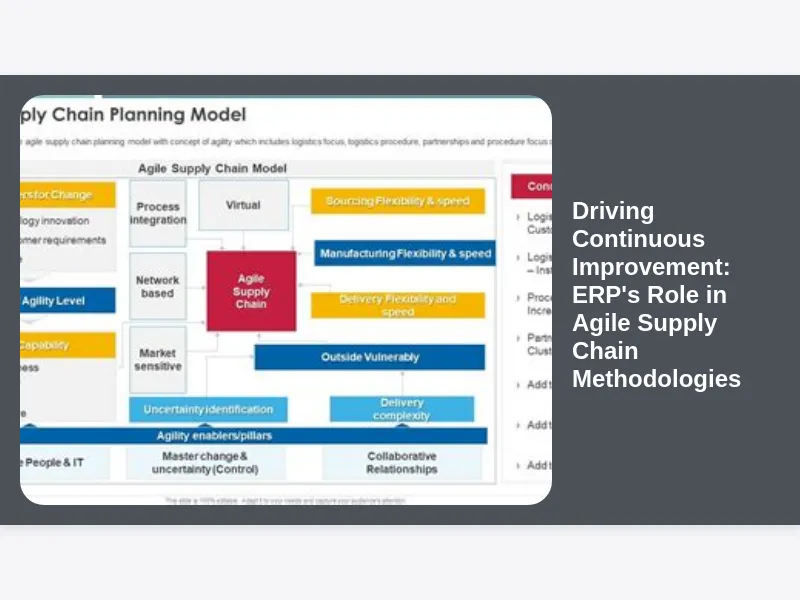
The concept of “agile” originated in software development but has rapidly permeated other business functions, particularly the supply chain, due to its emphasis on flexibility, responsiveness, and customer centricity. An agile supply chain is characterized by its ability to sense and respond quickly to changes in demand, supply, and external disruptions. It’s not just about speed; it’s about smart speed – the ability to adapt without losing efficiency or incurring excessive costs. This contrasts sharply with traditional “lean” approaches, which primarily focus on waste elimination, although the two are often complementary.
Why has agility become so critical? The simple answer lies in the acronym VUCA – Volatility, Uncertainty, Complexity, and Ambiguity – which perfectly describes today’s business environment. Supply chains today face unprecedented challenges, from natural disasters and pandemics to trade wars and rapid technological obsolescence. An agile methodology equips supply chains with the necessary tools and mindset to pivot quickly, reconfigure networks, adapt production schedules, and manage inventory levels proactively, rather than reactively. This proactive stance is essential for maintaining competitive advantage and ensuring business continuity.
ERP Systems: The Foundational Backbone for Operational Excellence
Enterprise Resource Planning (ERP) systems have been the central nervous system for businesses for decades, integrating various functions like finance, HR, manufacturing, and supply chain management into a single, cohesive platform. Traditionally, ERP was seen as a system of record, focusing on transaction processing and data consolidation. Its primary objective was to standardize processes, improve data accuracy, and provide a single source of truth across the enterprise. By breaking down departmental silos, ERP offered a holistic view of the organization’s operations, leading to improved efficiency and better decision-making.
Modern ERP systems, however, have evolved far beyond their foundational roles. They are no longer just about recording transactions but about enabling strategic execution. Today’s ERP platforms leverage advanced technologies like cloud computing, artificial intelligence (AI), machine learning (ML), and the Internet of Things (IoT) to offer predictive insights, automate complex processes, and support real-time collaboration. This evolution makes ERP an indispensable tool, not just for managing resources, but for actively driving continuous improvement: ERP’s role in agile supply chain methodologies is more pronounced than ever, offering the digital infrastructure required for true transformation.
Bridging the Gap: How Modern ERP Enables Continuous Improvement Across the Supply Chain
The synergy between ERP and continuous improvement is profound. A well-implemented ERP system provides the structured environment and data foundation necessary to identify areas for improvement and measure the impact of changes. By centralizing data from various operational areas – procurement, manufacturing, inventory, logistics, and sales – ERP creates a comprehensive picture of the supply chain’s performance. This integrated view allows organizations to pinpoint inefficiencies that might otherwise remain hidden within disparate departmental systems.
Furthermore, ERP systems facilitate process standardization, which is a prerequisite for effective continuous improvement. When processes are standardized, it becomes easier to benchmark performance, identify deviations, and implement best practices consistently. ERP’s workflow automation capabilities also play a crucial role, eliminating manual tasks, reducing human error, and freeing up personnel to focus on higher-value, analytical tasks aimed at further optimization. This foundational support from ERP is what truly enables the ongoing pursuit of excellence, providing the stable ground upon which agile changes can be built and evaluated.
Real-Time Data and Analytics: The Fuel for Agile Decision-Making
Agile supply chains thrive on information. The ability to make quick, informed decisions is paramount, and this relies entirely on access to accurate, up-to-the-minute data. This is precisely where modern ERP systems excel. By integrating data from all points of the supply chain – from sensor data on production lines and warehouse stock levels to supplier performance metrics and customer order statuses – ERP provides a real-time pulse of the entire operation. This continuous flow of data is invaluable for sensing changes and adapting rapidly.
With built-in analytics and reporting tools, ERP transforms raw data into actionable insights. Supply chain managers can monitor key performance indicators (KPIs) in real-time, identify trends, detect anomalies, and predict potential disruptions before they escalate. For example, sudden spikes in demand, delays from a specific supplier, or quality issues in a batch of products can be immediately flagged, allowing for swift corrective action. This data-driven approach is fundamental to agility, enabling businesses to react proactively rather than merely respond to events after they have occurred, solidifying driving continuous improvement: ERP’s role in agile supply chain methodologies.
Enhanced Visibility and Transparency Across the End-to-End Supply Chain
One of the most significant challenges for complex global supply chains is achieving comprehensive visibility. Often, different segments of the chain operate in silos, leading to blind spots regarding inventory levels, order statuses, and potential bottlenecks. Modern ERP systems directly address this by providing a single, unified platform that offers end-to-end visibility. This means everyone, from procurement to logistics to sales, operates with the same, accurate information, fostering greater transparency across the entire value chain.
This enhanced visibility extends beyond internal operations to include external partners – suppliers, manufacturers, logistics providers, and customers. Through supplier portals and customer relationship management (CRM) modules integrated with ERP, businesses can share relevant information seamlessly, track shipments, manage returns, and communicate changes in real-time. This transparency is vital for an agile supply chain, as it enables all stakeholders to coordinate efforts effectively, anticipate issues, and collaborate on solutions, significantly reducing lead times and improving overall responsiveness.
Optimizing Processes Through ERP-Driven Automation and Workflow Management
Continuous improvement is often hindered by manual, repetitive tasks that are prone to errors and consume valuable time. ERP systems are instrumental in overcoming this challenge through extensive automation capabilities. From automated purchase order generation based on inventory levels to robotic process automation (RPA) for routine data entry and invoice processing, ERP streamlines numerous operational workflows. This not only increases efficiency but also frees human capital to focus on more strategic, analytical, and problem-solving activities – the very essence of continuous improvement.
Beyond simple task automation, modern ERP offers sophisticated workflow management tools that define, execute, and monitor complex business processes. These tools ensure that every step of a process is followed correctly, approvals are obtained promptly, and deviations are flagged. By standardizing and automating these workflows, ERP reduces variability, enforces compliance, and provides a clear audit trail, making it easier to identify bottlenecks and areas ripe for optimization. This proactive management of processes through automation is a cornerstone of driving continuous improvement: ERP’s role in agile supply chain methodologies.
Predictive Analytics and AI: Proactive Improvement with ERP
The true power of modern ERP for continuous improvement and agility lies in its integration with advanced technologies like predictive analytics and artificial intelligence. While traditional ERP primarily focused on historical data, next-generation systems leverage AI and machine learning algorithms to analyze vast datasets, identify patterns, and forecast future outcomes with remarkable accuracy. This shift from reactive to proactive management is a game-changer for supply chain optimization.
For instance, AI-powered ERP modules can analyze historical sales data, promotional calendars, external factors like weather, and even social media sentiment to generate highly accurate demand forecasts. This allows businesses to optimize inventory levels, production schedules, and logistics routes, minimizing stockouts and overstock. Similarly, predictive maintenance features can analyze sensor data from machinery to anticipate equipment failures, enabling proactive repairs and preventing costly production disruptions. This intelligent foresight, embedded within ERP, significantly enhances the supply chain’s ability to remain agile and continuously improve.
Fostering Collaboration and Communication with Integrated ERP Platforms
Effective collaboration, both internal and external, is a cornerstone of both continuous improvement and agile methodologies. Within an organization, departmental silos can impede the flow of information and hinder problem-solving. Externally, poor communication with suppliers and customers can lead to delays, misunderstandings, and missed opportunities. ERP systems, by their very nature, are designed to break down these barriers by providing a unified platform for communication and information sharing.
Modern ERP includes robust features for collaborative planning, shared dashboards, integrated communication tools, and even dedicated portals for suppliers and customers. This ensures that all stakeholders have access to the same, consistent information, facilitating joint decision-making and rapid problem resolution. For example, if a sudden change in product specifications is required, the integrated ERP platform allows engineering, procurement, production, and sales teams to collaborate instantaneously, minimizing delays and ensuring everyone is aligned. This seamless communication network is critical for the adaptive nature of agile supply chains.
Risk Management and Resilience: An Agile ERP Approach
In a world prone to disruptions – from natural disasters and geopolitical tensions to cyber-attacks and economic downturns – supply chain resilience is no longer optional; it’s imperative. An agile supply chain, supported by a powerful ERP system, is inherently more resilient. ERP provides the tools to identify, assess, and mitigate risks proactively, transforming potential crises into manageable challenges. This capability is a core aspect of driving continuous improvement: ERP’s role in agile supply chain methodologies.
Modern ERP systems can integrate data from various risk factors, offering comprehensive risk assessments for suppliers, logistics routes, and even geopolitical regions. They can simulate different disruption scenarios, allowing businesses to test their contingency plans and optimize their responses. Furthermore, by providing real-time visibility into inventory across multiple locations and alternative sourcing options, ERP enables rapid adjustments in the event of a disruption, ensuring business continuity. This ability to adapt quickly and recover efficiently is a hallmark of an agile and continuously improving supply chain.
Measuring Success: KPIs and Performance Management with ERP
You can’t improve what you don’t measure. Continuous improvement relies heavily on robust performance measurement and analysis. ERP systems are unparalleled in their ability to track, analyze, and report on a vast array of Key Performance Indicators (KPIs) across the entire supply chain. From operational metrics like order fulfillment rates, on-time delivery percentages, and inventory turns to financial KPIs such as cost per unit and return on assets, ERP provides the data necessary to monitor progress and evaluate the effectiveness of improvement initiatives.
Through customizable dashboards and detailed reporting features, supply chain managers can gain deep insights into performance at various levels – from individual processes to overall network efficiency. This data-driven approach allows organizations to establish baselines, set realistic targets, and continuously monitor whether agile strategies and continuous improvement efforts are yielding the desired results. When an initiative doesn’t meet expectations, the detailed data provided by ERP allows for a precise post-mortem analysis, enabling rapid adjustments and further iterative improvements.
Challenges and Best Practices for ERP-Enabled Agile Transformation
While the benefits of leveraging ERP for an agile and continuously improving supply chain are clear, the transformation journey is not without its challenges. One common hurdle is organizational resistance to change, particularly when new processes or technologies are introduced. Another significant challenge can be data quality – “garbage in, garbage out” applies here, as inaccurate data can undermine even the most sophisticated ERP system. Integration complexities with legacy systems or third-party applications also pose a challenge, as does the sheer scale of managing a large-scale ERP implementation or upgrade.
To overcome these challenges, best practices include securing strong executive sponsorship, fostering a culture of continuous learning, and investing in comprehensive user training. A phased implementation approach can help manage complexity, allowing organizations to realize value incrementally. Furthermore, prioritizing data governance and establishing clear data quality standards from the outset is crucial. Partnering with experienced ERP vendors and consultants who understand both the technology and the nuances of supply chain operations can significantly enhance the chances of a successful transformation, truly capitalizing on driving continuous improvement: ERP’s role in agile supply chain methodologies.
The Future Landscape: Next-Gen ERP for Hyper-Agile Supply Chains
The evolution of ERP is far from over. The next generation of ERP systems will be even more deeply integrated with emerging technologies, pushing the boundaries of what’s possible for agile and continuously improving supply chains. We can anticipate greater leveraging of advanced AI and machine learning for predictive and prescriptive analytics, enabling ERP to not just tell you what happened or what will happen, but to recommend the best course of action. The Internet of Things (IoT) will provide an ever-richer stream of real-time data from every conceivable point in the supply chain, enabling hyper-granular visibility and immediate response capabilities.
Blockchain technology also holds immense promise for ERP, offering unparalleled transparency and traceability for supply chain transactions, enhancing trust and reducing fraud. Furthermore, the rise of composable ERP architectures, where businesses can assemble best-of-breed modules from different vendors, will offer unprecedented flexibility and customization, allowing organizations to tailor their systems precisely to their unique agile needs. This future will see ERP transform from a system of record and execution into an intelligent, adaptive ecosystem that anticipates needs and autonomously drives optimization, solidifying driving continuous improvement: ERP’s role in agile supply chain methodologies at its core.
Conclusion: Empowering Your Supply Chain for Sustainable Growth in a Dynamic World
In an era defined by constant change, the ability of a supply chain to be both agile and committed to continuous improvement is not just an advantage – it’s a fundamental necessity. Businesses that fail to adapt risk being left behind in a wake of disruption and inefficiency. Modern ERP systems stand as the undisputed foundation for this transformation, providing the integrated data, automation capabilities, real-time visibility, and analytical prowess required to achieve operational excellence.
By strategically implementing and leveraging advanced ERP solutions, organizations can empower their teams to make faster, more informed decisions, optimize processes, mitigate risks, and foster a culture of ongoing enhancement. The synergistic relationship between continuous improvement, agile methodologies, and ERP creates a virtuous cycle where every improvement fuels further agility, and every agile adaptation leads to new opportunities for optimization. Embracing this powerful triad is not just about keeping pace with the market; it’s about driving continuous improvement: ERP’s role in agile supply chain methodologies is about proactively shaping a resilient, responsive, and sustainably growing future for your enterprise.