Hey there, fellow workshop owner! Are you feeling the crunch of managing your small manufacturing or fabrication business with spreadsheets, sticky notes, and a hodgepodge of disconnected software? You’re not alone. Many small workshops reach a point where manual processes become a bottleneck, hindering growth and profitability. The good news is, there’s a powerful solution on the horizon: Cloud ERP. But let’s be honest, the idea of an Enterprise Resource Planning (ERP) system often conjures images of massive, expensive software solutions typically reserved for large corporations. That perception, thankfully, is outdated. Today, finding the most cost-effective Cloud ERP for small workshops isn’t just a dream; it’s a tangible reality that can transform your operations.
This comprehensive guide is designed to cut through the jargon and demystify the process of selecting an affordable yet robust Cloud ERP. We’ll delve into what truly constitutes “cost-effective,” explore essential features tailored for small workshops, discuss various pricing models, and provide a roadmap to help you make an informed decision. Our goal is to empower you to implement a system that not only streamlines your business but also becomes a catalyst for sustainable growth, all without breaking the bank. So, let’s embark on this journey to unlock efficiency and profitability for your small workshop.
The Small Workshop’s Predicament: Why Traditional Methods Are Holding You Back
Running a small workshop is a testament to dedication and skill. You’re likely juggling everything from sales and customer inquiries to production scheduling, inventory management, and financial reporting. In the early days, a few spreadsheets and a good memory might have sufficed. However, as your business grows, these traditional, disconnected methods begin to show their cracks. Orders get lost, inventory levels are inaccurate, production delays become frequent, and cash flow forecasting is more guesswork than science. This fragmented approach isn’t just inconvenient; it actively eats into your profits and stifles your potential for expansion.
Imagine a scenario where a critical component for a job is out of stock, but nobody realized it until the production line ground to a halt. Or perhaps, you over-ordered a material because your inventory records were outdated, tying up valuable capital. These are everyday struggles for small workshops that lack a centralized system. The time spent chasing information, correcting errors, and reconciling discrepancies is time not spent on valuable activities like product innovation, customer engagement, or strategic planning. Ultimately, the cumulative impact of these inefficiencies can be far more expensive than investing in a proper solution, making the need for finding the most cost-effective Cloud ERP for small workshops even more urgent.
What Exactly is Cloud ERP and Why Does it Matter for Small Businesses?
Before we dive into cost-effectiveness, let’s clarify what Cloud ERP actually is. Simply put, Enterprise Resource Planning (ERP) is a system that integrates all aspects of your business operations – from product planning, development, manufacturing, sales, and marketing to human resources and finance – into a single, cohesive database. When we add “Cloud” to ERP, it means the software and its associated data are hosted on remote servers, accessible over the internet, rather than being installed and managed on your workshop’s own computers. This fundamental shift from on-premise to cloud-based delivery has profound implications, especially for small businesses and workshops.
For small workshops, the “Cloud” aspect of ERP is a game-changer. It eliminates the need for significant upfront investments in expensive hardware, servers, and dedicated IT staff to maintain them. Instead, you pay a subscription fee, typically on a monthly or annual basis, and the vendor handles all the infrastructure, updates, and maintenance. This model democratizes access to powerful business management tools that were once exclusive to large enterprises. It means your team can access critical business information from anywhere, whether they’re on the shop floor, at home, or on the road, fostering collaboration and responsiveness. This accessibility and reduced IT burden are core reasons why exploring finding the most cost-effective Cloud ERP for small workshops is now a viable and attractive option.
Deconstructing “Cost-Effectiveness”: Beyond the Sticker Price for Workshop Software
When we talk about finding the most cost-effective Cloud ERP for small workshops, it’s crucial to understand that “cost-effectiveness” extends far beyond the initial subscription fee. Many workshop owners mistakenly evaluate solutions solely on their monthly price tag, overlooking a multitude of other factors that significantly impact the Total Cost of Ownership (TCO) and, more importantly, the return on investment (ROI). A seemingly cheap system might turn out to be incredibly expensive in the long run if it lacks essential features, requires extensive customization, or demands significant ongoing maintenance.
To truly assess cost-effectiveness, you need to consider a broader spectrum of expenses and benefits. This includes the cost of implementation, which involves data migration, system configuration, and integration with existing tools. Then there’s the ongoing cost of training your team, potential add-on modules as your business grows, and the quality and cost of customer support. Furthermore, don’t forget the hidden costs of inefficient processes if the chosen system doesn’t adequately address your workshop’s unique needs. A truly cost-effective solution is one that delivers significant value and efficiency gains over its lifespan, offsetting its price through tangible improvements in productivity, accuracy, and profitability, making the initial search for an affordable option much more nuanced.
Core ERP Modules Essential for Small Workshop Operations
For a small workshop, not every single ERP module is necessary, but a select few are absolutely vital for streamlining operations and achieving cost-effectiveness. The key is to identify the core functionalities that will have the most impact on your day-to-day work, without paying for features you don’t need. These typically include Inventory Management, Production Planning, Order Management, a foundational level of Customer Relationship Management (CRM), and integrated Financials. Understanding these core components is paramount when you’re dedicated to finding the most cost-effective Cloud ERP for small workshops.
Let’s break them down. Inventory Management is non-negotiable; it tracks raw materials, work-in-progress, and finished goods, preventing stockouts and overstocking. Production Planning helps schedule jobs, allocate resources, and monitor progress on the shop floor, ensuring timely delivery. Order Management handles everything from quotes to sales orders, invoicing, and shipping. A basic CRM module helps manage customer interactions and track sales leads, which is crucial for repeat business. Finally, Financials integrates with all other modules to provide a real-time view of your workshop’s fiscal health, handling accounts payable, accounts receivable, and general ledger functions. Choosing a system that offers these core modules as a standard package, or allows you to add them incrementally, will be critical for managing costs.
Evaluating Cloud ERP Pricing Models: Subscription vs. User-Based vs. Module-Based
Navigating the various pricing models offered by Cloud ERP vendors can feel like deciphering a complex puzzle, but understanding them is crucial for finding the most cost-effective Cloud ERP for small workshops. Most Cloud ERP solutions operate on a subscription basis, which is generally a monthly or annual fee. However, within this subscription framework, vendors often employ different structures that can significantly impact your overall expenditure. It’s not a one-size-fits-all approach, and what works for one workshop might not be ideal for another.
Common pricing models include user-based pricing, where the cost scales with the number of active users accessing the system. This can be efficient for workshops with a stable and limited number of employees who need direct system access. Then there’s module-based pricing, where you pay for each specific module (e.g., inventory, production, financials) you activate. This offers flexibility, allowing you to start with essential modules and add more as your business grows or needs evolve. Some vendors might also offer tier-based pricing, which bundles a certain set of features and users into different package levels. Carefully analyzing your current and projected needs against these models will help you determine which structure provides the most value without incurring unnecessary costs, ensuring you truly land on the most cost-effective solution for your unique operational footprint.
Key Features to Look For in a Cost-Effective Solution for Small Manufacturing
When you’re engaged in finding the most cost-effective Cloud ERP for small workshops, the focus shouldn’t just be on the price, but on the practical features that will genuinely elevate your manufacturing process. Small workshops often have unique needs that differ from larger factories, emphasizing agility, precision, and efficient resource utilization. Therefore, a cost-effective system isn’t merely cheap; it’s one that delivers high value through functionalities directly applicable to your day-to-day operations. These features enable you to produce more efficiently, reduce waste, and improve product quality, directly impacting your bottom line.
Look for capabilities such as a robust Bill of Materials (BOM) management system, which allows you to define all the components and quantities needed for each product, ensuring accuracy and consistency. Routing capabilities are also critical, mapping out the sequence of operations required for production, helping with scheduling and resource allocation. Even basic shop floor control features, like tracking job progress and labor time, can provide invaluable insights into efficiency. Furthermore, consider systems that offer some level of quality control functionality, allowing you to implement checks at various stages of production. These specific manufacturing-centric features, when bundled into a reasonably priced Cloud ERP, are what truly define a cost-effective solution for a small workshop, turning efficiency into profitability.
Considering Scalability and Flexibility for Future Growth of Your Workshop
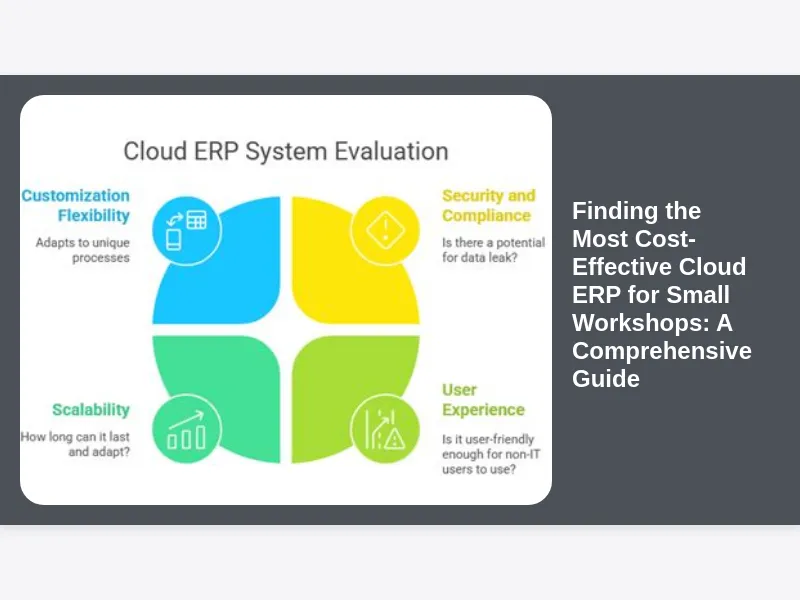
One of the most strategic considerations when you’re finding the most cost-effective Cloud ERP for small workshops is its capacity for scalability and flexibility. While your current needs might be specific and limited, a thriving workshop is a growing workshop. Investing in a system that can’t grow with you will inevitably lead to another costly migration in a few years, negating any initial savings. Think of your Cloud ERP as a long-term partner for your business journey; it needs to be able to adapt to increasing transaction volumes, new product lines, additional users, and evolving business processes.
A truly cost-effective solution for the long haul is one that offers modularity, allowing you to easily add new functionalities or user licenses as your demands increase, without undergoing a complete system overhaul. This might mean starting with core inventory and production modules, and later adding advanced analytics, a more robust CRM, or e-commerce integrations. Look for vendors who demonstrate a clear upgrade path and offer different pricing tiers that can accommodate expansion. Choosing a flexible system protects your initial investment and ensures that your chosen Cloud ERP remains a valuable asset, rather than becoming an expensive limitation, as your workshop continues to evolve and flourish.
The Importance of User Experience and Ease of Adoption in Cloud ERP
When dedicated to finding the most cost-effective Cloud ERP for small workshops, it’s often tempting to prioritize feature lists and price tags above all else. However, overlooking the importance of user experience (UX) and ease of adoption can prove to be a remarkably expensive mistake. A system, no matter how feature-rich or affordably priced, will fail to deliver its promised value if your team finds it difficult, frustrating, or overly complex to use. The time and resources spent on training, troubleshooting, and correcting errors due to a poor user interface can quickly erode any upfront cost savings, ultimately making the system anything but cost-effective.
A user-friendly interface minimizes the learning curve, reducing the time and cost associated with initial training. When employees can intuitively navigate the system and quickly understand how to perform their tasks, they become more productive faster. This also leads to higher adoption rates across your workshop, ensuring that the investment benefits everyone and becomes fully integrated into your daily operations. Look for systems with modern, clean designs, logical workflows, and readily available in-app help or tutorials. A Cloud ERP that champions a positive user experience is an investment in your team’s efficiency and morale, making it a critical factor in the true cost-effectiveness and long-term success of your implementation.
Integration Capabilities: Connecting Your ERP to Other Essential Workshop Tools
In the quest for finding the most cost-effective Cloud ERP for small workshops, a critical, yet often underestimated, factor is the system’s ability to integrate seamlessly with other essential tools you might already be using or plan to use. While an ERP aims to centralize many functions, it’s rare for a single system to cover absolutely everything, especially for specialized tasks. Your workshop likely uses specific software for CAD/CAM design, payroll, e-commerce, or advanced shipping solutions. A Cloud ERP that acts as an isolated island, unable to communicate with these other applications, creates new data silos and negates much of the efficiency it promises.
Look for Cloud ERP solutions that offer robust integration capabilities, whether through native connectors, an Application Programming Interface (API), or third-party integration platforms. For instance, if you sell products online, a direct link to your e-commerce platform can automate order entry and inventory updates. Integration with your preferred accounting software (if not fully replaced by the ERP’s financial module) ensures consistent financial reporting. The ability to connect your ERP to other critical systems reduces manual data entry, minimizes errors, and creates a more cohesive, automated workflow across your entire workshop. This interoperability is a hallmark of a truly cost-effective solution, maximizing the value of all your software investments.
Data Security and Reliability: Protecting Your Workshop’s Most Valuable Asset
When you’re committed to finding the most cost-effective Cloud ERP for small workshops, it’s paramount to consider not just the financial outlays but also the security and reliability of your data. In today’s digital landscape, your business data—from customer information and proprietary designs to financial records and production schedules—is arguably your most valuable asset. Entrusting this data to a cloud provider means you must have absolute confidence in their security measures and the reliability of their service. A data breach or prolonged system downtime can incur costs far exceeding any savings from a cheap ERP, including reputational damage, legal liabilities, and significant operational disruptions.
Reputable Cloud ERP vendors invest heavily in security infrastructure, including advanced encryption, multi-factor authentication, regular security audits, and robust data backup and disaster recovery protocols. When evaluating solutions, inquire about their compliance certifications (e.g., ISO 27001), their data center locations, and their uptime guarantees (Service Level Agreements – SLAs). A reliable system ensures continuous access to your critical business information, meaning your workshop can operate without unexpected interruptions. While robust security and high reliability might come with a slightly higher price tag, the peace of mind and protection they offer against potentially catastrophic losses make them an undeniably cost-effective investment in the long run, safeguarding your workshop’s future.
The Vendor Selection Process: Asking the Right Questions for Your Workshop
The journey of finding the most cost-effective Cloud ERP for small workshops culminates in the critical vendor selection process. This stage goes beyond simply comparing features and prices; it involves evaluating potential partners who will be instrumental in your workshop’s digital transformation. Choosing the right vendor is as important as choosing the right software, as their support, expertise, and long-term commitment will significantly impact your ERP’s success and overall cost-effectiveness. Don’t rush this phase; thorough due diligence here will pay dividends for years to come.
Start by requesting detailed demonstrations of the software, focusing on how it specifically handles your workshop’s most critical workflows. Don’t be afraid to ask for a free trial period to test the system with your own data and processes. Engage with their sales and support teams, evaluating their responsiveness, knowledge, and willingness to understand your unique needs. Ask about their implementation methodology, training options, and ongoing customer support structure, including service level agreements (SLAs). It’s also wise to ask for customer references, especially from other small manufacturing or fabrication businesses. A vendor with a strong reputation, clear communication, and a commitment to customer success will prove to be a more cost-effective partner, ensuring you maximize your investment in the Cloud ERP.
Implementation Strategies for Small Workshops: Keeping Costs and Disruptions Low
Once you’ve succeeded in finding the most cost-effective Cloud ERP for small workshops and selected your vendor, the next critical phase is implementation. This process can be daunting, but with a well-planned strategy, you can minimize costs, reduce disruptions to your daily operations, and ensure a smooth transition. For small workshops, a “big bang” implementation—where everything goes live at once—is often too risky and resource-intensive. A phased approach, tailored to your workshop’s specific capacity and priorities, is generally a more cost-effective and manageable strategy.
Consider implementing the most critical modules first, perhaps starting with inventory and order management, then gradually adding production planning and financials. This allows your team to get comfortable with the new system incrementally, reducing the learning curve and preventing overwhelm. Leverage any pre-built templates or industry-specific configurations offered by your vendor, as these can significantly reduce customization costs and implementation time. Wherever possible, assign internal team members to lead different aspects of the implementation, as their familiarity with your workshop’s processes will be invaluable, cutting down on external consulting fees. By adopting a pragmatic, phased approach, you can ensure a successful Cloud ERP rollout without derailing your business or blowing your budget.
Training and Support: Ensuring a Smooth Transition and Ongoing Success
Even after diligently finding the most cost-effective Cloud ERP for small workshops and executing a smart implementation, the journey isn’t over. The long-term success and true cost-effectiveness of your investment hinge critically on adequate user training and readily available ongoing support. A powerful system is only as good as the people who use it, and without proper training, even the most intuitive ERP can lead to frustration, errors, and underutilization, eroding any potential gains in efficiency and profitability.
Ensure your chosen vendor offers comprehensive training resources, whether through online tutorials, webinars, documentation, or dedicated training sessions. Ideally, the training should be role-specific, so your production manager, sales team, and accounting staff learn how to leverage the system for their particular responsibilities. Beyond initial training, assess the quality and availability of ongoing customer support. Does the vendor offer 24/7 support, or are they only available during specific business hours? What are their typical response times? Are there self-service options like knowledge bases or community forums where users can find answers and share insights? Excellent support is not just a safety net; it empowers your team to continuously learn, troubleshoot issues quickly, and fully exploit the ERP’s capabilities, making it an essential component of a truly cost-effective and successful deployment.
Measuring ROI: How to Quantify the Value of Your Cloud ERP Investment
For those committed to finding the most cost-effective Cloud ERP for small workshops, the ultimate goal isn’t just to implement a new system, but to realize a tangible return on investment (ROI). Quantifying this value is crucial for justifying the initial expenditure and demonstrating the long-term benefits to your stakeholders. While some benefits, like reduced IT costs or improved data accuracy, are straightforward to measure, others might be less obvious but equally impactful, such as enhanced decision-making or improved customer satisfaction.
Start by establishing clear Key Performance Indicators (KPIs) before implementation. These could include reductions in inventory holding costs, faster order fulfillment times, fewer production errors, decreased administrative overhead, or improved cash flow. Track these metrics before and after the ERP goes live to demonstrate the positive impact. Beyond direct financial gains, consider the “soft” benefits: improved employee morale due to less manual work, better compliance, increased transparency across departments, and the ability to scale your operations without adding significant headcount. While these might be harder to put a precise dollar figure on, they contribute significantly to your workshop’s long-term sustainability and competitiveness. A truly cost-effective Cloud ERP isn’t just about saving money; it’s about making your workshop more agile, responsive, and ultimately, more profitable.
Common Pitfalls to Avoid When Choosing a Cloud ERP for Small Workshops
The pursuit of finding the most cost-effective Cloud ERP for small workshops can be fraught with potential pitfalls if you’re not careful. Many workshops, despite their best intentions, fall into common traps that can lead to budget overruns, implementation failures, or a system that simply doesn’t meet their needs. Being aware of these common mistakes is the first step toward avoiding them and ensuring your investment truly delivers the promised value and efficiencies. It’s not just about selecting the right software, but also about adopting the right mindset and strategy.
One major pitfall is over-customization. While some tailoring is often necessary, demanding extensive custom features for a cloud-based system can quickly inflate costs and complicate future upgrades. Stick to standard functionalities wherever possible and adapt your processes slightly if needed. Another common error is inadequate training and change management. Assuming your team will just “figure it out” is a recipe for low adoption and frustration. Invest time and resources into proper training and communicate the benefits of the new system clearly to foster buy-in. Finally, underestimating data migration is a frequent oversight. Cleaning, mapping, and transferring your existing data into the new ERP can be a complex and time-consuming task, and ignoring its demands can lead to significant delays and data quality issues. By sidestepping these common blunders, you significantly increase your chances of a successful and truly cost-effective Cloud ERP implementation.
Exploring Industry-Specific Cloud ERP Solutions for Workshops
While the general principles for finding the most cost-effective Cloud ERP for small workshops remain consistent, there’s a nuanced layer worth exploring: industry-specific solutions. Many ERP vendors have developed specialized versions of their software tailored to the unique demands of particular industries, including discrete manufacturing, job shops, and fabrication businesses. These niche solutions can sometimes offer a more direct path to cost-effectiveness by providing out-of-the-box functionalities that closely match your operational requirements, reducing the need for costly customizations.
Industry-specific Cloud ERPs often come pre-configured with industry best practices, terminology, and workflows. For a small workshop, this might mean built-in support for Bills of Materials (BOMs), routings, machine scheduling, serial number tracking, or compliance standards relevant to your sector. While a generic ERP might require extensive configuration to support these, a specialized solution could offer them as standard features. The trade-off is sometimes a potentially higher upfront cost compared to a very basic generic system, but this is often offset by faster implementation, reduced customization fees, and a quicker time to value. Carefully evaluate whether the benefits of an industry-specific solution align with your workshop’s unique needs and long-term goals, as it could be the truly cost-effective choice in the grand scheme of things.
Leveraging Free Trials and Demos to Make Informed Decisions for Your Business
In your journey of finding the most cost-effective Cloud ERP for small workshops, one of the most powerful tools at your disposal is the opportunity to leverage free trials and personalized demos. These aren’t just sales tactics; they are invaluable opportunities for your workshop to experience the software firsthand, test its functionalities against your specific needs, and gauge its user-friendliness before making a significant financial commitment. Skipping this crucial step is like buying a car without a test drive; you’re relying purely on specifications and salesperson pitches, which rarely tell the whole story.
When participating in demos, come prepared with a list of your workshop’s most critical workflows and questions. Ask the vendor to walk you through how the system handles a typical sales order, how you would manage your inventory, or how a production job is scheduled and tracked. During a free trial, involve key team members from different departments – production, sales, and administration – and have them actively use the system with some of your own data. This hands-on experience will quickly reveal whether the software is intuitive, integrates well with your existing processes, and truly addresses your pain points. A thorough evaluation during trials and demos will save you from potentially costly mistakes down the line, ensuring that the system you ultimately choose is genuinely the most cost-effective and best fit for your workshop.
Budgeting for Your Cloud ERP: A Realistic Approach for Workshop Owners
Embarking on the task of finding the most cost-effective Cloud ERP for small workshops necessitates a realistic and thorough approach to budgeting. It’s not just about the monthly subscription fee; a comprehensive budget needs to account for all potential costs, both initial and ongoing, to avoid unexpected financial surprises. Approaching your budget with clarity and foresight will ensure that your chosen Cloud ERP remains an asset, not a financial burden, and ultimately delivers the ROI you expect.
Begin by categorizing costs into initial investments and recurring operational expenses. Initial costs typically include one-time setup fees, data migration services, integration services (if custom connectors are needed), and initial training. Recurring costs will encompass the monthly or annual subscription fees based on your chosen pricing model (user-based, module-based, or tier-based), ongoing support contracts, potential add-on modules as your business expands, and any incremental training for new hires or system updates. It’s also wise to allocate a contingency fund for unforeseen expenses. By meticulously outlining these various cost components and comparing them across different vendors, you can create a transparent budget that allows you to confidently assess and select a Cloud ERP solution that is truly cost-effective and sustainable for your workshop’s financial landscape.
Conclusion: Your Roadmap to a More Efficient and Profitable Workshop
We’ve journeyed through the intricate process of finding the most cost-effective Cloud ERP for small workshops, deconstructing what “cost-effective” truly means, beyond just the initial price tag. From understanding the core modules essential for your operations to navigating diverse pricing models, prioritizing user experience, and ensuring robust security, the path to a streamlined and more profitable workshop is clearer than ever. Remember, the goal isn’t just to buy software; it’s to invest in a strategic business tool that will drive efficiency, reduce waste, enhance decision-making, and ultimately, fuel your growth.
By embracing a Cloud ERP, you’re not just replacing old systems; you’re transforming your workshop into a more agile, data-driven, and competitive entity. The right solution will eliminate manual inefficiencies, provide real-time visibility into your operations, and empower your team to focus on what they do best: creating exceptional products. Take the time to evaluate, demo, and budget wisely, focusing on total cost of ownership and long-term value. With the insights provided in this guide, you are now well-equipped to make an informed decision and usher your small workshop into a new era of productivity and sustained success. The future of your workshop is integrated, efficient, and ready for growth.