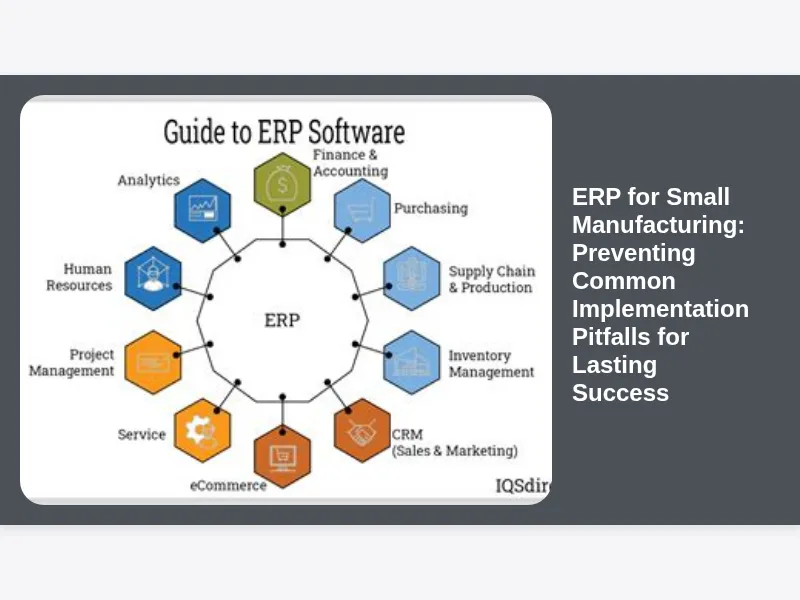
Embarking on an ERP journey as a small manufacturer can feel like navigating a dense jungle. On one hand, you see the promised land of streamlined operations, increased efficiency, and data-driven decisions. On the other, tales of budget overruns, failed implementations, and user rebellion echo through the industry. The truth is, while the benefits of ERP for small manufacturing are undeniable, the path to achieving them is often fraught with common implementation pitfalls. This comprehensive guide is designed to arm you with the knowledge and strategies to anticipate, avoid, and overcome these challenges, ensuring your investment truly transforms your business.
The Allure and Necessity of ERP for Small Manufacturing Operations
In today’s fast-paced, competitive landscape, small manufacturing businesses face immense pressure to optimize every aspect of their operations. From managing raw materials and production schedules to tracking inventory and fulfilling orders, manual processes or disconnected systems quickly become bottlenecks. This is where an Enterprise Resource Planning (ERP) system steps in, offering a single, integrated platform to manage all core business processes. For small manufacturers, ERP isn’t just a luxury; it’s becoming a necessity for survival and growth.
Imagine having real-time visibility into your entire production line, from the moment an order is placed to its final shipment. Think about the power of accurate inventory data preventing stockouts or overstock situations, or the ability to forecast demand with precision. This holistic view, this integrated control, is the core promise of ERP for small manufacturing. It enables businesses to make faster, more informed decisions, reduce operational costs, and ultimately deliver higher quality products to customers more efficiently. Without it, many small manufacturers find themselves perpetually playing catch-up, reacting to problems rather than proactively preventing them.
Understanding the Unique Landscape of Small Manufacturers: Not Just a Miniature Large Enterprise
It’s tempting to think of small manufacturers as simply smaller versions of their larger counterparts, but this perspective overlooks crucial distinctions that directly impact ERP implementation. Small businesses typically operate with fewer dedicated IT staff, more constrained budgets, and often a tightly-knit culture where everyone wears multiple hats. They might not have the luxury of a dedicated project manager or an extensive team to handle data migration or user training.
Furthermore, decision-making processes can be more centralized, relying heavily on the owner or a small leadership team. This can be a strength, allowing for agility, but also a challenge if that leadership lacks specific ERP experience or struggles with delegating. The complexity of their products might be just as high as a large enterprise, but their processes might be less formalized, making the transition to a structured ERP environment more daunting. Recognizing these unique characteristics is the first step in tailoring an ERP for small manufacturing strategy that truly fits.
Common Myths and Misconceptions About ERP for Small Businesses: Separating Fact from Fiction
Before diving into solutions, it’s vital to address some pervasive myths that often deter small manufacturers from even considering ERP, or worse, lead them down the wrong path. One common misconception is that ERP systems are exclusively for large corporations with massive budgets and complex needs. While true that enterprise-level systems can be costly, the market has evolved significantly, offering scalable, cloud-based, and industry-specific ERP for small manufacturing solutions that are both affordable and powerful.
Another myth is that ERP implementation is a “set it and forget it” project. Many believe that once the system is live, all problems will automatically disappear. In reality, ERP is a continuous journey of optimization and adaptation. It requires ongoing commitment, user training, and process refinement. Lastly, some fear that ERP will stifle their agile, entrepreneurial spirit, forcing them into rigid processes. While ERP does introduce structure, the right system, implemented correctly, should empower agility by freeing up time from manual tasks and providing insights for strategic decision-making, not hinder it.
Pitfall 1: Poor Planning and Vague Objectives – The Foundation of Failure in ERP Implementation
One of the most destructive common implementation pitfalls for ERP for small manufacturing begins long before any software is even installed: a lack of clear planning and ill-defined objectives. Many small businesses rush into selecting a system without first understanding why they need it, what specific problems they intend to solve, or what success truly looks like. Without a clear vision, the project can quickly lose direction, scope creep becomes rampant, and the team struggles to prioritize features or make crucial decisions.
Successful ERP implementation is not just about buying software; it’s about strategic business transformation. Before looking at vendors, a small manufacturer must thoroughly analyze its current state, identify bottlenecks, and articulate measurable goals. Do you want to reduce inventory holding costs by 15%? Improve on-time delivery by 10%? Shorten the order-to-cash cycle? These specific, quantifiable objectives will serve as your compass throughout the entire project, guiding every decision, from vendor selection to module configuration. Skipping this foundational step is like building a house without blueprints – you might end up with something, but it’s unlikely to be what you wanted, or stand the test of time.
Pitfall 2: Neglecting Business Process Analysis – Don’t Automate Chaos with Your New ERP
A critical error in ERP for small manufacturing implementations is the failure to conduct a thorough business process analysis before choosing and configuring a system. Many small businesses assume their existing processes, no matter how inefficient or fragmented, can simply be mapped directly into the new ERP. This approach is a recipe for disaster, as it essentially automates existing chaos rather than improving it. An ERP system amplifies what you put into it; if your current processes are flawed, the ERP will merely make those flaws more efficient.
Effective process analysis involves documenting current “as-is” processes across all relevant departments – sales, production, inventory, finance, shipping, etc. – and then identifying opportunities for improvement to define the desired “to-be” processes. This isn’t just about understanding what you do, but why you do it, and critically, how you could do it better with the capabilities an ERP offers. Engaging key stakeholders from each department in this exercise is crucial, as they are the ones who understand the daily operational realities and can contribute invaluable insights into optimizing workflows. This pre-work ensures that the ERP is configured to support streamlined, best-practice processes, not just mimic outdated ones.
Pitfall 3: Inadequate Vendor Selection – Choosing the Wrong Partner for Your ERP Journey
For small manufacturers, the choice of an ERP vendor and implementation partner is arguably as important as the software itself. One of the most significant common implementation pitfalls is making this decision based solely on price, flashy demonstrations, or superficial recommendations, without a deep dive into the vendor’s suitability. An inadequate vendor can lead to a system that doesn’t align with your specific industry needs, a lack of ongoing support, and an implementation process plagued by misunderstandings and delays.
When selecting an ERP for small manufacturing solution, look beyond generic capabilities. Does the vendor truly understand the nuances of manufacturing – bill of materials, production scheduling, quality control, shop floor management? Do they have a proven track record with businesses of your size and in your specific industry niche? Ask for references, scrutinize their implementation methodology, and assess their support structure. The ideal partner will act as a trusted advisor, not just a software seller, guiding you through best practices, customization decisions, and post-implementation support. Remember, this is a long-term relationship, and choosing wisely upfront will save immense frustration and cost down the line.
Pitfall 4: Underestimating Data Migration Complexity – The Digital Bridge to Your New ERP
Data migration is often cited as one of the most challenging and underestimated aspects of any ERP for small manufacturing project. It involves extracting data from legacy systems, cleaning it, transforming it, and loading it into the new ERP. Many small businesses mistakenly believe this will be a straightforward process, only to be hit with significant roadblocks, delays, and data integrity issues. Poorly migrated data can render a new ERP system useless, eroding user trust and forcing manual workarounds.
The complexity stems from several factors: disparate data sources, inconsistencies in data formats, redundant information, and simply the sheer volume of historical data. Developing a robust data migration strategy is paramount. This includes identifying all data sources, defining data cleansing rules, deciding what historical data truly needs to be migrated (you don’t always need everything), and establishing clear validation processes. It’s often beneficial to run multiple test migrations, allowing the team to identify and resolve issues before the final cutover. Involving key users in data validation is also critical, as their domain knowledge can help spot discrepancies that automated tools might miss, ensuring the accuracy and reliability of your new ERP for small manufacturing system.
Pitfall 5: Insufficient User Training and Adoption – The Human Element of ERP Success
Even the most perfectly implemented ERP for small manufacturing system will fail if employees don’t adopt it and use it correctly. This is a recurring and significant common implementation pitfall. Many small businesses invest heavily in the software and technical aspects but underfund or neglect user training, assuming employees will simply figure it out or adapt quickly. The reality is that resistance to change is natural, and a lack of proper training can lead to frustration, decreased productivity, errors, and ultimately, a return to old, inefficient manual processes.
Effective user adoption requires a comprehensive training program tailored to different roles and levels of technical proficiency. It’s not a one-time event; it should be an ongoing process, starting with introductory sessions, moving to hands-on practice, and offering continuous support. Super users or “champions” within each department can be identified and trained more deeply, acting as local experts and first-line support. Emphasize the “why” behind the ERP – how it will make their jobs easier, not just different. Providing clear documentation, accessible support channels, and opportunities for feedback will foster a sense of ownership and competence, ensuring your team truly embraces the new ERP for small manufacturing system.
Pitfall 6: Lack of Dedicated Project Management – Steering the Ship Through Rough Waters
Implementing ERP for small manufacturing is a complex undertaking, akin to building a new facility or launching a major product line. Yet, a surprisingly common implementation pitfall is the absence of dedicated, skilled project management. Small businesses often assign ERP project leadership to an existing employee who already has a full-time job, expecting them to juggle both responsibilities. This approach frequently leads to missed deadlines, budget overruns, communication breakdowns, and a lack of overall control.
A successful ERP project requires a strong leader who can champion the initiative, coordinate internal teams, manage external vendors, monitor progress, resolve conflicts, and communicate effectively with all stakeholders. This project manager, whether internal or external, needs to have authority, time, and the necessary skills to drive the project forward. They are responsible for creating a detailed project plan, setting realistic timelines, allocating resources, and identifying potential risks. For small manufacturers, it might mean temporarily reassigning responsibilities or even hiring a consultant for the duration of the project, but the investment in proper project management is crucial for navigating the inherent complexities of ERP for small manufacturing implementation.
Pitfall 7: Over-Customization vs. Out-of-the-Box – The Tailored Trap in Small Manufacturing ERP
The temptation to customize an ERP for small manufacturing system to perfectly match every existing process can be incredibly strong. However, this desire often leads to one of the most insidious common implementation pitfalls: over-customization. While some tailoring might be necessary to meet specific industry or unique business requirements, excessive customization introduces significant risks and costs. It increases complexity, makes upgrades more difficult and expensive, and ties you more closely to a specific vendor’s original code base, hindering future flexibility.
Instead of immediately customizing, small manufacturers should prioritize adapting their processes to best practices embedded within the standard ERP functionality. Modern ERP for small manufacturing solutions are built with flexibility in mind, often offering configurable options that can address many specific needs without custom coding. If customization is truly unavoidable, approach it strategically. Evaluate its necessity against the long-term costs and benefits. Will it provide a significant competitive advantage? Is it absolutely critical for regulatory compliance? A good rule of thumb is to customize only when absolutely necessary, and always seek advice from your implementation partner on the potential implications, aiming for configuration over custom code whenever possible to maintain a lean, adaptable system.
Pitfall 8: Ignoring Change Management – Preparing Your Team for Transformation
Implementing ERP for small manufacturing isn’t just a technological shift; it’s a profound organizational change. Yet, many businesses overlook or underemphasize the human element of this transition, leading to resistance, low morale, and ultimately, adoption failure. Ignoring change management strategies is a significant common implementation pitfall that can derail even the most technically sound projects. Employees often fear new systems, worrying about job security, increased workload, or simply the discomfort of learning something new.
Effective change management involves proactively addressing these concerns and preparing your team for the upcoming transformation. It starts with clear, consistent communication from leadership about the “why” behind the ERP, emphasizing the benefits for both the business and individual employees. Involve key users early in the process, seeking their input and making them feel like part of the solution. Provide training that isn’t just about “how-to” but also helps them understand the new workflows and their role within them. Celebrate small victories, acknowledge challenges, and maintain an open door for feedback. A well-executed change management strategy ensures that your team embraces the new ERP for small manufacturing system, seeing it as an enabler rather than a threat.
Pitfall 9: Budget Overruns and Hidden Costs – Beyond the Initial Price Tag of Small Manufacturing ERP
One of the most anxiety-inducing aspects of ERP for small manufacturing is the cost. While initial software licenses or subscription fees are often clear, many small businesses fall victim to common implementation pitfalls related to budget overruns and hidden costs. These can quickly inflate the total cost of ownership (TCO) far beyond initial estimates, causing financial strain and jeopardizing the project’s viability. Understanding these potential hidden expenses upfront is crucial for accurate budgeting and preventing unwelcome surprises.
Hidden costs can stem from several areas: unexpected integration requirements with existing systems, extensive data cleansing efforts, additional training needs, unforeseen customizations, and the cost of internal staff time dedicated to the project. Furthermore, don’t forget ongoing maintenance and support fees, future upgrades, and potential hardware infrastructure improvements if you’re not fully on a cloud solution. When preparing your budget for ERP for small manufacturing, build in a contingency fund (typically 15-25% of the estimated cost) for unforeseen circumstances. Engage in transparent discussions with your vendor about all potential costs, get detailed quotes for every service, and ensure your contract clearly defines scope and deliverables to avoid ambiguity.
Pitfall 10: Inadequate Post-Implementation Support – The Long-Term Partnership in Small Manufacturing ERP
Many small manufacturers breathe a sigh of relief once their ERP for small manufacturing system goes live, thinking the hardest part is over. However, neglecting post-implementation support is a critical common implementation pitfall that can undermine the long-term success of the investment. The go-live date isn’t the finish line; it’s just the beginning of a continuous journey of optimization and adaptation. Without adequate support, users may struggle with new processes, small issues can escalate into significant problems, and the system’s full potential may never be realized.
Post-implementation support encompasses several facets: accessible technical support from the vendor or implementation partner, ongoing user training for new hires or advanced functionalities, system monitoring and maintenance, and regular performance reviews. Small manufacturers should ensure their contract with the ERP provider includes clear terms for ongoing support, including response times and escalation procedures. Establishing internal “super users” who can act as first-line support and maintain knowledge within the organization is also invaluable. This long-term partnership with your system and its providers ensures that your ERP for small manufacturing continues to evolve with your business needs, delivering sustained value for years to come.
Pitfall 11: Integration Woes – Connecting Your Digital Ecosystem in Small Manufacturing ERP
Modern businesses rarely operate with just one standalone software system. Small manufacturers often have existing tools for CAD design, CRM, e-commerce, or specialized shop floor controls. A significant common implementation pitfall when adopting ERP for small manufacturing is underestimating the complexity and importance of integrating the new ERP with these existing systems. If not properly integrated, data silos persist, manual data entry remains, and the promise of a single source of truth is unfulfilled, leading to inefficiencies and errors.
Effective integration requires careful planning and often significant technical effort. You need to identify which systems absolutely must talk to the ERP, define the data flows between them, and determine the best integration methods (APIs, middleware, direct database connections). Cloud-based ERP for small manufacturing solutions often offer more straightforward integration capabilities with other cloud applications, but legacy systems might pose a greater challenge. It’s crucial to discuss integration requirements thoroughly with your ERP vendor and implementation partner early in the project. Prioritize critical integrations first, ensuring seamless data exchange between your most vital business functions. This will maximize the value of your ERP by making it the true central nervous system of your digital ecosystem.
Pitfall 12: Scaling Too Soon or Too Late – Future-Proofing Your ERP Investment for Small Manufacturers
For small manufacturers, growth is the ultimate goal. However, another common implementation pitfall in ERP for small manufacturing is either selecting a system that cannot scale with future growth or, conversely, over-investing in an overly complex system far beyond current needs. Both scenarios can lead to wasted resources and a system that quickly becomes a burden rather than an asset. The key is to find the right balance – a system that supports your current operations effectively while offering the flexibility to accommodate future expansion.
When evaluating an ERP for small manufacturing, consider its scalability. Can it handle increased transaction volumes, more users, additional locations, or new product lines without requiring a complete overhaul? Cloud ERP solutions are often inherently more scalable, allowing you to easily add modules or expand user licenses as your business grows. On the other hand, avoid being lured into features you won’t use for years, as these often come with unnecessary complexity and cost. Work with your vendor to understand the roadmap for the ERP, ensuring it aligns with your own long-term business strategy. A forward-thinking approach to scalability ensures that your ERP investment remains valuable and relevant as your small manufacturing business evolves.
Best Practices for a Smooth ERP Implementation in Small Manufacturing: Proactive Steps for Success
Avoiding the common implementation pitfalls discussed above requires a proactive and strategic approach. For ERP for small manufacturing success, several best practices stand out. Firstly, secure strong executive sponsorship. The owner or top management must champion the project, allocate necessary resources, and communicate its importance consistently. This leadership commitment is invaluable for driving adoption and overcoming internal resistance.
Secondly, invest heavily in discovery and planning phases. Don’t rush into vendor selection. Spend adequate time defining your current processes, identifying pain points, establishing clear, measurable objectives, and documenting your desired “to-be” state. Thirdly, build a dedicated internal project team, even if it’s small. Appoint a strong project manager and designate super users from each department to act as liaisons and future trainers. Fourthly, prioritize data quality from day one. Begin data cleansing early in the process and establish clear data governance policies for ongoing maintenance. By adhering to these foundational best practices, small manufacturers can significantly increase their chances of a smooth and successful ERP journey.
The Role of Cloud ERP in Small Manufacturing Success: A Modern Approach to Efficiency
For many small manufacturers, the traditional on-premise ERP model presented significant barriers: high upfront costs for hardware and software licenses, the need for dedicated IT staff to manage servers and maintenance, and complex upgrade processes. Fortunately, the advent and maturity of cloud-based ERP for small manufacturing solutions have revolutionized accessibility and affordability. Cloud ERP, hosted remotely and accessed via the internet, offers a compelling alternative that directly addresses many of the challenges faced by smaller businesses.
Cloud ERP significantly reduces upfront capital expenditure, moving to a more predictable subscription model. It eliminates the need for in-house IT infrastructure and maintenance, as the vendor handles these aspects, freeing up valuable internal resources. Scalability is often inherent, allowing businesses to easily add or remove users and modules as needed. Furthermore, cloud solutions often provide automatic updates, ensuring small manufacturers always have access to the latest features and security patches without manual intervention. This modern approach to ERP for small manufacturing democratizes access to powerful tools, enabling small businesses to compete more effectively with larger enterprises by leveraging cutting-edge technology without the associated headaches of traditional deployments.
Measuring ROI and Celebrating Milestones – Demonstrating Value and Sustaining Momentum
Successfully implementing ERP for small manufacturing is a significant investment of time, money, and organizational effort. To ensure continued stakeholder buy-in and demonstrate the value of this transformation, it’s crucial to establish clear metrics for measuring Return on Investment (ROI) and to celebrate project milestones. Without this, the long-term benefits might go unnoticed, and future optimization efforts could lose momentum.
Before implementation, revisit the specific, measurable objectives you established in the planning phase. These might include reductions in inventory carrying costs, improvements in production efficiency, faster order fulfillment times, or increased customer satisfaction. Track baseline performance against these metrics before the ERP goes live, and then regularly monitor them post-implementation. Quantify the savings and efficiencies gained to show tangible ROI. Additionally, break down the ERP project into smaller, manageable milestones – completion of data migration, successful module go-live, initial user adoption rates. Acknowledging and celebrating these achievements, however small, boosts team morale, reinforces the positive impact of the ERP for small manufacturing project, and keeps everyone engaged and motivated for the continuous journey of improvement.
Embracing Continuous Improvement: Your ERP as a Living System for Small Manufacturing Growth
The “go-live” of your ERP for small manufacturing system is not the end of the journey; it’s merely the beginning. One of the greatest common implementation pitfalls is viewing ERP as a static solution rather than a dynamic, living system that evolves with your business. The manufacturing landscape is constantly changing, with new technologies, market demands, and competitive pressures emerging regularly. Your ERP must be able to adapt and grow to remain a valuable asset.
Embracing a philosophy of continuous improvement means regularly reviewing your ERP’s performance, soliciting user feedback, and identifying areas for further optimization. This might involve exploring additional modules, integrating new technologies, refining existing workflows, or investing in advanced training for your team. Schedule regular check-ins with your ERP vendor to stay abreast of new features and industry best practices. Your ERP for small manufacturing should be a strategic tool that empowers your business to not only survive but thrive and innovate in a competitive market. By nurturing and evolving your ERP, you ensure it remains the cornerstone of your operational efficiency and strategic growth for years to come.
Conclusion: Mastering ERP for Small Manufacturing Means Proactive Pitfall Prevention
Implementing ERP for small manufacturing is undoubtedly a challenging endeavor, but the rewards of improved efficiency, enhanced decision-making, and sustainable growth are well worth the effort. By understanding and proactively preventing the common implementation pitfalls discussed throughout this guide – from poor planning and inadequate vendor selection to insufficient user training and neglecting change management – small manufacturers can significantly increase their chances of success.
Remember, a successful ERP project is less about the software itself and more about the strategic foresight, meticulous planning, strong leadership, and engaged team that drives it. Choose your partners wisely, prioritize process optimization over blind automation, invest in your people, and view your ERP as a long-term strategic asset. By following these principles, your small manufacturing business won’t just implement an ERP; it will truly transform, laying a robust foundation for enduring prosperity and competitive advantage in the ever-evolving market.