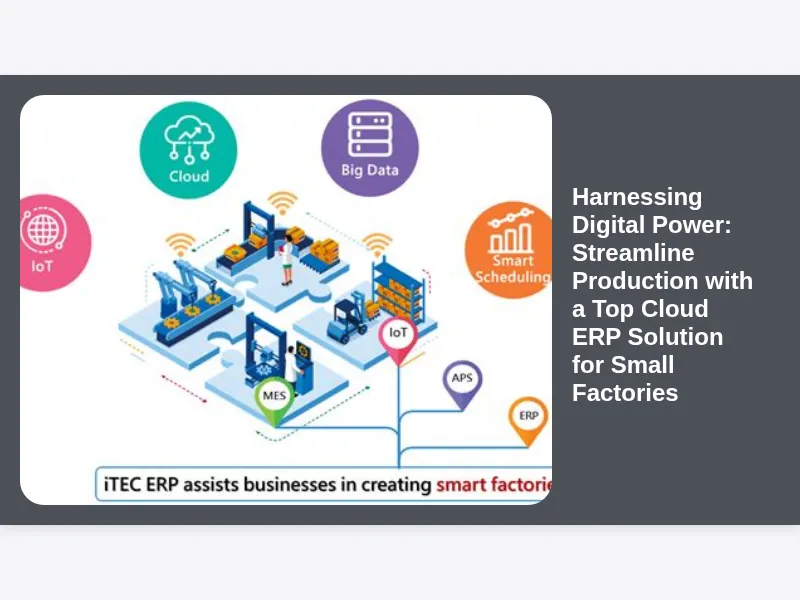
In today’s fiercely competitive manufacturing landscape, small factories face immense pressure to optimize every aspect of their operations. From managing intricate supply chains to ensuring impeccable product quality and delivering on time, the demands are relentless. Many still rely on a patchwork of spreadsheets, fragmented software, and manual processes, unknowingly stifling their growth potential and hindering their ability to adapt. However, there’s a powerful transformation tool available that can revolutionize how small factories operate, enabling them to compete effectively with larger enterprises and achieve unprecedented levels of efficiency: a modern cloud-based Enterprise Resource Planning (ERP) solution. This article will delve deep into how you can streamline production with a top cloud ERP solution for small factories, unlocking substantial operational benefits, reducing costs, and paving the way for sustainable growth in the digital age.
The Manufacturing Maze: Why Small Factories Struggle with Traditional Systems
For decades, small factories have navigated a complex manufacturing maze, often with limited resources and outdated tools. The very essence of manufacturing involves a series of interconnected processes – from procurement and inventory management to production, quality control, and shipping. When these processes are managed in silos, using disparate systems or, worse, manual ledgers and standalone spreadsheets, chaos inevitably ensues. This traditional approach creates a breeding ground for inefficiencies, data discrepancies, and a profound lack of real-time visibility, making it incredibly difficult for decision-makers to react swiftly to changes or proactively identify bottlenecks.
The challenges are manifold and deeply rooted. Inventory levels might be estimated rather than precisely known, leading to either costly overstocking or crippling stockouts that halt production. Production schedules often resemble a best-guess scenario, failing to account for unexpected machine breakdowns or sudden changes in customer demand. Quality control might be reactive, addressing issues after they’ve occurred rather than preventing them upstream. This fragmented approach not only drains valuable time and resources but also significantly impacts customer satisfaction and, ultimately, the factory’s bottom line. The truth is, without a centralized system that connects every function, small factories are constantly playing catch-up, struggling to keep pace with an increasingly dynamic market.
Unpacking Cloud ERP: What It Means for Your Factory Floor
At its core, ERP stands for Enterprise Resource Planning, a comprehensive software system designed to integrate all facets of an organization’s operations into a single, unified database. For manufacturers, this means bringing together everything from finance, human resources, and supply chain management to production planning, inventory control, and customer relationship management. Historically, ERP systems were complex, expensive, and primarily the domain of large corporations, requiring significant on-premise infrastructure, dedicated IT staff, and lengthy implementation cycles. This often put them out of reach for small factories, which simply didn’t have the capital or technical bandwidth.
However, the advent of cloud computing has dramatically democratized ERP, making it accessible and affordable for businesses of all sizes, including small factories. A “cloud ERP” solution essentially means that the software and its data are hosted and managed by a third-party vendor over the internet, rather than being installed and maintained on your own servers. This fundamental shift eliminates the need for substantial upfront hardware investments and ongoing IT maintenance, allowing small factories to leverage powerful enterprise-grade capabilities through a simple web browser. It transforms ERP from a prohibitive capital expenditure into a predictable operational expense, opening doors to advanced functionalities that were once unimaginable for smaller manufacturing operations.
Beyond Basics: How a Cloud ERP Solution Drives Production Streamlining
The primary promise of a cloud ERP solution for any manufacturing entity, particularly small factories, is its unparalleled ability to streamline production. This isn’t just a buzzword; it refers to the process of optimizing every step in the manufacturing workflow to eliminate waste, reduce costs, improve efficiency, and accelerate throughput. Imagine a scenario where every piece of information relevant to your production line – from raw material availability to machine capacity, worker schedules, and customer order deadlines – is instantly accessible and intelligently coordinated within a single system. That’s the power a modern cloud ERP brings to the table, transforming chaotic operations into a finely tuned, highly responsive manufacturing engine.
One of the most significant ways cloud ERP streamlines production is by providing real-time visibility across the entire factory floor and beyond. No longer are managers waiting for end-of-day reports or manually consolidating data from various sources. With an integrated ERP, they can see, in real-time, the status of every work order, the current inventory levels of components, the performance of each machine, and the progress of finished goods. This immediate access to accurate, up-to-the-minute data empowers decision-makers to identify potential bottlenecks before they escalate, reallocate resources proactively, and adjust production schedules on the fly to meet changing demands or unforeseen challenges. It shifts the operational paradigm from reactive problem-solving to proactive optimization, ensuring that production flows smoothly and efficiently from start to finish.
Mastering Inventory: Real-Time Stock Control and Demand Forecasting
Effective inventory management is the bedrock of efficient manufacturing, yet for many small factories, it remains a persistent pain point. The delicate balance between having enough raw materials to meet production demands and avoiding excessive holding costs due to overstocking is notoriously difficult to achieve with manual methods. This is where a top cloud ERP solution shines, offering sophisticated tools that bring clarity and control to what is often a murky and unpredictable aspect of factory operations. By centralizing inventory data and automating key processes, ERP helps small factories move beyond guesswork to embrace precision.
A cloud ERP provides real-time visibility into every item in your inventory, from raw components to work-in-progress and finished goods. It tracks quantities, locations, and even serial numbers, giving you an accurate, up-to-the-minute picture of your stock levels. This eliminates the need for time-consuming physical counts and drastically reduces errors, ensuring that production managers always know exactly what they have on hand. Furthermore, advanced ERP systems often include robust demand forecasting capabilities. By analyzing historical sales data, seasonal trends, and current order backlogs, the system can predict future demand with greater accuracy, allowing factories to optimize their purchasing and production plans, minimizing both stockouts that disrupt operations and costly overstocking that ties up capital.
Precision Planning: Elevating Production Scheduling and Resource Allocation
Manufacturing isn’t just about making things; it’s about making the right things at the right time, with the right resources. For small factories, manual production scheduling is a complex jigsaw puzzle, often leading to missed deadlines, inefficient machine utilization, and overworked staff. A key benefit of implementing a top cloud ERP solution for small factories is its ability to revolutionize production planning and scheduling, injecting a level of precision and adaptability that is simply unattainable through traditional methods. This intelligent planning ensures that every component, every machine, and every hour of labor is utilized optimally.
Cloud ERP systems come equipped with advanced planning and scheduling (APS) modules that go far beyond simple Gantt charts. These modules consider multiple variables simultaneously: machine availability, operator skill sets, raw material lead times, maintenance schedules, and customer delivery dates. They can then generate optimized production schedules that minimize downtime, balance workloads across different workstations, and ensure that products move through the manufacturing process efficiently. When unexpected events occur – a machine breaks down, or an urgent order comes in – the ERP system can quickly recalculate and suggest alternative schedules, allowing the factory to remain agile and responsive. This level of dynamic resource allocation not only enhances efficiency but also significantly improves on-time delivery rates, a critical factor for customer satisfaction and reputation.
Quality Assurance Enhanced: Maintaining Standards from Raw Material to Finished Goods
In manufacturing, quality is non-negotiable. Substandard products not only lead to costly rework and scrap but also damage a factory’s reputation and customer trust. Many small factories struggle with reactive quality control, identifying defects only after they’ve occurred, which is an expensive and inefficient approach. A cloud ERP solution, however, offers a proactive framework for quality assurance, integrating quality checks and data collection seamlessly into every stage of the production process, thereby enhancing overall product integrity and reducing waste.
With an integrated ERP system, quality control points can be embedded directly into work orders and routings. This means that specific checks, measurements, or inspections are mandated at critical stages, from the moment raw materials arrive (incoming quality control) to various points during assembly (in-process quality control) and finally, before shipping (final inspection). Any deviations or non-conformances can be immediately logged within the system, triggering alerts and initiating corrective actions. The ERP can also track quality metrics over time, identifying patterns of defects or performance issues related to specific materials, machines, or processes. This data-driven approach to quality management allows small factories to move from simply detecting problems to preventing them, significantly reducing the cost of poor quality and ensuring consistent adherence to standards, which is vital for building a strong brand and fostering customer loyalty.
The Financial Advantage: Cost Reduction and Better Budgeting with Cloud ERP
Small factories are constantly battling tight margins and intense competition, making cost reduction and precise financial management paramount for survival and growth. Often, financial data is siloed from operational data, making it incredibly difficult to accurately track costs associated with specific production runs, identify areas of waste, or prepare realistic budgets. This disconnect can lead to significant financial leakage and missed opportunities for savings. Implementing a top cloud ERP solution for small factories bridges this gap, offering a unified financial perspective that drives substantial cost reductions and empowers more accurate budgeting and forecasting.
A cloud ERP system integrates financial modules directly with manufacturing, inventory, and procurement processes. This means that every transaction, from purchasing raw materials and tracking labor costs to machine depreciation and finished goods inventory valuation, is recorded and reconciled in real-time. This holistic view allows factory owners and managers to gain granular insight into the true cost of production for each item, identifying inefficiencies in material usage, labor allocation, or operational overhead. By having this transparent financial data, businesses can make informed decisions to negotiate better prices with suppliers, optimize energy consumption, streamline workflows, and reduce waste. Furthermore, with all financial data centralized, budgeting becomes a much more precise exercise. Historical cost data, current operational metrics, and forecasted sales can all be leveraged within the ERP to create realistic and achievable budgets, enabling small factories to better control expenditures and allocate resources strategically for maximum return.
Scalability at Your Fingertips: Growing Without Growing Pains
One of the most exciting prospects for any small factory is growth. However, growth often comes with its own set of challenges, especially if the underlying operational infrastructure isn’t designed to scale. Manual processes and disparate systems, while perhaps manageable for a very small operation, quickly become bottlenecks as order volumes increase, product lines expand, or new markets are entered. The inability of traditional systems to handle increased complexity is a common reason why promising small businesses hit a growth ceiling. This is where the inherent scalability of a cloud ERP solution offers a distinct advantage, allowing small factories to expand their operations without encountering debilitating growing pains.
Cloud ERP platforms are built on highly flexible and scalable infrastructures. As your factory grows, requiring more users, additional modules, or increased data storage, the cloud provider can seamlessly scale up resources to meet these demands. This means you don’t need to invest in new hardware, worry about server capacity, or undergo disruptive system migrations. You simply subscribe to the additional services you need, and the cloud provider handles the underlying infrastructure. This “pay-as-you-grow” model is incredibly cost-effective and agile, allowing small factories to adapt quickly to changing business requirements without large upfront capital expenditures. Whether you’re adding a new production line, expanding your workforce, or opening a second facility, a cloud ERP can accommodate these changes with minimal disruption, ensuring your operational efficiency keeps pace with your business expansion.
Securing Your Data: Understanding Cloud ERP Security Measures
For many small factory owners, the idea of entrusting critical business data to a “cloud” can raise significant security concerns. Traditional thinking often suggests that keeping data on-premise is inherently safer, under direct control. However, this perspective often overlooks the considerable resources and expertise that cloud service providers dedicate to data security, far exceeding what most small factories could ever hope to implement themselves. Understanding these robust security measures is crucial for alleviating concerns and recognizing the true benefits of cloud-based data management.
Leading cloud ERP vendors invest massive amounts of capital and human resources into creating highly secure environments. This includes physical security at data centers (biometric access, surveillance), network security (firewalls, intrusion detection systems, DDoS protection), application security (encryption, access controls, regular vulnerability scanning), and data privacy compliance (GDPR, ISO 27001, etc.). Data is typically encrypted both in transit and at rest, meaning it’s scrambled and unreadable without the correct keys, even if intercepted. Furthermore, cloud providers perform regular backups and disaster recovery planning, ensuring business continuity even in the event of major incidents. While no system is entirely impervious, the security posture of a reputable cloud ERP vendor is almost always superior to what a small factory could realistically maintain on its own, providing a more secure and resilient foundation for your critical business information.
Seamless Integration: Connecting Your Entire Business Ecosystem
A common predicament for small factories is the proliferation of standalone software solutions, each performing a specific function but rarely communicating with one another. You might have one system for accounting, another for CRM, a third for CAD, and spreadsheets managing production. This fragmented digital landscape creates data silos, necessitating manual data entry, which is prone to errors, incredibly time-consuming, and severely limits overall business visibility. The true power of a top cloud ERP solution for small factories lies in its ability to act as the central nervous system, seamlessly integrating all these disparate functions into a cohesive, intelligent whole.
Modern cloud ERP systems are designed with interoperability in mind. They typically come with robust APIs (Application Programming Interfaces) that allow them to connect and exchange data with a wide array of other business applications that a factory might use. This could include e-commerce platforms, customer relationship management (CRM) systems, specialized CAD/CAM software, supplier portals, shipping carriers, and even IoT devices on the factory floor. When these systems are integrated, data flows automatically between them, eliminating manual transcription, reducing errors, and ensuring that everyone in the organization is working with the most current and accurate information. For example, a customer order placed on your e-commerce site can automatically trigger a production order in the ERP, update inventory, and inform the finance department, all without human intervention. This holistic connectivity not only streamlines production but also enhances customer service, improves supply chain coordination, and provides a single source of truth for all business intelligence.
The Implementation Journey: What to Expect When Adopting Cloud ERP
Adopting a new ERP system, even a cloud-based one, is a significant undertaking that represents a fundamental change in how a factory operates. It’s not merely installing software; it’s a business transformation project. Understanding the typical implementation journey can help small factory owners set realistic expectations, allocate resources appropriately, and minimize potential disruptions. While cloud ERP implementations are generally faster and less complex than their on-premise predecessors, careful planning and execution remain crucial for success.
The journey typically begins with a discovery and planning phase, where the ERP vendor and your team work together to map out your factory’s specific business processes, identify key requirements, and define the scope of the project. This is followed by configuration, where the ERP system is tailored to fit your unique workflows, settings, and reporting needs, often involving minimal coding due to the flexibility of cloud platforms. Data migration is a critical step, involving the transfer of existing historical data (e.g., customer records, inventory levels, financial statements) into the new system. Thorough testing, involving key users, ensures that the system functions as expected and that all processes are correctly reflected. Finally, comprehensive user training is provided to equip your team with the skills to effectively use the new system, culminating in the go-live and ongoing support. While initial adjustments are inevitable, a well-planned implementation minimizes downtime and sets the stage for long-term operational excellence, demonstrating how to streamline production with a top cloud ERP solution for small factories effectively.
Choosing Your Champion: Selecting the Right Cloud ERP for Small Factory Needs
With numerous cloud ERP solutions available on the market, each promising to be the ideal fit, selecting the right one for your small factory can feel overwhelming. It’s a critical decision that will impact your operations for years to come, making a thoughtful and strategic approach essential. The goal isn’t just to buy an ERP; it’s to invest in a solution that genuinely helps you streamline production with a top cloud ERP solution for small factories, aligns with your specific manufacturing processes, and supports your future growth ambitions. A one-size-fits-all approach rarely works, so careful evaluation based on several key criteria is paramount.
Firstly, focus on industry-specific functionality. Does the ERP have strong modules for manufacturing, including production planning, bill of materials management, inventory control, and quality assurance that are relevant to your type of production (e.g., discrete, process, lean)? Generic ERPs might offer some features, but a solution with robust manufacturing capabilities will provide much greater value. Secondly, consider scalability and flexibility. As discussed, your factory will grow, so ensure the ERP can easily expand with you, accommodating more users, locations, and functionalities without requiring a complete overhaul. Thirdly, evaluate user-friendliness and accessibility. A complex, difficult-to-use system will face significant user resistance, hindering adoption. Look for an intuitive interface that your team can quickly learn and use effectively, accessible from anywhere, on any device. Finally, deeply investigate the vendor’s reputation, customer support, and implementation methodology. A strong partnership with a knowledgeable vendor is just as important as the software itself, ensuring you receive the guidance and assistance needed for a successful transition and ongoing optimization.
Measuring Success: Quantifying ROI and Business Transformation
Implementing a cloud ERP solution involves a significant investment of time, resources, and capital, even for a small factory. Therefore, it’s natural and necessary to ask: “What’s the return on this investment?” Quantifying the Return on Investment (ROI) and measuring the overall business transformation is crucial for justifying the project, celebrating successes, and continuously optimizing the system for maximum benefit. The benefits of a top cloud ERP solution for small factories extend far beyond mere cost savings, encompassing improvements across efficiency, quality, customer satisfaction, and strategic agility.
ROI can be measured through various tangible and intangible metrics. Tangible benefits often include reduced operational costs (e.g., lower inventory carrying costs, reduced scrap and rework, improved labor utilization, decreased administrative overhead), increased throughput and production capacity, and enhanced on-time delivery rates. These can be quantified by comparing “before and after” metrics. Intangible benefits, while harder to put a precise number on, are equally valuable: improved data accuracy, better decision-making capabilities, enhanced customer satisfaction, a more agile and responsive supply chain, and increased employee morale due to reduced frustration with manual tasks. By establishing clear key performance indicators (KPIs) before implementation – such as manufacturing cycle time, inventory turnover rate, defect rates, and customer complaint volume – factories can effectively track progress and demonstrate the profound impact of their cloud ERP investment, proving how effectively it helps streamline production with a top cloud ERP solution for small factories.
Future-Proofing Your Operations: Embracing Innovation and Agility
The manufacturing world is in a constant state of flux, driven by technological advancements, evolving customer expectations, and global economic shifts. For small factories, simply keeping up is a challenge; staying ahead requires a proactive approach to innovation and an inherent agility to adapt quickly. Relying on outdated systems and manual processes leaves factories vulnerable to disruption and unable to capitalize on new opportunities. This is where a top cloud ERP solution for small factories serves not just as a tool for current efficiency but as a strategic platform for future-proofing your entire operation, ensuring relevance and competitiveness in the long run.
Cloud ERP systems are inherently designed for continuous improvement and integration with emerging technologies. Unlike static on-premise solutions that require costly upgrades, cloud ERPs receive regular, often automatic, updates from the vendor, incorporating new features, security enhancements, and compliance adjustments. This ensures your system is always up-to-date with the latest capabilities without additional effort or expense from your side. Furthermore, modern cloud ERPs are often built to integrate with cutting-edge technologies such as the Internet of Things (IoT), artificial intelligence (AI), machine learning (ML), and advanced analytics. This means your factory can leverage data from connected machinery for predictive maintenance, optimize production parameters using AI algorithms, and gain deeper insights from operational data. By adopting a cloud ERP, small factories aren’t just optimizing today’s operations; they are laying the groundwork for digital transformation, building an agile foundation that can embrace future innovations and respond effectively to market changes, keeping them competitive in an ever-evolving industrial landscape.
Debunking Myths: Common Misconceptions About Cloud ERP for Manufacturing
Despite the clear benefits, many small factory owners harbor misconceptions about cloud ERP that prevent them from exploring this transformative technology. These myths often stem from outdated information about ERP systems in general or a misunderstanding of cloud computing. Addressing these common concerns is crucial to helping small factories envision how a top cloud ERP solution for small factories can truly empower their operations rather than complicate them. It’s time to separate fact from fiction and reveal the true potential.
One prevalent myth is that cloud ERP is only for large enterprises. As we’ve discussed, the pay-as-you-go model, reduced IT overhead, and simplified implementation of cloud solutions have made them highly accessible and cost-effective for small businesses. Another misconception is that cloud ERP is less secure than on-premise systems. In reality, reputable cloud providers offer security measures that far surpass what most small factories could afford to implement, including robust encryption, physical data center security, and constant monitoring. Some also believe that cloud ERP means losing control over their data or being locked into a vendor. While vendor choice is important, data ownership typically remains with the client, and modern cloud solutions offer increasing flexibility and export options. Finally, the idea that cloud ERP implementations are always lengthy, disruptive, and require a huge internal IT team is also largely outdated. While planning is crucial, cloud implementations are generally faster, less resource-intensive, and supported heavily by the vendor, making the transition much smoother for smaller manufacturing teams.
Empowering Your Team: Training and Support for a Smooth Transition
The success of any new technology implementation, especially one as comprehensive as an ERP system, ultimately hinges on the people who use it every day. Even the most advanced top cloud ERP solution for small factories will fail to deliver its full potential if the workforce isn’t adequately trained, supported, and engaged. For small factories, where every team member wears multiple hats, ensuring a smooth transition for employees is paramount. This isn’t just about teaching them how to click buttons; it’s about empowering them to embrace new ways of working and understand the broader benefits the system brings to their daily tasks and the factory as a whole.
A comprehensive training program is the cornerstone of successful user adoption. This should go beyond generic tutorials and be tailored to the specific roles and responsibilities of your factory’s employees. Production managers will need training on scheduling and work order management, inventory clerks on stock control, and finance personnel on accounting integrations. The training should be hands-on, interactive, and reinforced with practical scenarios relevant to their daily work. Furthermore, ongoing support is critical. This includes accessible resources like user manuals, video tutorials, and a clear channel for questions and troubleshooting, either through the ERP vendor’s support team or a designated internal super-user. By investing in thorough training and robust support, small factories can transform initial resistance into enthusiastic adoption, ensuring that their team effectively leverages the new cloud ERP to streamline production with a top cloud ERP solution for small factories and drive the factory forward.
Your Next Step: Embracing a Streamlined Future
The journey to streamline production with a top cloud ERP solution for small factories is not just about adopting new software; it’s about embracing a new philosophy of operational excellence and digital transformation. In an increasingly complex and competitive global marketplace, small factories can no longer afford to operate with fragmented data, manual processes, and limited visibility. The inherent challenges of traditional systems are creating bottlenecks that hinder growth, erode profitability, and limit adaptability. A cloud ERP offers a clear, actionable path to overcoming these obstacles, providing a unified, intelligent platform that connects every facet of your manufacturing business.
By centralizing data, automating routine tasks, improving communication, and providing real-time insights, a cloud ERP empowers small factory owners and managers to make faster, more informed decisions, optimize resource allocation, and respond with agility to market demands. It’s an investment that pays dividends not just in immediate cost savings and efficiency gains but also in future-proofing your operations, enhancing customer satisfaction, and positioning your factory for sustainable growth. Don’t let the complexity of yesterday’s technology deter you from the opportunities of today’s cloud solutions. Take the proactive step to research, evaluate, and engage with reputable cloud ERP vendors. The future of your small factory’s production efficiency and overall success lies in embracing this powerful digital transformation.