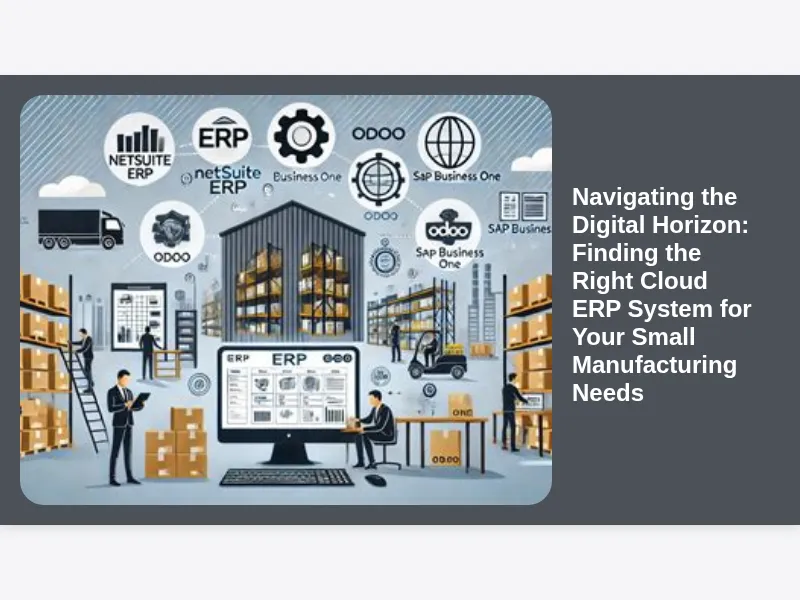
The world of manufacturing, once deeply rooted in the tangible, is now undergoing a profound digital transformation. For small manufacturing businesses, this shift isn’t just about adopting new machinery; it’s about fundamentally rethinking how every aspect of their operation is managed, from the initial order to the final delivery. In this dynamic landscape, the quest for efficiency, accuracy, and agility is paramount. Traditional methods, often reliant on fragmented systems, manual spreadsheets, and disconnected departments, are no longer sufficient to meet the demands of modern markets. They lead to bottlenecks, errors, and missed opportunities, ultimately stifling growth and competitiveness.
For many small manufacturers, the idea of a comprehensive Enterprise Resource Planning (ERP) system might seem daunting, typically associated with large corporations and hefty price tags. However, the advent of cloud technology has democratized ERP, making it not only accessible but also incredibly powerful for businesses of all sizes. A cloud ERP system offers a unified platform that integrates all core business processes, providing a real-time, holistic view of operations. It’s no longer a luxury but a strategic imperative for those aiming to streamline production, optimize inventory, manage finances, and enhance customer satisfaction in an increasingly complex global supply chain.
This article aims to be your comprehensive guide in finding the right cloud ERP system for your small manufacturing needs. We’ll delve into the intricacies of what cloud ERP entails, why it’s a game-changer for small manufacturers, and how you can navigate the selection and implementation process to ensure a successful digital transformation. From understanding the core benefits to exploring specific features, cost considerations, and common pitfalls, we’ll equip you with the knowledge needed to make an informed decision that propels your business forward. Get ready to unlock new levels of productivity and profitability by embracing the power of integrated cloud solutions.
Understanding the Modern Small Manufacturer’s Landscape: Beyond Spreadsheets and Silos
The typical small manufacturing business often finds itself at a critical crossroads. On one hand, there’s a strong desire to grow, innovate, and compete effectively. On the other, daily operations are frequently bogged down by inefficient processes that have evolved organically over time. Many start small, using basic accounting software for finances, a series of spreadsheets for inventory and production scheduling, and perhaps a separate CRM for customer interactions. While these individual tools might suffice in the very early stages, their inherent lack of integration quickly creates significant challenges as the business expands. Data silos emerge, where critical information is isolated within specific departments, making it nearly impossible to get a clear, accurate, and real-time overview of the entire operation.
This fragmented approach leads to a cascade of problems. Inventory levels might be miscalculated, resulting in either costly overstocking or crippling stockouts that delay production and disappoint customers. Production schedules, relying on outdated or incomplete information, can become bottlenecks, failing to account for material availability or machine capacity. Financial reporting, disconnected from actual production costs and sales data, can be delayed and inaccurate, hindering strategic decision-making. Furthermore, manual data entry across multiple systems is not only time-consuming but also a primary source of human error, leading to rework, waste, and increased operational costs.
The “making do” mentality, while seemingly cost-effective in the short term, ultimately stifles growth and innovation. Small manufacturers often struggle with a lack of visibility into their supply chain, fluctuating demand, and increasingly stringent customer expectations. Without a centralized source of truth, responding to these pressures becomes a reactive, rather than proactive, exercise. This unsustainable situation highlights the urgent need for a more integrated and efficient system, prompting many to consider a robust solution capable of bringing all these disparate functions under one cohesive digital roof. The journey to finding the right cloud ERP system for your small manufacturing needs begins with recognizing these fundamental operational pain points.
What Exactly is a Cloud ERP System, and Why Does it Matter for Manufacturing?
At its core, an Enterprise Resource Planning (ERP) system is a suite of integrated software applications that manages and streamlines core business processes, from financials and human resources to manufacturing and supply chain management. The “cloud” aspect simply means that this software and its associated data are hosted by a third-party vendor and accessed over the internet, rather than being installed and run on servers located within your own facility. This delivery model, often referred to as Software-as-a-Service (SaaS), transforms ERP from a capital expenditure into an operational one, offering flexibility and accessibility previously unattainable for many small and medium-sized businesses.
For the manufacturing sector specifically, a cloud ERP system is profoundly transformative because it brings together every critical function under a single, unified platform. Imagine a system where your customer’s order instantly triggers a check on raw material inventory, initiates a production order, updates the financial ledger, and schedules the delivery. This is the power of integrated ERP. Traditional on-premise ERP systems required significant upfront investment in hardware, licenses, and IT staff for maintenance and upgrades. Cloud ERP, in contrast, offloads much of this burden to the vendor, who handles infrastructure, security, and software updates, allowing manufacturers to focus on their core business: making things.
The relevance for manufacturing cannot be overstated. Core modules within a manufacturing cloud ERP typically include Material Requirements Planning (MRP), Bill of Materials (BOM) management, production scheduling, shop floor control, inventory management, quality control, and even advanced analytics. By having these modules seamlessly integrated with financial, sales, and purchasing functions, a small manufacturer gains unparalleled visibility and control. It moves beyond disparate systems that provide fragmented views, offering a single source of truth for all operational data. This comprehensive integration is precisely why finding the right cloud ERP system for your small manufacturing needs is such a pivotal strategic decision for modern businesses looking to optimize every facet of their production and administration.
Unlocking Growth: The Core Benefits of Cloud ERP for Small Manufacturing Businesses
The transition to a cloud ERP system offers a multitude of advantages that can fundamentally alter the growth trajectory of a small manufacturing business. One of the most compelling benefits is cost-effectiveness. Traditional ERP implementations demand substantial upfront investments in hardware, software licenses, and the IT infrastructure to support them. Cloud ERP, operating on a subscription-based model, dramatically reduces these initial capital outlays. Businesses pay a recurring fee, which covers not only the software but also hosting, maintenance, and often, updates. This shifts ERP from a CapEx to an OpEx model, freeing up valuable capital that can be reinvested directly into manufacturing equipment, product development, or marketing initiatives. It levels the playing field, making advanced tools accessible to smaller players who previously couldn’t afford them.
Beyond the financial savings, scalability and flexibility are paramount. Small manufacturers often experience fluctuating demand, seasonal peaks, or periods of rapid expansion. A cloud ERP system is inherently designed to scale with your business. Need to add more users, integrate a new facility, or roll out additional modules? Cloud solutions can typically accommodate these changes much more quickly and cost-effectively than on-premise systems, which often require significant hardware upgrades or complex reconfigurations. This agility ensures that your ERP system remains a supportive tool, not a restrictive bottleneck, as your business evolves and grows. It empowers manufacturers to adapt swiftly to market changes without being constrained by their technology infrastructure.
Furthermore, cloud ERP significantly enhances data accessibility and provides real-time insights. In a cloud environment, data is stored centrally and can be accessed securely from anywhere, at any time, on any device with an internet connection. This means a production manager can check inventory levels from the shop floor, a sales representative can confirm delivery dates while on the road, and an executive can review financial performance from home. This instant access to accurate, up-to-the-minute information empowers faster, more informed decision-making across all levels of the organization. Problems can be identified and addressed proactively, opportunities can be seized quickly, and performance metrics are always at your fingertips. These fundamental advantages make finding the right cloud ERP system for your small manufacturing needs a transformative step towards operational excellence and sustainable growth.
Key Features to Look For: Tailoring Cloud ERP to Your Production Floor
When embarking on the journey of finding the right cloud ERP system for your small manufacturing needs, it’s crucial to look beyond generic business functionalities and focus on features specifically designed for the complexities of a production environment. At the heart of any effective manufacturing ERP is robust Material Requirements Planning (MRP). This feature is vital for planning and scheduling material procurement and production activities. It helps manufacturers determine what materials are needed, how many, and when, based on production forecasts, customer orders, and current inventory levels. A strong MRP module can prevent stockouts, minimize excess inventory, and ensure that materials are available precisely when needed, keeping the production line running smoothly and efficiently.
Closely tied to MRP is comprehensive Bill of Materials (BOM) management. A BOM is essentially a recipe for your manufactured product, detailing all the raw materials, components, and sub-assemblies required, along with their quantities. An effective ERP system allows for easy creation, modification, and version control of BOMs, which is critical for product consistency, accurate costing, and managing engineering changes. Without precise BOM management, costing errors, production delays, and quality issues can quickly arise. The system should also support multi-level BOMs to handle complex products with multiple assembly stages, providing clear visibility into each component.
Furthermore, advanced production scheduling and shop floor control capabilities are non-negotiable for small manufacturers seeking to optimize their operations. This includes features for capacity planning, finite and infinite scheduling, and work order management. The ERP should enable detailed scheduling of machines and labor, helping to avoid bottlenecks and maximize resource utilization. Shop floor control provides real-time visibility into the status of work orders, machine uptime, and operator performance, often through integrations with machine sensors or data collection terminals. This immediate feedback loop allows managers to react quickly to issues, adjust schedules on the fly, and ensure that production stays on track, aligning closely with customer demand and promised delivery dates. By prioritizing these manufacturing-centric features, you ensure that the cloud ERP system truly enhances your production capabilities.
Beyond the Factory Floor: Integrating Finance, Sales, and Supply Chain with Cloud ERP
While manufacturing-specific features are critical, the true power of a cloud ERP system for small manufacturing needs lies in its ability to seamlessly integrate all core business functions, extending far beyond the factory floor. This holistic integration ensures that every department operates with the same up-to-date information, eliminating silos and fostering unparalleled collaboration. For example, the integration of finance modules (General Ledger, Accounts Payable, Accounts Receivable, Costing, Budgeting) with manufacturing data is revolutionary. When a production order is completed, its associated costs – materials, labor, overhead – are automatically updated in the financial ledger. This provides real-time, accurate product costing, enabling better pricing strategies, more precise profitability analysis, and quicker financial closing cycles. Finance teams no longer have to wait for manual inputs from production, reducing errors and improving overall financial transparency.
Similarly, connecting sales order management and customer relationship management (CRM) directly to the manufacturing process is crucial for enhancing customer satisfaction and boosting revenue. When a sales order is entered, the ERP system can immediately check inventory availability, production capacity, and lead times. This allows sales teams to provide accurate delivery dates to customers, avoiding frustrating delays and managing expectations effectively. Post-sale, the system can track warranty information, service history, and customer feedback, feeding into continuous improvement initiatives. A unified view of the customer, from initial inquiry to order fulfillment and after-sales support, ensures a consistent and superior customer experience, transforming sales from a standalone function into an integral part of the manufacturing value chain.
Finally, a comprehensive cloud ERP system brings vital cohesion to the supply chain and procurement processes. From managing supplier relationships and purchase orders to tracking incoming raw materials and outbound finished goods, the ERP provides end-to-end visibility. When MRP identifies a need for materials, purchase orders can be generated automatically, reducing manual effort and potential errors. Real-time tracking of supplier performance, lead times, and pricing allows for more strategic procurement decisions, helping to reduce costs and improve supply chain resilience. This integrated approach minimizes disruptions, optimizes inventory flows, and strengthens relationships with both suppliers and customers, making the entire operation more agile and responsive. This seamless interconnection is key to finding the right cloud ERP system for your small manufacturing needs that truly transforms your entire business, not just your production line.
Considering the Investment: Understanding the True Cost of Cloud ERP for Small Manufacturing
When small manufacturing businesses consider finding the right cloud ERP system for their needs, one of the most significant factors is, inevitably, the cost. It’s easy to focus solely on the monthly subscription fee, but understanding the true investment requires a more comprehensive perspective. Cloud ERP systems typically operate on a subscription model, which can vary. Some vendors charge per user per month, others per module, or a combination thereof. This recurring fee usually covers the software license, hosting, basic support, and automatic updates. While this eliminates large upfront software license purchases, it becomes an ongoing operational expense that needs to be budgeted consistently.
Beyond the subscription, implementation costs are a critical component of the overall investment. These can often equal or even exceed the first few years of subscription fees. Implementation typically involves several key areas:
- Consulting services: Expert consultants help analyze your current processes, configure the ERP system to match your specific manufacturing workflows, and guide you through the setup.
- Data migration: Moving your existing data from legacy systems (spreadsheets, older databases) into the new ERP system. This often requires significant effort in data cleansing, mapping, and transfer, which can be time-consuming and complex.
- Customization and integrations: While cloud ERPs are designed for flexibility, your business might require specific customizations or integrations with specialized third-party software (e.g., CAD systems, quality control tools). These modifications add to the cost, although modern cloud ERPs often emphasize configuration over extensive custom coding to simplify updates.
- Training: Ensuring your team is proficient in using the new system is paramount. Training costs include sessions provided by the vendor or consultants, as well as the internal time your employees spend learning.
It’s also important to consider hidden costs and, more importantly, long-term savings. While there are initial implementation expenses, cloud ERP often eliminates or significantly reduces costs associated with IT infrastructure maintenance, server upgrades, and dedicated IT staff for ERP management. The long-term savings come from increased efficiency, reduced errors, optimized inventory, better decision-making, and improved customer satisfaction. Calculating the Return on Investment (ROI) for a cloud ERP system involves quantifying these benefits against the total cost of ownership. This means looking at reductions in operational costs, improvements in production efficiency, faster order fulfillment, and even the intangible benefits of better data visibility and reduced stress for your team. A thorough ROI analysis is essential to justify the investment and ensure you select a system that provides genuine value for your small manufacturing business.
The ERP Selection Journey: A Step-by-Step Guide for Small Manufacturers
Embarking on the quest for finding the right cloud ERP system for your small manufacturing needs is a strategic project that requires a structured approach. Haphazard decisions can lead to costly mistakes and a system that doesn’t meet your operational realities. The journey begins with clearly defining your requirements and business goals. Before even looking at vendors, assemble a cross-functional team within your organization to meticulously document your current processes, identify pain points, and articulate what you hope to achieve with a new ERP. Are you looking to reduce inventory levels, improve on-time delivery, enhance financial reporting, or streamline production scheduling? Specific, measurable goals will serve as your compass throughout the selection process and help you evaluate potential solutions against tangible outcomes.
Once your internal needs are clearly articulated, the next step involves forming a selection team and involving key stakeholders. This team should represent all departments that will be impacted by the ERP – typically manufacturing, operations, finance, sales, and IT (if applicable). Their input is invaluable in understanding departmental requirements and ensuring buy-in for the eventual solution. Without strong internal advocacy and broad participation, even the most perfect system can face significant resistance during implementation. Each team member brings a unique perspective, helping to ensure that the chosen ERP addresses the diverse needs of the entire organization. Their collective understanding of current workflows and future aspirations will be critical in evaluating how different systems might fit.
With your requirements in hand and your team in place, you can move on to vendor research and shortlisting. This involves exploring the market to identify cloud ERP providers that specialize in or have strong offerings for small manufacturing businesses. Look for vendors with a proven track record, positive customer reviews (especially from similar-sized manufacturers), and a clear understanding of manufacturing processes like MRP, BOMs, and shop floor control. Attend webinars, download whitepapers, and review case studies. From your initial long list, narrow it down to a manageable short list of 3-5 vendors that appear to be the best fit. Subsequently, engage these shortlisted vendors by submitting a Request for Proposal (RFP), detailing your specific requirements, and requesting comprehensive demonstrations. During these demos, ensure vendors showcase how their system directly addresses your unique pain points and achieves your defined business goals, rather than just providing a generic overview. This systematic approach significantly increases your chances of selecting a cloud ERP that truly aligns with your small manufacturing business’s strategic vision and operational demands.
Data Migration and Integration: Paving a Smooth Path to Your New Cloud ERP System
One of the most critical and often underestimated phases when finding the right cloud ERP system for your small manufacturing needs is the process of data migration and integration. Successfully moving your historical and operational data from legacy systems into your new ERP is paramount for a smooth transition and reliable system performance. The journey begins with developing robust strategies for migrating legacy data effectively. This isn’t just about copying and pasting; it requires careful planning to identify which data is essential, how it will be mapped to the new ERP’s structure, and the sequence in which it will be transferred. Key data includes customer records, supplier information, product catalogs, historical sales orders, inventory levels, financial transactions, and any existing BOMs or routing information. Starting this process early allows ample time for review and adjustment, preventing last-minute rushes that can lead to errors.
A crucial precursor to data migration is the importance of data cleansing and validation. Over time, legacy systems often accumulate duplicate records, outdated information, or inconsistent data formats. Migrating “dirty” data into a new ERP will only perpetuate and amplify existing problems, leading to inaccurate reports and flawed decision-making. Therefore, before any data is transferred, it must be thoroughly cleansed, standardized, and validated to ensure accuracy and integrity. This may involve dedicated efforts to remove duplicates, correct errors, and enforce consistent formatting. While time-consuming, this step is non-negotiable for ensuring the reliability and trustworthiness of your new ERP system. Think of it as preparing a fresh canvas for your masterpiece – you wouldn’t want to start with a flawed foundation.
Furthermore, it’s rare for a single ERP system to handle every conceivable business function perfectly, especially for specialized manufacturing operations. Therefore, integrating with existing third-party applications is often a necessary component of a successful implementation. This might include CAD systems for product design, specialized quality control software, shipping carrier APIs, or e-commerce platforms. The chosen cloud ERP should offer robust integration capabilities, whether through pre-built connectors, open APIs, or middleware solutions. Understanding these integration requirements early in the selection process is vital, as complex integrations can add significantly to implementation time and cost. The goal is to minimize disruption during the transition by having a well-defined data migration plan and a clear strategy for integrating all necessary systems, ensuring that your business can continue to operate efficiently even as you move towards your new, unified digital environment.
Ensuring Business Continuity: Security and Reliability in Cloud ERP Environments
For small manufacturing businesses considering a move to the cloud, especially when finding the right cloud ERP system for your needs, questions around security and reliability are often paramount. Entrusting critical operational and financial data to a third-party provider can feel like a leap of faith. However, reputable cloud ERP vendors invest heavily in advanced security infrastructure, often exceeding what a small manufacturer could afford or manage in-house. They implement multi-layered data security measures, including state-of-the-art encryption for data at rest and in transit, robust access controls, firewalls, intrusion detection systems, and regular security audits. These measures are designed to protect your sensitive information from unauthorized access, cyber threats, and data breaches, ensuring the confidentiality and integrity of your business data.
Beyond protection from external threats, disaster recovery and business continuity planning are critical aspects of cloud ERP reliability. What happens if there’s a natural disaster, a power outage, or a server failure? Leading cloud ERP providers maintain geographically redundant data centers, performing regular data backups and employing sophisticated failover mechanisms. This means that if one data center experiences an issue, your operations can seamlessly switch to another, minimizing downtime and ensuring continuous access to your ERP system. For a small manufacturer, this level of resilience is often impossible to achieve with on-premise solutions, where a single server failure could halt all operations for extended periods, leading to significant financial losses and reputational damage.
Moreover, reputable cloud ERP vendors adhere to various compliance standards and industry regulations, which is increasingly important for manufacturing businesses. This might include standards like ISO 27001 for information security management, SOC 2 for security and availability, or industry-specific regulations depending on the products you manufacture. These certifications provide an independent assurance that the vendor’s security and operational controls meet stringent international benchmarks. Furthermore, understanding the vendor’s uptime guarantees and Service Level Agreements (SLAs) is crucial. An SLA will legally define the expected level of service, including the percentage of time the system will be available. Choosing a vendor with a strong track record of high availability and transparent SLAs provides peace of mind, ensuring that your small manufacturing business can rely on its cloud ERP system as a stable and secure foundation for its operations.
Empowering Your Workforce: Training, Adoption, and Ongoing Support for Cloud ERP Users
Implementing a new cloud ERP system is not just a technological upgrade; it’s a significant organizational change that impacts every employee. For small manufacturing businesses, successfully finding the right cloud ERP system for your needs is only half the battle; ensuring your team actually uses and embraces it is the other. This starts with recognizing the critical role of user training and change management. Employees, accustomed to their old ways of working, may naturally resist new systems. Comprehensive training is essential to equip them with the skills and confidence to navigate the new ERP. Training should be tailored to different user roles, covering specific tasks and workflows relevant to each department, from production floor operators to finance managers. It should ideally involve a mix of formal sessions, hands-on practice, and access to support materials.
Beyond initial training, developing effective strategies for fostering user adoption is paramount. This includes communicating the “why” behind the change – how the new ERP will benefit individual roles and the company as a whole. Involve key users in the selection and implementation process to build internal champions who can advocate for the system and help their colleagues. Provide ongoing support, create a culture where questions are encouraged, and celebrate early successes to build momentum. Gamification, regular feedback sessions, and creating easily accessible help resources can also contribute significantly to smooth adoption. Remember, a powerful ERP system is only as good as its users’ ability and willingness to leverage its capabilities effectively.
Finally, ensuring robust vendor support options is vital for the long-term success of your cloud ERP investment. This includes access to technical support for troubleshooting issues, functional support for understanding specific features or workflows, and potentially a user community forum where you can share experiences and solutions with other customers. Evaluate the vendor’s responsiveness, the availability of support channels (phone, email, chat), and the quality of their support staff. Additionally, consider their commitment to continuous improvement and future-proofing your investment. A good cloud ERP vendor regularly updates their software with new features, security enhancements, and compliance updates, ensuring your system remains current and capable of adapting to evolving business needs and technological advancements. This ongoing partnership and support ensure that your small manufacturing business maximizes the value derived from its cloud ERP system for years to come.
Scalability and Future-Proofing: Growing Your Small Manufacturing Business with Cloud ERP
For any small manufacturing business with aspirations for growth, finding the right cloud ERP system for your needs means selecting a solution that isn’t just a fit for today, but also for tomorrow. One of the most compelling advantages of cloud ERP over traditional on-premise systems is its inherent scalability. As your business expands – whether by adding new product lines, increasing production volume, hiring more employees, or even opening new facilities – your cloud ERP can effortlessly accommodate these changes. You can typically add new users, additional modules (like advanced quality control or project management), or increased data storage capacity with minimal disruption and often on a flexible, pay-as-you-grow basis. This means your ERP system acts as an enabler of growth, rather than a bottleneck that requires costly and time-consuming infrastructure overhauls every few years.
This scalability directly contributes to future-proofing your investment. The manufacturing landscape is constantly evolving, driven by technological advancements like Industry 4.0, the Internet of Things (IoT), and Artificial Intelligence (AI). A modern cloud ERP system is designed to integrate with these emerging technologies, positioning your small manufacturing business to adopt innovations that enhance efficiency, automate processes, and provide deeper insights. For instance, IoT sensors on the shop floor can feed real-time production data directly into the ERP for predictive maintenance or more accurate capacity planning. AI and machine learning capabilities can be leveraged for demand forecasting, supply chain optimization, or quality control. By choosing an ERP that is built on a flexible, open architecture, you ensure that your core operational system can evolve with the technological curve, rather than becoming obsolete.
Ultimately, a cloud ERP system provides a robust and adaptable foundation that allows your small manufacturing business to not only navigate current market demands but also to proactively embrace future opportunities. It empowers you to respond quickly to changing customer preferences, market shifts, and competitive pressures without being held back by an rigid IT infrastructure. This long-term strategic advantage, derived from the system’s ability to grow with you and integrate cutting-edge technologies, makes the decision to choose a scalable cloud ERP a critical investment in the sustained success and innovation of your small manufacturing operation.
Industry-Specific Solutions: When Niche Cloud ERP Outperforms General Platforms
When a small manufacturing business is in the process of finding the right cloud ERP system for its needs, it often faces a choice between a generalized, broad-spectrum ERP platform and a more specialized, industry-specific solution. While general ERPs offer wide applicability, the benefits of ERP tailored for specific manufacturing sectors can be substantial, often making them the superior choice. For instance, a manufacturer of custom furniture (discrete manufacturing) has very different needs from a chemical processor (process manufacturing) or a company building aerospace components (make-to-order manufacturing). Niche ERP solutions are designed with these distinct operational realities in mind, offering out-of-the-box functionalities that directly address the unique challenges of a particular industry.
For example, a process manufacturing ERP might have advanced recipe management, batch production capabilities, and robust quality control features specifically designed for chemical compositions and regulatory compliance. A discrete manufacturing ERP, on the other hand, would excel at managing complex multi-level Bills of Materials, engineering change orders, and finite capacity scheduling for individual machine centers. These specialized features often reduce the need for extensive customizations, which can be costly and make future upgrades more complex. By aligning with an ERP built for your specific industry, you’re more likely to find workflows, terminology, and reports that mirror your daily operations, reducing the learning curve for your team and accelerating time to value.
The decision of evaluating if a vertical solution is necessary for your operations hinges on the complexity and uniqueness of your manufacturing processes. If your business operates within a highly regulated industry, produces complex custom products, or relies on unique production methods, an industry-specific ERP will likely offer a more precise fit. These solutions often come with pre-configured best practices for your sector, benefiting from the vendor’s deep understanding of your industry’s nuances. While general ERPs are highly configurable, achieving the same level of specificity might require significant investment in customization. By carefully considering whether a niche cloud ERP outperforms a general platform for your specific manufacturing demands, you can ensure that the chosen system truly enhances your core operations rather than requiring you to adapt your processes to fit the software.
Leveraging Data: Business Intelligence and Reporting in Cloud Manufacturing ERP
In today’s competitive landscape, data is often referred to as the new oil, and for small manufacturing businesses, finding the right cloud ERP system for your needs is about more than just automating processes; it’s about harnessing the power of analytics for decision-making. A truly effective cloud ERP system collects vast amounts of data from every corner of your operation – from raw material procurement and production floor activities to sales orders and financial transactions. Without the tools to interpret this data, it remains just that: raw data. Integrated business intelligence (BI) and reporting capabilities transform this raw information into actionable insights, enabling managers to make informed, strategic decisions rather than relying on gut feelings or outdated reports.
A modern cloud manufacturing ERP system offers robust customizable dashboards and real-time reports. Dashboards provide at-a-glance summaries of key performance indicators (KPIs) such as production efficiency, on-time delivery rates, inventory turnover, customer satisfaction, and financial health. These visual representations can be tailored to specific user roles, ensuring that each manager, from the shop floor supervisor to the CEO, has access to the most relevant information for their responsibilities. Real-time reports allow you to drill down into the specifics, offering granular insights into specific products, customer segments, or production runs. This immediate access to current data empowers rapid response to issues and proactive adjustments to operational plans.
The ability to identify trends, optimize processes, and predict future needs is a game-changer for small manufacturers. By analyzing historical data, you can spot patterns in demand, identify bottlenecks in production, understand the true cost drivers of your products, and even forecast future raw material requirements with greater accuracy. This moves your business from reactive problem-solving to proactive strategic planning. For instance, predictive analytics might suggest a maintenance schedule for a machine before it breaks down, or alert you to potential supply chain disruptions. By continuously monitoring performance and uncovering hidden insights, a cloud ERP’s BI features enable continuous improvement across the entire manufacturing value chain, driving efficiency, reducing waste, and ultimately enhancing profitability.
The Role of Mobile Access: Managing Your Manufacturing Operations On-the-Go
In the fast-paced world of manufacturing, where decisions need to be made quickly and operations are often dynamic, the ability to access critical business information from anywhere is no longer a luxury, but a necessity. When finding the right cloud ERP system for your small manufacturing needs, evaluating its mobile access capabilities is crucial. Modern cloud ERPs offer robust mobile applications or responsive web interfaces that extend the power of the system beyond the desktop. This provides significant benefits of mobile access for shop floor managers, sales teams, and executives alike, transforming how they interact with the business and enabling greater agility.
For shop floor managers and supervisors, mobile access means they can check production schedules, monitor machine status, track work order progress, and even initiate inventory requests directly from a tablet or smartphone while walking the factory floor. This eliminates the need to constantly return to a desk, improving efficiency and responsiveness. If a machine goes down, they can quickly access maintenance records or reallocate resources on the spot, minimizing downtime. For sales teams, mobile ERP access allows them to provide accurate quotes, check product availability, confirm delivery dates, and process orders while on the road visiting clients. This real-time access to information enhances customer service and accelerates the sales cycle, turning every client interaction into an informed one.
The overarching advantage of mobile ERP access is the provision of real-time updates from anywhere, anytime. This immediacy allows for a more responsive and adaptive manufacturing operation. Executives can review financial reports, approve purchase orders, or monitor key performance indicators (KPIs) even when away from the office, ensuring they remain connected to the pulse of the business. This constant connectivity significantly improves responsiveness and operational agility, enabling quick decision-making that can capitalize on opportunities or mitigate risks faster. In an environment where every minute counts, mobile access transforms your cloud ERP from a static system into a dynamic, always-on command center, empowering your team to manage and drive your small manufacturing business forward, no matter their physical location.
Implementation Pitfalls to Avoid: Learning from Common Cloud ERP Mistakes
Even with the best intentions and thorough research in finding the right cloud ERP system for your small manufacturing needs, the implementation phase can be fraught with challenges. Being aware of common pitfalls can help your business navigate this critical period more successfully. One of the most frequent mistakes is a lack of clear objectives and scope creep. Before implementation begins, it’s vital to have a crystal-clear understanding of what problems the ERP is intended to solve and what functionalities are essential. Without this clarity, the project can quickly expand beyond its original scope, adding features that aren’t truly necessary, delaying timelines, and inflating costs. Stick to your core requirements initially, and consider adding advanced features in later phases.
Another significant pitfall is insufficient data preparation. As discussed earlier, migrating dirty data is a recipe for disaster. Rushing the data cleansing and validation process, or underestimating its complexity, will lead to inaccuracies in the new system, eroding user trust and making the ERP less effective. Allocate ample time and resources for this critical step, ensuring data is accurate, consistent, and correctly mapped before it’s transferred. Furthermore, a failure to plan for and manage resistance to change and inadequate training is a common stumbling block. Employees naturally resist change, especially when it involves their daily workflows. If they are not adequately trained, involved in the process, and supported through the transition, they may struggle with the new system, revert to old methods, or simply underutilize its capabilities, rendering the investment less effective.
Finally, choosing the wrong vendor or solution after all the careful planning is a devastating mistake. This can occur if the selection process focused too much on price and too little on fit, industry experience, or support. An ERP that isn’t tailored to manufacturing needs, or a vendor with poor customer service, can turn an exciting digital transformation into a prolonged headache. Similarly, underestimating resource allocation – both financial and human – can derail an implementation. ERP projects require dedicated internal resources from various departments to work alongside consultants. If key personnel are stretched thin or not given sufficient time to participate, the project will invariably suffer delays and quality issues. By being vigilant about these common mistakes, small manufacturers can significantly improve their chances of a smooth and successful cloud ERP implementation.
Measuring Success: Calculating the Return on Investment (ROI) of Your Cloud ERP
After investing significant time, effort, and capital in finding the right cloud ERP system for your small manufacturing needs and successfully implementing it, the natural next step is to measure its impact. Calculating the Return on Investment (ROI) is crucial not only to justify the initial expenditure but also to demonstrate the ongoing value and pinpoint areas for continuous improvement. The ROI of cloud ERP can be assessed through both quantifiable benefits and qualitative advantages. Quantifiable benefits are directly measurable financial gains or cost reductions. These might include reduced inventory holding costs due to optimized inventory management, increased production efficiency through better scheduling and shop floor control, decreased operational costs by automating manual processes, and lower administrative overhead. Faster order-to-cash cycles, reduced rework or scrap, and improved on-time delivery rates also directly contribute to the bottom line.
Beyond the direct financial metrics, qualitative benefits often play a significant role in the overall value proposition, even if they are harder to put an exact dollar figure on. These include improved decision-making capabilities thanks to real-time data and business intelligence, leading to more strategic choices in procurement, production, and sales. Enhanced customer satisfaction, stemming from accurate order fulfillment and better communication, can lead to increased loyalty and repeat business. Reduced employee stress and improved morale, resulting from fewer manual tasks and access to reliable information, can lower employee turnover and boost productivity. While these benefits don’t appear directly on a balance sheet, their cumulative impact on a small manufacturing business’s long-term success and competitiveness is undeniable.
To effectively measure success, it’s essential to develop metrics to track post-implementation success and continually monitor them. Before implementing the ERP, establish baseline metrics for your key pain points (e.g., average inventory levels, production lead times, order fulfillment rates, accuracy of financial reports). After implementation, regularly compare new data against these baselines. This ongoing measurement allows you to identify if the ERP is delivering on its promises and where further optimization might be needed. Ultimately, justifying the investment to stakeholders – whether they are owners, investors, or employees – relies on demonstrating how the cloud ERP system is making the business more efficient, more profitable, and better positioned for future growth. A clear articulation of both the tangible and intangible returns reinforces the strategic value of this digital transformation.
Vendor Relationships: Choosing a Partner, Not Just a Provider for Your Manufacturing ERP
The process of finding the right cloud ERP system for your small manufacturing needs extends far beyond selecting software; it involves forging a long-term relationship with a vendor who will become a strategic partner in your digital journey. This relationship is often as critical as the software’s features itself. Therefore, careful consideration of the vendor’s capabilities and commitment is paramount. One key factor is assessing the importance of the vendor’s industry experience and reputation. Does the vendor have a proven track record of working with small manufacturing businesses similar to yours? Do they understand the specific nuances, challenges, and terminology of your sector (e.g., discrete, process, make-to-order)? A vendor with deep industry expertise can offer not only a better-suited product but also valuable insights and best practices that can significantly accelerate your success. Look for case studies, testimonials, and industry recognition that confirm their specialization.
Equally important is assessing their customer support and responsiveness. Even the most robust ERP system will occasionally require support, whether for technical issues, feature questions, or guidance on optimizing workflows. Evaluate the vendor’s support channels (phone, email, chat, online portal), their typical response times, and the quality of their support staff. Is support included in your subscription, or are there additional costs? Do they offer dedicated account managers? A responsive and knowledgeable support team can make all the difference in quickly resolving issues and ensuring uninterrupted operations. Poor support can lead to frustrating downtime and diminish the overall value of your investment.
Finally, consider the vendor’s long-term vision and commitment to product development. The technology landscape evolves rapidly, and your chosen cloud ERP partner should demonstrate a clear roadmap for future innovations and enhancements. Are they continuously investing in R&D, adding new features, improving user experience, and adapting to emerging technologies like AI or IoT? A forward-thinking vendor ensures your ERP system remains modern and relevant, capable of supporting your business’s future growth and competitive needs. The goal is to establish the value of a strong partnership beyond the initial sale. A truly committed vendor will view your success as their own, offering ongoing guidance, training, and strategic advice to help your small manufacturing business maximize the benefits of its cloud ERP system over the years, solidifying their role as a trusted ally in your digital transformation.
The Future of Manufacturing: How Cloud ERP Positions Small Businesses for Innovation
The manufacturing industry stands on the cusp of a new era, often dubbed Industry 4.0, characterized by smart factories, automation, and interconnected systems. For small manufacturing businesses, finding the right cloud ERP system for your needs is not just about catching up; it’s about strategically positioning yourself to thrive in this innovative future. Cloud ERP serves as the foundational digital backbone upon which your business can confidently adopt Industry 4.0 technologies like the Internet of Things (IoT), Artificial Intelligence (AI), and advanced automation. Without a centralized, real-time data platform, integrating these sophisticated technologies would be fragmented and ineffective.
Imagine IoT sensors on your machinery feeding live performance data directly into your cloud ERP. This data can then be analyzed by AI algorithms to predict equipment failures before they occur, triggering preventive maintenance tasks and minimizing costly downtime. Similarly, AI can enhance demand forecasting, optimize production schedules, and even improve quality control by identifying anomalies in real-time. Cloud ERP provides the necessary infrastructure for these technologies to communicate, share data, and collectively create a more intelligent, efficient, and responsive manufacturing environment. It enables digital transformation by connecting physical operations with digital insights, allowing small manufacturers to automate complex processes, reduce human error, and achieve unprecedented levels of operational efficiency.
Ultimately, by embracing a robust cloud ERP system, small manufacturing businesses gain a significant competitive advantage. They can adapt to evolving market demands and global supply chains with greater agility. Real-time visibility into inventory, production, and logistics allows for quick adjustments to supply chain disruptions or sudden shifts in customer demand. The ability to innovate rapidly, test new product lines, and scale operations up or down with flexibility ensures continued relevance in a dynamic marketplace. Cloud ERP isn’t just a system; it’s an enabler of innovation, empowering small manufacturers to transform their operations, seize new opportunities, and secure a prosperous future in the exciting landscape of modern manufacturing.
Making the Informed Choice: Your Next Steps in Finding the Right Cloud ERP System
We’ve covered a vast landscape, exploring the critical factors involved in finding the right cloud ERP system for your small manufacturing needs. From understanding the inherent challenges of traditional operations to delving into the myriad benefits of cloud solutions, the specific features vital for the production floor, cost considerations, and the importance of user adoption, the path to digital transformation is multi-faceted. We’ve emphasized that this isn’t merely a software purchase but a strategic investment in the future of your business, requiring careful planning, stakeholder involvement, and a forward-looking perspective. The decision you make today will profoundly impact your operational efficiency, profitability, and competitive standing for years to come.
As you stand at the precipice of this transformative journey, it’s crucial to take deliberate and informed next steps. Begin by meticulously documenting your current processes and pinpointing your most pressing pain points. Define your business goals clearly and realistically, understanding what specific outcomes you expect from a cloud ERP system. This internal assessment is the bedrock of a successful selection. Subsequently, engage with multiple vendors, utilizing RFPs and in-depth demonstrations to assess how each solution directly addresses your unique manufacturing requirements. Prioritize vendors with proven industry experience and a strong commitment to long-term partnership, not just a one-time sale.
Embracing a cloud ERP system represents a significant evolution for any small manufacturing business. It’s an opportunity to move beyond the limitations of spreadsheets and siloed data, unlocking unprecedented levels of efficiency, insight, and agility. Don’t let the complexity deter you; instead, view it as an exciting challenge that promises substantial rewards. The future of manufacturing is digital, integrated, and intelligent, and a well-chosen cloud ERP system will be your compass and engine for navigating this promising new horizon. Start exploring your options, seek expert advice where needed, and embark on this journey with confidence, knowing that you are investing in a smarter, more resilient, and more profitable future for your small manufacturing enterprise.