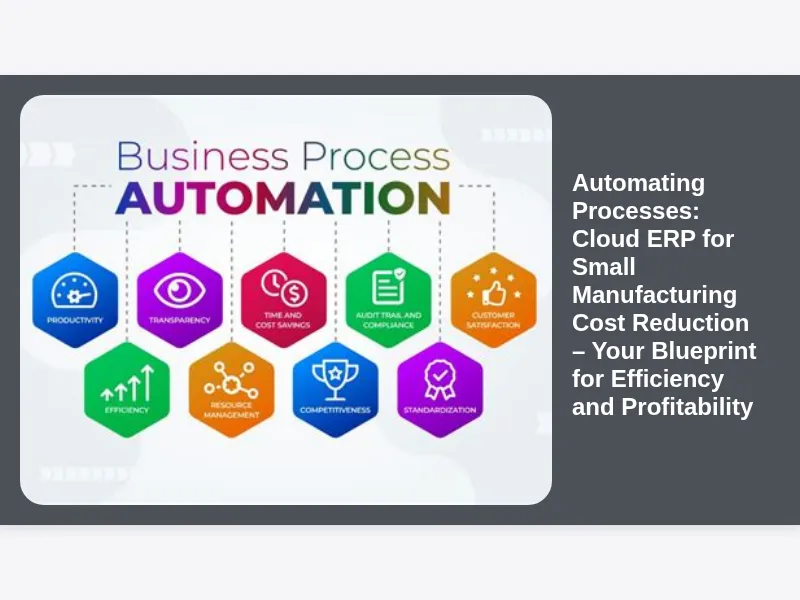
In today’s fiercely competitive manufacturing landscape, small and medium-sized enterprises (SMEs) face an uphill battle. They juggle rising material costs, labor shortages, intricate supply chain disruptions, and the relentless pressure to produce more with less. For many small manufacturers, the sheer volume of manual tasks, disconnected systems, and reactive decision-making isn’t just a nuisance – it’s a significant drain on their bottom line. But what if there was a strategic investment that could not only streamline operations but also unlock substantial cost reductions, paving the way for sustainable growth?
Enter the world of Cloud ERP. This isn’t just another buzzword; it’s a transformative solution specifically designed to empower businesses like yours. We’re talking about a powerful suite of integrated applications delivered over the internet, capable of automating processes across your entire operation. For small manufacturing cost reduction, Cloud ERP isn’t just an option; it’s rapidly becoming a necessity. This comprehensive guide will delve deep into how this technology can revolutionize your business, helping you cut costs, boost efficiency, and thrive in an ever-evolving market. Join us as we explore the intricate ways Cloud ERP serves as the ultimate engine for driving down expenses and maximizing profitability for small manufacturers.
The Modern Manufacturing Predicament: Why Small Businesses Struggle with Efficiency
Small manufacturing businesses, often built on passion and ingenuity, frequently find themselves trapped in a cycle of inefficiency. They rely on spreadsheets, disparate software, and manual paperwork to manage critical functions like inventory, production, sales, and accounting. This fragmented approach, while seemingly cost-effective in the short term, quickly becomes a significant liability as the business grows, or even as market demands fluctuate. The sheer effort required to gather accurate data, reconcile figures, and coordinate across departments consumes valuable time and resources, diverting focus from core manufacturing activities.
Consider the common scenario: an order comes in, requiring manual entry into a sales system, followed by separate manual updates to inventory, production schedules, and invoicing. Each step is prone to human error, leading to delays, incorrect shipments, or dissatisfied customers. This chain of disconnected tasks creates data silos, where different departments hold conflicting information, making it nearly impossible to gain a unified, real-time view of the business. Such a predicament directly impacts profitability, eroding margins through rework, waste, and missed opportunities. Without a robust, integrated system, the path to small manufacturing cost reduction remains frustratingly elusive, leaving businesses constantly playing catch-up.
Understanding Cloud ERP: A Game Changer for Manufacturing Efficiency
So, what exactly is Cloud ERP, and how does it differ from traditional software? ERP, or Enterprise Resource Planning, at its core, is a system that integrates all aspects of an enterprise into one comprehensive information system. It brings together financials, human resources, manufacturing, supply chain, services, and more. The “Cloud” simply means that this entire system is hosted on the internet and delivered to you as a service, rather than being installed and maintained on your own physical servers. Instead of buying expensive hardware and software licenses, you essentially subscribe to the service, accessing it via a web browser from anywhere, at any time.
For small manufacturing businesses, this delivery model is a true game-changer. It eliminates the need for significant upfront capital investment in IT infrastructure and specialist personnel to manage it. The vendor handles all the heavy lifting – maintenance, updates, security, and backups – allowing you to focus squarely on your core business of manufacturing. This shift from capital expenditure (CapEx) to operational expenditure (OpEx) can free up crucial funds and resources, making sophisticated business management tools accessible to even the smallest operations. It transforms how small manufacturers approach technology, turning a previous barrier into an enabler for automating processes and achieving greater efficiency.
The Core Benefit: Automating Processes in Small Manufacturing
The heart of Cloud ERP’s value proposition for small manufacturers lies in its unparalleled ability to automate processes. Imagine a world where a customer order triggers a cascade of actions automatically: inventory is checked, raw materials are allocated, a production order is scheduled, a pick list is generated for the warehouse, and an invoice is prepared – all without manual intervention after the initial order entry. This level of integration and automation eliminates redundant data entry, minimizes human error, and dramatically speeds up operational cycles. It fundamentally changes how work flows through your organization, reducing bottlenecks and improving overall responsiveness.
Beyond the order-to-cash cycle, process automation extends to every facet of manufacturing. From procurement, where purchase orders can be automatically generated based on inventory levels and production forecasts, to financial reporting, where real-time dashboards provide instant insights into the company’s health, automation streamlines operations. This isn’t just about saving a few minutes here and there; it’s about fundamentally re-engineering your business processes to be faster, more accurate, and more efficient. By enabling such comprehensive automating processes: Cloud ERP for small manufacturing cost reduction directly addresses the inefficiencies that often plague smaller operations, transforming them into lean, agile competitors.
Direct Cost Reduction through Cloud ERP Implementation
One of the most immediate and tangible benefits of adopting Cloud ERP for small manufacturing businesses is direct cost reduction. The cloud delivery model itself is a primary source of savings. Firstly, there are no expensive servers, data centers, or dedicated IT personnel required to manage the system. The vendor takes care of all infrastructure, maintenance, and upgrades, translating into substantial savings on capital expenditures and ongoing IT operational costs. This frees up budget that can be reallocated to other critical areas of the business, such as R&D or marketing.
Secondly, the automation capabilities inherently lead to reductions in labor costs. Tasks that once required hours of manual data entry, reconciliation, or administrative effort can now be completed in minutes or even seconds. This doesn’t necessarily mean layoffs; rather, it allows existing staff to focus on higher-value activities that truly drive the business forward, such as strategic planning, innovation, or customer relationship building. Furthermore, with improved inventory accuracy and production scheduling, businesses can significantly reduce holding costs for excess stock, minimize waste from obsolete materials, and decrease costs associated with rush orders or expedited shipping due to poor planning. These direct savings are powerful motivators for any small manufacturer looking to improve their financial standing.
Indirect Cost Savings and ROI: Beyond the Obvious Financial Gains
While direct cost reductions are compelling, the true power of Cloud ERP for small manufacturing often lies in its indirect cost savings and the overall return on investment (ROI) it delivers. Think about the cost of poor decision-making due to outdated or inaccurate data. With a Cloud ERP system, small manufacturers gain access to real-time, consolidated information across all departments. This unparalleled visibility empowers owners and managers to make informed, data-driven decisions – whether it’s optimizing production schedules, negotiating better supplier contracts, or identifying profitable product lines. The cost of errors, rework, and wasted resources stemming from guesswork dramatically decreases.
Moreover, improved operational efficiency translates directly into enhanced customer satisfaction. Faster order fulfillment, fewer errors, and more transparent communication build customer loyalty, reducing the hidden costs associated with customer churn and the need to acquire new clients. A better reputation can lead to increased sales without additional marketing spend. Furthermore, Cloud ERP offers robust reporting and analytics, which can highlight inefficiencies that were previously invisible, leading to continuous process improvements and ongoing savings. The ability to scale operations without a proportional increase in administrative overhead is another huge indirect saving, allowing small manufacturers to grow without being stifled by their internal systems. This comprehensive approach to efficiency underscores why automating processes: Cloud ERP for small manufacturing cost reduction is a holistic strategy.
Streamlining Production Workflows with Cloud ERP Automation
For any manufacturing business, the production floor is the beating heart of operations. In small manufacturing, inefficiencies here can quickly ripple throughout the entire organization, leading to missed deadlines, increased waste, and spiraling costs. Cloud ERP systems are specifically designed to bring unprecedented order and automation to these critical production workflows. They integrate demand forecasting with raw material availability and machine capacity, generating optimized production schedules that minimize downtime and maximize throughput. This means less idle machinery, more efficient use of labor, and a significant reduction in bottleneck occurrences.
Imagine a system that automatically tracks work orders from release to completion, providing real-time updates on each stage of the production process. This level of transparency allows managers to proactively address potential delays, reallocate resources as needed, and ensure that every item moves efficiently through the assembly line. Quality control processes can be integrated directly into the workflow, triggering inspections at critical points and ensuring that standards are met before products advance. By bringing discipline and data to every step of production, Cloud ERP dramatically reduces errors, minimizes rework, and ensures consistent quality, all contributing profoundly to automating processes: Cloud ERP for small manufacturing cost reduction.
Inventory Management Excellence: A Key to Manufacturing Cost Reduction
Inventory is often one of the largest assets for a small manufacturer, but it can also be one of the biggest liabilities if not managed effectively. Holding too much inventory ties up capital, incurs storage costs, and increases the risk of obsolescence. Holding too little can lead to stockouts, delayed production, and lost sales. Cloud ERP provides sophisticated inventory management capabilities that address these challenges head-on. By integrating sales forecasts, production schedules, and supplier lead times, the system can accurately predict demand and recommend optimal reorder points and quantities.
This level of precision in inventory control translates into significant cost savings. Automated reordering based on actual consumption and projected needs means you’re not carrying excessive stock, freeing up cash flow. Conversely, it minimizes the risk of production halting due to a lack of critical components, preventing costly delays and rush orders. Furthermore, Cloud ERP can track inventory across multiple locations, manage lot and serial numbers for traceability, and streamline warehouse operations through optimized picking and put-away strategies. Reducing carrying costs, minimizing waste from damaged or obsolete goods, and avoiding lost sales due to stockouts are all direct outcomes of superior inventory management, making it a cornerstone of small manufacturing cost reduction through automation.
Financial Control and Visibility for Small Manufacturers
For small manufacturing businesses, robust financial control and clear visibility into monetary flows are non-negotiable for survival and growth. Without them, it’s akin to navigating a ship in dense fog – you might be moving, but you’re constantly at risk. Cloud ERP systems revolutionize financial management by centralizing all financial data into a single, cohesive platform. This means real-time access to accounts payable, accounts receivable, general ledger, and payroll, eliminating the need to manually reconcile data from disparate sources. The accuracy and timeliness of financial reporting improve dramatically, providing a true picture of the company’s financial health at any given moment.
Automated invoicing, payment processing, and bank reconciliation significantly reduce administrative burden and potential errors, speeding up cash flow cycles. Furthermore, Cloud ERP provides powerful budgeting and forecasting tools that allow small manufacturers to plan more effectively, monitor performance against targets, and make proactive adjustments to maintain financial stability. By offering a crystal-clear view of profitability per product, customer, or project, the system empowers owners to identify revenue generators and cost centers with precision. This comprehensive financial oversight is critical for making informed strategic decisions and is a direct contributor to sustainable automating processes: Cloud ERP for small manufacturing cost reduction.
Empowering Sales and Customer Relations with Integrated ERP
In the manufacturing world, a strong sales pipeline and excellent customer relationships are crucial for sustained success. Disconnected systems often create friction between sales, production, and accounting, leading to inefficiencies that can damage customer trust. Cloud ERP seamlessly integrates these functions, creating a unified flow from initial customer inquiry to final product delivery and post-sales support. For instance, sales teams can generate accurate quotes faster, knowing inventory availability and production lead times in real-time, directly from the ERP system. This eliminates the need for time-consuming internal inquiries and provides customers with reliable information immediately.
Once an order is placed, the system automatically feeds this information into production planning and inventory management, ensuring that promises made by sales can be met by operations. Furthermore, integrated Customer Relationship Management (CRM) capabilities within Cloud ERP allow small manufacturers to track customer interactions, manage sales pipelines, and understand purchasing patterns. This holistic view enables personalized service, proactive problem-solving, and the identification of upselling or cross-selling opportunities. By streamlining the entire customer journey and enhancing communication, Cloud ERP not only boosts sales efficiency but also significantly improves customer satisfaction and retention, indirectly contributing to small manufacturing cost reduction by fostering loyalty and repeat business.
Supply Chain Optimization: From Procurement to Delivery
The supply chain is a complex web of interconnected activities, and for small manufacturers, managing it efficiently can be a daunting task. Disruptions, delays, and poor supplier relationships can have a cascading effect, driving up costs and impacting production schedules. Cloud ERP acts as the central nervous system for your supply chain, bringing unprecedented visibility and control. It begins with intelligent procurement: automating purchase order generation based on production needs and minimum stock levels, and even suggesting preferred suppliers based on past performance and negotiated terms.
Beyond procurement, Cloud ERP helps manage supplier relationships, tracking delivery performance, quality, and pricing. This data-driven approach allows small manufacturers to negotiate better terms, identify reliable partners, and mitigate risks associated with single-source dependencies. As products move through production, the system tracks material usage and finished goods, providing complete traceability from raw material to final delivery. Integration with logistics and shipping partners can further optimize delivery routes and reduce transportation costs. By creating a transparent, streamlined supply chain, Cloud ERP minimizes disruptions, reduces holding costs, and ensures timely delivery, all critical components of automating processes: Cloud ERP for small manufacturing cost reduction.
Overcoming Implementation Challenges: A Roadmap for Success
Implementing a new ERP system, even a cloud-based one, can seem like a daunting task for a small manufacturing business. The perceived complexity and potential disruption are common concerns. However, with a clear roadmap and the right approach, these challenges are entirely surmountable. The first crucial step is selecting the right Cloud ERP vendor. This isn’t just about features; it’s about finding a partner who understands the unique needs of small manufacturing, offers industry-specific functionalities, and provides excellent support. Thorough due diligence, including demos, reference checks, and understanding their implementation methodology, is essential.
Data migration is another critical phase. While it requires careful planning to transfer existing data accurately, most Cloud ERP vendors offer tools and support to simplify this process. Perhaps the most significant challenge lies in user adoption and change management. Employees are accustomed to existing processes, and introducing new ways of working requires clear communication, comprehensive training, and strong leadership buy-in. A phased implementation, starting with a core module and gradually adding others, can often ease the transition and allow teams to adapt more comfortably. By addressing these challenges proactively, small manufacturers can ensure a smoother rollout and quickly begin realizing the benefits of automating processes: Cloud ERP for small manufacturing cost reduction.
Security and Data Privacy in the Cloud for Manufacturers
One of the most common concerns for small manufacturers considering Cloud ERP is the security and privacy of their sensitive business data. It’s a valid concern, as protecting intellectual property, financial records, and customer information is paramount. However, the reality is that Cloud ERP providers typically invest far more in cybersecurity infrastructure, expertise, and protocols than any small business could ever afford on its own. These vendors employ dedicated security teams, advanced encryption methods, multi-factor authentication, and continuous monitoring to safeguard your data.
Reputable Cloud ERP providers adhere to stringent industry compliance standards and certifications (e.g., ISO 27001, SOC 2), undergoing regular audits to ensure their security measures are robust and effective. They also implement comprehensive data backup and disaster recovery plans, ensuring business continuity even in the event of unforeseen incidents. For a small manufacturer, attempting to replicate this level of security on-premise would be prohibitively expensive and resource-intensive. By choosing a trusted Cloud ERP partner, you’re not outsourcing your security; you’re upgrading it, leveraging the expertise and infrastructure of specialists dedicated to protecting your valuable information, thus enabling secure automating processes: Cloud ERP for small manufacturing cost reduction.
Future-Proofing Your Manufacturing Operations with Cloud ERP
The manufacturing landscape is in constant flux, driven by technological advancements, shifting market demands, and evolving consumer expectations. For small manufacturers, staying agile and adaptable is key to long-term survival. Cloud ERP is not just a solution for today’s problems; it’s an investment in the future-proofing of your operations. Its inherent scalability is a major advantage. As your business grows, expands into new markets, or introduces new product lines, your Cloud ERP system can seamlessly scale with you, without the need for costly hardware upgrades or complex software migrations.
Furthermore, leading Cloud ERP vendors are continually investing in research and development, integrating emerging technologies like Artificial Intelligence (AI), Machine Learning (ML), and the Internet of Things (IoT) into their platforms. This means that as these technologies mature and become relevant to small manufacturing, your ERP system will be updated automatically, keeping you at the forefront of innovation without additional development costs. This continuous evolution ensures that your business remains competitive, agile, and ready to embrace the opportunities of tomorrow, making Cloud ERP a strategic asset in your journey towards sustained small manufacturing cost reduction and growth.
Real-World Impact: Case Studies and Success Stories (Illustrative Examples)
While we can’t link to live case studies here, imagine the transformative stories that unfold when small manufacturers embrace Cloud ERP. Consider a modest metal fabrication shop, struggling with manual inventory counts and inefficient job scheduling. After implementing Cloud ERP, they experienced a 15% reduction in inventory holding costs within the first year, simply by optimizing reorder points and minimizing obsolete stock. Their production efficiency improved by 20% due to automated scheduling, allowing them to take on more orders without increasing overhead. This allowed them to reinvest savings into new machinery, significantly boosting their capacity.
Another example might be a specialty food manufacturer, battling with traceability issues and complex compliance requirements. By integrating their quality control and batch management through Cloud ERP, they not only met stringent regulatory standards with ease but also reduced product recall risks by 50%. Their ability to pinpoint exact ingredient sources and production dates instantly saved them potentially millions in fines and reputational damage. These aren’t just numbers; they represent tangible gains for businesses that were once weighed down by manual processes, illustrating the profound impact of automating processes: Cloud ERP for small manufacturing cost reduction across diverse industries. These stories underscore how a well-implemented Cloud ERP system can turn operational challenges into strategic advantages.
Is Cloud ERP Right for Your Small Manufacturing Business? A Self-Assessment
Deciding whether Cloud ERP is the right move for your small manufacturing business requires careful consideration. It’s a significant investment, not just in terms of capital, but also in time and effort. Start by honestly assessing your current pain points. Are you constantly battling with inaccurate inventory, missed production deadlines, or financial data that’s never quite up-to-date? Do your sales, production, and accounting departments operate in silos, leading to miscommunication and rework? If you find yourself nodding in agreement, these are strong indicators that your current systems are holding you back.
Next, consider your growth ambitions. Are you planning to expand your product lines, increase production volume, or enter new markets? Manual, disconnected processes simply won’t scale efficiently. A Cloud ERP system is designed to grow with you, providing the infrastructure for future expansion without proportional increases in administrative burden. Finally, evaluate your current technological comfort level and your team’s willingness to embrace change. While Cloud ERP simplifies IT management, it does require a commitment to learning new processes. If you’re ready to embrace digital transformation and seek a competitive edge, then exploring automating processes: Cloud ERP for small manufacturing cost reduction is very likely your next strategic move. Don’t hesitate to seek advice from industry consultants or peers who have already made the transition.
The Strategic Advantage: Beyond Just Cost Reduction
While small manufacturing cost reduction is a compelling driver for adopting Cloud ERP, the strategic advantages extend far beyond the balance sheet. In today’s dynamic market, agility and responsiveness are paramount. Cloud ERP provides your small manufacturing business with the nimbleness to adapt quickly to changes in demand, supply chain disruptions, or new market opportunities. With real-time data and integrated processes, you can pivot production schedules, adjust inventory strategies, and respond to customer needs with unprecedented speed. This agility transforms a reactive business into a proactive one, capable of seizing opportunities before competitors even recognize them.
Moreover, Cloud ERP fosters a culture of innovation and continuous improvement. By eliminating repetitive, manual tasks, it frees up your employees to focus on more creative, problem-solving, and value-adding activities. Empowered with accurate information and efficient tools, teams can identify areas for improvement, develop new products, or enhance customer experiences. This strategic shift from merely surviving to actively thriving is perhaps the most profound benefit. It’s about building a resilient, intelligent manufacturing operation that’s not just cutting costs but also building a sustainable competitive advantage for the long haul.
Debunking Common Myths About Cloud ERP for Small Businesses
Despite its clear benefits, several myths often deter small manufacturers from considering Cloud ERP. One prevalent misconception is that Cloud ERP is “too expensive” for small businesses. While an initial investment is required, the subscription model typically means lower upfront costs compared to traditional on-premise systems, and the long-term ROI from automating processes: Cloud ERP for small manufacturing cost reduction often far outweighs the expense. The savings on IT infrastructure, maintenance, and reduced operational inefficiencies quickly add up, making it a highly cost-effective solution over time.
Another myth suggests that Cloud ERP is “too complex” to implement or manage for a small team. Modern Cloud ERP systems are designed with user-friendliness in mind, often featuring intuitive interfaces and streamlined implementation processes. Vendors also provide extensive support and training, ensuring your team can adapt smoothly. The idea that “data is less secure in the cloud” is also largely unfounded; as discussed, reputable cloud providers offer security far beyond what most small businesses can afford independently. Finally, some fear a “loss of control” over their IT. In reality, you gain control over your business data and processes, while offloading the burden of IT infrastructure management to experts. Debunking these myths is crucial for small manufacturers to fully grasp the potential of this transformative technology.
What to Look for in a Cloud ERP Provider for Small Manufacturing
Choosing the right Cloud ERP provider is a critical decision that can determine the success of your implementation. It’s not a one-size-fits-all solution, especially for the unique needs of small manufacturing businesses. First and foremost, look for a provider with deep industry expertise. Do they understand manufacturing processes, terminology, and challenges specific to your sector (e.g., discrete, process, job shop)? Industry-specific features and modules can significantly reduce customization needs and accelerate time to value for automating processes: Cloud ERP for small manufacturing cost reduction.
Secondly, scalability and flexibility are paramount. Ensure the system can grow with your business, supporting increased users, transactions, and evolving functional requirements without requiring a complete overhaul. Integration capabilities are also crucial; your ERP should seamlessly connect with other essential tools like CAD software, shipping carriers, or specialized machinery. Comprehensive support and training resources are vital for user adoption and ongoing success – look for providers who offer robust customer service. Finally, be transparent about pricing structure, understanding all costs involved, from subscription fees to implementation and ongoing support. A thorough evaluation based on these criteria will help you select a partner that truly empowers your manufacturing operations.
The Journey Towards Digital Transformation: A Holistic View
Embracing Cloud ERP is more than just installing new software; it’s a foundational step on your journey toward digital transformation. For small manufacturing, this means moving beyond isolated systems and manual tasks to a fully integrated, data-driven operation. Cloud ERP acts as the central nervous system, connecting all your vital functions – from customer orders and inventory management to production scheduling and financial reporting. But digital transformation doesn’t stop there. It’s about continuously seeking ways to leverage technology to improve efficiency, enhance customer experience, and foster innovation.
Consider how your Cloud ERP can integrate with other digital tools: perhaps IoT sensors on your machinery feeding real-time performance data back into your ERP for predictive maintenance, or AI-driven analytics providing deeper insights into market trends and operational bottlenecks. This holistic approach cultivates a culture of continuous improvement, where data-driven decisions replace guesswork, and processes are constantly refined. The long-term vision is to build a highly responsive, resilient, and intelligent manufacturing enterprise capable of navigating any market challenge and achieving sustained growth. This comprehensive view ensures that automating processes: Cloud ERP for small manufacturing cost reduction becomes an ongoing engine for excellence, not just a one-time project.
Conclusion: Unleashing the Power of Automation for Small Manufacturing Cost Reduction
The challenges faced by small manufacturers today are significant, but so are the opportunities for those willing to embrace transformative technology. We’ve explored in depth how Automating Processes: Cloud ERP for Small Manufacturing Cost Reduction isn’t just a catchy phrase; it’s a proven strategy for businesses ready to shed the shackles of manual inefficiency and unlock their full potential. From direct savings on IT infrastructure and labor to indirect gains through improved decision-making, enhanced customer satisfaction, and optimized supply chains, the benefits are both profound and far-reaching.
Cloud ERP provides the integrated platform necessary to streamline production, perfect inventory management, gain absolute financial control, and empower your sales and customer relations. It’s an investment that not only drives down costs but also future-proofs your operations, grants you strategic agility, and transforms your business into a more competitive, resilient, and profitable entity. Don’t let the myths or perceived complexities hold you back. The time to explore the power of Cloud ERP for your small manufacturing business is now. By embracing this technology, you’re not just buying software; you’re investing in a smarter, leaner, and more prosperous future for your entire operation.