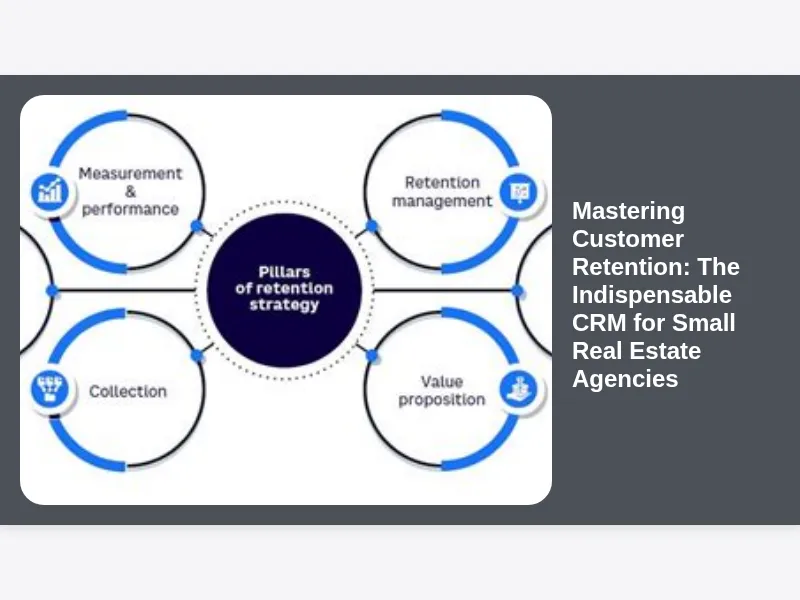
Introduction: Beyond the Sale – Why Customer Retention is Your Real Estate Agency’s Gold Mine
In the dynamic world of real estate, the focus often heavily leans towards lead generation and closing new deals. While securing new clients is undoubtedly vital for growth, savvy small real estate agencies are increasingly recognizing that the true gold mine lies not just in the next transaction, but in the enduring relationships built and nurtured long after the keys have been handed over. This strategic shift towards customer retention isn’t just a nice-to-have; it’s a foundational pillar for sustainable success, resilient growth, and a continuous stream of organic referrals. For small agencies, where every client relationship holds significant weight, mastering the art of keeping clients engaged and loyal becomes a superpower.
Imagine a scenario where a substantial portion of your new business comes from repeat clients or enthusiastic referrals from past clients. This isn’t a pipe dream; it’s a tangible reality achievable through a focused approach to client lifecycle management. The cost of acquiring a new client is notoriously higher than retaining an existing one, making effective customer retention a crucial factor in optimizing your marketing spend and maximizing your agency’s profitability. It fosters a cycle of trust, loyalty, and advocacy that fuels long-term stability and elevates your agency’s reputation in a crowded market.
This article delves deep into the transformative power of a dedicated CRM for small real estate agencies focused on customer retention. We’ll explore how the right Customer Relationship Management system is not just a database, but a strategic partner that empowers you to cultivate deeper relationships, anticipate client needs, and convert one-time transactions into a lifetime of loyalty and valuable referrals. It’s about building a community around your brand, where clients feel valued and remember you not just as their agent, but as their trusted real estate advisor.
Understanding how to leverage technology to strengthen client bonds is no longer optional; it’s essential. For small agencies with limited resources, choosing the right tools and strategies to prioritize customer retention can be the differentiator that sets them apart from larger competitors and secures their future success. We’ll uncover the specific features, strategies, and mindset shifts required to turn your client base into your most powerful asset.
The Unique Challenges Small Real Estate Agencies Face in a Competitive Market
Small real estate agencies operate in an incredibly competitive landscape, often going head-to-head with larger, more established firms that boast extensive marketing budgets and substantial teams. This disparity in resources presents a unique set of challenges. Attracting new leads can be an uphill battle, requiring creative strategies and often a higher cost per acquisition. Once a client is secured, the pressure to deliver exceptional service is immense, as word-of-mouth and reputation carry significant weight in local markets.
Furthermore, small teams often mean that individual agents wear many hats – from prospecting and showing properties to marketing and administrative tasks. This multi-faceted role can leave little time for the crucial, but often overlooked, aspect of post-sale follow-up and relationship nurturing. Without dedicated systems, tracking client interactions, remembering important dates, and proactively engaging with past clients can easily fall through the cracks, leading to missed opportunities for repeat business and referrals.
The personal touch is often cited as a key advantage of smaller agencies, yet maintaining that high level of personalized service at scale, even with a growing client base, can become overwhelming without the right tools. Juggling multiple clients, their diverse needs, and their unique property journeys manually is inefficient and prone to errors. It’s in this environment that a specialized CRM for small real estate agencies focused on customer retention becomes not just helpful, but absolutely critical for survival and growth.
These agencies need solutions that are cost-effective, easy to implement, and specifically designed to streamline processes, automate communication, and provide a holistic view of every client relationship. They need a system that can amplify their natural ability to offer personalized service, ensuring that no client feels forgotten and that every opportunity for continued engagement is seized.
Understanding the Power of Customer Retention in Real Estate: More Than Just Repeat Business
Customer retention in real estate extends far beyond simply securing a second transaction with the same client. While repeat business is a significant benefit, the true power lies in cultivating lifelong client relationships that transform into invaluable referral sources and powerful advocates for your brand. In an industry built on trust and personal connections, a satisfied, retained client becomes a dynamic marketing asset, perpetually generating new leads through authentic recommendations.
Consider the ripple effect of a positive client experience that is consistently nurtured. A client who felt genuinely cared for during their initial home purchase is far more likely to return to you when they decide to sell, upgrade, or invest in another property. More importantly, they will enthusiastically recommend your agency to friends, family, and colleagues who are entering the market. This organic word-of-mouth marketing is incredibly potent, often converting at a much higher rate than traditional advertising because it comes with an inherent level of trust and endorsement.
Beyond direct referrals, strong customer retention builds a robust and positive reputation within the community. When your agency is known for its exceptional post-sale care, personalized attention, and long-term commitment to client success, it attracts a higher caliber of clients and distinguishes you from competitors. This reputation acts as a magnet, drawing in new business through the sheer power of positive sentiment and demonstrated reliability. For a small real estate agency, this is an economical and highly effective way to grow.
The strategic focus on customer retention also provides invaluable market intelligence. Long-term clients offer ongoing feedback, insights into evolving market trends, and a deeper understanding of community needs and preferences. This continuous dialogue helps your agency refine its services, anticipate future demands, and stay ahead of the curve. Ultimately, embracing a strong CRM for small real estate agencies focused on customer retention strategy is about building a sustainable business model where your past success directly fuels your future growth, creating a virtuous cycle of loyalty and prosperity.
What Exactly is a CRM and Why It’s Not Just for Big Corporations?
At its core, CRM stands for Customer Relationship Management, and it’s much more than just a glorified address book. A CRM system is a technology solution designed to manage all your company’s relationships and interactions with customers and potential customers. The goal is simple: improve business relationships to grow your business. For many, the term CRM conjures images of complex, enterprise-level software used by massive corporations with thousands of employees. However, this perception is rapidly changing, and for good reason.
Modern CRM platforms are increasingly scalable, flexible, and specifically designed to meet the unique needs of businesses of all sizes, including bustling small real estate agencies. Far from being an overly complicated tool, a well-chosen CRM can actually simplify daily operations, consolidate disparate data, and provide a single, unified view of every client interaction. It collects and organizes client information—contact details, communication history, property preferences, transaction records, and even personal notes—in one accessible location.
For small real estate agencies, a CRM empowers agents to move beyond scattered spreadsheets, sticky notes, and individual email inboxes. It provides the infrastructure to truly personalize client interactions, ensuring that every touchpoint is informed and relevant. This means no more forgetting a client’s specific property desires, their children’s names, or the anniversary of their home purchase. It’s about empowering your team to deliver the kind of attentive, high-touch service that defines successful small businesses, but with the efficiency and insight typically associated with larger enterprises.
Ultimately, a CRM for small real estate agencies focused on customer retention levels the playing field. It provides the tools necessary to compete effectively, manage a growing client base without sacrificing personalized service, and strategically nurture relationships that might otherwise fade over time. It transforms client management from a reactive, ad-hoc process into a proactive, data-driven strategy for sustainable growth and unwavering loyalty.
Tailoring Your Approach: Key CRM Features for Small Real Estate Agencies Focused on Customer Retention
When selecting a CRM, small real estate agencies focused on customer retention need to look beyond generic functionalities. The ideal system will possess specific features that directly support the cultivation of long-term client relationships. It’s not about having every bell and whistle, but rather the right tools that make nurturing clients intuitive and effective.
First and foremost is Robust Contact Management. This isn’t just a database; it’s a detailed profile for each client, storing not only basic contact information but also property preferences, past transactions, communication history (emails, calls, texts), personal notes (birthdays, family details, hobbies), and any specific desires they expressed during their property journey. The ability to quickly pull up a comprehensive client history ensures every interaction is personalized and informed.
Secondly, Automated Communication and drip campaigns are critical. For retention, this means setting up automated email sequences or text messages for post-sale follow-ups, birthday greetings, home purchase anniversaries, or seasonal home maintenance tips. These “touches” keep your agency top-of-mind without requiring constant manual effort, demonstrating you care long after the deal is done. A good CRM allows for customization of these campaigns, ensuring they feel genuine and not generic.
Third, Transaction and Document Management simplifies the administrative burden, freeing up agents to focus on client relationships. While not directly a retention feature, efficiency in managing deals means less time spent on paperwork and more time building rapport. The CRM should integrate transaction details seamlessly with client profiles, providing a holistic view of their journey with your agency.
Finally, Reporting and Analytics specific to client engagement provide invaluable insights. A CRM for small real estate agencies focused on customer retention should allow you to track client interactions over time, identify patterns in repeat business or referrals, and measure the effectiveness of your retention campaigns. Understanding who your most loyal clients are and why, empowers you to replicate successful strategies and continuously improve your client care efforts. These key features transform a simple contact manager into a strategic asset for building lasting client loyalty.
Nurturing Leads to Lifelong Clients: CRM’s Role in Pre-Sale and During-Sale Engagement
The journey to customer retention doesn’t begin after the sale; it starts from the very first interaction with a potential client. A well-implemented CRM for small real estate agencies focused on customer retention plays a pivotal role in nurturing leads through the sales funnel, building trust, and setting the stage for a lasting relationship even before a contract is signed. By streamlining pre-sale and during-sale engagement, CRM ensures that clients feel understood, valued, and well-supported from day one.
In the pre-sale phase, the CRM acts as your agency’s memory and strategic guide. It tracks lead sources, captures initial inquiries, and allows for the segmentation of prospects based on their specific needs, property type interests, budget, and timeline. This segmentation is crucial for tailoring your initial communications. Instead of sending generic mass emails, the CRM enables you to launch personalized drip campaigns that provide relevant information, market updates, and helpful resources that directly address a lead’s expressed interests, establishing your agency as a knowledgeable and reliable resource.
During the sale, the CRM becomes the central hub for all client interactions and transaction details. Every showing, every conversation, every offer, and every question asked by the client is logged. This comprehensive record ensures that any agent within the agency can step in and pick up where another left off, providing seamless service. It allows for proactive communication, such as sending automated reminders for upcoming appointments or document deadlines, thereby reducing stress for the client and showcasing your agency’s professionalism and attention to detail.
Moreover, the CRM helps in identifying potential roadblocks or concerns a client might have during the negotiation or closing process. By having a clear history of their questions and feedback, agents can address these proactively, mitigating issues before they escalate. This level of meticulous care and responsive communication throughout the entire pre-sale and during-sale journey builds a strong foundation of trust and satisfaction, making the client far more likely to become a loyal advocate and a source of future business, aligning perfectly with the goals of a CRM for small real estate agencies focused on customer retention.
The Art of the Follow-Up: Automating Personalized Communication for Post-Sale Success
The period immediately following a successful real estate transaction is often overlooked, yet it presents one of the most significant opportunities for solidifying client loyalty and securing future business. This is where the true art of the follow-up comes into play, and where a CRM for small real estate agencies focused on customer retention truly shines. Automating personalized communication ensures that clients feel continuously valued, not just during the transaction, but long after they’ve settled into their new home.
Manual follow-ups are time-consuming and often inconsistent, particularly for busy agents. A CRM system enables agencies to establish sophisticated, yet entirely personalized, post-sale communication workflows. Imagine an automated email sent a week after closing, checking in on the client and offering assistance with local services. Or a personalized text message six months later, reminding them of their home purchase anniversary with a warm congratulatory note. These small, thoughtful gestures make a profound impact, demonstrating that your agency’s commitment extends beyond the commission check.
Beyond simple check-ins, automated campaigns can be strategically designed to provide ongoing value. This could include a quarterly newsletter with local market updates, tips for home maintenance tailored to the season, or invitations to community events hosted or sponsored by your agency. The key is to deliver content that is genuinely useful and relevant to the homeowner’s journey, keeping your agency at the forefront of their mind without being intrusive.
The CRM also tracks these interactions, allowing agents to see which communications resonate most with clients and to tailor future outreach accordingly. For instance, if a client consistently opens emails about home renovation tips, the system can flag them for future content on that topic. This level of intelligent, automated personalization is virtually impossible to achieve manually at scale for even a small agency. It transforms the follow-up from a chore into a strategic, relationship-building process, ensuring that every client remains connected, engaged, and ready to recommend or re-engage with your services when the time comes.
Building a Referral Engine: Leveraging CRM Data for Organic Growth and Word-of-Mouth
For small real estate agencies, referrals are the lifeblood of organic growth. They represent pre-qualified leads, often with a higher conversion rate and lower acquisition cost than traditional marketing efforts. A dedicated CRM for small real estate agencies focused on customer retention is not just about keeping clients; it’s about actively transforming those loyal clients into a powerful referral engine, fueling your agency’s expansion through authentic word-of-mouth.
The foundation of a robust referral engine lies in exceptional post-sale care and consistent value delivery, which the CRM facilitates through automated, personalized follow-ups. When clients feel truly valued and supported long after their transaction, they are naturally inclined to share their positive experiences. The CRM provides the framework to not only identify these happy clients but also to strategically encourage and track referrals. It can segment clients who have had particularly positive experiences, making them prime candidates for a polite request for a review or a referral.
Furthermore, the CRM allows agencies to track the origin of referrals. By noting which clients referred new business, your agency can acknowledge and appreciate these advocates, further strengthening their loyalty. This could involve a personalized thank-you, a small gift, or an invitation to an exclusive client event. This act of recognition reinforces the value of their advocacy and encourages them to continue being a source of new business. Without a CRM, tracking these intricate relationships and their associated referrals would be an arduous, if not impossible, task.
By leveraging the rich data within the CRM, agencies can also identify patterns among their most frequent referrers or the types of clients who are most likely to refer. This insight allows for more targeted strategies to cultivate even more advocates. Ultimately, a CRM for small real estate agencies focused on customer retention empowers agencies to move beyond hoping for referrals to proactively building a systematic and highly effective referral program. It turns every satisfied client into a potential extension of your sales team, driving sustainable, trust-based growth.
Personalization at Scale: How CRM Transforms Client Relationships from Generic to Genuine
In today’s market, clients expect more than just transactional interactions; they crave personalized experiences that make them feel genuinely understood and valued. For small real estate agencies, delivering this level of personalization can be a significant differentiator, but doing it consistently and at scale can be challenging without the right tools. This is precisely where a CRM for small real estate agencies focused on customer retention becomes indispensable, transforming generic client interactions into genuine, meaningful relationships.
Without a CRM, remembering every detail about every client – their preferred communication method, their children’s names, their specific desires for a home feature, or even their favorite coffee order – becomes impossible as your client base grows. Agents might rely on memory or scattered notes, leading to inconsistencies and missed opportunities to connect on a deeper level. The CRM centralizes all this crucial information, creating a comprehensive client profile that is accessible to the entire team.
This immediate access to detailed client history means every interaction can be informed and tailored. When a client calls, the agent can instantly see their last conversation, property interests, and any personal notes, allowing them to pick up the conversation seamlessly. This eliminates the need for clients to repeat themselves and immediately conveys a sense of attentive service. It’s about making every client feel like your most important client, regardless of how many others you’re simultaneously assisting.
Moreover, the CRM facilitates proactive personalization. Based on stored preferences and historical data, the system can prompt agents with relevant talking points or suggest appropriate outreach. For example, if a client expressed interest in investment properties, the CRM can trigger a notification when a suitable listing becomes available. This anticipatory service goes a long way in building trust and demonstrating genuine care. By enabling personalization at scale, a CRM for small real estate agencies focused on customer retention allows agencies to foster deeper connections, cultivate lasting loyalty, and ensure that every client relationship feels authentic and valued, rather than just another number.
Beyond the Transaction: Tracking Client Milestones and Preferences for Enduring Loyalty
The real estate transaction itself is merely one chapter in a client’s life story. To build enduring loyalty and cultivate a truly robust customer retention strategy, small real estate agencies must look beyond the immediate sale and focus on the entire client journey. This involves diligently tracking client milestones and evolving preferences, a task made efficient and effective through a specialized CRM for small real estate agencies focused on customer retention.
A comprehensive CRM allows agencies to log not only transaction details but also significant personal and property-related milestones. This could include the purchase anniversary of their home, a client’s birthday, family events (like a child going to college, which might signal a future downsize), or even the estimated time they might consider moving again based on average homeownership cycles in their area. By having these dates and events readily accessible, your agency can schedule thoughtful, proactive outreach that resonates deeply with clients. A personalized card on their home anniversary or a quick message on their birthday demonstrates that you remember and care, strengthening the emotional bond.
Furthermore, client preferences are not static; they evolve over time. What a client wanted in their first home might be very different from their desires for a second or third property. A good CRM allows agents to continuously update and refine client profiles, noting new interests, lifestyle changes, or feedback from post-sale check-ins. Did they mention needing more space for a growing family? Or perhaps they expressed a newfound interest in eco-friendly homes? These nuanced details, captured within the CRM, become invaluable for future recommendations and targeted communication.
By maintaining a living, breathing record of client milestones and changing preferences, your agency transforms from a one-time service provider into a trusted, long-term advisor. This sustained engagement, powered by intelligent CRM data, ensures that when a client is ready for their next real estate journey – whether buying, selling, or investing – your agency is their immediate and unquestioned first choice. It’s about building a relationship that endures, making the CRM an essential tool for fostering truly lasting loyalty.
Integrating CRM with Your Existing Tools: A Seamless Workflow for Small Teams
For small real estate agencies, efficiency is paramount. Every minute saved on administrative tasks translates into more time available for client interaction and business development. This is why the ability of a CRM for small real estate agencies focused on customer retention to seamlessly integrate with existing tools and platforms is not just a convenience, but a necessity. A fragmented digital ecosystem leads to data silos, manual data entry, and wasted time – precisely what a small team can ill afford.
The most effective CRMs are designed to be central hubs that connect various aspects of your daily operations. Consider integrations with your email platform (like Gmail or Outlook), allowing you to log communications automatically and send personalized messages directly from the CRM. This eliminates the need to manually copy-paste email threads into client records and ensures a complete communication history is always available. Similarly, integration with your calendar (Google Calendar, Outlook Calendar) means appointments and follow-up reminders can be scheduled and synced effortlessly, reducing the chances of missed meetings or lost tasks.
Beyond basic communication tools, deeper integrations can revolutionize workflow. Connecting your CRM with marketing automation platforms can enhance lead nurturing and post-sale engagement, ensuring consistent branding and messaging across all client touchpoints. If your agency uses specific accounting software, an integration can streamline transaction tracking and financial reporting, providing a holistic view of client value. Even social media integration can help agents stay abreast of client life updates and engage authentically.
A CRM that acts as an open ecosystem, rather than a closed one, ensures that agents aren’t constantly switching between different applications, re-entering data, or missing critical information. This cohesive environment reduces administrative overhead, minimizes errors, and empowers small teams to operate with the efficiency of a much larger organization. It ensures that data flows freely and accurately, providing a comprehensive, real-time view of every client relationship, which is critical for a CRM for small real estate agencies focused on customer retention. Ultimately, seamless integration means your team can focus on what they do best: building and nurturing client relationships.
Overcoming Implementation Hurdles: Tips for Small Agencies Adopting a New CRM System
Adopting any new technology, especially a comprehensive system like a CRM, can seem daunting for a small real estate agency. Concerns about cost, complexity, data migration, and team resistance are common and valid. However, by approaching implementation strategically and proactively addressing potential hurdles, even the smallest agency can successfully integrate a CRM for small real estate agencies focused on customer retention and reap its immense benefits.
The first hurdle is often cost and perceived complexity. Small agencies might fear that CRMs are too expensive or require dedicated IT staff. The reality is that many CRM providers offer scalable, cloud-based solutions with tiered pricing plans specifically designed for small businesses. Start with a system that offers essential features for retention and allows for future expansion. Focus on user-friendliness; a system that’s intuitive to navigate will reduce training time and increase adoption rates. Look for platforms that offer robust customer support and comprehensive online resources to guide you through initial setup.
Data migration is another significant challenge. The thought of transferring years of client contacts, property data, and communication history from spreadsheets, old systems, or even physical files can be overwhelming. Begin by auditing your existing data, cleaning up duplicates, and ensuring accuracy. Many CRM providers offer migration tools or services, or you can opt for a phased approach, starting with your most active clients and gradually bringing in historical data. It’s a critical step that ensures the CRM is valuable from day one.
Perhaps the biggest hurdle is team adoption and resistance to change. Agents, accustomed to their existing (even if inefficient) methods, might be hesitant to learn a new system. To overcome this, involve your team early in the decision-making process. Highlight the personal benefits to them – less administrative work, more personalized client interactions, and ultimately, more closed deals and referrals. Provide thorough, hands-on training that focuses on practical use cases relevant to their daily tasks. Designate a “CRM champion” within the team who can provide peer support and encouragement. Start with small wins, demonstrating how the CRM simplifies specific tasks and improves client service. Consistent leadership buy-in and a clear communication strategy about why the CRM is being implemented (specifically, to enhance customer retention and streamline work) are vital for successful adoption.
Measuring Success: ROI and Key Metrics for Your Customer Retention Focused CRM Strategy
Implementing a CRM for small real estate agencies focused on customer retention is a strategic investment, and like any investment, its success needs to be measured. Understanding the Return on Investment (ROI) and tracking key metrics allows your agency to assess the effectiveness of its CRM strategy, refine its approach, and justify the resources allocated. It moves retention from an abstract goal to a quantifiable business outcome.
One of the most direct measures of success is the Client Retention Rate. This calculates the percentage of clients who have conducted repeat business with your agency over a specific period. A robust CRM will provide the data necessary to accurately track this metric year over year, allowing you to see if your retention efforts are yielding positive results. An increase in this rate directly translates to a more stable and predictable revenue stream.
Another critical metric is the Referral Rate and Referral Conversion Rate. By tracking how many new clients come from referrals (and from whom), and then how many of those referrals convert into closed deals, you can gauge the effectiveness of your retention strategy in generating new business. The CRM, with its ability to log lead sources, makes this tracking feasible. A higher referral rate indicates a healthier, more loyal client base that is actively advocating for your agency.
Client Lifetime Value (CLTV) is perhaps the most comprehensive metric for retention. It estimates the total revenue a client is expected to generate throughout their relationship with your agency. While harder to calculate precisely, a CRM that tracks multiple transactions and interactions over time can provide invaluable data to model and improve CLTV. An increasing CLTV signifies successful retention efforts and a more profitable client base.
Additionally, monitoring Client Engagement Metrics within the CRM, such as email open rates on newsletters, participation in client events, or response rates to follow-up communications, provides insight into how well your retention efforts are connecting with clients. Low engagement might signal a need to adjust your content or outreach frequency. By consistently tracking these metrics, a small real estate agency can ensure its CRM is not just a tool, but a powerful engine driving sustained customer loyalty and measurable business growth.
Case Studies and Success Stories: Real-World Impact of CRM for Small Real Estate Agencies
While the theoretical benefits of a CRM for small real estate agencies focused on customer retention are compelling, real-world examples often provide the clearest picture of its transformative power. Let’s look at a few hypothetical scenarios that illustrate how small agencies have leveraged CRM to dramatically improve their client loyalty and business growth.
Case Study 1: “Homestead Realty” – From Scattered Notes to Seamless Service
Homestead Realty, a three-agent agency operating in a tight-knit suburban community, struggled with inconsistent follow-ups. Agents relied on individual calendars and memory, leading to missed client anniversaries and infrequent post-sale check-ins. Clients felt well-served during the transaction but often felt forgotten afterward. After implementing a user-friendly real estate CRM, they automated birthday greetings, home purchase anniversary messages, and a quarterly e-newsletter with local market insights. The CRM also allowed them to log specific client preferences, like “prefers text message updates” or “interested in gardening tips.” Within 18 months, their repeat business rate increased by 25%, and agent productivity improved by 15% as less time was spent on manual reminders. The number of new clients generated from direct referrals also saw a significant boost, cementing their reputation as the community’s most attentive agency.
Case Study 2: “Urban Living Brokers” – Building a Referral Machine in a Fast-Paced Market
Urban Living Brokers focused on a bustling city market with high client turnover. While they closed many deals, repeat business was low, and they struggled to differentiate themselves. They adopted a CRM with strong referral tracking and communication automation features. After every successful closing, the CRM triggered a personalized “thank you” email, followed by a request for a Google review a few weeks later. Six months post-sale, clients received a targeted email offering a “free home valuation” for themselves or a friend. The CRM allowed them to meticulously track every referral source. They discovered that clients who received specific market update reports were more likely to refer. By fine-tuning their automated content based on these insights, Urban Living Brokers saw a 40% increase in qualified referrals within two years, turning their transactional business model into a sustainable referral-driven engine.
Case Study 3: “Coastal Properties Group” – Deepening Relationships Through Data-Driven Personalization
Coastal Properties Group prided itself on personalized service but found it difficult to maintain as their client base grew. Their agents spent too much time trying to recall specific client details. Their chosen CRM allowed them to create highly detailed client profiles, including hobbies, family details, and even the names of their pets. They used this data to personalize their outreach beyond real estate. For example, if a client mentioned an interest in sailing, the CRM would prompt an agent to send them a local regatta schedule. The CRM also tracked property preferences over time. If a client purchased a starter home and five years later was consistently opening emails about larger family homes, the CRM flagged them for proactive outreach about potential upgrades. This deep, data-driven personalization fostered an incredible sense of loyalty, leading to a 30% increase in Client Lifetime Value and a strong emotional connection that differentiated them from every competitor in their niche. These stories underscore that a tailored CRM for small real estate agencies focused on customer retention isn’t just a luxury; it’s a fundamental tool for achieving tangible, measurable business growth and unparalleled client satisfaction.
Choosing the Right CRM: A Guide to Platforms Geared Towards Real Estate Client Retention
The market is saturated with CRM options, making the selection process overwhelming for small real estate agencies. However, by prioritizing features that directly support client retention, the choice becomes clearer. The “right” CRM for small real estate agencies focused on customer retention isn’t necessarily the most expensive or feature-rich; it’s the one that best aligns with your agency’s specific needs, budget, and long-term goals.
Ease of Use and Real Estate Specificity should be your top priority. A complex system that agents resist using will fail. Look for platforms with intuitive interfaces, minimal learning curves, and ideally, those specifically designed for real estate professionals. Real estate CRMs often include features like property tracking, transaction management, and MLS integration, which generic CRMs might lack. This specificity can significantly streamline workflows and boost agent adoption.
Automation Capabilities are crucial for retention. Evaluate the CRM’s ability to automate personalized follow-up sequences, birthday wishes, home anniversary messages, and drip campaigns based on client segments. Can you easily customize templates to maintain your agency’s brand voice? Look for robust scheduling features that ensure no client ever falls through the cracks, freeing up agents to focus on high-value interactions.
Integration with Existing Tools was discussed previously, but it bears repeating. Ensure the CRM can seamlessly connect with your email client, calendar, website lead forms, and any marketing tools you currently use. This creates a unified ecosystem, preventing data silos and ensuring a consistent client experience across all touchpoints. Check for open APIs if you anticipate needing custom integrations down the line.
Scalability and Support are also vital. While you’re a small agency today, you hope to grow. Choose a CRM that can scale with your business, allowing you to add more users, features, or storage as needed. Furthermore, assess the provider’s customer support. A responsive support team and comprehensive training resources are invaluable during implementation and ongoing use, especially for smaller teams without dedicated IT staff. Reading reviews and, if possible, testing a free trial or demo can provide critical insights into a CRM’s real-world usability and support quality, ensuring your investment truly serves your retention goals.
The Future of Real Estate: How CRM Prepares Your Agency for Evolving Client Expectations
The real estate landscape is constantly evolving, driven by technological advancements and shifting client expectations. Today’s buyers and sellers are more informed, more digitally savvy, and demand a level of personalized service that transcends traditional transactional models. For small real estate agencies, embracing a robust CRM for small real estate agencies focused on customer retention is not just about optimizing current operations; it’s about future-proofing your business and preparing for the demands of tomorrow’s clients.
Clients increasingly expect a seamless, integrated experience across all channels. They want to interact with your agency on their terms – via email, text, social media, or phone – and they expect you to remember their past conversations and preferences, regardless of the channel. A centralized CRM provides this omni-channel memory, ensuring consistent and informed communication that meets modern client expectations. It allows agents to deliver the kind of personalized, always-on service that builds trust and loyalty in a digital-first world.
Furthermore, the future of real estate will be heavily influenced by data and predictive analytics. A well-maintained CRM accumulates a wealth of client data over time – property interests, transaction history, communication patterns, and even personal milestones. This data becomes an invaluable asset, allowing your agency to identify emerging trends, anticipate client needs, and proactively offer relevant services. For example, a CRM could help predict when a client might be ready to move again based on market cycles and their past behavior, giving your agency a significant competitive advantage.
Investing in a CRM now lays the groundwork for incorporating future technologies like AI-powered insights, advanced marketing automation, or even virtual reality property tours integrated into client profiles. It ensures that your agency remains agile and adaptable, ready to leverage new tools that further enhance client relationships and retention. By establishing a solid CRM foundation today, a small real estate agency positions itself not just to survive, but to thrive in the complex, technology-driven real estate market of the future, ensuring enduring client loyalty and sustained success.
Empowering Your Team: Training and Adoption for Maximum CRM Efficacy
The most sophisticated CRM for small real estate agencies focused on customer retention is only as effective as the team using it. Successful implementation isn’t just about selecting the right software; it’s critically about empowering your agents and administrative staff with the knowledge, skills, and motivation to fully adopt and leverage the system. Without thorough training and consistent encouragement, even the best CRM can become an underutilized expense.
Effective training goes beyond a quick tutorial. It should be comprehensive, hands-on, and directly relevant to each team member’s daily tasks. Break down the training into manageable modules, focusing on core functionalities first, such as contact entry, logging interactions, and setting up follow-up tasks. Provide real-world scenarios and allow agents to practice using dummy client data before going live. Emphasize how the CRM will simplify their work, reduce administrative burden, and ultimately help them close more deals and foster stronger client relationships. Frame the CRM not as an additional chore, but as a powerful personal assistant.
Beyond initial training, ongoing support and continuous learning are essential. Designate a “CRM Champion” within your agency – someone who is enthusiastic about the system and becomes the go-to person for questions and troubleshooting. Encourage peer-to-peer learning and create an open feedback loop where agents can share tips, ask questions, and suggest improvements. Many CRM providers offer extensive online knowledge bases, video tutorials, and webinars; make sure your team knows how to access these resources.
Leadership buy-in and consistent reinforcement are also critical. Agency principals and managers must actively use the CRM themselves, demonstrate its value, and make it clear that the CRM is the primary tool for client management and retention. Integrate CRM usage into performance reviews and team meetings, celebrating successes achieved through its utilization. By investing in your team’s proficiency and fostering a culture of adoption, a small real estate agency ensures that its CRM becomes a powerful, indispensable asset, driving maximum efficacy in customer retention and overall business growth.
Data Security and Privacy: Protecting Your Clients’ Information Within Your CRM
In an increasingly data-conscious world, the security and privacy of client information are paramount. For small real estate agencies, trust is a cornerstone of client relationships, and a data breach can irrevocably damage that trust, reputation, and even lead to significant legal and financial repercussions. Therefore, when utilizing a CRM for small real estate agencies focused on customer retention, understanding and prioritizing data security and privacy is not just a best practice, but a critical imperative.
When selecting a CRM, thoroughly investigate the provider’s security protocols. Look for features such as data encryption (both in transit and at rest), multi-factor authentication (MFA) for user logins, regular data backups, and robust access controls. Understand where your data is stored (cloud servers, geographical location) and what compliance certifications (e.g., GDPR, CCPA, SOC 2) the provider holds. A reputable CRM vendor will be transparent about their security measures and have a proven track record of protecting sensitive information.
Beyond the vendor’s responsibilities, your agency also plays a crucial role. Establish clear internal policies for data usage and access. Not all team members may need access to every piece of client information. Implement role-based access controls within the CRM to limit data visibility to only those who require it for their specific tasks. Train your team regularly on data privacy best practices, including creating strong, unique passwords, recognizing phishing attempts, and understanding the importance of never sharing client data outside of the secure CRM environment.
Furthermore, be transparent with your clients about how their data is collected, stored, and used, in compliance with relevant privacy regulations. Have a clear privacy policy on your website. Regularly review your CRM’s security settings and update them as needed. By taking a proactive and diligent approach to data security and privacy, a small real estate agency not only protects itself from potential threats but also reinforces client trust, demonstrating a deep commitment to safeguarding their personal information, thereby strengthening the foundation of lasting relationships built through your CRM for small real estate agencies focused on customer retention.
Conclusion: Your Agency’s Future, Cemented by Relationships and Smart CRM Investment
In a real estate market that continually shifts and evolves, the enduring strength of any agency, especially a small one, hinges not just on its ability to close deals, but on its capacity to cultivate and maintain lasting client relationships. We’ve explored extensively how a dedicated CRM for small real estate agencies focused on customer retention is no longer a luxury, but a strategic imperative. It’s the central nervous system that empowers your agency to move beyond transactional interactions and build a robust foundation of loyalty, advocacy, and sustainable growth.
From streamlining initial lead nurturing and personalizing every touchpoint during a transaction, to automating thoughtful post-sale follow-ups and transforming satisfied clients into a powerful referral engine, the right CRM is an indispensable ally. It frees your agents from administrative burdens, allowing them to focus on what they do best: connecting with people. It provides invaluable data to understand your clients better, anticipate their needs, and deliver exceptional service that makes them feel truly valued, not just during their current property journey, but throughout their entire real estate lifecycle.
The journey to effective customer retention begins with a clear vision and the courage to invest in the tools that make that vision a reality. While implementation might present initial hurdles, the long-term benefits of increased repeat business, a steady stream of high-quality referrals, enhanced brand reputation, and a significantly higher client lifetime value far outweigh the initial effort. By embracing a CRM that is specifically tailored to the unique needs of a small real estate agency focused on customer retention, you are not just purchasing software; you are investing in the future stability, profitability, and enduring legacy of your business.
As client expectations continue to rise and the market becomes increasingly competitive, the agencies that prioritize building genuine, lasting relationships will be the ones that thrive. Make the smart investment, empower your team, and watch as your small real estate agency transforms its client base into its most powerful and loyal asset. Your future success is truly cemented, one nurtured relationship at a time.