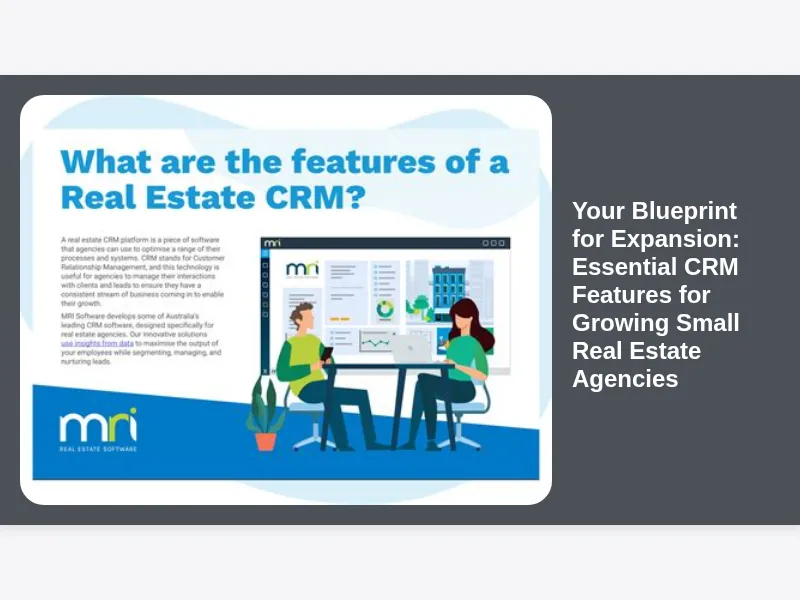
In the dynamic world of real estate, where connections are currency and efficiency is king, small agencies often find themselves at a crossroads. The desire to grow is palpable, but the path to scaling operations, managing an ever-expanding client base, and staying competitive against larger firms can seem daunting. This is precisely where a powerful Customer Relationship Management (CRM) system steps in, transforming from a mere tool into the very backbone of your agency’s success. For any small real estate agency aspiring to expand its reach and impact, understanding and implementing the essential CRM features for growing small real estate agencies isn’t just an advantage—it’s a necessity.
Gone are the days when a handwritten ledger or a patchwork of spreadsheets could adequately manage a burgeoning client list and complex property transactions. Today’s market demands agility, personalization, and seamless communication, all of which are meticulously handled by a well-chosen CRM. It’s more than just software; it’s an intelligent assistant that empowers agents, streamlines processes, and ultimately, fuels sustainable growth. This comprehensive guide will delve deep into the non-negotiable CRM features that will not only support your current operations but also lay a robust foundation for your agency’s future expansion.
The Cornerstone of Success: Robust Contact Management for Real Estate Professionals
At the heart of every thriving real estate agency is its network of contacts. This isn’t just about names and phone numbers; it encompasses a complex web of buyers, sellers, leads, past clients, referral partners, and even local vendors. A top-tier CRM offers robust contact management, serving as a centralized, intelligent database where every interaction, preference, and historical detail for each individual is meticulously recorded and instantly accessible. This feature moves beyond simple address books, allowing real estate professionals to build truly comprehensive profiles for everyone they engage with.
Imagine having a 360-degree view of every client. Your CRM should enable you to log property preferences, budget constraints, family details, communication history, preferred contact methods, and even personal notes about their hobbies or interests. This level of detail empowers agents to deliver highly personalized experiences, making clients feel valued and understood rather than just another transaction. For a small real estate agency aiming for growth, superior client relationships often translate directly into repeat business and invaluable word-of-mouth referrals, setting you apart from the competition.
Furthermore, a centralized contact database dramatically improves team collaboration. When all agents have access to the same up-to-date information, it eliminates silos and ensures consistent client service, regardless of who is handling a particular inquiry. New agents can quickly get up to speed on client histories, and senior agents can effortlessly delegate tasks or seek assistance knowing that all necessary context is readily available. This collective intelligence streamlines operations, prevents miscommunications, and ensures that every client interaction is informed and effective, which is truly an essential CRM feature for growing small real estate agencies.
Beyond just basic contact information, a sophisticated CRM allows for the attachment of relevant documents, linking contacts to specific properties or deals, and tracking engagement metrics. This ensures that data accuracy is maintained and that critical information is always at your fingertips. By providing a single source of truth for all client-related data, your agency can make more informed decisions, serve clients more effectively, and build a reputation for unparalleled professionalism and attentiveness, directly contributing to your agency’s expansion.
Mastering the Funnel: Seamless Lead Capture and Nurturing for Agent Productivity
For any real estate agency focused on growth, a steady influx of qualified leads is paramount. However, capturing these leads from various sources and then effectively nurturing them can be a disjointed, time-consuming process without the right tools. An essential CRM feature for growing small real estate agencies is its ability to seamlessly capture leads from diverse channels and then automate the crucial nurturing process, dramatically boosting agent productivity and conversion rates.
Think about all the ways potential clients discover your agency: website forms, property portal inquiries, social media ads, open house sign-ins, phone calls, and even walk-ins. A robust CRM integrates with these various touchpoints, automatically pulling in new lead information directly into your system. This eliminates manual data entry, reduces the risk of human error, and ensures that no promising lead ever falls through the cracks. The moment a potential buyer or seller expresses interest, their details are immediately logged and ready for action.
Once a lead is captured, the real work of nurturing begins. This is where automated lead nurturing workflows truly shine. A CRM allows you to set up predefined sequences of emails, SMS messages, and tasks based on a lead’s source, expressed interest, or engagement level. For instance, a lead who downloaded a “First-Time Home Buyer’s Guide” might automatically receive a series of emails offering helpful tips, while a seller inquiry receives information about your agency’s marketing strategy. This consistent, relevant communication keeps your agency top-of-mind without requiring constant manual intervention from agents.
Furthermore, a powerful CRM enables you to segment your leads based on specific criteria. Are they looking for commercial properties or residential? Are they pre-approved for a mortgage or just browsing? Do they prefer townhouses or single-family homes? By categorizing leads, your agents can tailor their outreach and marketing efforts, sending highly targeted messages that resonate more deeply with each individual. This personalized approach not only increases the likelihood of conversion but also saves agents valuable time by focusing their efforts on the most promising opportunities. The efficiency gained in managing and engaging with leads directly impacts your agency’s capacity for growth, making this a pivotal feature.
Beyond Spreadsheets: Integrated Property and Listing Management Solutions
Managing a multitude of properties and their associated listings can quickly become a logistical nightmare for a growing real estate agency, especially if you’re still relying on outdated methods like spreadsheets or disparate systems. An essential CRM feature for growing small real estate agencies is robust, integrated property and listing management, which centralizes all crucial information about the properties you handle, linking them directly to your clients and leads. This capability streamlines operations and ensures that your property data is always accurate and accessible.
Imagine having a dedicated profile for each property, much like you have for each client. This property profile within the CRM should include everything from its address, square footage, and number of bedrooms/bathrooms to specific features, high-resolution photos, virtual tour links, and even historical data like previous sale prices or renovation details. Crucially, it tracks the property’s current status—whether it’s active, under contract, sold, or rented—and automatically updates relevant stakeholders as its status changes.
The true power of this feature lies in its ability to connect properties directly to your client records. When a new listing comes in, your CRM can intelligently match it with potential buyers based on their predefined preferences, budget, and location criteria. This proactive matching saves agents immense time, allowing them to instantly present relevant options to clients without sifting through countless files. For a seller, it means a faster path to finding the right buyer, demonstrating your agency’s efficiency and responsiveness.
Moreover, integrated property management helps your agency maintain a unified and up-to-date presence across all your marketing channels. A CRM with strong listing capabilities can often push property details directly to your website, various MLS (Multiple Listing Service) platforms (with proper integrations), and even social media. This ensures consistency in information and reduces the manual effort involved in cross-platform updates. By centralizing and automating property data management, your agents can focus less on administrative tasks and more on closing deals and building client relationships, thereby fueling your agency’s capacity to take on more listings and clients, a clear indicator of growth.
Efficiency Multiplier: Task Automation and Workflow Optimization for Agents
In the fast-paced environment of real estate, agents are constantly juggling multiple responsibilities, from showing properties and negotiating deals to managing paperwork and nurturing leads. Many of these tasks are repetitive but absolutely critical for successful transactions. This is precisely why task automation and workflow optimization stand out as an essential CRM feature for growing small real estate agencies. By automating routine administrative duties and standardizing operational processes, a CRM frees up agents to focus on high-value activities that directly drive revenue and client satisfaction.
Consider the sheer volume of administrative tasks an agent faces daily: sending follow-up emails after a showing, setting reminders for contract deadlines, generating standard disclosure documents, or initiating drip campaigns for new leads. Without automation, each of these requires manual action, consuming valuable time that could otherwise be spent interacting with clients or scouting new opportunities. A sophisticated CRM allows you to set up automated tasks and alerts based on specific triggers. For example, once a property goes under contract, the CRM can automatically trigger a series of tasks for the agent: “Send congratulations email to buyer,” “Schedule inspection,” “Notify legal team,” and “Update listing status.”
Beyond individual tasks, CRM enables you to design comprehensive workflows that standardize your agency’s internal processes. Whether it’s the client onboarding process, the lifecycle of a new listing, or the steps involved in closing a deal, these workflows ensure consistency and adherence to best practices across your entire team. This not only makes your operations more efficient but also reduces the chances of critical steps being missed, which can have significant consequences in real estate. Standardized workflows are particularly beneficial for growing agencies, as they facilitate smoother scaling and easier training for new team members.
The real benefit of this efficiency multiplier is that it gives your agents precious time back. When administrative burdens are lifted, agents can dedicate more energy to face-to-face client meetings, strategic networking, and honing their sales skills. This shift from reactive task management to proactive relationship building directly contributes to increased agent productivity, higher client satisfaction rates, and ultimately, accelerated growth for your small real estate agency. Leveraging these automated capabilities transforms your team from task-managers into strategic advisors, a key differentiator in a competitive market.
Staying Connected: Integrated Communication Tools for Client Engagement
Effective and timely communication is the bedrock of strong client relationships in real estate. Clients expect to be informed every step of the way, and agents need efficient ways to manage conversations across various channels. Therefore, integrated communication tools are unequivocally an essential CRM feature for growing small real estate agencies. A CRM that centralizes and streamlines email, SMS, and even call logs ensures that every client interaction is documented, personalized, and efficient, fostering trust and improving responsiveness.
Imagine being able to send an email to a client, an SMS reminder about an upcoming showing, and then log a phone call, all from within the same platform. This eliminates the need to jump between multiple applications, saving agents time and ensuring that all communication history is consolidated in one place. When an agent picks up a client file, they immediately see a complete chronological record of every message exchanged, providing crucial context for the next conversation. This prevents awkward repetitions, ensures continuity, and helps agents pick up exactly where they left off, even if a previous colleague handled the interaction.
Beyond simple integration, a powerful real estate CRM enables personalized and timely communication at scale. You can craft email templates for various scenarios—new listing announcements, market updates, closing congratulations—and then personalize them with client-specific details pulled directly from their CRM profile. Automated SMS messages can be scheduled for property updates, showing confirmations, or birthday greetings, demonstrating a level of attentiveness that clients truly appreciate. This balance of automation and personalization helps your small agency maintain a human touch even as your client base expands.
The ability to track communication history also provides invaluable insights. Are clients opening your emails? Are your SMS messages generating responses? This data helps you refine your communication strategies, understand what resonates with your audience, and improve engagement over time. For a growing agency, consistent and professional communication not only strengthens client loyalty but also enhances your brand reputation, making you the preferred choice for real estate services in your area. This seamless communication management is truly a game-changer for client engagement and agency growth.
Never Miss a Beat: Streamlined Calendar and Appointment Scheduling
In real estate, an agent’s schedule is a complex tapestry woven with showings, client meetings, open houses, inspections, and administrative tasks. Manually coordinating these appointments can be incredibly time-consuming, prone to errors, and a source of frustration for both agents and clients. This makes streamlined calendar and appointment scheduling an absolutely essential CRM feature for growing small real estate agencies. It not only optimizes agent productivity but also significantly enhances the client experience by offering convenience and reliability.
A top-tier real estate CRM integrates a robust calendar system that’s directly linked to your contacts, properties, and deals. This means that when you schedule a showing for a specific property with a particular client, all relevant information is immediately tied to that calendar entry. Agents can view their entire day, week, or month at a glance, clearly seeing all commitments and available slots. This central visibility prevents double bookings and helps agents plan their routes more efficiently, minimizing travel time between appointments.
Beyond internal organization, many advanced CRMs offer client-facing scheduling capabilities. Imagine sending a client a link to your online calendar, allowing them to view your real-time availability and book a showing or meeting that works for them, directly into your schedule. This self-service option empowers clients, reduces the endless back-and-forth of email or phone tag, and provides an immediate sense of responsiveness. For a small agency, offering such modern conveniences can be a significant differentiator, making you appear more tech-savvy and client-focused.
Automated reminders and confirmations are another invaluable aspect of this feature. Once an appointment is scheduled, the CRM can automatically send email or SMS reminders to both the client and the agent a day or a few hours beforehand. This drastically reduces no-shows and ensures everyone arrives prepared. Furthermore, if an appointment needs to be rescheduled, the CRM simplifies the process, automatically updating calendars and notifying all parties. By bringing order and efficiency to scheduling, your agency can manage a higher volume of client interactions more effectively, supporting your ambitious growth objectives.
Guiding the Journey: Robust Deal Pipeline Management for Sales Success
Every property transaction is a journey, often complex and multi-staged, from initial inquiry to the final closing. Without a clear, visual system to track each deal’s progress, small real estate agencies can quickly lose sight of opportunities, miss critical deadlines, and struggle with accurate revenue forecasting. This is why robust deal pipeline management is an undeniably essential CRM feature for growing small real estate agencies. It provides a clear, visual representation of every active deal, allowing agents and managers to monitor progress, identify bottlenecks, and drive transactions forward with greater precision.
Imagine a visual dashboard where each potential sale or purchase is represented as a card, moving across a series of stages: “New Lead,” “Pre-Qualification,” “Showing Scheduled,” “Offer Made,” “Under Contract,” “Closing Soon,” “Closed.” This intuitive pipeline view allows agents to instantly see where each of their deals stands, what the next steps are, and what actions need to be taken. It’s a powerful organizational tool that brings clarity to what can often feel like a chaotic process, ensuring no deal falls through the cracks.
For agency owners or team leaders, deal pipeline management offers invaluable oversight. You can quickly assess the overall health of your sales funnel, identify which agents might need support, or pinpoint common sticking points in the sales process. By analyzing conversion rates between stages, you can gain insights into where your agency is performing well and where improvements are needed. This data-driven approach to sales management empowers you to make strategic adjustments to training, marketing, or agent allocation, directly impacting your agency’s bottom line.
Furthermore, a well-managed sales pipeline enables more accurate revenue forecasting. By understanding the probability of deals closing at different stages, your agency can project future income with greater confidence, allowing for better financial planning and investment in growth initiatives. It also fosters accountability among agents, as their individual pipelines are transparent and their progress measurable. By bringing structure and visibility to the sales process, deal pipeline management helps small agencies scale their sales efforts effectively, making it an invaluable component of any growth strategy.
Paperless Power: Secure Document Management and E-Signature Capabilities
The real estate industry is notoriously paperwork-intensive, with contracts, disclosures, agreements, and numerous other documents exchanging hands for every single transaction. For a growing small real estate agency, managing this deluge of physical paper can be inefficient, insecure, and environmentally unsustainable. This makes secure document management and e-signature capabilities an absolutely essential CRM feature for growing small real estate agencies, enabling a smoother, faster, and more secure transition to a paperless office.
A CRM equipped with robust document management allows your agency to store all client-related documents—from initial agreements and offer letters to closing statements and appraisal reports—digitally within the client’s or property’s profile. This centralized digital repository offers unparalleled benefits: instant accessibility from anywhere, enhanced security through encryption and access controls, and improved organization. No more digging through filing cabinets or worrying about lost paperwork; everything is just a few clicks away, securely backed up and easily searchable.
The integration of e-signature capabilities takes this efficiency a step further. Instead of waiting for clients to physically sign and return documents, which can cause significant delays, the CRM allows agents to send documents for electronic signature directly from the system. Clients can review and sign legally binding documents from their computer or mobile device in minutes, speeding up the entire transaction process. This not only improves the client experience by offering convenience but also significantly reduces the time from offer to acceptance, giving your agency a competitive edge.
Beyond convenience, digital document management and e-signatures contribute significantly to compliance and risk management. Most CRMs offer version control, ensuring that everyone is always working with the latest iteration of a document, and provide an audit trail of who accessed, edited, or signed a document and when. This level of meticulous record-keeping is crucial for regulatory compliance and provides vital evidence in case of disputes. By embracing paperless power, your growing agency can operate with greater efficiency, security, and professionalism, allowing you to handle a larger volume of transactions without being bogged down by administrative overhead.
Data-Driven Decisions: Powerful Reporting and Analytics for Market Insights
In today’s competitive real estate landscape, operating on gut feelings alone is a recipe for stagnation. For small real estate agencies aiming for sustainable growth, the ability to make informed, data-driven decisions is paramount. This is precisely why powerful reporting and analytics are an undeniably essential CRM feature for growing small real estate agencies. A robust CRM transforms raw data into actionable insights, providing a clear picture of what’s working, what’s not, and where the next growth opportunities lie.
Imagine having instant access to reports that can tell you your most profitable lead sources, the average time it takes to close a deal, or the performance metrics of individual agents. A sophisticated CRM can generate a wide array of customizable reports, analyzing everything from lead conversion rates and client acquisition costs to agent productivity, market trends within your database, and the return on investment (ROI) of your marketing campaigns. These insights empower agency owners and managers to move beyond anecdotal evidence and base their strategic decisions on concrete data.
For instance, by analyzing lead source reports, you might discover that while your social media campaigns generate a high volume of leads, open houses yield leads with a significantly higher conversion rate. This insight could prompt you to reallocate marketing budgets or refine your social media strategy. Similarly, agent performance reports can highlight top performers whose strategies can be replicated, or identify areas where certain agents might need additional training or support, ultimately improving the overall effectiveness of your sales team.
Furthermore, reporting and analytics help your agency better understand your client base and market dynamics. You can identify patterns in property types requested, price ranges, or geographical areas of interest. This allows for more targeted marketing campaigns and service offerings, ensuring your agency is always aligned with client demand. For a growing small real estate agency, these insights are not just about retrospective analysis; they are about proactively identifying future opportunities, optimizing operations, and making strategic investments that will accelerate your expansion and solidify your market position.
Business On-the-Go: Mobile Accessibility for Agile Real Estate Agents
The life of a real estate agent is rarely confined to an office desk. Agents are constantly on the move—showing properties, attending inspections, meeting clients, and networking. In such a dynamic environment, being tied to a desktop computer can severely hinder productivity and responsiveness. This makes mobile accessibility an absolutely essential CRM feature for growing small real estate agencies. A robust mobile CRM application empowers agents to access critical information, update records, and communicate effectively from anywhere, ensuring they remain agile and efficient, regardless of their location.
Imagine an agent at a property showing, a potential buyer asks a specific question about a neighboring listing, or expresses a sudden interest in a different property type. With a mobile CRM app, the agent can instantly pull up property details, client preferences, and communication history right from their smartphone or tablet. This immediate access to information allows them to provide real-time answers, update client profiles with new insights on the spot, and even schedule a follow-up showing without missing a beat, significantly enhancing their professionalism and responsiveness.
Beyond information retrieval, mobile CRM apps enable agents to perform crucial tasks while out in the field. This includes updating lead statuses after a call, adding notes from a client meeting, uploading photos of a new listing, or scheduling appointments directly into their calendar. By completing these administrative tasks on the go, agents prevent a backlog of work that would otherwise await them back at the office. This continuous updating ensures that the CRM remains a single source of truth, always reflecting the most current state of operations.
For a growing small real estate agency, empowering agents with mobile accessibility translates into increased productivity, faster response times, and an overall more dynamic and efficient team. Agents can capitalize on every moment, turning downtime between appointments into productive work time. This agility not only helps in managing a larger client load but also elevates the client experience, as agents are always prepared and informed. Investing in a CRM with a strong, intuitive mobile application is a strategic move to support your agency’s expansion and ensure your team is always at peak performance.
Breaking Down Silos: Seamless Integration with Essential Real Estate Tools
Modern real estate agencies rely on an ecosystem of specialized tools, ranging from MLS platforms and marketing automation software to accounting systems and virtual tour providers. Operating these tools in isolation creates data silos, necessitates redundant data entry, and leads to inefficiencies. Therefore, seamless integration capabilities are an undeniably essential CRM feature for growing small real estate agencies. A CRM that integrates effortlessly with other vital real estate tools creates a unified operational hub, streamlining workflows and ensuring a consistent flow of information across your entire tech stack.
Consider the benefits of direct integration with your local MLS. Instead of manually copying property details or checking multiple systems for updates, a CRM integration can automatically pull in new listings, property status changes, and even comparable sales data directly into your system. This not only saves agents countless hours of manual data entry but also ensures that the information your team is working with is always current and accurate, reducing the risk of errors and improving decision-making.
Beyond MLS, integrations with marketing automation tools mean that lead information flows directly from your CRM into your email marketing platform, allowing for highly targeted campaigns based on CRM segments. Accounting software integrations can track commission payouts, expenses, and overall financial performance, giving a holistic view of your agency’s profitability. Even simple integrations with popular communication tools like Google Workspace or Microsoft 365 can centralize email, calendar, and document management, making collaboration effortless.
For a growing small real estate agency, the power of a well-integrated CRM lies in creating a “single source of truth” for all your data. This eliminates inconsistencies, reduces administrative overhead, and allows your team to operate with maximum efficiency. By connecting your critical business tools, you build a robust digital infrastructure that can effortlessly support increased client volume and operational complexity as your agency expands. This strategic consolidation of technology is not just convenient; it’s a foundational element for scalable growth.
Precision Outreach: Advanced Client Segmentation for Targeted Marketing
In a crowded market, generic marketing messages often fall flat. Today’s real estate clients expect personalized communication that speaks directly to their needs, preferences, and stage in the property journey. This makes advanced client segmentation an absolutely essential CRM feature for growing small real estate agencies. By enabling your agency to meticulously categorize and understand your diverse client base, a CRM empowers you to craft highly targeted marketing campaigns that resonate deeply, improve engagement, and ultimately drive higher conversion rates.
Imagine being able to filter your entire database based on a multitude of criteria: budget range, desired property type (single-family, condo, commercial), preferred neighborhoods, timeframes for buying/selling, lead source, or even their past interactions with your agency. A robust CRM allows you to create dynamic segments that automatically update as client information changes. For example, you could easily create a segment for “First-time buyers looking for homes under $500k in the Northwood area,” or “Sellers who have been in their homes for 10+ years and might be looking to downsize.”
With these precise segments, your marketing team can move beyond broad-stroke emails and craft highly specific, relevant messages. Instead of sending a general market update to everyone, you can send an email showcasing new listings in a specific neighborhood to clients who have expressed interest in that area. You can provide tailored advice to first-time buyers, while offering unique insights into local market trends to potential sellers. This level of personalization makes your communication feel less like mass marketing and more like a helpful, individualized conversation.
For a growing small real estate agency, the ability to execute precision outreach significantly boosts the effectiveness of your marketing efforts. It improves open rates, click-through rates, and ultimately, conversion rates, meaning your marketing budget goes further. By demonstrating that you understand and cater to individual client needs, your agency builds a reputation for being attentive and knowledgeable, fostering deeper relationships and securing more business. This targeted approach is a powerful engine for attracting and converting new clients, accelerating your agency’s growth in a meaningful way.
Your Network, Your Net Worth: Robust Referral Tracking and Management
In the real estate industry, word-of-mouth is an incredibly powerful force, and referrals often represent some of the highest-quality leads. For a small real estate agency looking to grow, effectively leveraging and nurturing your referral network is absolutely critical. This is why robust referral tracking and management is an essential CRM feature for growing small real estate agencies. It provides the tools to systematically identify, track, and cultivate your referral sources, turning a sporadic flow of recommendations into a consistent, measurable pipeline of new business.
Think about all the potential sources of referrals: past clients, fellow agents, mortgage brokers, contractors, family, and friends. Without a dedicated system, keeping track of who referred whom, what deals originated from a referral, and any associated commission or thank-you arrangements can be haphazard and easily forgotten. A CRM with referral tracking allows you to log the referral source for every new lead or client. This immediately connects new business directly to its origin, giving you a clear picture of your most valuable referral partners.
Beyond simple tracking, a sophisticated CRM helps you manage the relationship with your referral partners. You can set up reminders to regularly check in with them, send personalized thank-you notes for successful referrals, or even automate updates on the progress of a referred client’s transaction. This consistent communication and appreciation strengthen those valuable relationships, encouraging partners to send more business your way. It transforms casual recommendations into a reliable, ongoing source of high-quality leads.
Furthermore, robust referral tracking provides invaluable insights through reporting. You can analyze which referral sources are most productive, the ROI of your referral programs, or identify patterns that lead to successful referrals. This data empowers your agency to strategically invest in nurturing those key relationships, perhaps by offering specific incentives or dedicating more time to networking with high-potential partners. For a growing small real estate agency, maximizing your referral network is one of the most cost-effective and powerful strategies for acquiring new clients and expanding your market footprint, making this CRM feature an indispensable asset.
Staying Compliant: Integrated Compliance Management Features
The real estate industry is heavily regulated, with a myriad of federal, state, and local laws governing every aspect of a transaction, from property disclosures and fair housing rules to licensing requirements and data privacy. For a growing small real estate agency, navigating this complex regulatory landscape while maintaining operational efficiency can be a significant challenge. This makes integrated compliance management an essential CRM feature for growing small real estate agencies, helping to minimize legal risks, protect your agency’s reputation, and ensure smooth, lawful operations.
Imagine a system that helps you keep track of all necessary disclosures for a property, reminds you of license renewal dates for your agents, or flags potential conflicts of interest before they become an issue. A CRM with compliance features can do exactly that. It can be configured to prompt agents for specific documents or information at crucial stages of a deal, ensuring that all legal requirements are met. For example, when a listing goes live, the CRM might automatically trigger a task to ensure the seller’s disclosure form is complete and signed.
Beyond individual transaction compliance, these features can help manage broader agency-level regulatory adherence. This might include tracking agent training certifications, ensuring data handling practices comply with privacy regulations (like GDPR or CCPA where applicable), or maintaining a clear audit trail of all communications and document exchanges. In the event of an audit or legal inquiry, having all this information meticulously organized and easily retrievable within your CRM can be a lifesaver, demonstrating your agency’s commitment to lawful and ethical practices.
For a growing small real estate agency, the stakes of non-compliance are high, ranging from hefty fines to irreparable damage to your brand reputation. By integrating compliance management directly into your CRM workflows, you embed best practices into your daily operations, making it easier for agents to adhere to regulations without adding significant administrative burden. This proactive approach to compliance not only safeguards your agency but also builds client trust, positioning your firm as a reliable and reputable partner in the real estate journey, which is fundamental for sustainable growth.
Grow With You: Customization and Scalability for Future Success
As a small real estate agency embarks on a growth trajectory, its needs and operational complexities will inevitably evolve. A CRM that is rigid and unable to adapt will quickly become an impediment rather than an asset. This is why customization and scalability are absolutely essential CRM features for growing small real estate agencies. Investing in a CRM that can be tailored to your unique workflows and seamlessly grow alongside your business ensures that your technology infrastructure remains a supportive force, not a limiting factor, in your long-term success.
Customization allows your CRM to truly reflect your agency’s unique brand, processes, and terminology. You should be able to configure custom fields to capture specific data relevant to your market, create unique sales pipelines that mirror your actual transaction stages, and design personalized dashboards that provide the most crucial information at a glance. This ability to mold the CRM to fit your agency, rather than forcing your agency to fit the CRM, increases user adoption and ensures the system enhances your existing strengths and workflows.
Imagine being able to add new lead sources, modify automated email templates, or adjust workflow triggers as your marketing strategies evolve. A flexible CRM provides this agility, allowing you to adapt quickly to market changes or new business opportunities without requiring extensive technical expertise or costly developer interventions. This self-service customization empowers your team to continuously optimize the CRM for maximum effectiveness, ensuring it always supports your current strategic goals.
Crucially, the CRM you choose must be scalable. As your agency grows, you’ll add more agents, handle a larger volume of leads and clients, and manage more complex transactions. A scalable CRM can effortlessly accommodate this increased load, handling more data, more users, and more sophisticated integrations without experiencing performance degradation or requiring a complete system overhaul. Investing in a scalable solution from the outset protects your initial technology investment and ensures that your CRM remains a powerful engine for growth, rather than becoming a bottleneck that hinders your expansion in the future.
Elevating the Client Experience: Engaging Client Portals
In today’s digital age, clients expect transparency, convenience, and the ability to access information on their own terms. For a small real estate agency aiming to stand out and grow, simply managing client data internally isn’t enough; empowering clients with self-service options can dramatically enhance their experience. This is why engaging client portals, while sometimes considered an advanced feature, are increasingly becoming an essential CRM feature for growing small real estate agencies focused on superior client satisfaction and operational efficiency.
Imagine offering your clients a secure, branded online portal where they can log in at any time to view specific information relevant to their property journey. For buyers, this might include a curated list of properties matching their criteria, details of upcoming showings, and perhaps even the ability to provide feedback directly. For sellers, it could mean seeing real-time updates on their listing’s performance, viewing inquiries, accessing showing schedules, and reviewing marketing materials your agency is using. This level of transparency fosters trust and makes clients feel more involved and informed throughout the process.
Beyond simply viewing information, a robust client portal can facilitate seamless communication and document exchange. Clients can securely upload requested documents, review and e-sign agreements, or send messages directly to their agent within the portal, centralizing all interactions in one secure place. This reduces the back-and-forth of emails and phone calls, cutting down on administrative tasks for agents and allowing them to focus on higher-value activities. It also ensures that sensitive documents are exchanged through a secure channel, enhancing data privacy.
For a growing small real estate agency, providing an engaging client portal is a significant differentiator. It positions your agency as modern, tech-savvy, and deeply committed to client convenience and transparency. This enhanced client experience not only leads to higher satisfaction and positive testimonials but also helps to attract new clients who appreciate such innovative service. By empowering clients with self-service capabilities, your agency can manage a larger client base more efficiently while simultaneously elevating the quality of your service, directly contributing to sustainable growth.
The Human Element: Training and Support for Optimal CRM Adoption
Even the most feature-rich and technologically advanced CRM is only as effective as the people using it. For a small real estate agency investing in new technology, ensuring high user adoption across the team is paramount to realizing the full potential of the system. This makes comprehensive training and robust support services an often-overlooked yet undeniably essential CRM feature for growing small real estate agencies. Without adequate guidance, even the most intuitive software can sit underutilized, wasting valuable investment.
When evaluating CRM solutions, it’s crucial to consider the quality and availability of training resources offered by the vendor. This should include everything from initial onboarding sessions for new users to comprehensive documentation, video tutorials, and webinars that cover all aspects of the system. Effective training ensures that agents and administrative staff quickly become proficient in using the CRM’s various features, understanding how to leverage them to improve their daily tasks and contribute to the agency’s overall efficiency. Poor training can lead to frustration, resistance, and a failure to integrate the CRM fully into daily workflows.
Beyond initial training, ongoing support is equally vital. As your agency grows and evolves, questions will arise, and new challenges may emerge. Access to responsive and knowledgeable customer support—whether through phone, email, or live chat—ensures that any issues can be quickly resolved, preventing disruptions to your operations. A strong support system also indicates a vendor’s commitment to your long-term success, offering guidance as you explore more advanced features or seek to optimize your CRM usage for specific strategic goals.
For a growing small real estate agency, maximizing the return on your CRM investment hinges directly on team adoption. When agents feel confident and supported in using the CRM, it becomes an indispensable part of their workflow, truly enhancing productivity and client engagement. Conversely, a lack of training and support can lead to agents reverting to old, inefficient habits, undermining the entire purpose of the CRM. Prioritizing a CRM provider with a strong emphasis on user success through excellent training and support is a strategic decision that ensures your technology investment translates into tangible growth and efficiency.
Strategic Investment: Choosing the Right CRM for Your Agency’s Growth
Selecting a CRM is a significant strategic decision for any small real estate agency aiming for growth. It’s not merely about accumulating features; it’s about finding the right technological partner that aligns with your agency’s unique vision, culture, and operational needs. This makes the process of carefully choosing the right CRM an essential CRM feature for growing small real estate agencies in itself. A thoughtful evaluation process will ensure your investment yields maximum returns and truly supports your expansion.
Beyond the specific features we’ve discussed, several critical factors should guide your decision. First, consider the overall ease of use. An intuitive interface with a gentle learning curve will encourage agent adoption, whereas a complex or clunky system will lead to frustration and underutilization. Second, evaluate the vendor’s reputation and track record, paying attention to customer reviews, industry recognition, and their commitment to ongoing innovation and security. A reliable vendor provides peace of mind and ensures long-term support.
Budget is, of course, a practical consideration. While it’s tempting to opt for the cheapest solution, remember that a CRM is an investment in your agency’s future. Weigh the costs against the potential benefits in terms of increased efficiency, lead conversion, and client satisfaction. Many CRMs offer tiered pricing, allowing you to start with a basic package and scale up as your agency grows and its needs become more sophisticated. It’s also crucial to understand all associated costs, including setup, training, and ongoing support fees, to avoid unexpected expenses.
Finally, consider the long-term vision. Does the CRM provider share your commitment to innovation? Will the system be able to integrate with future technologies you might adopt? Engage in thorough demos, ask specific questions about customization and scalability, and even explore pilot programs to test the system with a small group of users before a full agency-wide rollout. By approaching CRM selection as a strategic investment in your agency’s growth, rather than just a software purchase, you set the stage for sustained success and meaningful expansion.
The Digital Backbone: CRM as the Heart of Your Real Estate Operations
In the increasingly competitive real estate market, small agencies face unique pressures to perform efficiently, connect effectively, and grow strategically. What was once seen as an optional tool for large enterprises has now become the fundamental digital backbone for agencies of all sizes. The cumulative power of the essential CRM features for growing small real estate agencies we’ve explored transforms a disparate collection of tasks into a cohesive, streamlined operation, establishing the CRM as the undisputed heart of your entire real estate business.
A well-implemented CRM fundamentally changes how a small agency operates. It shifts the focus from reactive, administrative busywork to proactive client engagement and strategic business development. Instead of chasing down information or manually updating records, agents are empowered to spend more time building relationships, negotiating deals, and providing exceptional service—activities that directly contribute to revenue generation and client satisfaction. This strategic shift is crucial for any agency aiming to not just survive, but truly thrive and expand its market share.
For growing agencies, a CRM provides a competitive advantage by enabling superior client experiences. Personalization, timely communication, and seamless service become achievable standards, differentiating your agency from competitors who still rely on outdated methods. It also offers invaluable insights through data, allowing you to make smarter marketing decisions, optimize agent performance, and identify new growth opportunities before your rivals do. This blend of operational excellence and data intelligence fuels sustainable expansion.
Ultimately, a CRM isn’t just a piece of software; it’s an integrated platform that connects every facet of your real estate business. It unites your lead generation, client management, property tracking, communication, and analytics into a single, intelligent system. By embracing this digital transformation, your small real estate agency positions itself not just for incremental gains, but for exponential growth, becoming an agile, client-centric, and highly profitable enterprise that is ready to dominate its local market and beyond.
Charting Your Course: Embracing Technology for Sustainable Expansion
We’ve journeyed through the intricate landscape of essential CRM features for growing small real estate agencies, uncovering how each component, from robust contact management to powerful analytics and seamless integrations, plays a pivotal role in propelling your business forward. The narrative is clear: in today’s digital-first world, a strategically chosen and well-utilized CRM is not merely a convenience; it is the definitive roadmap for sustainable expansion and competitive dominance for any ambitious real estate agency.
The commitment to adopting a comprehensive CRM signifies more than just a technology upgrade; it represents a fundamental shift in your agency’s operational philosophy. It’s an embrace of efficiency, personalization, and data-driven decision-making that empowers your agents, delights your clients, and ultimately, fuels your bottom line. By centralizing information, automating repetitive tasks, and providing actionable insights, a CRM transforms your agency from merely functioning to truly flourishing, ready to handle increased volume and complexity with confidence.
As you reflect on the features discussed, consider the transformative impact each could have on your daily operations, client satisfaction, and growth trajectory. Imagine the hours saved, the leads converted, and the client relationships strengthened. This isn’t just about streamlining; it’s about scaling intelligently, ensuring that as your agency grows, your capacity to deliver exceptional service and capture new opportunities grows even faster. The right CRM will not only solve your current challenges but also anticipate your future needs, providing a flexible foundation for long-term success.
Therefore, the call to action is simple yet profound: take the leap. Research, conduct demos, and thoughtfully evaluate the CRM solutions that best align with your agency’s unique goals and budget. Invest the time in training your team and fostering a culture of adoption. By making this strategic investment in a powerful CRM, your small real estate agency won’t just keep pace with the market; it will define the pace, charting a course for unparalleled success and sustainable expansion in the years to come.