The landscape of modern manufacturing is constantly evolving, presenting both immense opportunities and significant challenges, especially for smaller enterprises. In an age where agility, efficiency, and data-driven decision-making are paramount, relying on outdated systems or manual processes can severely hinder growth and competitiveness. Small manufacturing firms often grapple with limited resources, fluctuating demand, and the intricate dance of supply chain management, making precise production planning not just an advantage, but a necessity for survival and prosperity.
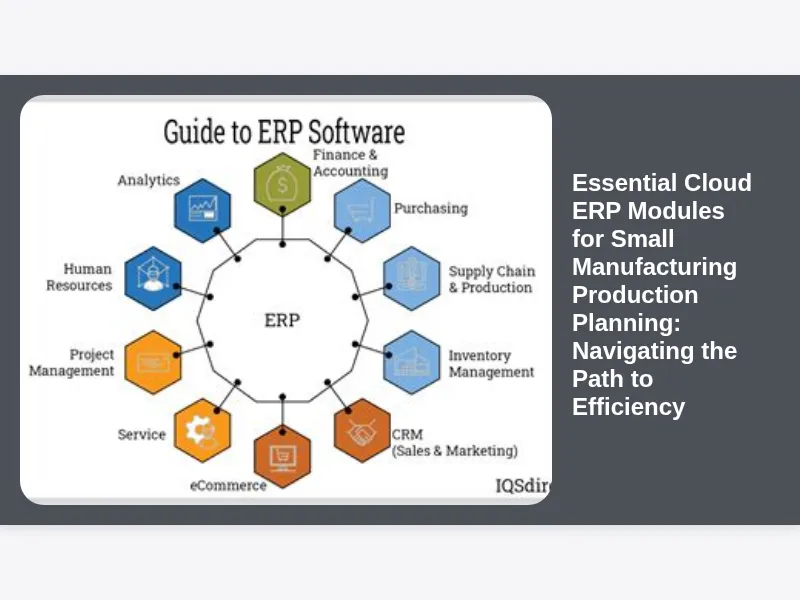
Imagine trying to orchestrate a complex symphony with only a handful of instruments, each played by a different musician without a conductor or a shared score. That’s often the reality for small manufacturers without an integrated system. Production delays, material shortages, inaccurate forecasts, and inefficient resource allocation are common pain points that can quickly erode profitability and customer satisfaction. The good news is that technological advancements have brought sophisticated solutions within reach, democratizing tools once reserved for large corporations. Cloud-based Enterprise Resource Planning (ERP) systems stand out as a beacon for these businesses, offering a comprehensive, integrated suite of modules designed to streamline operations from end to end.
Why Cloud ERP is a Game-Changer for Agile Small Manufacturers
For small manufacturing businesses, the leap to a sophisticated ERP system might initially seem daunting, conjuring images of massive upfront investments, lengthy implementation periods, and complex IT infrastructure. However, cloud-based ERP solutions have fundamentally reshaped this perception. Unlike traditional on-premise systems, cloud ERP operates on a subscription model, eliminating the need for expensive servers, dedicated IT staff, and cumbersome maintenance. This significantly reduces the total cost of ownership, making enterprise-grade functionality accessible to businesses with leaner budgets.
Beyond cost-effectiveness, the inherent agility of cloud ERP is a profound advantage for smaller manufacturers who need to adapt quickly to market shifts. Cloud systems offer unparalleled scalability, allowing businesses to effortlessly add or remove users and modules as their needs evolve, without disrupting operations. This flexibility is crucial for companies experiencing rapid growth or those navigating seasonal fluctuations in demand. Furthermore, the ability to access critical business data from any location, on any device with an internet connection, empowers remote teams and enhances collaboration across various departments, from sales and engineering to the shop floor and warehousing. This pervasive accessibility is not just a convenience; it is a strategic asset that ensures real-time visibility and responsiveness, fundamentally transforming how small manufacturers manage their operations and plan for production.
Understanding the Intricacies of Production Planning in Lean Manufacturing
Production planning is the backbone of any successful manufacturing operation, yet for small manufacturers, it often feels like a constant juggling act. It encompasses a wide array of activities, including forecasting customer demand, scheduling production orders, allocating resources such as machinery and labor, managing inventory levels, and ensuring timely delivery of finished goods. The goal is simple in principle: produce the right products, in the right quantities, at the right time, while minimizing costs and maximizing efficiency. However, achieving this balance requires meticulous coordination and foresight, especially when faced with limited capital, fluctuating order volumes, and tight deadlines.
The unique challenges faced by small manufacturers further underscore the criticality of robust production planning. They often lack the buffer capacity or the extensive supply chains that larger enterprises might possess, making them more vulnerable to disruptions such. A single late material delivery or a sudden machine breakdown can have a disproportionately large impact on their entire production schedule and customer commitments. Moreover, many small firms operate with multi-skilled workforces and flexible production lines, requiring planning systems that can accommodate varied setups and rapid changeovers. Without a structured, integrated approach to production planning, these businesses risk falling prey to reactive decision-making, leading to excessive overtime, rush orders, material waste, and ultimately, a decline in profitability and customer trust. This highlights the indispensable role of Essential Cloud ERP Modules for Small Manufacturing Production Planning.
Core Module 1: Mastering Demand Planning and Accurate Forecasting
At the heart of effective production planning lies the ability to accurately predict what customers will want and when they will want it. This is precisely where the Demand Planning and Forecasting module of a cloud ERP system becomes indispensable for small manufacturers. Moving beyond educated guesses or reliance on simple historical averages, this module leverages sophisticated algorithms and historical sales data, seasonal trends, promotional activities, and even external market indicators to generate more reliable demand forecasts. For a small manufacturer, understanding future demand with greater precision means significantly reducing the risk of either overproducing, leading to excess inventory and storage costs, or underproducing, resulting in lost sales and frustrated customers.
The real power of this module extends beyond just prediction; it’s about enabling proactive decision-making across the entire organization. By integrating with sales and marketing data, the demand planning module provides a unified view of anticipated future orders, allowing manufacturers to align their production schedules with expected customer needs. This holistic approach supports a more stable production environment, reduces the need for last-minute adjustments, and helps optimize resource allocation well in advance. For small manufacturing businesses looking to enhance their responsiveness and minimize waste, a robust demand planning and forecasting module within their cloud ERP is not just a feature; it’s a strategic imperative that directly impacts profitability and market position.
Core Module 2: Streamlining Operations with Master Production Scheduling (MPS)
Once demand has been intelligently forecasted, the next critical step in production planning for small manufacturers is translating that forecast into a actionable production plan. This is where the Master Production Scheduling (MPS) module within a cloud ERP system takes center stage. The MPS module acts as the conductor of the manufacturing symphony, determining precisely what products need to be produced, in what quantities, and by when, to meet the forecasted demand and firm customer orders. It doesn’t just look at what’s needed; it also critically assesses the available capacity of machines, labor, and other critical resources on the shop floor.
For small manufacturing businesses, effective MPS is vital for optimizing their often-limited resources and avoiding bottlenecks that can derail an entire production run. The module considers factors such as lead times, batch sizes, and setup times to create an optimized production schedule that maximizes throughput and minimizes idle time. By providing a clear, realistic schedule, MPS enables better coordination between departments, from procurement ensuring raw materials are on hand, to shop floor management allocating tasks efficiently. This module is truly one of the Essential Cloud ERP Modules for Small Manufacturing Production Planning, ensuring that the manufacturer operates at peak efficiency, reliably delivers products, and sustains profitability without overstretching its capabilities.
Core Module 3: Optimizing Inventory and Material Requirements Planning (MRP)
Imagine a scenario where your production line grinds to a halt because a single, seemingly minor component is missing, or conversely, your warehouse is overflowing with unused raw materials, tying up valuable capital. These are common dilemmas for small manufacturers without a robust Material Requirements Planning (MRP) module. MRP is a cornerstone of cloud ERP for manufacturing, meticulously calculating the precise quantities of raw materials and sub-components needed for production, based on the Master Production Schedule and the Bill of Materials (BOM) for each product.
This module goes beyond simple inventory tracking; it’s a dynamic planning tool that ensures materials are available exactly when they are needed, preventing costly production delays and eliminating unnecessary inventory holding costs. For small manufacturing businesses, which often operate with tighter cash flow and limited storage space, the ability to maintain optimal inventory levels is paramount. The MRP module within a cloud ERP integrates seamlessly with purchasing and inventory management, automatically generating purchase requisitions for materials that fall below predefined reorder points or are required for upcoming production runs. This streamlined material procurement process significantly enhances efficiency, reduces waste, and empowers small manufacturers to maintain a lean operation while reliably meeting their production commitments, making it an undeniable component of Essential Cloud ERP Modules for Small Manufacturing Production Planning.
Core Module 4: Gaining Real-time Visibility with Shop Floor Control and Execution
The best production plans, master schedules, and material plans can falter without effective execution and real-time visibility into what’s actually happening on the shop floor. This is precisely the critical role played by the Shop Floor Control and Execution module within a cloud ERP system. For small manufacturers, who often run dynamic operations with multiple jobs running concurrently and frequent changes, this module offers unprecedented clarity and control, moving beyond manual tracking and paper-based systems. It allows for the real-time tracking of every production order, every machine’s status, and every labor activity, providing an accurate, up-to-the-minute picture of production progress.
Through data captured directly from the shop floor—whether via barcode scans, RFID, or machine integrations—the module monitors job status, resource utilization, and production output against the planned schedule. This real-time data flow immediately highlights any deviations, bottlenecks, or unexpected issues, allowing supervisors and management to intervene promptly, reroute jobs, or reallocate resources before minor problems escalate into major delays. For small manufacturing businesses, this enhanced operational transparency is invaluable. It not only improves efficiency and responsiveness but also empowers continuous improvement efforts by providing concrete data on production cycle times, machine performance, and labor productivity. This immediate feedback loop is essential for maintaining agile operations and continuously refining production planning, firmly positioning shop floor control as one of the Essential Cloud ERP Modules for Small Manufacturing Production Planning.
Core Module 5: Driving Efficiency with Inventory Management and Warehouse Operations
While the MRP module focuses on planning material requirements, the Inventory Management and Warehouse Operations module in a cloud ERP system takes charge of the physical custody, movement, and accuracy of all goods—from raw materials and work-in-progress to finished products. For small manufacturing businesses, inefficient inventory practices can drain profitability through excessive holding costs, obsolescence, stockouts, or damaged goods. This module provides the tools necessary to meticulously track every item, optimize storage locations, and streamline the entire warehouse workflow.
It offers functionalities such as bin and location management, serial and lot number tracking for traceability, and cycle counting capabilities to maintain high levels of inventory accuracy without the need for disruptive annual physical counts. By integrating with purchasing, production, and sales, the module ensures that inventory levels are always synchronized across the enterprise, preventing discrepancies that can lead to production delays or incorrect order fulfillment. For small manufacturers aiming to reduce operational costs, improve order accuracy, and accelerate order fulfillment times, precise inventory control and efficient warehouse management are non-negotiable. This module ensures that the right materials are in the right place at the right time, minimizing waste and maximizing efficiency throughout the production lifecycle, solidifying its place among the Essential Cloud ERP Modules for Small Manufacturing Production Planning.
Core Module 6: Ensuring Product Excellence with Quality Management (QM)
In today’s competitive marketplace, product quality is not just a differentiator; it’s a fundamental expectation. For small manufacturing businesses, maintaining consistent quality is crucial for building brand reputation, ensuring customer satisfaction, and complying with industry standards and regulations. The Quality Management (QM) module within a cloud ERP system provides the framework to embed quality control directly into every stage of the manufacturing process, rather than treating it as an afterthought. This integrated approach ensures that quality checks are not isolated events but an intrinsic part of production planning and execution.
The QM module facilitates the definition of quality control points, specifications, and inspection procedures at various stages, from incoming raw materials inspection to in-process checks and final product testing. It enables the recording of inspection results, tracking of non-conformances, and initiation of corrective and preventive actions (CAPA). For small manufacturers, this means reducing scrap rates, minimizing rework, and preventing defective products from reaching customers, all of which directly impact the bottom line and customer loyalty. Furthermore, robust quality management capabilities provide full traceability, allowing manufacturers to quickly identify the source of any quality issue, a critical capability for managing recalls or addressing customer complaints effectively. By making quality an integral part of operations, this module is clearly one of the Essential Cloud ERP Modules for Small Manufacturing Production Planning.
Core Module 7: Managing Product Data with Product Lifecycle Management (PLM) Integration
While a full-fledged PLM system might seem like overkill for many small manufacturers, the ability to effectively manage product data and engineering changes is undeniably critical for agility and innovation. A cloud ERP that offers integrated or tightly linked PLM functionalities provides small manufacturing businesses with the means to centralize product definitions, bill of materials (BOMs), engineering drawings, specifications, and revision histories. This isn’t about complex design workflows, but rather about ensuring that everyone—from engineers and production planners to sales and procurement—is working with the most current and accurate product information.
For small manufacturers, particularly those involved in custom orders or frequently introducing new product variants, managing multiple versions of a product or ensuring that all departments are using the latest BOM can be a logistical nightmare. The PLM aspects within the ERP streamline the process of initiating, tracking, and approving engineering change orders (ECOs), ensuring that changes are propagated across all relevant modules, including inventory, purchasing, and production. This prevents costly errors, rework, and delays that often arise from outdated information. By providing a single source of truth for all product-related data, this module empowers small manufacturers to accelerate new product development, improve design accuracy, and maintain agility in their production planning, making it an important consideration among the Essential Cloud ERP Modules for Small Manufacturing Production Planning.
Core Module 8: Gaining Financial Oversight with Integrated Financial Management
At the end of the day, every manufacturing activity, every production decision, and every operational efficiency or inefficiency ultimately impacts the company’s financial health. The Financial Management module, tightly integrated within the cloud ERP system, provides small manufacturing businesses with a real-time, comprehensive view of their financial performance, directly linking operational activities to monetary outcomes. This goes far beyond basic accounting; it delves into the specifics of manufacturing costs, profitability per job, and overall financial stability.
For small manufacturers, understanding the true cost of production—including raw materials, labor, overhead, and machine time—is paramount for accurate pricing, informed decision-making, and maximizing margins. The financial module captures data from all other ERP modules, enabling precise job costing, tracking expenses, managing accounts payable and receivable, and generating accurate financial statements. It provides insights into cash flow, profitability of different product lines, and the return on investment for various production initiatives. By integrating financial data with production data, manufacturers can immediately see the financial impact of production delays, material waste, or improved efficiency. This holistic financial visibility ensures that production planning aligns with financial goals, making this module a non-negotiable inclusion among the Essential Cloud ERP Modules for Small Manufacturing Production Planning.
Core Module 9: Strengthening Supplier Relationships and Procurement Processes
The success of any manufacturing operation is heavily reliant on a robust and reliable supply chain. For small manufacturers, managing supplier relationships and procurement processes efficiently can be the difference between meeting production deadlines and facing costly delays. The Supplier Relationship Management (SRM) or Procurement module within a cloud ERP system is designed to streamline and optimize every aspect of sourcing, purchasing, and managing interactions with vendors. It transforms procurement from a reactive, transactional activity into a strategic component of production planning.
This module helps manage vendor information, track purchase orders, analyze supplier performance, and negotiate better terms. For small manufacturing businesses, effective procurement means ensuring the timely availability of high-quality raw materials and components at the most competitive prices. The module can automate the requisition-to-pay process, reducing manual errors and administrative overhead. By providing real-time visibility into incoming shipments and supplier lead times, it directly impacts the accuracy of the Master Production Schedule and Material Requirements Planning. This foresight allows manufacturers to proactively address potential supply chain disruptions, maintain optimal inventory levels, and build stronger, more collaborative relationships with their suppliers, ultimately safeguarding their production planning and operational continuity. This makes it undeniably one of the Essential Cloud ERP Modules for Small Manufacturing Production Planning.
Core Module 10: Driving Data-Driven Decisions with Robust Reporting and Business Intelligence (BI)
In the modern manufacturing landscape, data is king. However, raw data by itself is just numbers; it’s the ability to transform that data into actionable insights that truly empowers small manufacturing businesses to optimize production, identify trends, and make informed strategic decisions. This is the precise function of the Reporting and Business Intelligence (BI) module within a cloud ERP system. It acts as the analytical powerhouse, gathering information from across all integrated modules—from demand planning and production to inventory and finance—and presenting it in meaningful, digestible formats.
For small manufacturers, who often lack dedicated data analysts, the BI module provides intuitive dashboards, customizable reports, and powerful analytical tools that reveal performance bottlenecks, highlight areas for improvement, and pinpoint opportunities for cost savings or efficiency gains. Imagine instantly seeing a report on the efficiency of a particular production line, the actual cost versus estimated cost for a specific job, or the historical accuracy of your demand forecasts. Such insights enable managers to move beyond gut feelings, relying instead on concrete data to refine their production planning strategies, improve resource allocation, and address operational challenges proactively. This capability to visualize and understand operational performance is crucial for continuous improvement and sustained competitiveness, firmly establishing reporting and BI as one of the Essential Cloud ERP Modules for Small Manufacturing Production Planning.
The Power of Integration: Unifying Manufacturing Operations for Seamless Data Flow
While we’ve discussed individual cloud ERP modules, the true revolutionary power for small manufacturing businesses doesn’t lie in any single module, but rather in their seamless integration. Imagine separate departments operating in silos, each with its own spreadsheets and data sets: sales forecasting demand, production scheduling orders, procurement buying materials, and finance tracking costs. Discrepancies, delays, and errors are almost inevitable in such an environment. This fragmented approach leads to inefficiencies, wasted resources, and missed opportunities.
A fully integrated cloud ERP system breaks down these barriers, creating a unified ecosystem where data flows effortlessly and instantly across all modules. When a sales order is entered, it immediately updates demand planning, which then informs the Master Production Schedule, triggering material requirements in MRP, and eventually influencing inventory levels and financial accounts. This creates a “single source of truth” for all business data, ensuring that everyone in the organization is working with the most current and accurate information. For small manufacturers, this integrated approach eliminates manual data entry, reduces errors, improves communication, and provides real-time visibility across the entire value chain. It’s this profound interconnectedness that elevates cloud ERP from a collection of tools to a strategic asset, fundamentally transforming how small manufacturing businesses plan and execute their production.
Implementation Considerations for a Successful Cloud ERP Deployment
Embarking on a cloud ERP implementation journey can seem daunting for small manufacturers, but with careful planning and a strategic approach, it can be a smooth and highly rewarding process. One of the primary considerations is selecting the right vendor whose solution aligns not only with current operational needs but also with future growth ambitions. It’s crucial to look for providers with a strong track record in the manufacturing sector and experience serving businesses of a similar size. A phased implementation approach can often be less disruptive, allowing the business to go live with core modules first, such as inventory and production planning, and then gradually add more advanced functionalities as users become comfortable and the benefits start to materialize.
Another vital aspect is data migration. Small manufacturers often have years of historical data scattered across various spreadsheets and legacy systems. Accurately cleaning, validating, and migrating this data into the new ERP system is critical for ensuring the integrity and reliability of the new system. Furthermore, comprehensive user training is non-negotiable. Even the most sophisticated cloud ERP system will fail to deliver its full potential if employees are not adequately trained and comfortable using it. Investing time and resources in training fosters user adoption, minimizes resistance to change, and ensures that the team can fully leverage the powerful capabilities of their new Essential Cloud ERP Modules for Small Manufacturing Production Planning. Lastly, continuous support from the vendor and a designated internal champion are key to navigating the initial learning curve and ensuring ongoing optimization.
Overcoming Common Challenges with Cloud ERP Adoption in Manufacturing
Despite the undeniable benefits, small manufacturing businesses might encounter several challenges during the adoption of a new cloud ERP system. One of the most common hurdles is resistance to change from employees accustomed to old processes and familiar tools, however inefficient they may be. Overcoming this requires clear communication, demonstrating the benefits to individual roles, and involving key users in the selection and implementation process. Another significant challenge can be data accuracy and cleanliness. Migrating years of inconsistent or incomplete data can lead to initial frustrations if not meticulously managed. Investing time upfront in data cleansing and validation is crucial to ensure the new system performs optimally from day one.
Budget constraints, even with the more affordable cloud subscription models, can still be a concern for small businesses. It’s important to clearly define the expected return on investment (ROI) and phase the implementation if necessary to manage cash flow. Furthermore, selecting an ERP system that offers sufficient customization without excessive complexity is a delicate balance. Too much customization can lead to higher costs and difficult upgrades, while too little might not address specific manufacturing needs. Small manufacturers must find a vendor that provides a flexible, industry-specific solution. By proactively addressing these potential challenges through thorough planning, strong leadership, and a commitment to change management, small manufacturing businesses can significantly increase the likelihood of a successful cloud ERP adoption, maximizing the benefits of their Essential Cloud ERP Modules for Small Manufacturing Production Planning.
Future-Proofing Your Manufacturing with Scalable Cloud ERP Solutions
In today’s rapidly advancing technological landscape, what works today might be obsolete tomorrow. For small manufacturing businesses, investing in a solution that can adapt and grow with them is paramount. This is where the inherent scalability and adaptability of cloud ERP systems truly shine, offering a pathway to future-proof operations against unforeseen market shifts and technological advancements. Unlike traditional on-premise systems that often require significant hardware upgrades and complex updates, cloud ERP platforms are continuously updated by the vendor, meaning small manufacturers automatically benefit from the latest features, security enhancements, and technological integrations without additional effort or cost.
Furthermore, cloud ERP systems are increasingly designed to integrate with emerging technologies such as the Internet of Things (IoT), Artificial Intelligence (AI), and Machine Learning (ML). This means that as small manufacturers look to incorporate smart sensors on their shop floor for predictive maintenance, or leverage AI for more accurate demand forecasting, their ERP system is likely to have the APIs and frameworks to connect seamlessly. This future-readiness allows small businesses to incrementally adopt advanced capabilities as their needs and budgets allow, without needing to overhaul their entire foundational system. By providing a flexible, evergreen platform, cloud ERP ensures that small manufacturing companies remain competitive, innovative, and resilient in a dynamic global market, making the selection of Essential Cloud ERP Modules for Small Manufacturing Production Planning a strategic decision for long-term viability.
The Tangible ROI of Investing in Essential Cloud ERP Modules
For any small manufacturing business, a significant investment in technology like a cloud ERP system must demonstrate a clear and compelling return on investment (ROI). Fortunately, the Essential Cloud ERP Modules for Small Manufacturing Production Planning offer a multitude of tangible benefits that translate directly into improved financial performance and operational efficiency. One of the most immediate impacts is often a significant reduction in operational costs. By optimizing inventory levels through MRP, minimizing waste, reducing rework due to improved quality control, and streamlining procurement, manufacturers can drastically cut down on material costs and carrying expenses.
Moreover, enhanced efficiency across the board leads to increased productivity. Automated processes, real-time visibility, and better resource allocation mean less idle time, faster production cycles, and the ability to produce more with existing resources. This directly translates to higher throughput and potentially faster time-to-market for products. Beyond these, the ability to make data-driven decisions through robust reporting leads to improved forecasting accuracy, better pricing strategies, and more effective marketing efforts, all contributing to increased sales and profitability. While calculating a precise ROI can be complex, the cumulative effect of these improvements—from reduced errors and faster order fulfillment to better customer satisfaction and strategic growth—makes a strong case for cloud ERP as an investment that pays dividends, securing the future of small manufacturing businesses.
Tailoring Cloud ERP: Choosing the Right Modules for YOUR Unique Business Needs
While we’ve explored a comprehensive set of Essential Cloud ERP Modules for Small Manufacturing Production Planning, it’s crucial to acknowledge that not every small manufacturing business is identical. Each firm has its own unique production processes, market niche, growth trajectory, and specific pain points. Therefore, the process of selecting and implementing a cloud ERP system should begin with a thorough internal needs assessment. This involves identifying the current operational bottlenecks, understanding the specific challenges faced by different departments, and envisioning the desired future state of the business.
For example, a job shop manufacturer might prioritize highly flexible scheduling and robust job costing, while a small discrete manufacturer producing standardized products might focus more on inventory optimization and automated material planning. It’s also vital to consider the company’s growth plans; a scalable ERP system should be able to accommodate future expansions, new product lines, or increased production volumes without requiring a complete system overhaul. Engaging key stakeholders from different departments in this selection process ensures that the chosen cloud ERP system, with its specific modules, truly addresses the organization’s unique requirements. This tailored approach ensures maximum adoption and delivers the greatest strategic value, making the choice of Essential Cloud ERP Modules for Small Manufacturing Production Planning a highly personalized journey towards enhanced operational excellence.
Conclusion: Empowering Small Manufacturing with Strategic Cloud ERP Adoption
The journey of a small manufacturing business is often characterized by innovation, resilience, and a tireless pursuit of efficiency. In an increasingly complex and competitive global marketplace, the strategic adoption of a cloud-based Enterprise Resource Planning system is no longer a luxury but a fundamental necessity. By integrating critical functions, from sophisticated demand planning and master production scheduling to precise material requirements planning, real-time shop floor control, and comprehensive financial management, these Essential Cloud ERP Modules for Small Manufacturing Production Planning provide a unified platform to overcome traditional operational hurdles.
Moving beyond the limitations of disparate systems and manual processes, small manufacturers can leverage cloud ERP to gain unparalleled visibility, enhance decision-making capabilities, and foster a culture of continuous improvement. The agility, scalability, and cost-effectiveness of cloud solutions democratize access to enterprise-grade tools, allowing smaller firms to compete effectively with larger players. Ultimately, investing in the right combination of cloud ERP modules empowers small manufacturing businesses to optimize their resources, reduce waste, improve product quality, enhance customer satisfaction, and strategically position themselves for sustained growth and profitability in the years to come. The future of small manufacturing is undoubtedly in the cloud, driven by intelligent, integrated ERP solutions.