The landscape of modern manufacturing is a dynamic and ever-evolving arena, presenting both immense opportunities and significant challenges for small manufacturing plants. From navigating intricate supply chains to contending with global competition, and from meeting escalating customer demands to achieving operational excellence, the pressures on small manufacturers are relentless. In this competitive environment, merely producing high-quality goods is no longer enough; success hinges on the ability to optimize every single facet of your operation, from the initial procurement of raw materials to the final delivery of your finished products. Traditional, often fragmented, methods of managing these complexities are increasingly proving inadequate, making smarter, integrated tools essential for survival and growth.
For decades, Enterprise Resource Planning (ERP) systems have served as the indispensable backbone of large corporations, adept at integrating diverse business processes into a single, cohesive platform. These powerful systems provided the visibility and control necessary for complex operations. However, their substantial upfront costs, extensive IT infrastructure requirements, and notoriously complex, lengthy implementation cycles historically placed them well beyond the reach and budget of most small and medium-sized enterprises. This barrier meant that many small manufacturers were left to juggle disparate systems, spreadsheets, and manual processes, leading to inefficiencies and data silos.
The advent of Cloud ERP has dramatically shifted this paradigm. This revolutionary approach has democratized access to sophisticated business management tools, effectively bringing enterprise-level capabilities within the grasp of smaller manufacturers. By leveraging cloud technology, businesses can now benefit from reduced upfront capital expenditure, faster deployment times, inherent scalability, and enhanced accessibility, truly leveling the playing field. The decision to adopt a Cloud ERP system is a significant strategic move, promising to streamline operations, enhance data-driven decision-making, and unlock new avenues for growth and innovation.
However, the market is now flooded with a multitude of Cloud ERP options, each boasting its own set of features and benefits, making the task of identifying the perfect fit for your unique operation feel overwhelming. This comprehensive article is meticulously crafted to serve as your ultimate guide through this critical selection process. Our mission is to equip you with the in-depth knowledge and practical insights necessary for Choosing the Right Cloud ERP System for Your Small Manufacturing Plant, ensuring that your investment translates into tangible benefits, a significant return on investment, and a robust, scalable foundation for your plant’s future success. We will delve into every critical aspect, from the initial assessment of your specific operational needs to evaluating vendors and understanding long-term support, empowering you to make an informed and truly impactful choice.
Why Cloud ERP is a Game-Changer for Small Manufacturing Plants
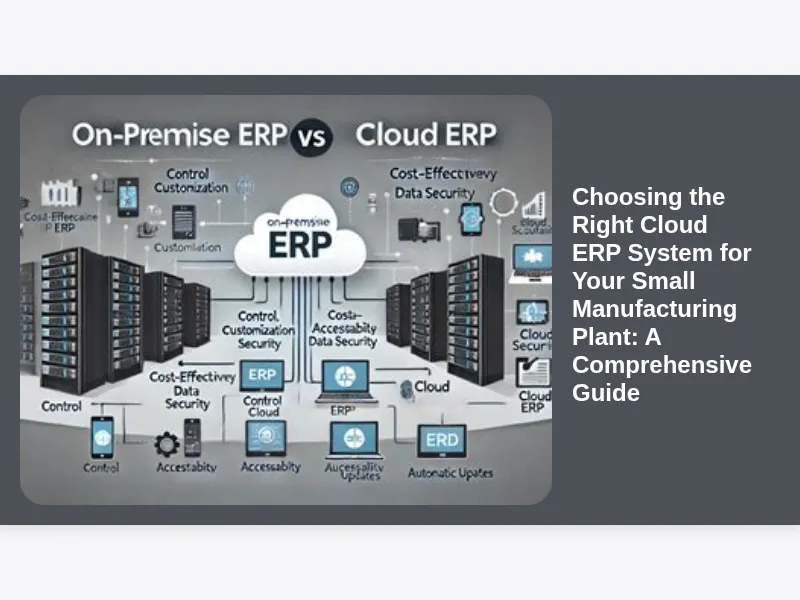
Historically, the idea of an ERP system for a small manufacturing plant might have seemed daunting, if not outright unfeasible. Traditional on-premise ERP solutions demanded substantial upfront investments in hardware, server infrastructure, and specialized IT personnel to manage, maintain, and secure the system. These requirements often created an insurmountable barrier for small businesses operating with leaner budgets and limited technical resources. Such systems also entailed lengthy and complex deployment processes, sometimes taking years to fully implement, further adding to the cost and disruption. The burden of constant updates, patches, and physical security measures also fell squarely on the shoulders of the manufacturing plant, diverting valuable resources away from core production activities.
Cloud ERP fundamentally alters this equation by delivering ERP functionalities as a service over the internet. Instead of purchasing software licenses and investing in extensive IT infrastructure, small manufacturers pay a subscription fee to access the ERP system hosted and managed by a third-party vendor. This shift from a capital expenditure (CapEx) to an operational expenditure (OpEx) model significantly lowers the financial barrier to entry, making sophisticated business management tools accessible to a much broader range of companies. The vendor takes responsibility for maintaining the servers, ensuring software updates, managing backups, and upholding robust security measures, thereby freeing up valuable internal resources within your manufacturing plant.
The specific benefits of Cloud ERP are particularly pronounced for small manufacturing operations. Firstly, the reduced upfront costs mean that budget-conscious plants can implement a powerful system without straining their finances. Secondly, deployment times are dramatically shorter, often measured in weeks or months rather than years, allowing businesses to realize benefits much quicker. Thirdly, automatic updates ensure that your system is always running on the latest version, with new features and security patches applied seamlessly, eliminating the need for disruptive manual upgrades. Fourthly, Cloud ERP offers unparalleled scalability, allowing you to easily add users, modules, or expand capabilities as your business grows, without having to purchase new hardware or undergo complex reconfigurations. Finally, and crucially, cloud-based systems provide anytime, anywhere access from any internet-enabled device, enhancing flexibility for management, sales teams, and even shop floor supervisors.
These inherent advantages directly address many common pain points faced by small manufacturers. With limited budgets, access to enterprise-level software becomes possible. With limited IT staff, the burden of system maintenance is outsourced. The need for agility in response to market changes is met by the system’s flexibility and rapid deployment. Furthermore, the inherent integration capabilities of a well-chosen Cloud ERP system can help eliminate data silos that often plague smaller operations, providing a single source of truth for all business data. This unification leads to improved visibility across production, inventory, finance, and sales, empowering better decision-making and fostering a more efficient and responsive manufacturing environment.
Understanding Your Unique Manufacturing Needs: The Foundation of ERP Selection
Before embarking on the exciting but challenging journey of evaluating Cloud ERP solutions, the most critical first step is to turn your focus inward and thoroughly assess your own unique manufacturing needs. This foundational self-assessment is not merely a formality; it is the bedrock upon which a successful ERP selection and implementation will be built. Without a clear understanding of your current operational landscape, your pain points, and your aspirations, you risk selecting a system that either overshoots your requirements, leading to unnecessary complexity and cost, or undershoots them, leaving critical gaps in your processes.
Start by meticulously identifying your specific operational pain points. Where are the bottlenecks in your production line? Are you struggling with accurate inventory management, leading to stockouts or excessive carrying costs? Is your production scheduling inefficient, resulting in missed deadlines or idle capacity? How robust is your quality control process, and where might it be improved? Are order fulfillment processes slow or error-prone? Do you have clear visibility into your costs at every stage of production? These are the real-world problems that a well-chosen Cloud ERP system should be designed to solve, and articulating them precisely will guide your feature requirements.
It is absolutely vital to involve key stakeholders from across all departments of your manufacturing plant in this needs assessment process. Gather input from individuals in production, finance, sales, purchasing, inventory, and even customer service. Each department will have a unique perspective on existing challenges and opportunities for improvement. Ask open-ended questions: What processes are currently manual, time-consuming, or prone to human error? Where do data silos exist, preventing a unified view of the business? What critical information is difficult to access or analyze? Their collective insights will paint a comprehensive picture of your operational landscape and highlight the functionalities that truly matter.
Finally, meticulously document your current workflows – both formal and informal – and then envision your ideal future state. How would an integrated system transform these processes? What would improved data visibility enable you to do? This detailed analysis will form the basis of your functional requirements document, which will be an invaluable tool when communicating with potential vendors. By investing the time and effort into this comprehensive self-assessment, you ensure that you are Choosing the Right Cloud ERP System for Your Small Manufacturing Plant that truly fits your operational DNA, rather than merely adopting a generic solution. This clarity will save you considerable time, money, and frustration down the line.
Essential Features to Look for in Cloud ERP for Production Management
For any manufacturing plant, the core of operations lies on the shop floor. Therefore, when evaluating Cloud ERP systems, a deep dive into their production management capabilities is paramount. These features are not merely optional extras; they are the fundamental tools that will directly impact your plant’s efficiency, output, and overall profitability. A robust Cloud ERP must offer a comprehensive suite of functionalities designed to manage every aspect of your production process, from planning to execution.
Firstly, look for robust Bill of Materials (BOM) management. The BOM is the recipe for your products, detailing all raw materials, sub-assemblies, and quantities required. The ERP should support multi-level BOMs, revisions, and engineering change management, ensuring that your production team always has access to the most current and accurate product specifications. Closely linked are production planning and scheduling capabilities. The system should allow you to create detailed production schedules, taking into account machine capacity, labor availability, material lead times, and order priorities. Advanced scheduling features, such as finite capacity scheduling, can significantly optimize your shop floor operations and reduce bottlenecks.
Secondly, effective work order management and shop floor control are crucial. The Cloud ERP should enable you to generate, track, and manage work orders from creation to completion, providing real-time visibility into the status of each job. This includes features like labor tracking, machine utilization monitoring, and the ability to report progress and exceptions directly from the shop floor. Some advanced systems offer Manufacturing Execution System (MES) lite functionalities, bringing real-time data from machines and operators directly into the ERP, facilitating better decision-making and more accurate cost accounting for each production run.
Beyond these core functionalities, consider the importance of quality control modules, preventative maintenance scheduling, and robust capacity planning. A quality control module can help manage inspections, track defects, and ensure compliance with industry standards, reducing rework and improving product consistency. Preventative maintenance features can schedule regular servicing for your machinery, minimizing downtime and extending asset lifespans. Capacity planning tools help you understand your current and future production capabilities, allowing you to optimize resource allocation and accurately commit to delivery dates. Integrating demand forecasting capabilities can further enhance planning by predicting future customer needs, allowing for proactive production adjustments. These features collectively form the bedrock for efficient and optimized operations in a modern manufacturing context, ensuring that choosing the right Cloud ERP system for your small manufacturing plant directly enhances your production prowess.
Beyond Production: Integrating Financials, Sales, and Supply Chain with Cloud ERP
While production management forms the heart of a manufacturing ERP, a truly effective Cloud ERP system extends its reach far beyond the shop floor. It acts as a single, unified nervous system for your entire business, integrating critical functions such as financials, sales, and supply chain management. This holistic approach is what transforms an isolated production tool into a powerful enterprise-wide solution, eliminating data silos and providing a comprehensive, real-time view of your business’s health and performance.
At its core, a robust Cloud ERP must include comprehensive financial management capabilities. This typically encompasses the General Ledger (GL), Accounts Payable (AP), Accounts Receivable (AR), fixed asset management, and budgeting. An integrated financial module ensures that all revenue and expenditure associated with manufacturing, sales, and procurement are accurately recorded and automatically reconciled, providing precise financial statements. This eliminates the need for manual data entry into separate accounting software, significantly reducing errors and freeing up your finance team for more strategic analysis. Furthermore, robust financial reporting tools allow you to track profitability, manage cash flow, and ensure compliance with accounting standards, all within the same system that manages your production.
Equally important are sales order management and customer relationship management (CRM) functionalities. A well-integrated Cloud ERP will manage the entire sales cycle, from initial customer inquiry and quote generation to order entry, fulfillment, and invoicing. Having sales and production data in one system means that sales teams can provide accurate lead times based on current inventory and production schedules, improving customer satisfaction. Basic CRM capabilities often included in ERPs can help track customer interactions, manage opportunities, and understand sales trends, fostering stronger customer relationships and better forecasting. This synergy between sales and operations ensures that customer promises are realistic and achievable.
Finally, the supply chain management (SCM) capabilities of a Cloud ERP are vital for a small manufacturing plant. This includes features such as supplier relationship management (SRM), purchase order automation, inventory optimization, and even basic logistics tracking. The ability to manage procurement effectively, from vendor selection and negotiation to generating purchase orders and tracking incoming shipments, ensures that raw materials are available when needed, preventing costly production delays. An integrated SCM module optimizes inventory levels, reducing carrying costs while ensuring sufficient stock to meet production demands. By linking these disparate functions, a truly integrated Cloud ERP system provides end-to-end visibility, streamlines operations from customer order to product delivery, and ensures a smooth flow of information across your entire business, making it an indispensable tool for efficient management.
Scalability and Flexibility: Future-Proofing Your Investment in Cloud ERP
For small manufacturing plants, growth is always the aspiration. However, rapid growth can quickly strain legacy systems that weren’t designed to scale. This is where the inherent scalability and flexibility of Cloud ERP solutions become a massive advantage, offering a built-in capacity to adapt as your business evolves. When you are Choosing the Right Cloud ERP System for Your Small Manufacturing Plant, thinking about tomorrow’s needs is just as important as solving today’s problems. An ERP system should not be a limiting factor in your expansion; rather, it should be an enabler.
One of the most compelling aspects of Cloud ERP is its ability to scale effortlessly. Unlike on-premise systems that require significant upfront capital investment in hardware and licenses that may quickly become obsolete or insufficient, cloud solutions operate on a “pay-as-you-grow” model. As your manufacturing plant expands, whether that means adding more users, introducing new product lines, increasing production volume, or opening new facilities, the Cloud ERP vendor handles the underlying infrastructure upgrades. You can typically provision additional user licenses, activate new modules, or increase data storage capacity with simple adjustments to your subscription plan, without the need for disruptive hardware installations or complex system reconfigurations. This agility means your ERP can grow with you, rather than becoming a bottleneck that stifles expansion.
Beyond mere scaling, Cloud ERP offers remarkable flexibility to adapt to an ever-changing business environment. The manufacturing sector is particularly susceptible to market fluctuations, technological advancements, and shifts in customer demand. A flexible Cloud ERP allows your plant to quickly pivot strategies, adjust production processes, or even explore new business models. For instance, if you decide to expand into e-commerce, a good Cloud ERP can integrate seamlessly with your online storefront. If new compliance regulations emerge, the vendor often provides updates to help you meet these requirements. This inherent adaptability ensures that your core business system remains relevant and supportive of your strategic goals, rather than becoming a rigid, outdated constraint.
Furthermore, cloud environments are typically designed to support multi-company, multi-currency, and multi-language capabilities. This means that if your small manufacturing plant eventually expands into international markets or acquires other entities, your Cloud ERP system will likely be equipped to handle these complexities without requiring a complete overhaul. The ease with which these parameters can be configured within a cloud platform stands in stark contrast to the significant IT challenges of integrating disparate systems in an on-premise setup. By selecting a Cloud ERP with strong scalability and flexibility, you are not just investing in a system for today; you are future-proofing your operations, building a robust foundation that can confidently support your manufacturing plant’s growth and evolution for years to come.
Seamless Integration Capabilities with Existing Business Systems
In today’s interconnected business world, no single software system operates in isolation. Your manufacturing plant likely already relies on a range of specialized tools and applications, from Computer-Aided Design (CAD) and Product Lifecycle Management (PLM) to Customer Relationship Management (CRM) and even specific e-commerce platforms. A critical consideration when Choosing the Right Cloud ERP System for Your Small Manufacturing Plant is its ability to seamlessly integrate with these existing business systems. Without robust integration capabilities, your new ERP could inadvertently create new data silos or necessitate cumbersome manual data transfers, undermining the very efficiency it’s meant to achieve.
The cornerstone of effective integration lies in Application Programming Interfaces (APIs). A Cloud ERP system that offers a comprehensive and well-documented set of APIs provides the flexibility for other applications to “talk” to it, exchanging data in a structured and automated manner. This is crucial for maintaining data consistency across your entire technological ecosystem. For instance, integration with your CAD/CAM software can allow engineering changes to flow directly into your BOMs, reducing errors and speeding up product development. Similarly, linking your CRM to the ERP ensures that sales orders automatically trigger production planning, and customer service has real-time visibility into order status. These automated data flows are essential for operational agility.
Beyond generic APIs, many reputable Cloud ERP vendors offer pre-built connectors or partnerships with popular third-party applications. These pre-configured integrations can significantly reduce the complexity and cost of connecting your ERP to other essential systems. For example, a connector to a popular e-commerce platform can synchronize product catalogs, inventory levels, and sales orders, ensuring that your online store accurately reflects your real-time stock. Similarly, integrations with shipping carriers or payment gateways can automate logistics and financial reconciliation. When evaluating vendors, inquire about their ecosystem of partners and the availability of ready-made integrations for the specific tools you currently use or plan to adopt.
The ease and cost of integration can significantly impact the overall success and budget of your Cloud ERP project. While some integrations might require custom development, prioritizing a system with robust out-of-the-box or easily configurable options will save your small manufacturing plant considerable time, money, and headaches. A truly integrated Cloud ERP system acts as a central hub, ensuring that all critical business data flows freely and accurately between applications. This eliminates data re-entry, reduces errors, provides a unified view of your operations, and ultimately makes your entire business ecosystem more efficient and responsive, allowing you to harness the full power of your digital tools.
Unpacking the Costs: Total Cost of Ownership (TCO) for Cloud ERP
While Cloud ERP is celebrated for its lower upfront costs compared to traditional on-premise systems, it’s crucial for small manufacturing plants to look beyond the monthly subscription fee and understand the complete Total Cost of Ownership (TCO). A clear-eyed assessment of TCO will help you budget effectively and avoid unpleasant financial surprises down the line. When Choosing the Right Cloud ERP System for Your Small Manufacturing Plant, consider all potential cost components, both obvious and hidden, to make a truly informed financial decision.
The primary cost component of Cloud ERP is the recurring subscription fee, which typically varies based on the number of users, the specific modules selected, and the level of functionality required. This fee covers software licensing, hosting, infrastructure maintenance, security, and usually automatic updates. However, this is just the beginning. You must also account for significant implementation costs. These include professional services from the vendor or a third-party consultant for system configuration, process mapping, data migration (a notoriously complex and time-consuming task often requiring extensive data cleansing), and any necessary integrations with existing systems. Customization, if unavoidable, will also add to these initial implementation expenses.
Furthermore, consider the costs associated with training your employees. While Cloud ERPs are generally more intuitive, effective user adoption requires dedicated training sessions, which may involve consultant fees, internal resource time, and the development of training materials. Post-implementation, ongoing support beyond the basic included in the subscription fee might also be necessary, especially if you require specialized assistance or higher service level agreements (SLAs). Don’t forget potential integration maintenance costs if your ERP is connected to many other systems, as updates to one system might necessitate adjustments to the integration points.
When conducting a TCO analysis, it’s beneficial to compare the OpEx model of Cloud ERP against the CapEx model of an on-premise system. While Cloud ERP has ongoing subscription fees, it eliminates large capital outlays for servers, networking equipment, and specialized IT staff for maintenance. The savings in IT infrastructure, utilities, and dedicated personnel can be substantial for a small manufacturing plant. Additionally, the faster deployment and quicker realization of benefits from a Cloud ERP can contribute to a faster return on investment. Always insist on clear and transparent pricing from potential vendors, ensuring you understand exactly what is included in your subscription and what will incur additional charges. A thorough TCO analysis is not just about comparing prices; it’s about evaluating the long-term financial viability and value proposition of your chosen solution.
Data Security and Compliance: Protecting Your Manufacturing Plant’s Assets
One of the most significant concerns for small manufacturing plants contemplating a move to Cloud ERP is the question of data security and compliance. Entrusting your sensitive operational, financial, and customer data to a third-party vendor can feel like a leap of faith. However, reputable Cloud ERP providers invest heavily in sophisticated security measures, often far exceeding what a small business could afford or implement independently. When Choosing the Right Cloud ERP System for Your Small Manufacturing Plant, understanding and vetting these security protocols is absolutely paramount to protecting your business’s most valuable assets.
Robust data security measures taken by leading Cloud ERP providers are multi-layered. This typically includes advanced encryption for data both in transit and at rest, ensuring that even if data were intercepted or accessed, it would be unreadable. Physical security of their data centers is also paramount, featuring stringent access controls, surveillance, and redundancy to prevent outages. Network security includes firewalls, intrusion detection systems, and regular vulnerability scanning. Furthermore, user access controls and authentication protocols, such as multi-factor authentication (MFA), are standard, ensuring that only authorized personnel can access specific parts of the system based on their roles and responsibilities. These measures are designed to protect your intellectual property, financial records, and customer information from cyber threats and unauthorized access.
Beyond general security, compliance with various industry-specific regulations and data privacy laws is a critical consideration for manufacturing plants. Depending on your industry, you might need to adhere to standards such as FDA regulations for medical device manufacturing, ISO quality management standards (e.g., ISO 9001), or industry-specific environmental controls. Furthermore, global data privacy regulations like GDPR (General Data Protection Regulation) or CCPA (California Consumer Privacy Act) are becoming increasingly relevant. Your chosen Cloud ERP vendor should be able to articulate how their system helps you meet these compliance requirements, potentially offering audit trails, robust data retention policies, and configurable controls to track and manage regulated processes.
When evaluating vendors, don’t hesitate to ask probing questions about their security posture. Inquire about their security certifications (e.g., ISO 27001, SOC 1, SOC 2), their disaster recovery plan, data backup frequency, and the details of their uptime guarantees. Understand where your data will be physically stored and if that location aligns with any regulatory requirements. A clear security roadmap from your vendor demonstrates their commitment to staying ahead of evolving threats. Ultimately, a strong security framework from your Cloud ERP partner means you can focus on your core manufacturing operations with confidence, knowing that your vital business data is protected by industry-leading practices and robust infrastructure, safeguarding your plant’s future.
The Vendor Selection Process: Finding Your Ideal Cloud ERP Partner
The software itself is only half the equation when implementing a Cloud ERP; the other, equally critical half, is the vendor you choose to partner with. Selecting the right vendor is akin to choosing a long-term business partner, as they will be integral to the success of your Cloud ERP implementation and its ongoing performance. For small manufacturing plants, this partnership is particularly vital, as you may rely heavily on their expertise and support. Therefore, a meticulous vendor selection process is paramount when Choosing the Right Cloud ERP System for Your Small Manufacturing Plant.
Begin your search by researching potential vendors thoroughly. Look beyond just their marketing materials and delve into their industry experience, specifically focusing on their track record with small manufacturing operations. Do they understand the nuances of your particular sector, whether it’s discrete manufacturing, process manufacturing, custom job shops, or something more specialized? A vendor with domain expertise will be better equipped to understand your challenges, speak your language, and offer solutions that genuinely align with your operational context, potentially reducing the need for costly customizations. Seek out case studies, whitepapers, and testimonials that highlight their successes in similar environments.
Once you’ve shortlisted a few promising candidates, engage in detailed discussions and request personalized demonstrations. A generic demo might show off flashy features, but a tailored demo focused on your specific workflows and pain points will reveal how the system truly addresses your needs. During these demos, involve key stakeholders from your internal project team. Ask pointed questions about specific functionalities, integration capabilities, and scalability. Don’t shy away from asking for customer references from businesses similar in size and industry to your own. Speaking directly with current users can provide invaluable insights into the vendor’s responsiveness, the system’s ease of use, and the overall quality of their support.
Finally, evaluate the vendor’s financial stability, their product roadmap, and their long-term vision. You want a partner who will be around for the long haul, continuously investing in their product and adapting to new technologies. Understand their implementation methodology – do they have a structured, proven approach? How do they handle potential issues or scope changes? What is their support structure post-implementation? A strong, reliable, and forward-thinking partner will not only provide excellent software but also offer the guidance, expertise, and ongoing support that will be invaluable throughout the entire lifecycle of your Cloud ERP system. This thorough due diligence in vendor selection is truly a cornerstone of a successful ERP journey.
Navigating the Implementation Journey: Best Practices for Cloud ERP Deployment
The implementation phase of a Cloud ERP system is arguably the most critical juncture in your entire journey. Even the most perfectly chosen software can falter without a well-executed deployment. For a small manufacturing plant, managing this transition effectively is paramount to minimizing disruption to ongoing operations and ensuring a smooth go-live. A structured, disciplined approach to implementation, guided by best practices, will pave the way for successful adoption and a rapid return on your investment. When Choosing the Right Cloud ERP System for Your Small Manufacturing Plant, remember that implementation strategy is as important as the system itself.
The initial step is to establish a dedicated internal project team, ideally led by a strong project manager and comprising key representatives from each department that will use the ERP. This team will serve as the primary liaison with the vendor’s implementation specialists. Together, you must define clear, measurable objectives for the project, set realistic timelines, and allocate necessary resources. It’s crucial to meticulously map out your current business processes and then design your ideal future processes within the ERP. This often requires critical self-reflection and a willingness to adapt existing workflows to align with the best practices embedded within the ERP, rather than trying to force the ERP to perfectly mimic your old, potentially inefficient, processes.
Data migration is another notoriously complex aspect of implementation that demands significant attention. This involves transferring historical and current data—such as customer records, supplier information, product catalogs, BOMs, inventory levels, and financial balances—from your legacy systems (or spreadsheets) into the new Cloud ERP. This process often reveals inconsistencies and errors in existing data, necessitating a thorough data cleansing effort before migration. Investing time in accurate data cleansing is non-negotiable, as “garbage in, garbage out” applies emphatically to ERP systems; poor data quality will undermine the system’s effectiveness and lead to distrust among users. Work closely with your vendor to establish a robust data migration plan and testing strategy.
Finally, consider your deployment strategy: will you opt for a “big-bang” approach, where the entire system goes live at once, or a phased implementation, rolling out modules sequentially? For many small manufacturing plants, a phased rollout is often preferred. This approach minimizes disruption, allows your team to get accustomed to new modules gradually, and provides opportunities to learn and adjust before moving to the next phase. While challenges are inevitable during implementation—from unexpected technical issues to resistance from employees—maintaining open communication with your vendor, staying focused on your defined objectives, and celebrating small victories will help ensure a successful transition and ultimately unlock the full potential of your new Cloud ERP system.
Training and User Adoption: Maximizing Your Cloud ERP Investment
The most sophisticated Cloud ERP system, packed with cutting-edge features, will remain an underutilized investment if your employees don’t know how to use it effectively or are unwilling to embrace it. Therefore, comprehensive training and a strong focus on user adoption are absolutely critical elements in realizing the full benefits of your new system. For small manufacturing plants, where every team member’s productivity counts, ensuring smooth transition and proficient use is paramount when Choosing the Right Cloud ERP System for Your Small Manufacturing Plant.
Training should not be a one-size-fits-all endeavor. Instead, it needs to be tailored to the specific roles and responsibilities of different user groups within your manufacturing plant. Shop floor operators will require training focused on work order execution, time tracking, and inventory movements, while finance personnel will need in-depth knowledge of general ledger entries, accounts payable, and reporting. Sales teams will focus on order entry and customer management. This role-based training ensures that users learn the functionalities most relevant to their daily tasks, making the training more efficient and engaging. Involve process owners and subject matter experts from your own team in developing and delivering some of the training, as they can speak the language of your plant and build credibility.
Beyond formal training sessions, fostering strong user adoption requires a broader strategy. Start by clearly communicating the “why” behind the new ERP system. Explain how it will benefit individual employees by streamlining their work, reducing frustrations, and making their jobs easier, not just how it benefits the company. Establish an “ERP champions” program, identifying influential and tech-savvy employees from various departments who can become internal experts and provide peer-to-peer support. Provide easily accessible training materials, such as quick reference guides, video tutorials, and an internal knowledge base that users can consult at any time. Address resistance to change proactively, acknowledging concerns and offering support, rather than forcing adoption.
Post-implementation support is also crucial. A dedicated help desk or designated internal “super users” can answer questions, troubleshoot minor issues, and provide ongoing guidance. Regular feedback sessions can identify areas where additional training or system adjustments might be needed. By investing in robust, ongoing training and focusing on strategies that promote genuine user adoption, your small manufacturing plant can maximize its Cloud ERP investment. This commitment ensures that your team fully embraces the new system, consistently leverages its capabilities, and ultimately contributes to achieving the desired operational efficiencies, cost reductions, and improved decision-making that justify the significant effort in selecting and implementing the system.
Ongoing Support and Maintenance: Ensuring Long-Term Success
One of the significant advantages of Cloud ERP for small manufacturing plants is the offloading of much of the IT infrastructure management and software maintenance burden to the vendor. However, while this reduces internal IT overhead, robust ongoing support from your Cloud ERP provider remains absolutely critical for ensuring the long-term success and optimal performance of your system. When you are Choosing the Right Cloud ERP System for Your Small Manufacturing Plant, understanding the vendor’s support model and service level agreements (SLAs) is just as important as evaluating the software’s features.
First and foremost, inquire about the vendor’s Service Level Agreements (SLAs). These legally binding agreements should clearly define parameters such as guaranteed uptime, response times for different severity levels of issues, and resolution times. Understand what constitutes a critical issue versus a minor bug. Does the vendor offer 24/7 support, or are their hours limited? What are the available support channels – phone, email, chat, or a dedicated support portal? For a manufacturing plant that operates beyond standard business hours, continuous support can be vital to minimize downtime and quickly resolve any issues that might halt production. A robust SLA provides peace of mind and accountability from your vendor.
Another key benefit of Cloud ERP is how updates and maintenance are handled. Typically, Cloud ERP vendors automatically deploy software updates, patches, and security enhancements to all their customers. This means your manufacturing plant always operates on the latest version of the software without the need for disruptive manual upgrades or complex patch management processes, which are often time-consuming and resource-intensive for on-premise systems. These automatic updates often introduce new features, performance improvements, and security fixes, ensuring your system remains current and resilient against evolving threats. Inquire about the vendor’s update schedule and how they communicate changes to users, allowing your team to prepare for any new functionalities.
Beyond direct vendor support, consider the broader ecosystem of resources available. Many popular Cloud ERP systems have active online communities, user forums, and extensive knowledge bases. These resources can be invaluable for troubleshooting common issues, finding best practices, and connecting with other users facing similar challenges. Some vendors also offer premium support tiers, dedicated account managers, or access to advanced consulting services, which might be worthwhile for more complex needs or strategic guidance. By selecting a vendor with comprehensive, reliable, and accessible ongoing support, your small manufacturing plant can minimize operational disruptions, quickly resolve technical issues, and continuously leverage the evolving capabilities of your Cloud ERP system, ensuring its sustained value and contribution to your business growth.
Customization vs. Configuration: Striking the Right Balance for Your Plant
One of the most common dilemmas faced by small manufacturing plants when adopting an ERP system is the perceived need for extensive customization. Many businesses believe their processes are so unique that only a heavily customized solution will suffice. However, in the context of Cloud ERP, this approach can often lead to significant pitfalls, including higher costs, longer implementation times, and increased complexity in future upgrades. A crucial aspect of Choosing the Right Cloud ERP System for Your Small Manufacturing Plant is understanding the distinction between customization and configuration and striking the right balance.
Customization refers to altering the core code of the ERP software to add new functionalities or significantly change existing ones to fit a very specific, non-standard business requirement. While it might seem appealing to perfectly tailor the system to your current unique workflows, customizations come with a heavy price tag. They require specialized development resources, often increase the complexity of implementation, and critically, can make future software upgrades challenging, if not impossible. When the vendor releases a new version of the core software, your custom code may break, requiring costly re-development and testing to ensure compatibility. For a small manufacturing plant, the long-term maintenance burden and potential for being “stuck” on an outdated version of the software due to customizations can outweigh any initial benefits.
In contrast, configuration involves setting up the ERP system within its existing parameters to match your business processes, without touching the underlying code. This includes activities such as defining workflows, creating custom fields, designing tailored reports, setting up specific user roles and permissions, and leveraging the system’s built-in business rules. Modern Cloud ERPs are designed to be highly configurable, offering a wide array of options to adapt the system to different industry requirements and operational preferences. Configuration is a much more sustainable and cost-effective approach for small manufacturers because it allows you to personalize the system to a significant degree while maintaining upgrade paths and benefiting from the vendor’s continuous product improvements.
When evaluating your needs, critically assess whether your “unique” requirements are truly core differentiators or if they can be adapted to standard industry best practices embedded within the ERP. Often, a slight adjustment to an internal process can allow you to leverage a standard ERP feature, saving significant customization costs and headaches. Prioritize configuration over customization whenever possible. If a critical business requirement absolutely cannot be met through configuration, consider whether a third-party add-on or a lightweight, integrated solution might be a better approach than modifying the core ERP. Striking this balance is key to ensuring that your Cloud ERP system is not only powerful and effective but also manageable, scalable, and future-proof for your small manufacturing plant.
Mobile Accessibility: Empowering Your Manufacturing Workforce On-the-Go
In the fast-paced environment of modern manufacturing, work often extends beyond the confines of a traditional office desk. Field sales representatives visiting clients, warehouse staff managing inventory, shop floor supervisors overseeing production lines, and even owners needing to check KPIs while traveling – all can benefit immensely from access to critical business information on the go. This is where mobile accessibility of your Cloud ERP becomes a powerful differentiator, empowering your manufacturing workforce and enhancing operational agility. When Choosing the Right Cloud ERP System for Your Small Manufacturing Plant, consider how well it supports a mobile, connected workforce.
A truly mobile-friendly Cloud ERP system offers more than just a browser-based interface that shrinks to fit a phone screen. Look for systems that provide dedicated, native mobile applications for iOS and Android devices. Native apps are typically optimized for mobile performance, offer a more intuitive user experience, and can leverage device-specific features like cameras for barcode scanning, GPS for location tracking, or push notifications for critical alerts. These apps should be designed with specific user roles in mind, providing simplified interfaces for tasks relevant to a mobile user, such as checking inventory levels, verifying order status, entering time against a work order, or approving purchase requests.
The benefits of mobile ERP access for a small manufacturing plant are manifold. For your sales team, real-time access to inventory levels, customer order history, and pricing information can mean faster quote generation and more accurate commitments, improving customer satisfaction. On the shop floor, supervisors can instantly review production schedules, track work order progress, and address issues without having to return to a desktop terminal. Warehouse personnel can perform inventory counts, receive goods, and pick orders using handheld devices, significantly improving efficiency and accuracy. For owners and senior management, mobile dashboards provide instant access to key performance indicators (KPIs), allowing them to monitor business health and make informed decisions regardless of their physical location.
Ultimately, mobile accessibility improves productivity across your entire organization by enabling real-time data input and retrieval from anywhere, at any time. It fosters a more responsive and efficient operational environment, reduces delays associated with information lag, and empowers your team to make quicker, more informed decisions. As your manufacturing plant strives for greater efficiency and flexibility, a Cloud ERP system that robustly supports mobile access is not just a convenience; it’s a strategic asset that keeps your workforce connected, informed, and productive, directly contributing to your competitive edge.
Advanced Analytics and Reporting: Turning Data into Actionable Insights
A core promise of an integrated Cloud ERP system is its ability to centralize vast amounts of operational, financial, and customer data into a single repository. However, merely collecting data is insufficient; the true power of an ERP lies in its capacity to transform that raw data into meaningful, actionable insights. For small manufacturing plants, sophisticated analytics and reporting capabilities are essential for understanding performance, identifying opportunities for improvement, and making data-driven strategic decisions. This is a critical evaluation point when Choosing the Right Cloud ERP System for Your Small Manufacturing Plant.
When assessing Cloud ERPs, prioritize systems that offer robust, flexible reporting tools and customizable dashboards. Standard reports are a good starting point, but the ability to generate ad-hoc reports, filter data, and visualize information in various formats (charts, graphs, tables) is invaluable. Customizable dashboards allow different users – from the CEO to the shop floor manager – to view the KPIs most relevant to their roles at a glance, providing real-time snapshots of critical performance metrics like production output, inventory turnover, on-time delivery rates, and profitability per product line. This level of immediate visibility empowers quick responses to emerging issues and proactive decision-making.
Beyond basic reporting, look for business intelligence (BI) capabilities embedded within the ERP or through seamless integrations. BI tools enable deeper analysis, allowing you to explore trends, identify correlations, and even perform predictive modeling. For a manufacturing plant, this could mean analyzing historical production data to optimize future schedules, identifying the most profitable customer segments, or understanding the true cost drivers behind a specific product. These insights move beyond simply knowing “what happened” to understanding “why it happened” and even “what might happen next,” providing a significant competitive advantage.
The goal of advanced analytics is to empower small manufacturing plants to shift from reactive problem-solving to proactive strategic planning. By continuously monitoring key performance indicators (KPIs) related to production efficiency, sales performance, supply chain effectiveness, and financial health, you can pinpoint bottlenecks, optimize resource allocation, and refine your operational strategies. For example, analyzing production lead times against customer delivery dates can highlight areas for process improvement. Understanding the profitability of individual product lines can guide product development and marketing efforts. By transforming raw data into clear, actionable insights, a Cloud ERP with strong analytics and reporting capabilities ensures that every decision your small manufacturing plant makes is informed, intelligent, and strategically aligned, driving continuous improvement and sustained growth.
Considering Industry-Specific Cloud ERP Solutions for Niche Manufacturing
While many Cloud ERP systems are designed to be general-purpose and highly configurable for various industries, some manufacturing plants, particularly those operating in highly specialized or niche sectors, may find significant advantages in considering industry-specific Cloud ERP solutions. These tailored systems are built from the ground up with the unique processes, terminology, regulatory requirements, and best practices of a particular industry already embedded. This can be a compelling factor when Choosing the Right Cloud ERP System for Your Small Manufacturing Plant that operates in a specialized market.
The primary benefit of an industry-specific Cloud ERP lies in its inherent fit. For example, a system designed for process manufacturing (e.g., food and beverage, chemicals, pharmaceuticals) will typically include features like batch control, recipe management, quality assurance specific to formulations, and robust traceability for ingredients, which might be absent or require extensive configuration in a generic ERP. Similarly, a system for aerospace and defense manufacturing would likely offer built-in compliance for government regulations, serial number tracking for components, and stringent quality control protocols. This “out-of-the-box” alignment with your core business needs can significantly reduce implementation time, lower the need for costly customizations, and accelerate user adoption as the system’s language and workflows resonate naturally with your team.
Furthermore, industry-specific solutions often come pre-configured with industry best practices, drawing on the vendor’s deep expertise in that particular sector. This means your small manufacturing plant can leverage proven workflows and established benchmarks, potentially optimizing your operations faster than if you were building everything from scratch with a generic system. Such systems are also more likely to be updated with new features that address evolving industry standards, regulatory changes, or technological advancements, ensuring that your ERP remains compliant and competitive without constant internal effort. The support and consulting teams from industry-specific vendors also tend to have a deeper understanding of your specific challenges, providing more targeted and effective assistance.
While industry-specific Cloud ERP solutions might sometimes come with a higher price tag or a more limited pool of vendors compared to general-purpose systems, the direct fit and reduced need for customization can often make them more cost-effective in the long run. The faster time-to-value, decreased implementation risk, and ongoing compliance support can provide a significant competitive advantage for niche manufacturing plants. Therefore, if your small manufacturing plant operates within a highly regulated or specialized sector, thoroughly investigate industry-specific Cloud ERP options; they might offer the most efficient and effective pathway to digital transformation, ensuring your system is truly optimized for your unique operational demands.
Avoiding Common Pitfalls: Lessons Learned in Cloud ERP Implementation
While the promise of Cloud ERP for small manufacturing plants is immense, the journey to achieving those benefits is not without its challenges. ERP implementations are complex projects, and even with the best intentions, common pitfalls can derail progress, increase costs, and lead to user frustration. Being aware of these potential traps and proactively planning to avoid them is a crucial aspect of Choosing the Right Cloud ERP System for Your Small Manufacturing Plant and ensuring a successful deployment. Learning from the mistakes of others can save your plant significant time, money, and heartache.
One of the most frequent pitfalls is poor planning and an inadequate needs assessment. Rushing into vendor selection without a clear understanding of your current processes, pain points, and desired future state can lead to selecting the wrong system or discovering critical missing functionalities late in the game. This often results in expensive change orders or a system that fails to meet expectations. Another common issue is insufficient executive sponsorship and lack of buy-in from key stakeholders. Without strong leadership commitment and engagement from top management, the project can lose momentum, resources may be diverted, and internal resistance to change can become insurmountable. The ERP implementation needs to be seen as a strategic business initiative, not just an IT project.
Data quality issues are another persistent problem. Attempting to migrate dirty, inconsistent, or incomplete data from legacy systems into the new ERP will inevitably lead to errors, distrust in the new system’s output, and significant troubleshooting headaches post-go-live. Investing time and resources in thorough data cleansing and validation before migration is a non-negotiable step. Furthermore, inadequate user training and a failure to manage change effectively can cripple adoption rates. If employees are not properly trained or do not understand how the new system benefits them, they will revert to old habits, bypassing the ERP and undermining its value.
To avoid these pitfalls, emphasize proactive risk management throughout the project. Maintain open and transparent communication between your internal project team and the vendor, addressing issues as they arise rather than letting them fester. Set realistic timelines and budgets, and be prepared for unexpected challenges. Do not underestimate the human element of change management; actively engage employees, communicate the benefits, and provide ample support. Consider engaging experienced independent ERP consultants who can offer unbiased advice, help with process mapping, and act as a bridge between your business and the vendor. By meticulously planning, securing executive buy-in, ensuring data quality, prioritizing user adoption, and learning from common mistakes, your small manufacturing plant can navigate the complexities of Cloud ERP implementation successfully and unlock its full transformative potential.
Measuring Success and Future-Proofing Your Manufacturing Operations
Implementing a Cloud ERP system is a significant investment of time, resources, and capital for any small manufacturing plant. Therefore, it is imperative to establish clear metrics for success and to have a strategy for measuring the system’s impact long after the go-live date. Furthermore, given the rapid pace of technological change, future-proofing your manufacturing operations and ensuring your ERP remains a valuable asset requires ongoing attention and adaptation. This final stage is crucial for realizing and sustaining the maximum return on your efforts in Choosing the Right Cloud ERP System for Your Small Manufacturing Plant.
Before implementation even begins, define specific Key Performance Indicators (KPIs) that will allow you to objectively measure the ERP’s success. These KPIs should be aligned with your initial objectives. For example, if your goal was to improve inventory management, relevant KPIs could include inventory turnover rate, reduction in stockouts, or accuracy of inventory records. If production efficiency was a focus, track metrics like production lead times, machine utilization, or on-time production completion rates. Financial goals might be measured by reductions in operational costs, improved cash flow, or faster financial close times. Regularly review performance against these pre-defined metrics to track progress, identify areas where the system is delivering value, and pinpoint areas that may require further optimization or training.
Cloud ERP adoption is not a one-time event; it’s an ongoing journey of continuous improvement. Once the system is live and stable, it’s essential to continually leverage its capabilities and adapt to new features. Cloud vendors frequently release updates that include new functionalities, performance enhancements, and security improvements. Stay informed about these releases and plan for how your team can adopt new tools that further streamline operations. Encourage users to provide feedback and actively seek out ways to optimize processes within the ERP. Regular internal reviews of your ERP usage can uncover opportunities for increased efficiency or better data utilization that might not have been apparent initially.
Finally, think about future-proofing your manufacturing operations. The technological landscape is constantly evolving, with advancements in areas like Artificial Intelligence (AI), Machine Learning (ML), and the Internet of Things (IoT). Inquire with your Cloud ERP vendor about their roadmap for incorporating these emerging technologies. Will the system be able to integrate with IoT sensors on your machinery to provide predictive maintenance alerts? Can AI be leveraged for more accurate demand forecasting or production scheduling? By selecting a vendor that demonstrates a clear vision for incorporating future innovations, you ensure that your Cloud ERP system remains cutting-edge and continues to support your manufacturing plant’s growth and competitive advantage for years to come. This forward-thinking approach transforms your ERP from a mere tool into a strategic platform for sustained innovation.
Conclusion – Your Strategic Leap with Cloud ERP for Small Manufacturing
The decision to embark on the journey of digital transformation by adopting a Cloud ERP system is one of the most strategic and impactful choices a small manufacturing plant can make. In an increasingly competitive global market, efficiency, agility, and data-driven decision-making are no longer luxuries but necessities for survival and growth. While the process may seem daunting, the potential rewards—from streamlined operations and reduced costs to enhanced visibility and improved customer satisfaction—are truly transformative, positioning your plant for sustained success in the modern industrial landscape.
Throughout this comprehensive guide, we have traversed the critical considerations involved in Choosing the Right Cloud ERP System for Your Small Manufacturing Plant. We’ve underscored the paramount importance of a meticulous needs assessment, ensuring that any chosen solution genuinely addresses your unique operational challenges and aligns with your strategic goals. We delved into the essential functionalities for production management, financial oversight, and supply chain integration, highlighting the benefits of a truly holistic system. Furthermore, we explored crucial factors like scalability, integration capabilities, data security, total cost of ownership, and the vital role of a strong vendor partnership in a successful deployment.
Remember that selecting and implementing a Cloud ERP is not merely a technology project; it is a business transformation initiative. Success hinges on a thoughtful approach, robust planning, dedicated resources, and a commitment to change management and user adoption. By carefully evaluating features, scrutinizing vendors, preparing for implementation, and fostering a culture of continuous improvement, your small manufacturing plant can mitigate risks and unlock the full potential of this powerful technology. It’s an investment that pays dividends by replacing fragmented processes with seamless workflows, guesswork with data-backed insights, and reactive management with proactive strategic planning.
So, take this guide as your starting point. Begin your journey with confidence, armed with the knowledge to make informed decisions. Engage with potential partners, ask the right questions, and envision the future of your manufacturing plant powered by a seamlessly integrated Cloud ERP. The strategic leap towards a unified, agile, and efficient operation awaits, ready to propel your small manufacturing plant into a new era of productivity, competitiveness, and sustainable growth. The right Cloud ERP system is not just software; it’s the foundation for your plant’s future success.