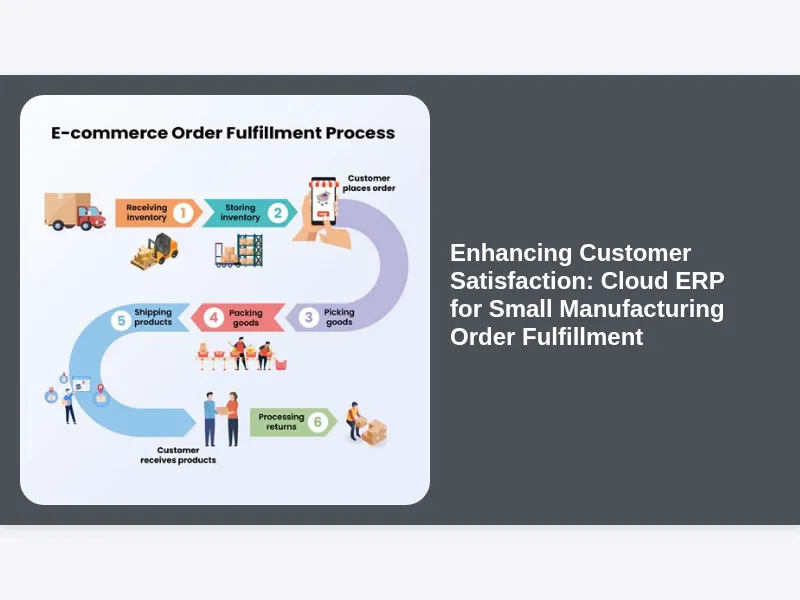
In the fiercely competitive landscape of modern manufacturing, small businesses face a unique set of challenges. They often operate with limited resources, yet are expected to deliver the same level of precision, speed, and reliability as their larger counterparts. The heartbeat of any manufacturing business, regardless of size, is its ability to meet customer expectations, and at the core of this lies efficient order fulfillment. It’s the moment of truth, where promises are either kept or broken, directly impacting customer loyalty and the very reputation of your brand.
For too long, small manufacturers have relied on a patchwork of manual processes, spreadsheets, and disparate software systems to manage their operations. This fragmented approach invariably leads to inefficiencies, costly errors, and, most importantly, frustrated customers. The demand for transparency, speed, and accuracy has never been higher, pushing small manufacturing businesses to seek robust solutions that can elevate their operational capabilities and, by extension, dramatically improve customer satisfaction. This is where the power of Cloud ERP comes into play, offering a transformative pathway to not just survive but thrive in today’s dynamic market by revolutionizing order fulfillment.
The Unique Landscape of Small Manufacturing Businesses Today
Small manufacturing businesses are often characterized by their agility, specialized products, and close-knit teams. Unlike massive corporations, they typically don’t have dedicated departments for every single function, meaning individuals often wear multiple hats, juggling responsibilities from sales and production to inventory and shipping. This lean structure can be a strength, fostering quick decision-making and a strong sense of community, but it also presents significant operational challenges, particularly when it comes to scaling efficiently.
The global marketplace has flattened, bringing new competitors from around the world to your doorstep. Customers now expect personalization, rapid delivery, and transparent communication, regardless of the size of the company they’re dealing with. This creates immense pressure on small manufacturers who must meticulously manage every aspect of their business—from sourcing raw materials and optimizing production schedules to precise inventory control and on-time delivery—all while ensuring profitability and maintaining a high standard of quality. Without the right tools, this delicate balancing act can quickly become overwhelming, leading to missed opportunities and declining customer goodwill.
Order Fulfillment: The Make-or-Break Moment for Customer Loyalty
Order fulfillment is far more than simply boxing up a product and sending it out the door. It encompasses the entire journey a customer’s request takes, from the initial sales order creation, through inventory allocation, production planning, quality control, packaging, shipping, and even post-delivery support. Each step is critical, and a misstep at any point can have a ripple effect, leading to delays, errors, or a damaged customer experience. For small manufacturers, whose brand reputation often hinges on personal relationships and word-of-mouth, seamless order fulfillment is absolutely paramount.
When a customer places an order, they are making an implicit agreement of trust. They trust that their product will be delivered on time, exactly as specified, and without hassle. Any deviation from this expectation—be it a late shipment, an incorrect item, or a lack of communication regarding order status—erodes that trust. In today’s interconnected world, a single negative experience can quickly escalate, potentially harming your business through poor reviews or lost future sales. Conversely, a consistently excellent fulfillment process can transform a one-time buyer into a loyal advocate, proving that an investment in optimized order fulfillment is an investment in long-term customer satisfaction and business growth.
What Exactly is Cloud ERP and Why Does It Matter Now?
ERP, or Enterprise Resource Planning, refers to a comprehensive system of integrated software applications that manage and integrate all facets of a business. This includes everything from product planning, development, manufacturing, sales and marketing, to human resources. Historically, ERP systems were complex, expensive, and primarily accessible only to large enterprises, requiring significant on-site infrastructure and specialized IT teams for maintenance and upgrades.
Cloud ERP, however, represents a paradigm shift. Instead of hosting the software on your own servers, it’s delivered as a service over the internet, hosted by a vendor and accessible via a web browser from anywhere, at any time. This “software-as-a-service” (SaaS) model dramatically lowers the barrier to entry for small manufacturing businesses. It eliminates the need for substantial upfront capital investment in hardware and licenses, replacing it with predictable, subscription-based payments. Furthermore, the vendor handles all the maintenance, security, and updates, freeing up your internal resources to focus on core business activities rather than IT management. This accessibility, combined with its inherent scalability and powerful integration capabilities, makes Cloud ERP not just relevant but essential for small manufacturers looking to modernize and compete effectively today.
Enhancing Customer Satisfaction: Cloud ERP for Small Manufacturing Order Fulfillment
The direct link between an efficient order fulfillment process and heightened customer satisfaction cannot be overstated. When customers receive their orders accurately, on time, and with clear communication throughout the journey, their trust in your brand grows exponentially. Cloud ERP provides the foundational framework to achieve this level of operational excellence by integrating every touchpoint of the fulfillment process, transforming it from a fragmented series of steps into a cohesive, synchronized workflow. It eliminates the guesswork and reactive problem-solving that often plagues small manufacturers, enabling a proactive approach that consistently meets and even exceeds customer expectations.
Imagine a world where every department, from sales to the shipping dock, is working from a single, unified source of truth. Cloud ERP makes this a reality, ensuring that customer orders are accurately captured, inventory is allocated in real-time, production schedules are optimized, and shipment details are immediately available. This holistic view not only minimizes errors and delays but also empowers your team to provide precise information and prompt assistance to customers at every stage. By automating routine tasks and providing unparalleled visibility, Cloud ERP for small manufacturing order fulfillment becomes the strategic engine that drives both operational efficiency and, critically, an elevated customer experience that sets your business apart from the competition.
Real-Time Visibility: The Cornerstone of Enhanced Fulfillment
One of the most significant advantages Cloud ERP brings to small manufacturing is the unparalleled real-time visibility it offers across the entire operation. In traditional setups, information often resides in isolated silos, with the sales team having one view of an order, production another, and inventory yet another. This fragmentation leads to delays, miscommunications, and a constant scramble to reconcile conflicting data, ultimately resulting in an inability to provide accurate information to customers.
With Cloud ERP, all critical business data—from incoming sales orders and raw material availability to production status and outbound shipment tracking—is centralized and updated instantly. This means that a customer service representative can immediately tell a customer the exact status of their order, whether it’s still in production, packaged, or out for delivery, without having to make multiple calls to different departments. This level of transparency not only builds immense trust with customers, who appreciate being kept informed, but also empowers management to make proactive decisions, identifying potential bottlenecks or delays before they impact delivery schedules, ensuring that the promise of on-time delivery is consistently met.
Streamlining Inventory Management for Optimal Flow and Reduced Delays
Inaccurate or inefficient inventory management is a common Achilles’ heel for many small manufacturers, directly impacting their ability to fulfill orders promptly and cost-effectively. Stockouts lead to delayed orders and frustrated customers, while overstocking ties up valuable capital and increases carrying costs. Manual tracking methods are prone to human error, making it incredibly difficult to maintain precise counts and forecast demand accurately.
Cloud ERP revolutionizes inventory management by providing real-time, accurate data on every item in your warehouse, from raw materials to finished goods. It tracks inventory levels across multiple locations, automates reorder points, and integrates seamlessly with sales and production modules to provide intelligent demand forecasting. This means you can optimize stock levels, ensuring that you have exactly what you need, when you need it, without excessive surplus. With accurate inventory data, you can confidently promise delivery dates, prevent costly production stoppages due to missing components, and reduce the likelihood of backorders, all of which contribute significantly to a smoother order fulfillment process and, consequently, happier customers.
Optimizing Production Planning and Scheduling for Predictable Deliveries
The production floor is where raw materials transform into finished products, and any inefficiency here can severely impact order fulfillment timelines. For small manufacturers, juggling multiple orders, managing machine capacities, and scheduling labor can be a complex puzzle, often leading to bottlenecks, unexpected delays, and the inability to provide reliable delivery estimates to customers. Manual production planning relies heavily on experience and guesswork, which can be prone to errors and lack the agility needed to respond to sudden changes.
Cloud ERP integrates production planning and scheduling directly with sales orders and inventory data, creating a cohesive manufacturing workflow. It allows you to model your production capacity, manage bills of materials (BOMs) with precision, and create optimized production schedules that account for machine availability, material constraints, and labor resources. By providing real-time updates from the shop floor, managers can monitor progress, identify potential issues immediately, and adjust schedules on the fly to keep orders moving. This proactive approach to production ensures that products are manufactured efficiently and on time, making promised delivery dates predictable and consistently achievable, which is a cornerstone of excellent customer satisfaction.
Mastering the Supply Chain: From Raw Material to Customer Doorstep
A small manufacturer’s ability to fulfill orders on time is inherently dependent on the reliability and efficiency of its supply chain. Delays in receiving raw materials or components from suppliers can quickly cascade into production stoppages and ultimately lead to late deliveries to customers. Without an integrated system, managing supplier relationships, tracking inbound logistics, and anticipating potential disruptions can be an overwhelming task, often leaving businesses vulnerable to external factors.
Cloud ERP extends its reach beyond your internal operations, offering comprehensive tools to master your supply chain. It facilitates supplier relationship management, enabling you to track vendor performance, manage contracts, and streamline procurement processes. By integrating with supplier systems or providing vendor portals, it can offer visibility into inbound shipments, allowing you to anticipate material arrivals and plan production accordingly. This proactive supply chain management minimizes the risk of material-related delays, ensuring a consistent flow of components necessary for uninterrupted production and, consequently, a seamless order fulfillment experience that keeps customer commitments intact.
Seamless Customer Communication and Unwavering Transparency
One of the biggest frustrations for customers is being left in the dark about their order status. In the absence of proactive communication, anxieties mount, leading to an influx of customer service calls and emails, which strain resources and detract from core business activities. For small manufacturers, building and maintaining strong customer relationships is vital, and transparent communication is a powerful tool in achieving this.
Cloud ERP, especially solutions with integrated CRM (Customer Relationship Management) capabilities, transforms customer communication from reactive to proactive. It automates the sending of order confirmations, shipment notifications, and even real-time status updates at various stages of fulfillment. Customers can often access dedicated portals to track their orders, view invoices, and communicate directly with your team, reducing the need for manual inquiries. This unwavering transparency not only alleviates customer anxiety but also builds immense trust and strengthens loyalty. When customers feel informed and valued throughout their purchasing journey, they are far more likely to return for repeat business and recommend your products to others, directly enhancing customer satisfaction.
Reducing Errors and Boosting Accuracy Across the Fulfillment Process
Manual processes are inherently susceptible to human error. Whether it’s miskeying an order quantity, selecting the wrong item from inventory, incorrectly labeling a package, or generating an inaccurate invoice, these errors can have significant consequences. Each mistake during order fulfillment translates into wasted time, increased costs for returns and rework, and, most importantly, a negative customer experience that can be difficult to rectify. For small manufacturers, where every resource counts, minimizing errors is crucial for both profitability and reputation.
Cloud ERP dramatically reduces the potential for human error by automating repetitive tasks, standardizing workflows, and enforcing data validation rules across the entire fulfillment process. From the moment an order is entered, the system ensures data consistency across sales, inventory, production, and shipping. Automated picking and packing instructions, integrated shipping label generation, and real-time inventory adjustments mean fewer incorrect items are shipped, fewer packages are mislabeled, and fewer discrepancies arise in billing. This heightened level of accuracy ensures that customers receive exactly what they ordered, minimizing returns, complaints, and the associated operational headaches, thereby creating a smooth and satisfying post-purchase experience.
Achieving Operational Efficiency and Significant Cost Savings
While enhancing customer satisfaction is a primary goal, small manufacturers also operate under tight budgetary constraints. The beauty of Cloud ERP is that it simultaneously drives customer satisfaction while also delivering substantial operational efficiencies and cost savings. Disconnected systems, manual data entry, and inefficient workflows often lead to significant hidden costs in terms of wasted time, duplicated efforts, and errors that require costly rework.
By centralizing data and automating processes across the entire manufacturing and fulfillment chain, Cloud ERP eliminates many of these inefficiencies. Automated inventory management prevents overstocking and reduces carrying costs, optimized production schedules minimize idle time and maximize throughput, and streamlined procurement processes can lead to better negotiation power with suppliers. Furthermore, by reducing manual data entry and administrative tasks, your team can focus on higher-value activities. These combined efficiencies free up capital, reduce operational expenditures, and allow you to potentially offer more competitive pricing or invest further in product innovation, all of which indirectly contribute to a more positive and satisfying experience for your customers while strengthening your bottom line.
Data-Driven Decisions for Continuous Improvement and Future Growth
In today’s data-rich world, making informed decisions is no longer a luxury but a necessity for business survival and growth. Small manufacturers often struggle to gather meaningful insights from their scattered data, making it difficult to identify bottlenecks, understand customer trends, or measure the effectiveness of their operations. Without a clear picture of performance, continuous improvement becomes a matter of guesswork rather than strategic action.
Cloud ERP acts as a central data warehouse, collecting and consolidating information from every aspect of your business. It comes equipped with powerful reporting tools and customizable dashboards that provide real-time analytics on key performance indicators (KPIs) relevant to order fulfillment and customer satisfaction. You can track on-time delivery rates, order accuracy, inventory turnover, production efficiency, and customer service response times. This data empowers you to identify areas for improvement, pinpoint the root causes of delays or errors, and proactively adjust your strategies. By continuously refining your processes based on concrete data, you can consistently improve the customer experience, leading to sustained satisfaction and laying a solid foundation for future growth and innovation.
Scalability and Adaptability: Growing with Your Cloud ERP Partner
For small manufacturing businesses, growth is the ultimate objective, but growth often brings new complexities that can quickly overwhelm existing systems. Legacy software and manual processes tend to be rigid, requiring costly and disruptive upgrades or even complete system overhauls when a business expands, adds new product lines, or enters new markets. This lack of scalability can hinder progress and limit a company’s potential.
One of the inherent advantages of Cloud ERP is its remarkable scalability and adaptability. As your business grows, you can easily add new users, integrate additional modules (such as advanced analytics or e-commerce integrations), or expand into new functionalities without needing to invest in new hardware or undergo complex installations. Cloud ERP vendors constantly update their platforms, ensuring that your system remains cutting-edge and can adapt to evolving industry standards and market demands. This flexibility means your ERP system grows with you, seamlessly supporting your expansion efforts and ensuring that your commitment to enhancing customer satisfaction through efficient order fulfillment remains unwavering, no matter how large your operations become.
Ensuring Security and Reliability in the Cloud Environment
A common concern for businesses considering the move to Cloud ERP is the security and reliability of their critical data when it’s stored off-site. For small manufacturers, intellectual property, customer details, and operational data are incredibly valuable assets that must be protected against breaches, loss, or system downtime. Entrusting this information to a third-party vendor requires confidence in their security protocols and infrastructure.
Reputable Cloud ERP providers invest heavily in state-of-the-art security measures, often exceeding what most small businesses could afford to implement on their own. This includes advanced encryption, multi-factor authentication, robust firewalls, intrusion detection systems, and regular security audits. Furthermore, Cloud ERP vendors typically offer high availability, redundant data centers, and comprehensive disaster recovery plans, ensuring that your system is almost always accessible and your data is backed up and recoverable. This peace of mind allows small manufacturers to focus on their core business, knowing that their sensitive information is secure and their operations will remain uninterrupted, directly contributing to the reliable order fulfillment that customers expect.
Overcoming the Hurdles: Implementing Cloud ERP Successfully
While the benefits of Cloud ERP are compelling, the implementation process can appear daunting to many small manufacturers. Concerns about data migration, employee training, resistance to change, and potential disruptions to existing operations are legitimate. A successful implementation requires careful planning, dedicated resources, and a clear understanding of the project’s scope and objectives. It’s not just a technological upgrade; it’s a business transformation.
To overcome these hurdles, it’s crucial to adopt a structured approach. Start by clearly defining your business requirements and goals for the new system. Engage key stakeholders from various departments early in the process to foster buy-in and gather valuable insights. Comprehensive data migration planning is essential to ensure a smooth transition of historical data. Robust training programs tailored to different user roles will empower your team to confidently adopt the new system. Finally, choosing an experienced Cloud ERP partner who can guide you through each stage, from planning and configuration to testing and go-live support, is paramount. With the right strategy and partnership, small manufacturers can navigate the implementation journey effectively, unlocking the full potential of Cloud ERP for enhanced customer satisfaction without undue stress.
Choosing the Right Cloud ERP Solution: A Strategic Decision
The market for Cloud ERP solutions is diverse, with numerous vendors offering a wide range of features and functionalities. For a small manufacturing business, selecting the right system is a critical strategic decision that will impact operations and customer satisfaction for years to come. A poor fit can lead to wasted investment, unmet expectations, and continued operational inefficiencies, undermining the very goal of adopting such a system.
When evaluating Cloud ERP solutions, it’s essential to look beyond the initial price tag. Consider vendors that have a strong track record specifically with small manufacturing businesses and understand the nuances of your industry. Evaluate the solution’s core manufacturing capabilities, including production planning, inventory management, and quality control, ensuring they align with your specific processes. Look for robust integration capabilities with other systems you rely on, such as e-commerce platforms or CAD software. Assess the vendor’s reputation for customer support, implementation assistance, and continuous innovation. Request demonstrations, speak to references, and calculate the total cost of ownership (TCO) over several years, including subscription fees, implementation costs, and potential customization needs. A thorough evaluation process will help you select a Cloud ERP partner that truly supports your journey toward Enhancing Customer Satisfaction: Cloud ERP for Small Manufacturing Order Fulfillment.
The Future of Small Manufacturing: Agility, Innovation, and Customer Focus
The manufacturing landscape is continuously evolving, driven by technological advancements and shifting customer expectations. What was once considered a “nice-to-have” is quickly becoming a “must-have” for businesses of all sizes. For small manufacturers, the future will be defined by agility, the ability to innovate rapidly, and an unwavering focus on the customer experience. Those who embrace digital transformation now will be best positioned to thrive.
Cloud ERP serves as the foundational technology that enables small manufacturers to embrace this future. It provides the real-time data and operational efficiency necessary to respond quickly to market changes, whether it’s adjusting production for a new product trend or scaling up to meet increased demand. It opens the door to integrating advanced technologies like IoT for predictive maintenance, AI for enhanced forecasting, and robotics for greater automation. By freeing up resources from manual tasks and providing deeper insights, Cloud ERP empowers small manufacturers to concentrate on product innovation, build stronger customer relationships, and cultivate a brand reputation for reliability and excellence. This strategic investment is not just about keeping pace; it’s about gaining a distinct competitive advantage.
Conclusion: Your Path to Enhanced Customer Satisfaction and Sustainable Growth
In a world where customer expectations are higher than ever, Enhancing Customer Satisfaction: Cloud ERP for Small Manufacturing Order Fulfillment is no longer merely an aspiration but a strategic imperative. For small manufacturing businesses, the journey from scattered spreadsheets and manual processes to an integrated, data-driven operation is transformative. Cloud ERP provides the comprehensive toolkit needed to streamline every aspect of order fulfillment, from the moment an order is placed to its successful delivery and beyond.
By adopting Cloud ERP, you gain unparalleled real-time visibility, optimize inventory and production, master your supply chain, and foster transparent customer communication. You significantly reduce errors, boost operational efficiency, and make data-driven decisions that fuel continuous improvement. This powerful combination not only resolves immediate pain points but also builds a resilient, scalable, and agile foundation for sustainable growth. Investing in Cloud ERP is an investment in your customers’ trust, loyalty, and ultimately, the enduring success of your small manufacturing enterprise. It’s time to unlock your full potential and deliver an exceptional customer experience that truly sets you apart.